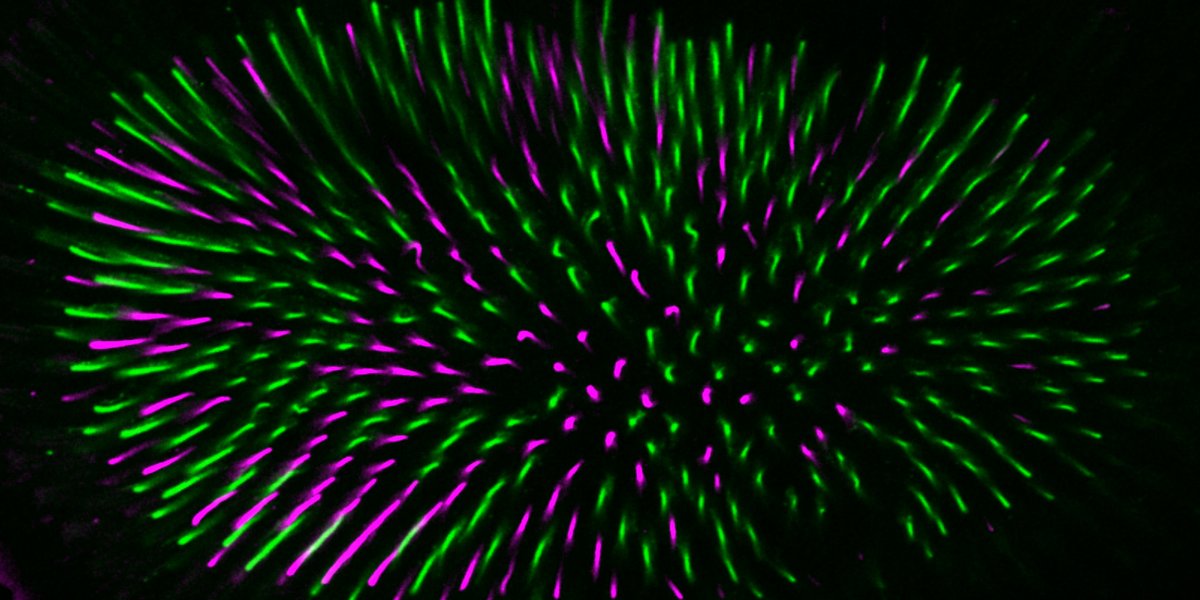
Like humans, flies detect colour via specialised cells in the eye. Here, @JonathanPojer finds new ways by which the Hippo tumour suppressor pathway is repurposed to control the fate of light-sensing cells in the fly eye @PeterMacRes@MonashBDI https://t.co/ELK4BHczib
Cells use their machinery to multitask. Here @JonathanPojer finds 2 parts of the Hippo Swiss army knife that control cell fate as well as organ growth. First 1st author paper for Jonathan - congratulations! @PeterMacRes@MonashBDI https://t.co/07SFYqmzeF
The 2020 Hippo signalling conference will be held virtually. Please join us for the latest developments in the field. Spots still available for speakers to be chosen from abstracts (Oct 18 deadline). Please RT
Thrilled and humbled to have 'What Goes Wrong in Cancer' officially selected for the Melbourne Documentary Film Festival @PeterMacCC@PeterMacRes@MDFFest
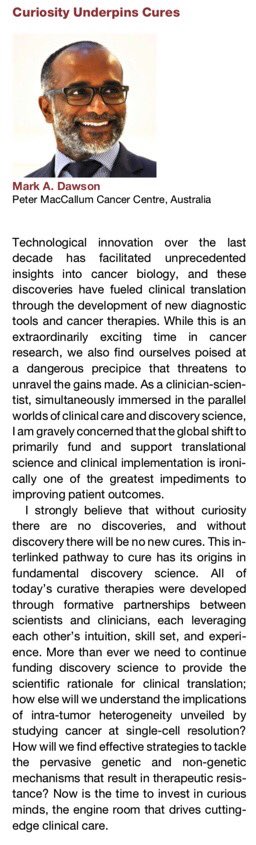
Very fortunate to have been awarded an @nhmrc Investigator grant. A huge thanks to the lab and my colleagues. An 87% failure rate is a horrible stat. We must find a way to increase funding for Australian science, especially #basicresearch@GregHuntMP@PeterMacCC@MonashBDI
For @PeterMacRes postdoc, Dr Francesca Froldi, studying development is not only fascinating, but also vital to better understand and treat diseases such as cancer. Read Francesca's 'Tale' in this month's #BenchandBeyond
👉https://t.co/8Gn91VrFM0
A new study from the lab on control of tissue growth by two Tgi-interacting transcription repressors (Pits and CtBP). Early online in @geneticsGSA. Congrats Joep, Lucas @CellsAndCulture, Colin and Shu. #Hippo#Drosophila https://t.co/5AQ5kFxGrL