NVIDIA IS BUYING ITS OWN CHIPS AND CALLING IT REVENUE
And your retirement account is secretly holding the bag.
This scheme is literally straight out of the Enron playbook...
In January 2026, a special purpose vehicle called Valor Compute Infrastructure was created with one purpose:
Buy Nvidia's chips so Nvidia could book the sale as revenue.
Valor raised $5.4 billion and purchased over 100,000 of Nvidia's GB200 GPUs.
But $1.9 billion of that money came FROM Nvidia itself.
Nvidia invested $1.9 billion into the shell company, then sold that same shell company $5.4 billion worth of its own chips and booked every dollar as revenue.
It's the Girl Scout whose dad bought all the cookies and then she wins the sales contest because Dad was the customer. Except this Girl Scout is a trillion-dollar company and the cookie sale is $5.4 billion.
But it gets MUCH worse:
The remaining $3.5 billion in financing came from Apollo Global Management. Apollo structured the debt, packaged it into securities, and then sold those securities to Athene.
And guess who Athene is? Apollo's OWN insurance subsidiary. The one that sells fixed annuities to American retirees as safe, conservative retirement products.
Follow the chain:
Nvidia funds a shell company with $1.9 billion. The shell company buys $5.4 billion in Nvidia chips. Apollo finances the remaining $3.5 billion. Apollo sells the debt to its own insurance arm. That insurance arm packages it into annuity products and sells them to retirees who think they're buying something safe.
The retirees have no idea that their retirement savings are now backed by 100,000 computer chips sitting in some data center that will be worth pennies on the dollar in three years.
Now look at what's happening inside Athene:
$74.2 billion in US reserves but $217 billion in assets have been shifted to a Bermuda-based captive insurer, outside normal US regulatory oversight.
$103 billion of that portfolio (roughly 35%) is classified as Level 3 assets. That means there is no observable market price.
These assets are valued by internal models, not by actual markets.
And sitting on top of all those unpriced assets? 16.6x leverage.
If you're getting flashbacks to 2008, you should be.
Back then it was mortgages bundled into securities that nobody understood, sold to investors who had no idea what they were holding, rated as safe by agencies that never looked under the hood.
Today it's GPU-backed securities. Computer chips bundled into structured credit instruments, routed through an offshore insurance subsidiary, and sold to you as a retirement product.
The collateral is 100,000 GPUs leased to a single customer through an xAI subsidiary. If xAI stops making lease payments for any reason - financial distress, a pivot in strategy, anything - the entire structure unravels.
And Nvidia releases new architectures every year, so each generation delivers dramatically more compute per watt. A 5 year lease on technology that's obsolete in 2 years creates a mismatch that should terrify every annuity holder in America.
Every single step in this chain is technically legal. The SPV is legal, the lease is legal, Nvidia's equity stake is legal, the securitization is legal, and the Bermuda transfer is legal.
But legality and legitimacy are not the same thing.
I've seen every trick Wall Street has ever pulled in my 45 years of doing this.
And what I'm looking at right now is a pipeline that takes AI infrastructure risk, launders it through 8 layers of financial engineering, and deposits it in the retirement accounts of Americans who never agreed to fund Elon Musk's data centers.
In 2008 it was mortgage-backed securities.
In 2026 it's GPU-backed securities.
Different asset. Same greed. With the same ending.
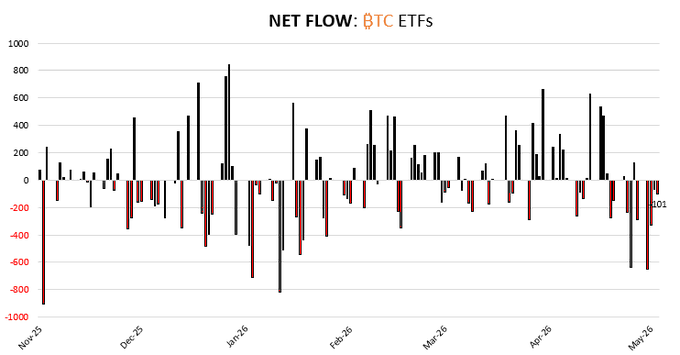
Everyone said big money would calm Bitcoin down. It did the opposite, it built a sell button.
ETFs, treasury companies, the leverage, all sold to you as "adoption." But when BTC drops, those structures are forced to raise cash and sell into the fall, which makes it worse.
Retail used to panic-sell the bottom. Now the "stable" institution is the forced seller.
Adoption didn't kill volatility. It gave it a lever.
@VitalTrades Most hyperscalers are loosing money. The only difference with 2000 is that now much more money are pumping in plus record deficit spending plus the silent QE.
When hedge funds distribute shares to its LPs (Limited Partners), it means the fund is transferring stocks or assets directly into the investors' accounts instead of cashing them out.
Basically the HFs don't want to be responsible for crashing the market.
https://t.co/rrHPdPhAqN
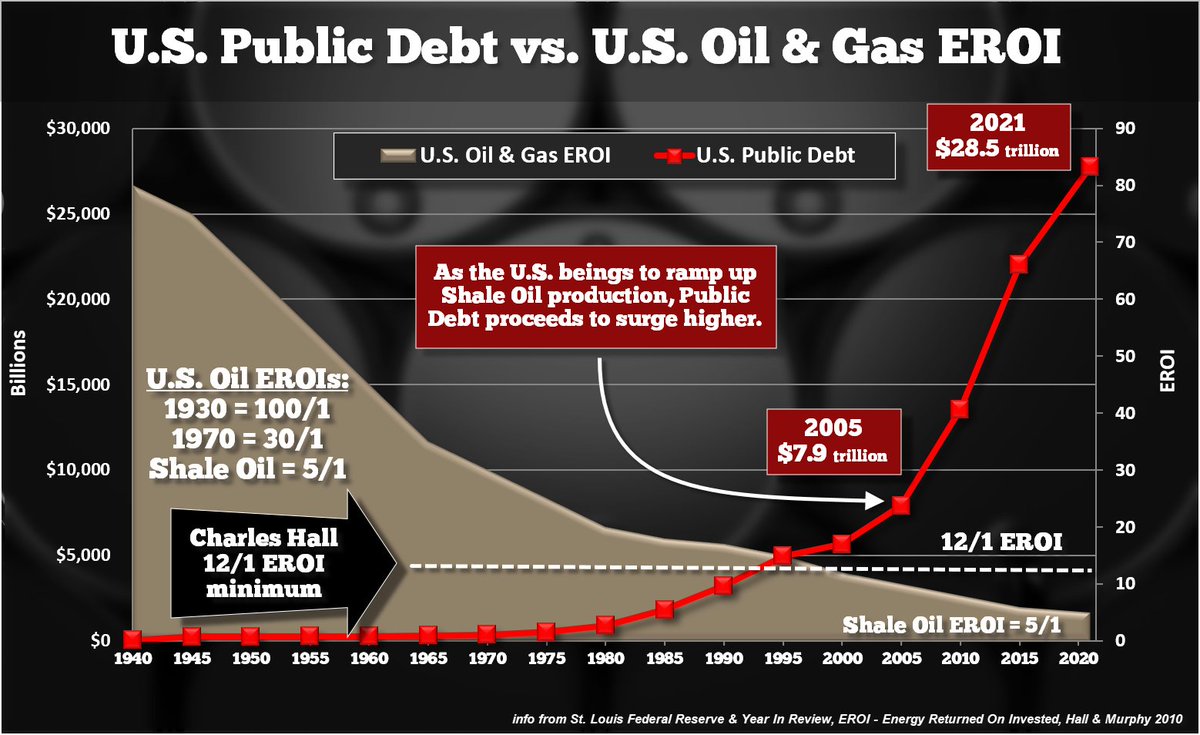
@VladTheInflator It's simply all about oil EROI. Declining EROI ruins the real economy which gets compensated by the financial economy. That's all there is, as simple as that.
The AI numbers are starting to look very ugly.
Even under "best case" assumptions, FT's own data shows Microsoft AI ROI at -9%, Google at -15%, Meta at -28%, Oracle at -35%. Only Amazon barely comes out positive.
This is exactly why I keep comparing this to the dot-com era. Incredible technology does not automatically mean sustainable economics. The internet survived. Most internet companies didn't.
Right now hyperscalers are spending trillions hoping future demand catches up to present capex. That's not certainty. That's a leveraged bet.
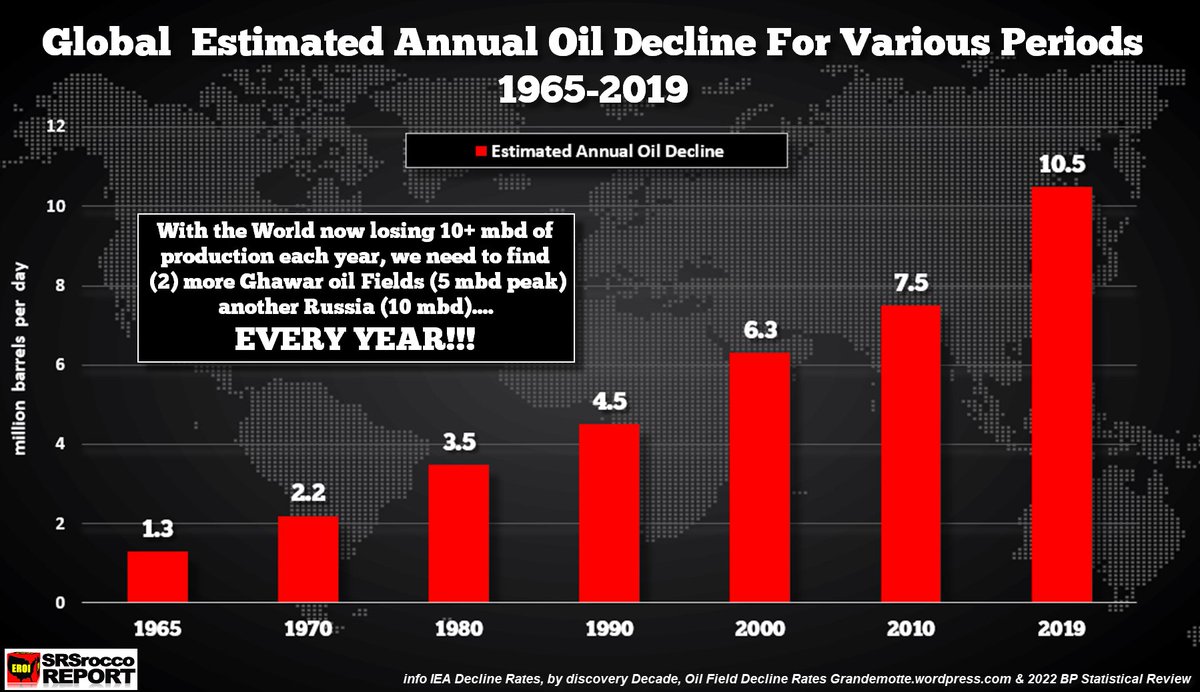
@Markzandi The economy is almost 100% correlated to oil. Oil has officially started to decline last year. How is the economy still growing? It's mathematically impossible.
Microsoft just banned its own engineers from using AI.
The tool was literally costing MORE than the humans it was supposed to replace.
They lied to you about AI adoption and now the whole narrative is blowing up:
Microsoft gave thousands of engineers access to Claude Code six months ago and encouraged them to use it.
Engineers loved it and adoption exploded. But then the invoices arrived.
Token-based pricing means every query, every code review, every debugging session costs money. At scale across 100,000 engineers, the numbers became so large that Microsoft issued an internal order to cancel nearly all Claude Code licenses by end of June and force everyone onto their own cheaper tool instead.
The company that invested $5 billion in Anthropic just told its own people to stop using Anthropic's product because it costs too much.
Uber's story is even worse...
Their CTO Praveen Neppalli Naga told The Information that the budget he planned for the full year was "blown away already" by April.
Uber had rolled out Claude Code in December 2025. By March, 84% of their 5,000 engineers were using it with 70% of all committed code coming from AI systems.
Heavy users were burning $500 to $2,000 per month each. Naga himself spent $1,200 in a single two-hour demo session.
The company had even built internal leaderboards ranking engineers by how much AI they used. They literally gamified the spending and then ran out of money.
Now look at what Nvidia's own VP of applied deep learning Bryan Catanzaro said to Axios last month. Direct quote:
"For my team, the cost of compute is far beyond the costs of the employees."
This is a VP at the company that SELLS the chips saying that using AI is more expensive than paying humans.
Think about what this means for the entire AI narrative.
Every CEO on every earnings call for the past two years has said the same thing:
AI will make us more efficient, reduce headcount, and cut costs.
The stock market rewarded every company that said it.
Fired workers, stock goes up. Announced AI adoption, stock goes up.
But the actual companies deploying AI at scale are discovering the math doesn't work. The MORE employees use AI, the HIGHER the bill.
Goldman Sachs forecasts a 24x increase in token consumption by 2030 as companies adopt AI agents. Gartner just published a report showing that even though individual token prices will drop 90% by 2030, total enterprise AI costs will go UP because agents consume exponentially more tokens per task than basic tools.
Meta built an internal dashboard called "Claudeonomics" to track which employees use the most AI. Amazon started pushing engineers to "tokenmaxx," their internal term for consuming as many AI tokens as possible.
Both companies are spending hundreds of billions on AI infrastructure this year alone.
And Microsoft, the company that bet its entire future on AI, just told 100,000 engineers to stop using the tool they liked best because the per-token bills got out of control.
The companies building AI are telling investors it saves money. The companies using AI are finding out it costs more than the humans it was supposed to replace. And even the company that makes the chips just admitted it through its own VP.
This is the gap nobody on Wall Street is pricing in.
$725 billion in AI infrastructure spending this year across Big Tech. And the first companies to actually deploy these tools at scale are already pulling back because the economics don't work.
What do you think?
@JeremySzafron Please have Steve from @SRSroccoReport on your show. He will give you a different perspective on the global affairs from the energy standpoint.