Luís de Camões, one of the greatest names in the Western Canon, died on this day in 1580.
I also wish a very happy Portugal Day to all my compatriots here 🇵🇹
And if you haven't read The Lusiads yet, today's the perfect day to pick it up.
É simplesmente inacreditável! 🛑🛑
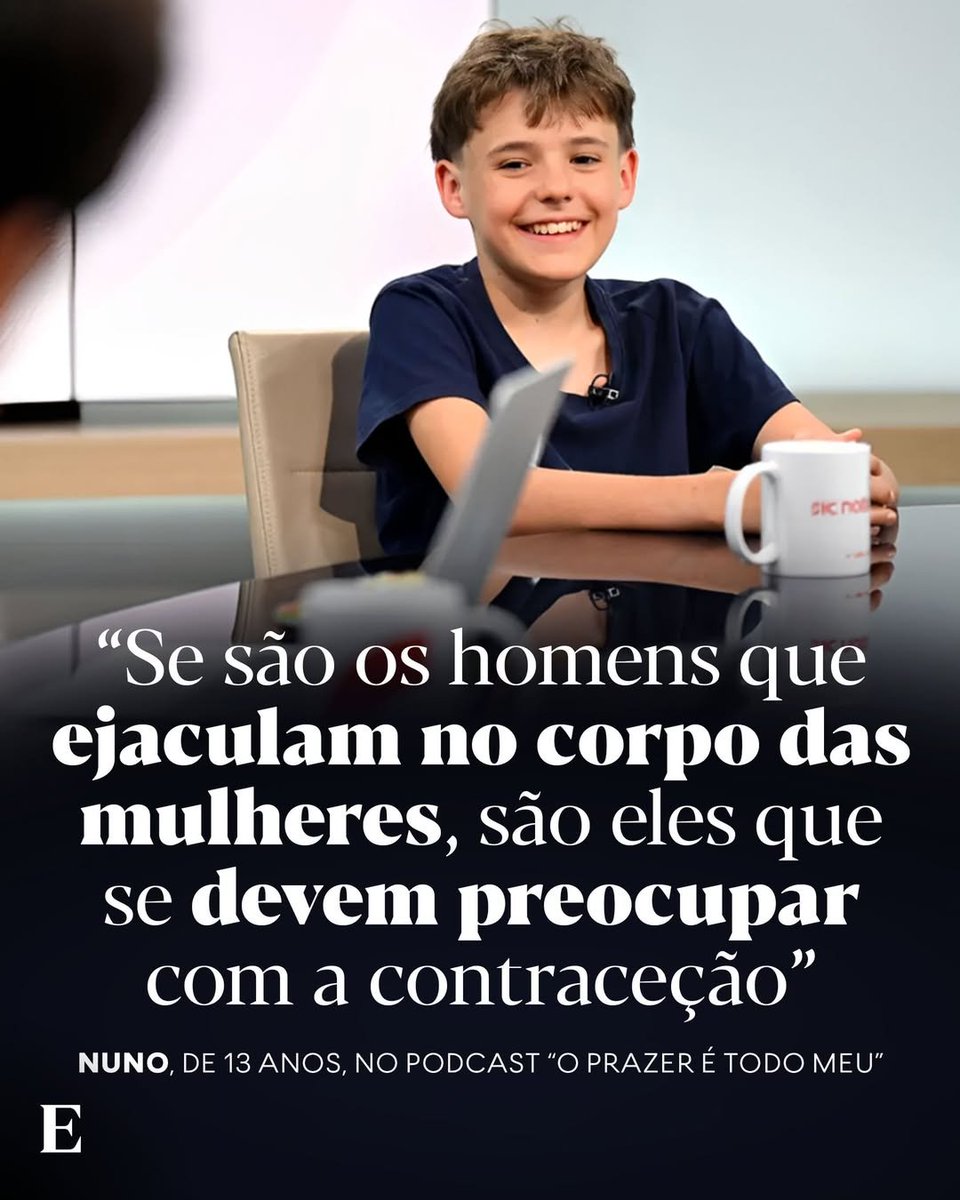
O Expresso achou apropriado produzir e promover, no Dia Mundial da Criança, um podcast “O Prazer é Todo Meu” com duas crianças de 13 e 15 anos, conduzido pela médica e sexóloga Mafalda Cruz.
Os dois adolescentes foram convidados a falar abertamente sobre sexualidade, pornografia, consentimento, masturbação e o impacto das redes sociais nas relações.
Isto é inaceitável. É grave e irresponsável colocar crianças ainda em pleno desenvolvimento a discursar publicamente sobre temas tão íntimos e complexos, transformando a sexualidade numa conversa de podcast para consumo geral.
Em vez de proteger a infância, o Expresso contribui activamente para a hipersexualização precoce e normaliza a ideia de que miúdos desta idade já devem estar imersos nestes assuntos de forma adulta.
Conversas sobre sexualidade devem ser privadas, graduais e conduzidas pelos pais, não expostas num podcast nacional. Este tipo de conteúdo não é progresso... é uma linha vermelha que não devia ter sido cruzada!
Em vez de proteger a inocência e deixar que eles vivam a infância/adolescência de forma mais natural, expõe-os a uma agenda de conversa adulta sobre sexualidade.
Crianças de 13 anos deviam estar a falar de escola, desporto, amizades, jogos... e não a dar entrevistas sobre pornografia e consentimento num podcast.
ANNOUNCEMENT: WE’RE SAVING SCIENCE!
We’re often told that science is “self-correcting.”
But that’s not really true.
Science doesn’t correct itself like a thermostat adjusting the temperature in your house. Science is a human institution run by human beings. And human beings are vulnerable to career incentives, groupthink, moral fads, political pressure, and fear.
And when those forces capture academic journals, peer review stops being a filter for bad ideas and starts becoming more of a credentialing system for fashionable nonsense.
This isn’t exactly new.
In 1996, the physicist Alan Sokal managed to publish a totally gibberish article in the journal Social Text full of trendy postmodern jargon. His point was simple: if you flatter the ideological commitments of certain academic editors, nonsense can pass as real scholarship.
Two decades later, @ConceptualJames, @HPluckrose , and @peterboghossian pulled off the “grievance studies” hoax, placing over a half dozen absurd papers in peer-reviewed journals. One paper used dog parks to analyze rape culture and queer performativity. Another rewrote parts of Mein Kampf in the language of feminist theory.
The problem wasn’t just that fake papers got published. It was that they were completely indistinguishable from the real thing.
And today, the problem is even worse.
We now have serious SCIENCE journals publishing papers about feminist lesbians marrying brine shrimp. We have disturbing papers that aim to “queer” and sexualize infants. We have scholarship on “lesbian-queer-trans-canine relationalities” and “trans-dog intimacies.”
But while Clown World papers are concerning because it makes a complete mockery of academia, the same broken, ideologically captured system is also publishing research in legitimate science and medical journals that pushes sex and gender pseudoscience, relies on deeply flawed data, and influences policies on the medical transition of children and young adults.
That’s not funny. That affects real people. It affects medicine. It affects law. It affects children.
And when critics try to respond, they often discover there’s no serious mechanism for correction. Submitted Letters to the Editor often go completely ignored. Contrary evidence is rejected without comment. As a result, the best critiques are often relegated to personal blog posts, social media threads, or newspaper op-eds, while the original paper remains in the literature wearing the armor of “peer review.”
That is untenable.
So Kevin McCaffree, editor-in-chief of Theory and Society (@Theory_Society), and I decided to do something about it.
Today, in the Wall Street Journal, we announced a first-of-its-kind article type called “Peer Review.”
The idea is simple: publication should be the beginning of academic scrutiny, not the end of it.
A Peer Review article can critique a paper from any scholarly journal. It can address problems with methods, evidence, logic, definitions, theory, or interpretation. But it has to focus on the claims and arguments, not personal attacks.
Submissions are capped at 2,500 words and go through a straightforward merit review instead of endless gatekeeping and ideological screening. We ask just one basic question: Is this critique coherent, serious, reasonable, or even popular enough to deserve scholarly attention?
If yes, it gets published.
And the authors of the original paper get a built-in right of reply, so readers can see the critique and the response in a legitimate academic venue.
That’s how science is supposed to work.
Science becomes self-correcting only when real people build the mechanisms that allow correction to happen.
That’s what we’ve done.
Now it’s time for academics to use it.
Read our announcement on the @WSJ below.
🔗https://t.co/gqkDE7aaDC
True then, true now.
"There is perhaps no phenomenon which contains so much destructive feeling as 'moral indignation,' which permits envy or hate to be acted out under the guise of virtue."
—Psychoanalyst Erich Fromm, 1947
Some therapists speak of
trauma work
shadow work
family of origin work
dream work
parts work
attachment work
as if they were separate things or special skills.
Psychodynamic therapists don’t use these terms. They’re all just the bread and butter of psychotherapy.
*Any* meaningful course of psychotherapy includes all or most of these elements.
We also have a special name for these ways of working. We call it “psychotherapy.”
This is is not a study of mentally healthy people. This is a study of people who SAY they are mentally healthy on questionnaires. Big difference.
Sadly, the social psychologist researchers never considered the role of denial and other reality-distorting defenses. Huge blind spot.
The correct interpretation of the findings is that people who are delusionally optimistic are also dellusionally optimistic when they fill out mental health questionnaires.
Instead of recognizing the obvious, the researchers instead made the assumption that their questionnaires measured the unbiased, objective truth.
This is the kind of blind spot we see when studies are done by academic researchers who have never treated a patient in their lives.
O mais engraçado nesta crise da restauração portuguesa é que as “bifanas do Afonso” e o “prego da Bogotá” (Amadora) são sensações no TikTok e têm dezenas de turistas à porta. Se calhar aquilo do “conceito” não foi assim tão boa ideia. Já nem falo das “gorjetas sugeridas”, etc.
Here's something I'm seeing more and more in "woke" research papers: ritualized, emotion-filled confessionals about the authors' "positionality" designed to signal academic rigor.
These aren't actual research methods, although they're often in the Methods section.
In this paper, the section is called "Reflexivity and Rigor."
One author's "experience as a Black, genderfluid, queer clinician and academic" apparently shaped the research questions, while the other authors are described as "white, heterosexual, cisgender women."
Then we get this: "These ongoing dialogues created intentional spaces to question ideas and examine how each author's social location informed their meaning-making."
They also "shared excerpts from analytic memos...which captured the first and second authors' emotional reactions to the transcripts and their analytic insights."
All of this apprently "deepened the authors' understanding of the data and helped to manage bias; thus, ensuring a thoughtfully interrogated analysis."
This is bizarre.
Academic publishing is supposed to minimize bias. That's the whole point of blinded peer review. But instead of concealing the authors' immutable characteristics, these papers foreground the authors' skin color, sexuality, and gender identity.
The authors claim this helps "manage bias," but I suspect it does the opposite.
Instead, it signals to reviewers: We are good, progressive, emotionally empathetic people doing The Work. Please treat us accordingly.
“Hoje, obrigam-te a ser um consumidor e não um leitor", sublinha Diogo Madre Deus, editor da Elsinore e Cavalo de Ferro.
👉Entrevista da jornalista Joana Rodrigues Stumpo: https://t.co/Gh9zMUzj98
Roubo. 24 latas passam de 15.36 para 17.76, mais 15%. 6 garrafas de água passam de 1.49 para 2.09, mais 40%.
Ah e tal, recebo o dinheiro de volta. SE estiver tudo intacto, tiveres espaço para guardar tudo direitinho, se a máquina funcionar e não forem de propósito lá de carro.
This is the final photographs of Phillip Herron 34, crying in his car, literally minutes before taking his own life.
He was a single Dad with three kids, struggling with crushing debt of over £20,000 and was desperately waiting for a Payday loan he'd applied for. But it was paid in arrears, with a 5 week wait time. That wait drove him even deeper into debt, and when he died he had £4.61 in his bank account and clearly couldn't see any other way out.
Like a lot of people, especially men, he kept all of this to himself, nobody else knew how bad things were getting. This poor man even had to tell his children that Santa Claus wouldn’t come this year, and in his suicide note he wrote that they'd be better off if he wasn't around any more.
And now he isn't.
We need to talk more. We need to be kinder. And we need to be a country that helps each other when we need it the most.
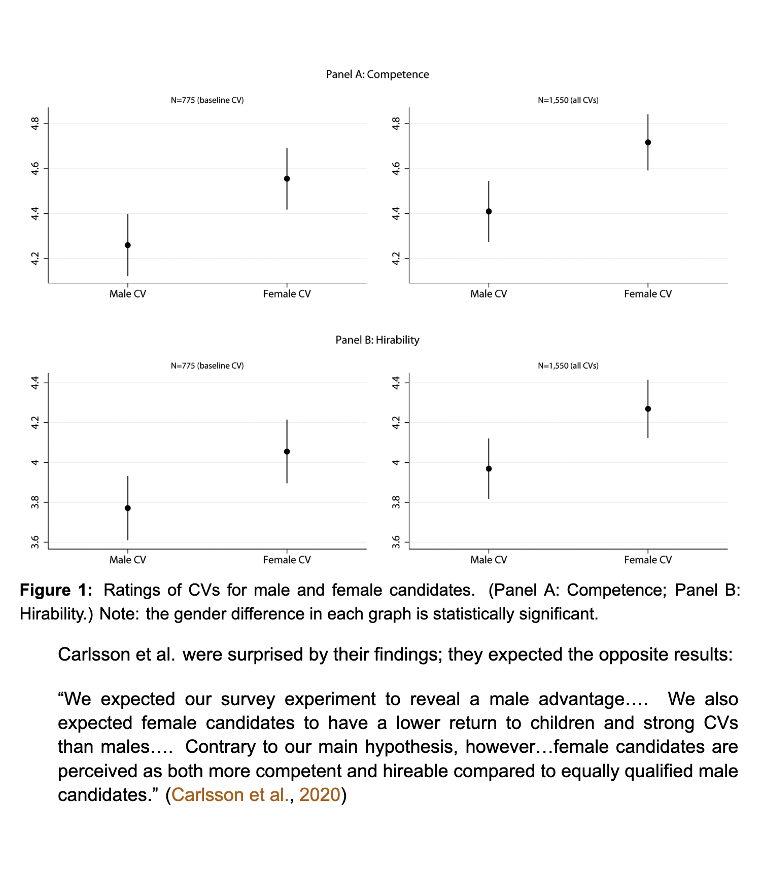
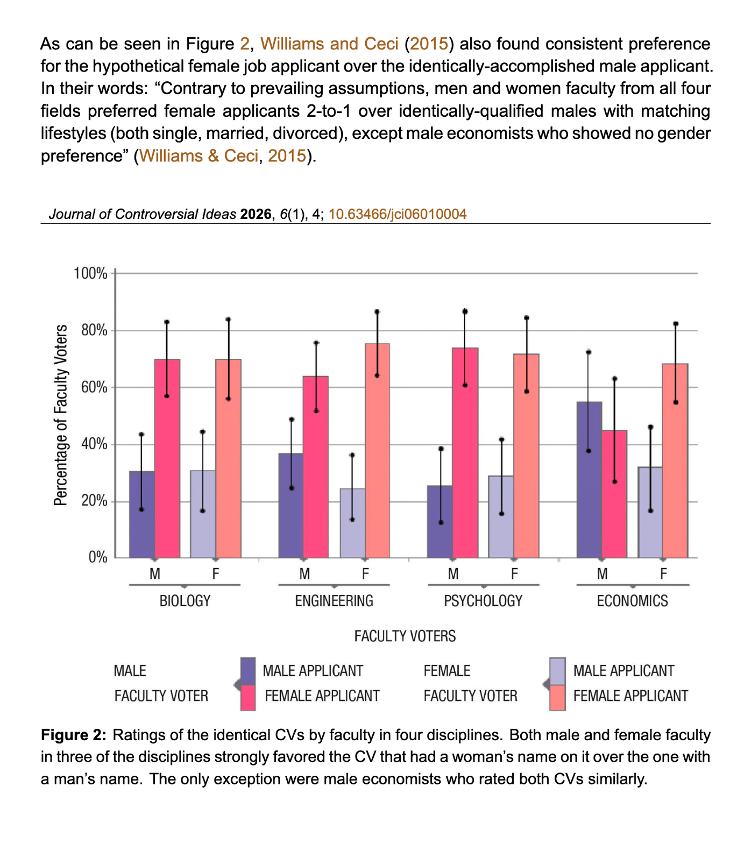
A zombie belief I frequently encounter in woke papers is that there's a tenure-track hiring bias against women in STEM.
A new paper combining all research on faculty ratings for identical CVs for men vs. women show that not only is this belief false, the opposite is true.
The ending of Blade Runner (1982) is one of those scenes where an actor just completely hijacks a movie. Rutger Hauer turns Roy Batty from a sci-fi villain into something weirdly tragic and beautiful. That monologue lingers forever.
The Australia social media age of 16 policy (for account creation, not viewing content!) is working as expected––usage declined substantially in the first stage, and is likely to decline further as Australia presses the companies to do better. (That will get ever easier as the tech for effective and privacy preserving methods improves, now that there’s a big market for it).
A journey of a thousand miles begins with a single step, and Australia took that first step. Many more steps to come, and many more countries are setting out on that path.
I want to applaud @CassSunstein and Leonardo Bursztyn for highlighting something I definitely agree with: "Tipping points can be crossed, as the smoking decline shows. The lesson there is that laws are most likely to change behavior when norms move with them." We need to change societal norms and incentives if we want laws like this to succeed. They offer great advice for the countries that are setting out on the path to get a faster start.
https://t.co/4XCf2IByCJ
In 2010, 11% of job applications for top Electrical Engineering posts in academia were from women, yet 32% of those who got the job were women.
That was 16 years ago, but how about today: are men being discriminated against in the science workplace?
https://t.co/zyyykzRXWV?
The fundamental insight of psychoanalysis is that the mind is divided against itself.
We are of many minds. We have conflicting and contradictory motives. That was Freud, circa 1900. No living person originated this insight. It does not belong to any therapy "brand."
Generations of psychotherapists have refined this understanding and developed ways of applying it in psychotherapy to help patients become more self-aware and whole.
It is not proprietary knowledge, you don’t need to become a devotee of a therapy acronym, and you don’t need a certification from a for-profit business.
This insight goes back to the early 1900s and is the starting point of all psychotherapy approaches that work toward greater self-awareness and wholeness.