Marc Andreessen: There are two ways to think about education. One is at the national level — how do you educate all kids? But the real question is N = 1: what do you do for one individual kid? And for centuries, the answer has been obvious.
If your goal is to maximize a single child, the best method by far is one-on-one tutoring. Every royal family knew this. Every aristocratic class knew this. It’s why Alexander the Great was tutored by Aristotle — and then took over the world.
There’s actually statistical proof of this. The Bloom’s 2-sigma effect shows one-on-one tutoring can move a kid from the 50th percentile to the 99th percentile. No other educational method comes close.
AI changes that. For the first time in history, every kid can have access to infinite questions, instant feedback, personalized explanations, and real-time quizzes — all at N = 1 scale.
This is the most powerful shift in education we’ve seen in centuries. One-on-one tutoring was always the gold standard. AI is what finally makes it available to everyone.
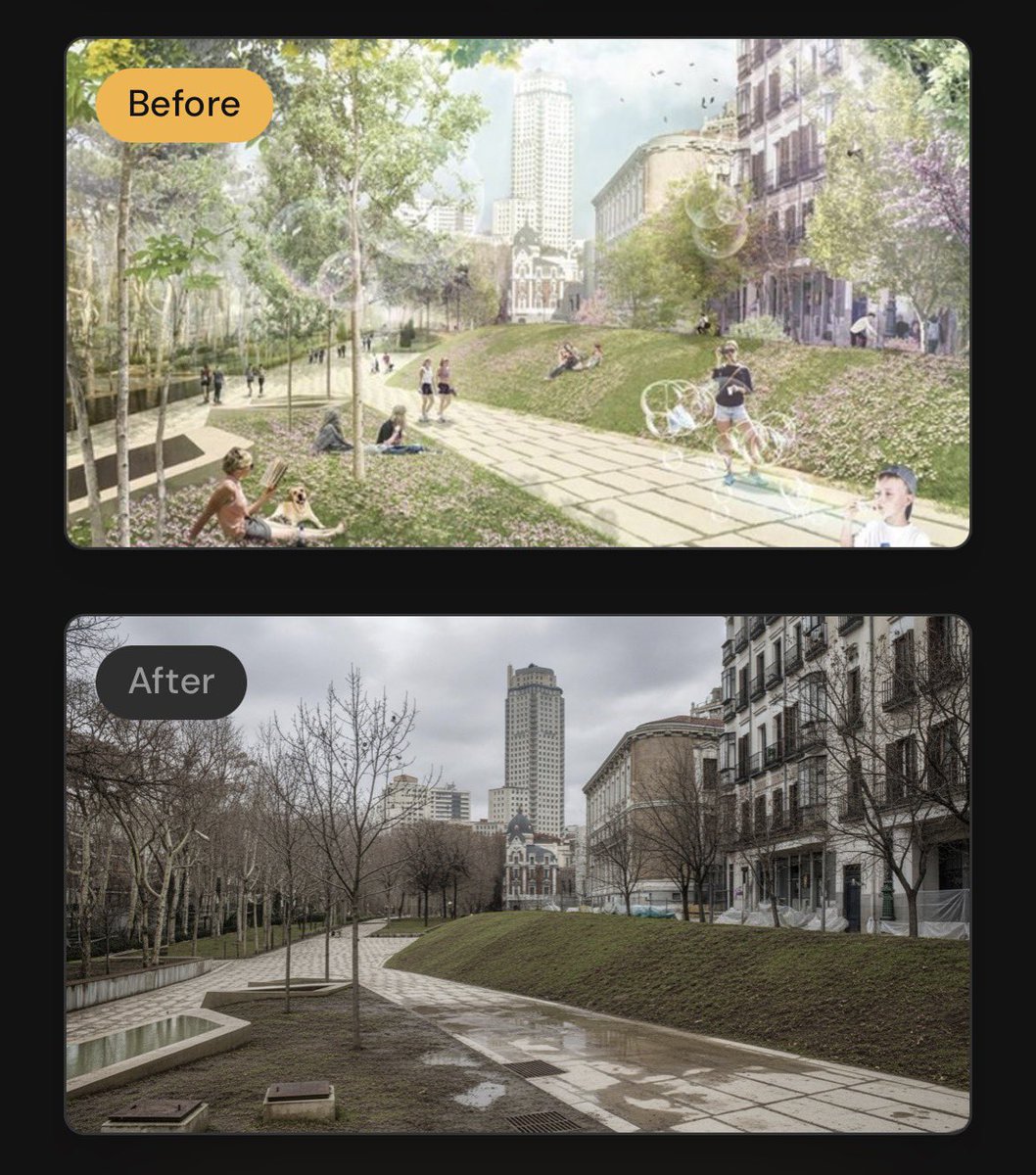
At last an AI tool I can get behind
“Upload an architectural render. Get back what it'll actually look like on a random Tuesday in November.”
https://t.co/23Ay7MD4ka
🚨 BREAKING: Google Research just dropped the textbook killer.
Its called "Learn Your Way" and it uses LearnLM to transform any PDF into 5 personalized learning formats. Students using it scored 78% vs 67% on retention tests.
The education revolution is here.
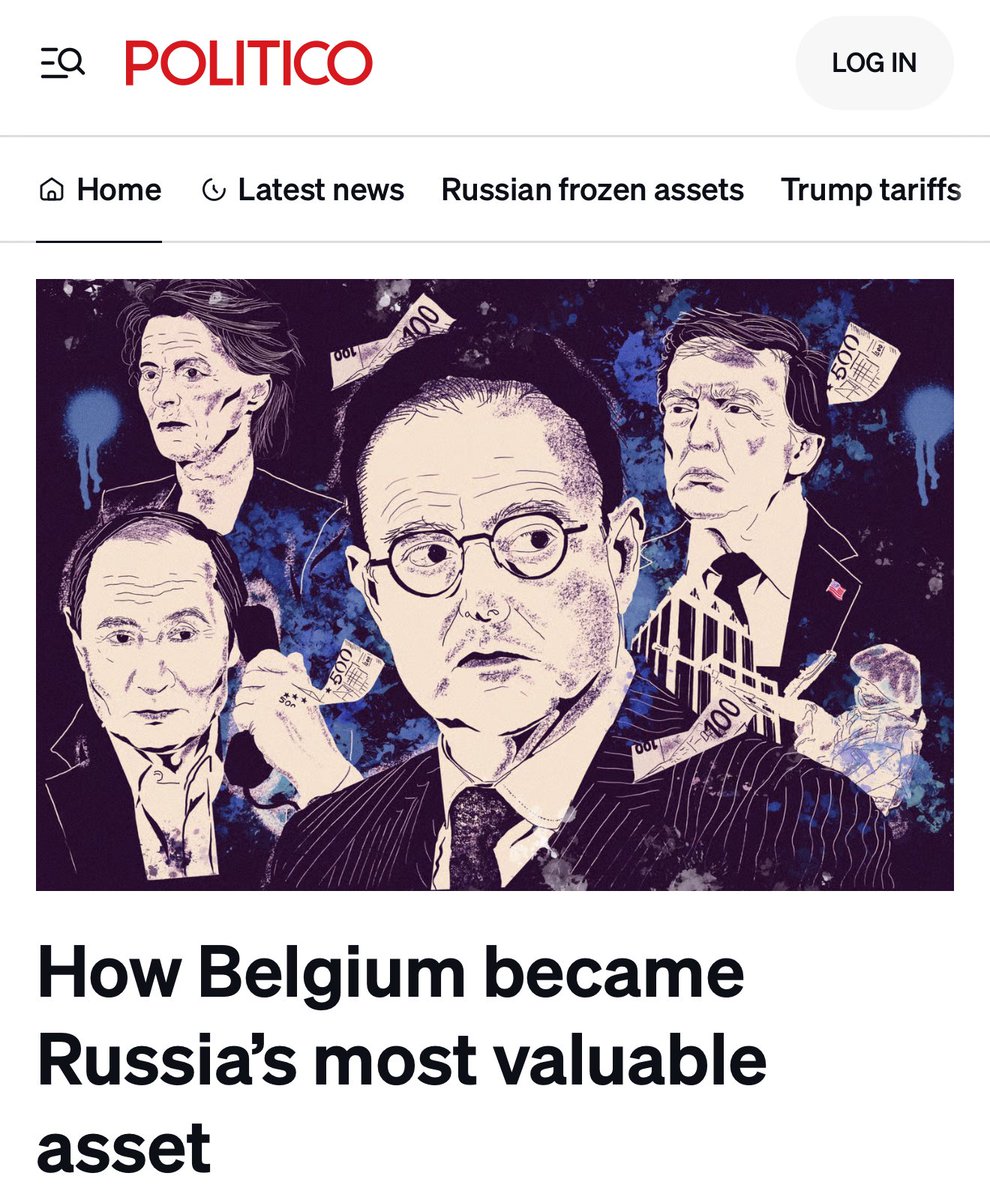
The great farce of late-imperial Europe is that every time Brussels stumbles into another historic blunder of its own making, it immediately searches for a foreign hand to blame. And so the EU’s court chronicler, Politico, delivers its latest fever dream: that Belgium, the most indecisive, over-medicated country in the bloc, has somehow transformed into “Russia’s most valuable asset.” In reality, the only asset Russia needed was the EU’s own arrogance.
Belgium merely did the unthinkable, it told the truth.
What Politico dresses up as geopolitical intrigue is actually a confession of EU derangement. The EU are trying to engineer the largest state-sanctioned theft of sovereign wealth in modern history, a direct raid on the Russian Central Bank’s reserves and expected applause, unity, and moral ecstasy. Instead, Belgium asked the only sane question left in Europe: “Are you all completely out of your minds?” For this, Politico paints De Wever as eccentric, impulsive, unstable, the same labels always deployed when someone refuses to bow to the imperial autopilot. But the deeper scandal is that Brussels expected him to sign off on detonating the post-war financial order for the sake of one more photo-op with Zelensky.
Politico can hide behind metaphors of summit dinners and langoustines, but the legal reality is brutal: raiding another nation’s central bank is not a policy disagreement. It is a declaration of financial war on the entire world. It would obliterate sovereign immunity, destroy the neutrality of reserve holdings, and instantly signal to the global South that their assets in EU banks are hostage to EU’s emotional spasms. One act, one reckless stroke of a pen, and the euro collapses as a safe currency, capital flees to Asia, and the West loses its last functional pillar of power. Belgium saw the cliff’s edge, Brussels mistook it for a (perverse) moral leap of faith.
Politico’s narrative stumbles further when it pretends the only danger lies in Moscow’s retaliation. It does not. Russia’s symmetric countermeasures are well-known, lawful, and devastating: nationalization of Western corporate assets, seizure of industrial infrastructure, liquidation of bond holdings, and the dismantling of Western financial footprints inside Russia. The value of Western assets exposed inside the Russian Federation rivals what sits in Euroclear. Brussels knows this. Euroclear knows this. Investors know this. Only the EU pretends the ledger is irrelevant. But the real threat is not Russia’s response , it is the irreversible collapse of trust in Western custodianship. Once the EU steals central bank reserves, no nation with self-respect will ever again store wealth in Europe. The theft of Russian reserves would be remembered not as an isolated act, but as the day the West proved it cannot be trusted with global money, let alone soverign assets.
This is the part Politico is terrified to articulate. Belgium wasn’t protecting Russia. Belgium is trying to protect the very system the EU purports to defend. Yet instead of portraying De Wever as the only adult in the room, Politico stages a melodrama about a Flemish nationalist gone rogue, supposedly spoiling the EU’s grandiose plan to hurl another €140 billion onto the Ukrainian funeral pyre. The reality is simpler, Belgium refused to mortgage its own future so Europe could continue its cosplay as a geopolitical superpower utterly detached from material reality. The EU elite wanted to play empire with someone else’s risk. Belgium refused to be the guarantor of their delusion.
1/2 — part 2 👇
Super, super, tof, tof.
En de Russen kunnen gewoon tot in Knokke rijden als ze willen.
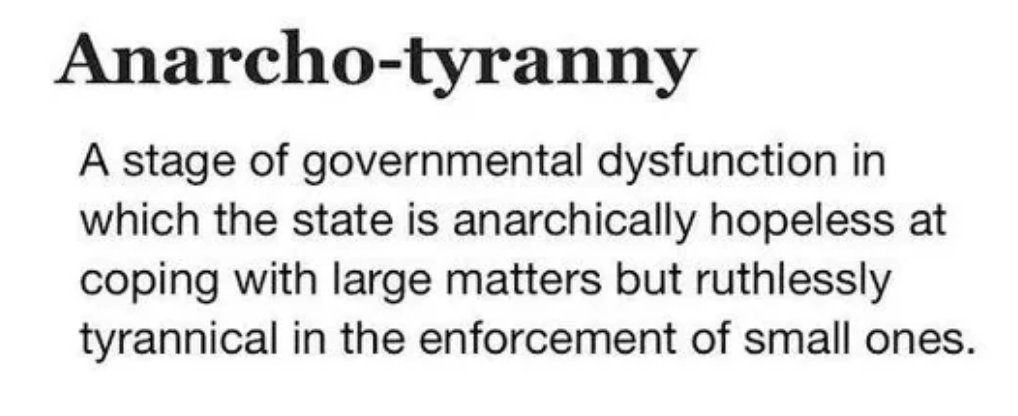
Dit is wat decennia welvaartsstaat tot stand hebben gebracht: een totale, zelfgekozen infantilisering en fragilisering, met de staat als mishandelend vadertje en moedertje tegelijk.
De laatste mens van Nietzsche, dat zijn de autochtone West-Europeanen van vandaag. En dat zullen ook letterlijk de laatste mensen van hun lijn zijn, want relatievorming en kinderen, dat is er ook niet meer bij. Te moeilijk, te lastig.
Ik ben het beu. Dit is niet oké. En we moeten dit absoluut niet goedkeuren of aanmoedigen.
"Wie in de wol wordt grootgebracht, ontbreekt het vaak aan levenskracht."
When people are suffering because the cost of living is too high, and you (as a policymaker) intend to spend public money to fix this, there are two main routes:
- subsidize demand, or
- subsidize supply
Subsidizing demand is "give people money to pay for the expensive thing."
Subsidizing supply is "give producers money to build out capacity to make more of the expensive thing."
These routes represent a difference between (to use coarse-grained terms) current Western liberal thinking and Chinese socialist thinking.
Subsidizing demand causes inflation if the expensive thing is expensive due to insufficient supply. The number of people who will have access to this thing will not go up, because the actual amount of supply stays the same. Prices eventually rise to reflect the inflation (speed depends on implementation of the subsidy).
Subsidizing supply increases the amount of the expensive thing being produced, reducing its price and increasing availability. More people are likely to have access to it because now there's more of it and it costs less to buy.
There are probably broader considerations involved that professional economists take into account but these dynamics seem relevant for our current economic situation.
A few weird things seem to be involved in this situation in our present cultural moment:
1) Western liberal elites don't like subsidizing supply because subsidies for producers often feels like giving money to owners, or capitalists, or rich people. Why would you give money to the capitalist owner of the factory instead of to the common man?
2) American elite thinking tends to focus on "virtualized" things (like prices) while Chinese elites think more about "real atoms" (actual goods). Hence, viewing the prices of things as being too high leads to favoring virtualized solutions like helping with the price (give more virtualized money to bring down the virtualized price). Thinking about the amount of physical goods leads to thinking about how to make more of the physical good (build more factories).
3) There is this idea that you don't want to "crash prices" through "overproduction." In the West, classical micro-economic incentives lead producers to make a profit-maximizing amount and that it's bad to disturb that; only occasionally disruptive exogenous events result in large changes to supply and deflationary drops in pricing.
There isn't much thought given to the idea that "price collapse" also lowers the cost of the good as an input into other things, as well as (in the case of widely-consumed goods) effectively lowering a tax burden on the population. China seems to think this way, and so subsidizes massive "overcapacity" which results in both everything that uses that good as an input becoming more economically viable, and people who consume it having more money for other things.
The above idea is not obvious so I will give three examples:
1) The idea of asteroid mining and bringing back billions of tons of some valuable metal (nickel or gold or platinum), worth "trillions of dollars." Someone always points out that it'll "crash the price" (it will); this statement shows an inability to separate the virtualized idea of a price from how it represents the cost [to produce/acquire] - in fact it would be bringing trillions of dollars of value to the entire economy, as now there's a lot more of the metal to use, and everyone who uses it to produce something useful has lower cost of production and more downstream products (value) can be made.
2) In my own industry (global reforestation) I hear a similar objection to the idea of enabling much larger scales of sustainable timber: wouldn't it collapse the price of timber? Yes, and that's a good thing: now there's more timber for everyone to use and it's cheaper so more products become economical to make.
3) Finally, the "peace dividend" over the past 30 years where the proliferation of mobile phones made cameras, gyroscopes, and batteries far smaller and cheaper due to forcing producers to scale up production: this is what enabled the drone industry to develop as an economically viable product.
The difference is that the West (to the extent that it remains laissez-faire) only allows these exogenous shocks or market trends to periodically drive down prices by expanding supply - the cause is unpredictable, whether it's discovery of a new source, business model, production methods, etc.
Even the phrase "price collapse" sounds horribly negative and conversation-ending. But if you want to "lower taxes" on your citizenry you can either
a) lower taxes revenues, or
b) find a way to make something that everyone buys cost a lot less
Examples of things that would essentially be a massive tax break for the citizenry if they went through a "price collapse":
- housing
- health care
- education
- fuel
- ... you get the idea
Current Chinese socialism is focused on increasing material wealth for its citizens, and so uses industrial policy to greatly increase production capacity - not just through subsidies, but also via competition: producers are given money to build more factories, but also forced to compete so that they innovate on efficiency and cost. If you give every producer money but tell them only a couple will win, you get a lot more stuff made and it gets better-cheaper-faster.... sooner.
They are essentially accelerating the long-term deflationary effects of capitalism through socialist planning.
But this is not a post about socialism!
That's just the name for it, because the big idea that everyone has missed is that "Chinese socialism" is nothing like what it took from the West - the common moniker is "socialism with Chinese characteristics - but I prefer to think that the degree of distortion from having to translate between such alien cultures and language resulted in so much leeway for re-interpretation that what China ended up with was nothing like what Western socialists had in mind, it's like a Panda Express version of socialism: unrecognizable to people familiar with the authentic original, but optimized for its local conditions.
After all, western conservatives - although apt to implement subsidies for producers ("giveaways to the rich") - still stop short at telling the producers to produce more than the profit-maximizing amount - they assume that the profit-maximizing amount is the "right amount" to be produced for the market. There is not as much thought given to "what are the downstream effects if 10x as much is produced and the price trends towards zero?" Bringing up "it would collapse the price for X" is enough to end most discussions.
(Of course, you do see some modern tech barons thinking this way, and it's part of the galaxy-brain/megolomanical thinking where one company might intend to dominate or reshape an entire ecosystem, but we are mostly talking about non-technocratic Western policymakers right now)
So instead the West contents itself with incremental reduction of prices (cost) through piecemeal innovation and competition, rather than targeted identification of areas where driving down a cost deliberately as close to zero as possible might have some kind of macro effect on society, and then implementation of industrial policy intended to achieve this effect.
This is not socialism, because if it were really socialism (as the West understands it), at least some branch of the extreme Left in the US or EU would be advocating for it. And the Right won't brook quite that much market intervention: it prefers to just deregulate to accelerate the incremental price reductions - you know, regular ol' capitalism.
Here is the point: the argument about whether China is socialist (communist) or capitalist is wrong. It is not either of those things - they are both Western ideas. It is a secret third thing.
Now I am not sure exactly what it is - because I am steeped in American culture while having cultural access via my Chinese ethnicity - I can only tell you that it's not one of those things.
It has something to do with a practical materialism, where "materialism" is not the word with the connotations of "shallow and liking money" (though Chinese people do love money), but rather a concern with real atoms, real things, the real physical world.
It is not as though China has no art or culture or life of the mind, but that there is a profound recognition (perhaps even an overcorrection from being humiliated by "culturally inferior" barbarians) that if you haven't mastered the physical world, nothing else matters. And so it's not about the price, and thus virtualized measures like "GDP" - it's about how much real physical stuff you're making.
For the tech people, it's a bit like counting productivity by Lines of Code (LOC). Writing more code means more productivity, right? Whereupon great programmers turn out to improve functionality by deleting Lines of Code, and so have "negative productivity."
The same glitch exists in GDP, because with Mississippi having a GDP per Capita of $53k and Chongqing having a GDP per Capita of $14k...
Well, you can increase GDP by making incrementally more stuff
And you can increase GDP by giving out subsidies so everyone pays more for the same stuff
But if you figure out a way to make the same stuff for way way cheaper super fast, you'll crater nominal GDP even while real economic welfare rises.
Statistical agencies typically try to correct for quality/price changes like this and can account for it incrementally, but if you simply don't care about GDP as a measurement at all and are using some secret third thing to guide your policymaking towards the idea of "make as much stuff for as many people as possible" I guess you might even end up driving GDP towards zero along with your prices while your people mysteriously get rich.
Anyhow, you might think this is a critique of American policy or something but really it's just a message for the new socialist government of New York City: if you want to drive down cost of living for New Yorkers, don't spend precious public dollars subsidizing goods. Figure out a way to spend it on increasing production capacity so that you can "collapse prices" because then everyone can afford it and have more.
Remember: secret third thing.
Quote van het jaar.
"We hebben niet een tekort aan vakmensen maar een overschot aan mensen die niets gestudeerd hebben, maar wel op universitair niveau"
Ja, humane wetenschappers het gaat over jullie.
#TeamJona
Thomas Sowell - Families under Siege:
”Why all these attempts, from so many quarters, to undermine the family, exaggerate its faults, and minimize statistically its very existence?
Many of the vital functions which families provide are functions which many wish to see provided by the state. Many of the traditional values which families pass on to the next generation are values rejected by clever sophisticates, who think that their superior wisdom should be replacing that of ordinary people.
Above all, families are the biggest single obstacle to the visions of the anointed, who take upon themselves the task of reconstructing society. Families care for their own, not for some abstract principle of imposed "equality."
The opposition of the political left to the family goes far back in history. The first draft of The Communist Manifesto made the destruction of the family an explicit part of its agenda. However, Marx was savvy enough to remove this excess candor by Engels.
Families are one of those independent centers of power which are intolerable to those who want to impose their ideologial Utopias from the top down. It is logically a prime target for unremitting erosion and undermining by those who dare not attack it openly.”
From his book - Is Reality Optional? (1993)
In onderstaand fragment uit Nieuws van de Dag horen we Aziz Akhath- jongerenwerker en buddycoach- reageren op de gruwelijke chaos in Beverwijk en Schalkwijk, waar tribale jeugdbendes de straat domineren.
Aziz is oprecht, dat wil ik écht benadrukken. Hij wil jongeren bereiken, gesprekken voeren, hen individueel leren kennen en op het rechte pad brengen. Maar wat hij zegt, is het refrein dat ik al decennia hoor: de fluwelen handschoenen van het welzijnswerk, die een onwenselijke realiteit in stand houden.
Inmiddels hebben wij te maken met een derde en vierde generatie Marokkaanse jongeren, structureel oververtegenwoordigd in de misdaadcijfers. Daar zijn genoeg onderzoeken over. Toch schuift er telkens weer iemand aan die opnieuw begint over ‘de dialoog’ en ‘persoonlijke begeleiding’, terwijl de feiten al lang en breed duidelijk zijn. Dit is geen kwestie van nuance of vertrouwen! Dit is een kwestie van discipline, consequenties en gezag. Tough love!
In de scholen waar ik werkte, zag ik steeds dezelfde patronen. Schoolcoaches zaten in de gangen, de mond vol van kansengelijkheid en ‘bandjes aangaan’, terwijl iedere orde en veiligheid ontbraken en leraren massaal wegrenden. Individueel lijken de notoire raddraaiers misschien klein en kwetsbaar, maar in groepsverband heerst de straatcode. En die straatcode tart iedere vorm van individuele verantwoordelijkheid.
Wat nodig is, zijn heldere regels en harde consequenties die aansluiten bij het referentiekader. In Marokko weet men wat er gebeurt als men de grenzen overschrijdt: strikte handhaving, zware straffen, geen ruimte voor pedagogisch geneuzel. Hier pruttelt men al vijftig jaar, met als resultaat dat iedere generatie nóg verder ontspoort.
Aziz belichaamt onbedoeld het falen van een systeem dat zichzelf allang bewezen heeft als ineffectief. The Ship of Reciprocity has sailed. We zijn voorbij het stadium van deugdrog en wederkerigheid. Het gaat nu om het herstellen van orde en het opleggen van sancties die beklijven. Wie écht inclusief wil zijn, hanteert een taal die deze jongeren daadwerkelijk begrijpen. Alles daarbuiten is wensdenken, dat de problemen alleen maar verergert.
Toch eigenlijk ongelooflijk hoe weinig interessants onze academici te melden hebben over de problemen en fenomenen van vandaag.
In de economische wetenschappen zijn cryptomunten en defi een verboden studieobject. In de rechten mag er niet nagedacht worden over een geupdatet mensenrechtenverdrag. Sociologie en criminologie blijven doofstom voor de realiteit in de straten van onze grootsteden. Enzovoort enzovoort.
Het geestesleven, als je het zo mag noemen, is daar totaal gefossiliseerd. Af en toe komt een vlotte boy of girl wat gladde uitleg geven in de media (steeds dezelfde groenlinksliberale talking points) en dat is het dan.