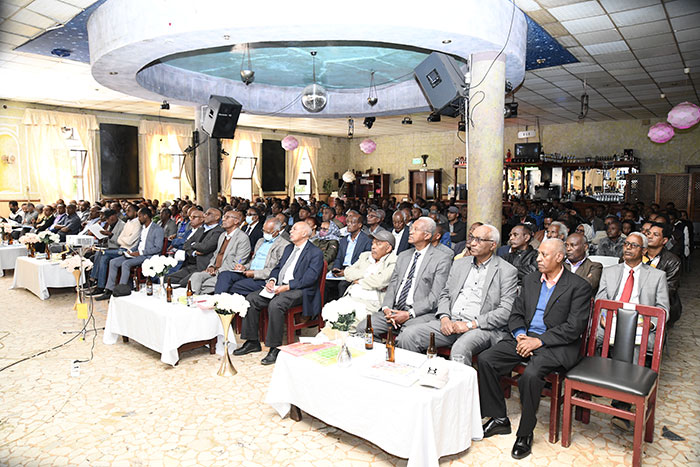
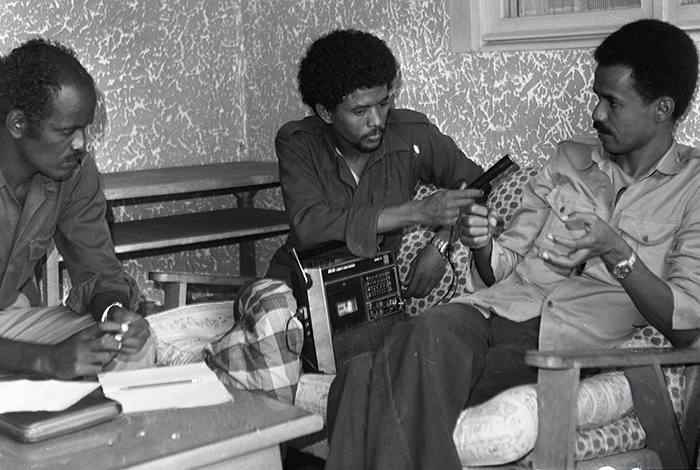
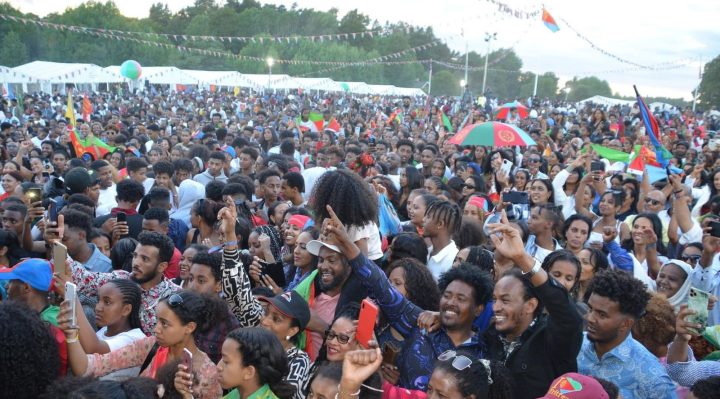
So excited and looking forward to a book by the renowned historian and author Alemseghed Tesfai, published by @HurstPublishers entitled " An African People’s Quest for #Freedom and #Justice
A Political History of #Eritrea 1941–1962" you can preorder here https://t.co/VFiJRarYwf
Some penny collectors "white saviors" went to Eritrea and brought some breaking news (for them) of no electricity, no Internet, no ATM, no G3 etc but never dared to mention why the shortage? Because they created the shortages and came to blame the government. Let me tell you why the shortages-
- Eritrea was under no war no peace for at least 18 years (the proxy war of EU & US by TPLF)
- unjusted & Illegal sanctions from 2009-2018
- unilateral & illegal sanctions by US and some EU countries forced by US
-Blocked from using SWIFT
- still blocked to buy any heavy machinery from western countries
- systematically denied Airlines to fly to Eritrea
-Eritrea under "regime change" agenda of US for the last 20+ years for not bowing down to imperialism and more
-completely blocked from taking loans from IMF & world bank and more.
The end of Italian colonialism was followed by the plunder and destruction of the 10 yr British Administration.
The 30 year armed struggle further devastated Eritrea’s economic infrastructure
But Eritrea has something that our well lit friends have not been able to get:
-Unity in our diversity
-Unparalleled social capital
-Internal peace, stability and security
-Strong clean government
-Resilience of our people- coping capacity
So on balance, we are faring much better than those digitally connected, ATMs, electricities etc. not saying these are not important…
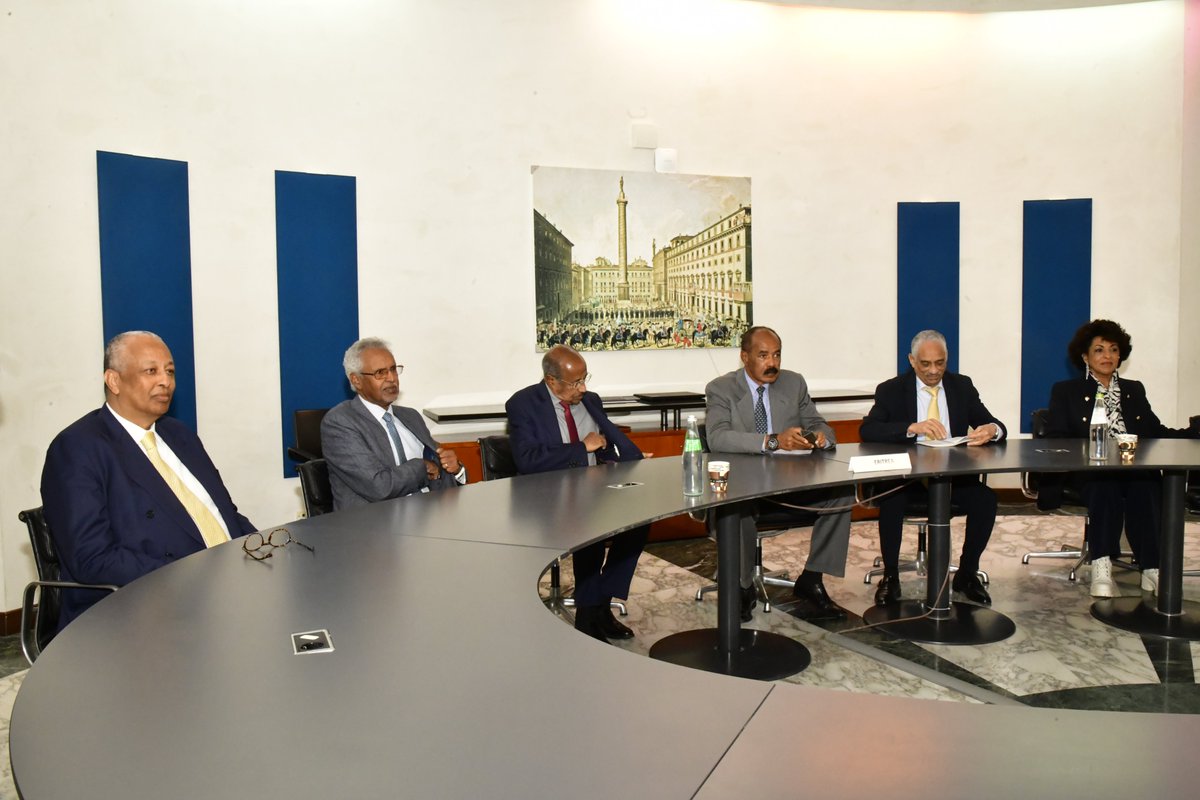
Pre. Isaias & his delegation held series of meetings with Minister of Enterprises; Minister of Youth & Sports; & Deputy Minister of Foreign Affairs in past two days. Discussions centered on cooperation & investment on Eritrea's sectors of comparative advantage & infrastructure
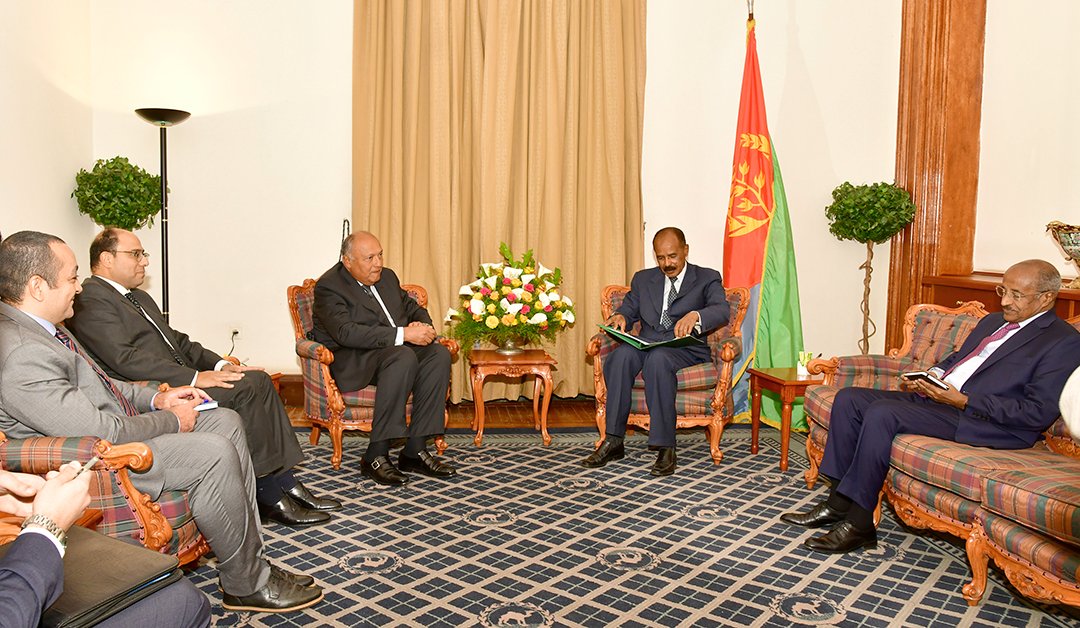
President Isaias Afwerki Receives Message from President Abdel Fattah el-Sisi #Eritrea
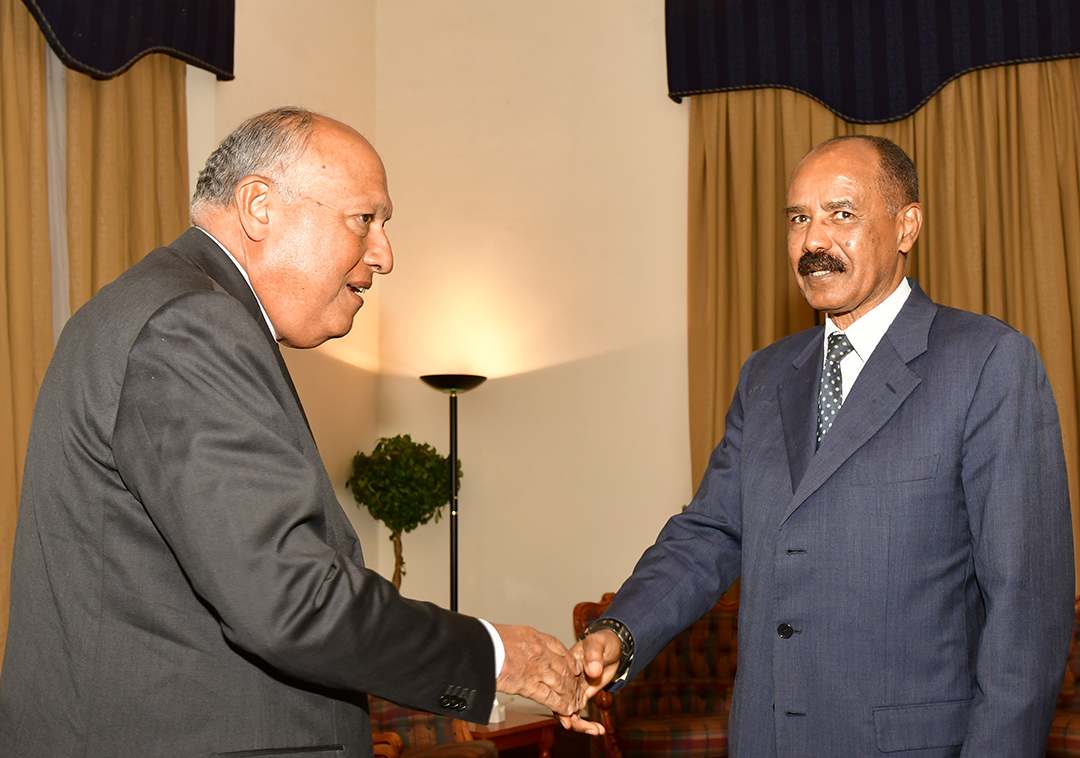
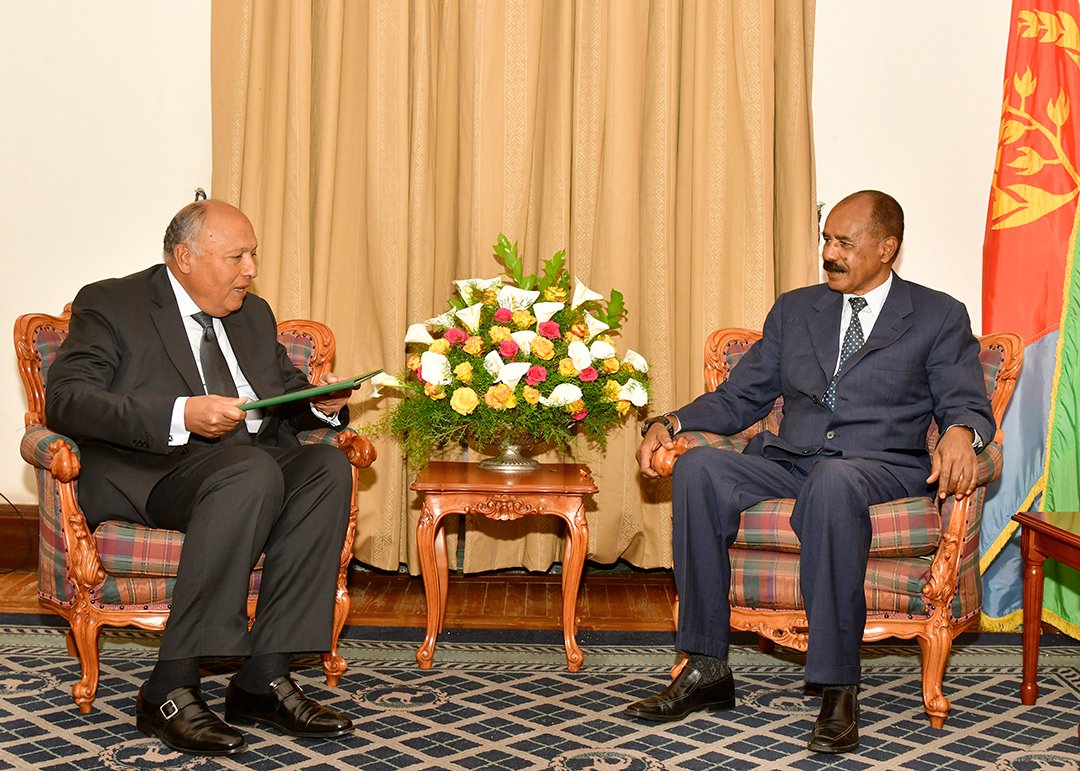
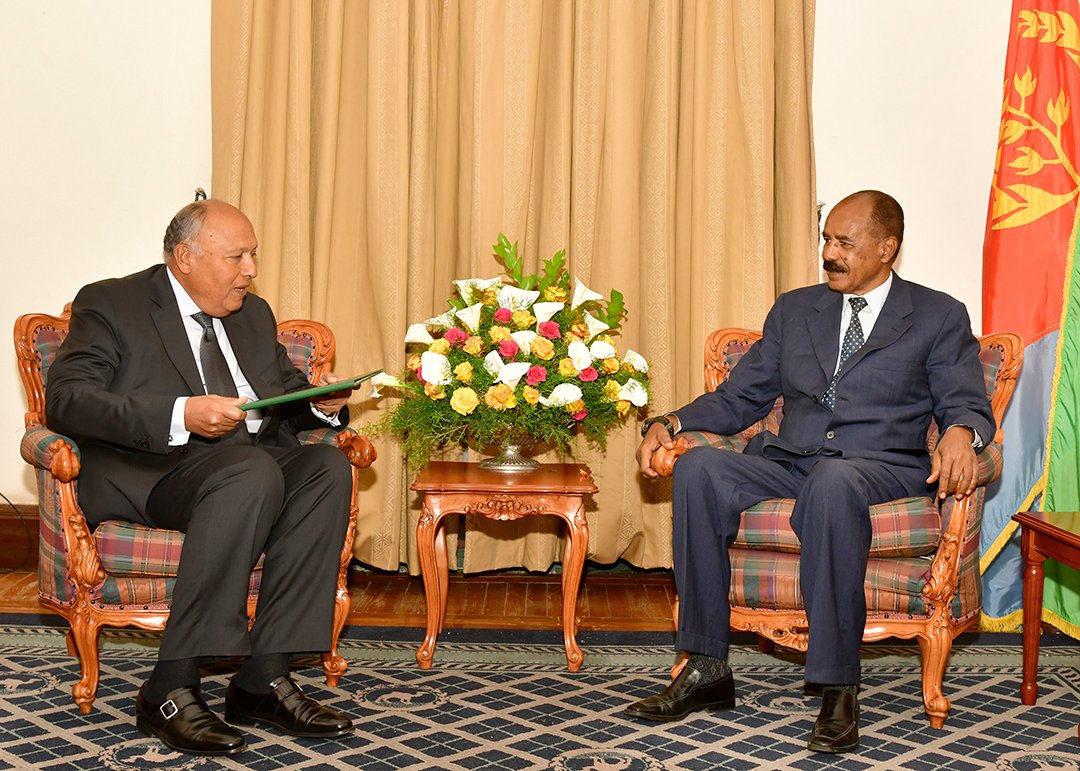
President Isaias Afwerki received a message from President Abdel Fattah el-Sisi of the Republic of Egypt.
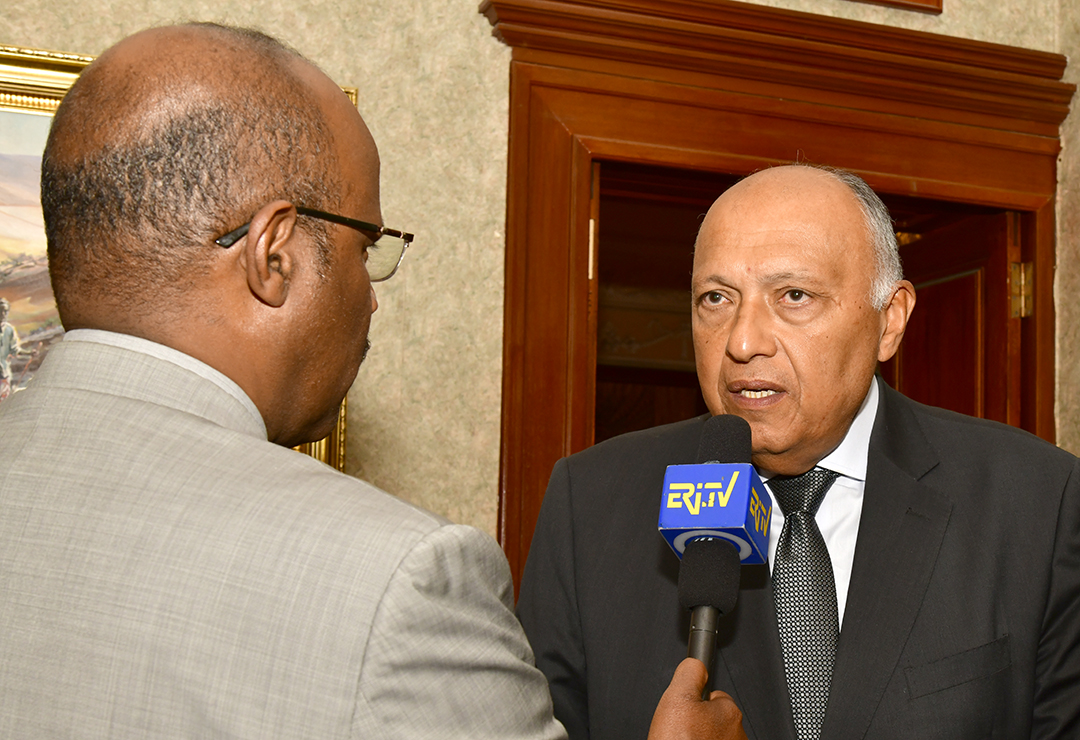
The message, focusing on strengthening bilateral ties and regional developments of mutual interest, was delivered by Mr. Sameh H. Shoukry, the Egyptian Minister of Foreign Affairs.
During a meeting at Denden Guest House in Asmara, held this evening, President Isaias and Mr. Sameh H. Shoukry engaged in discussions about the importance of consultation and coordination between Eritrea and Egypt on current regional and global challenges. The meeting also underscored the ongoing collaboration between the two countries.
Mr. Osman Saleh, Minister of Foreign Affairs, was also present at the meeting.
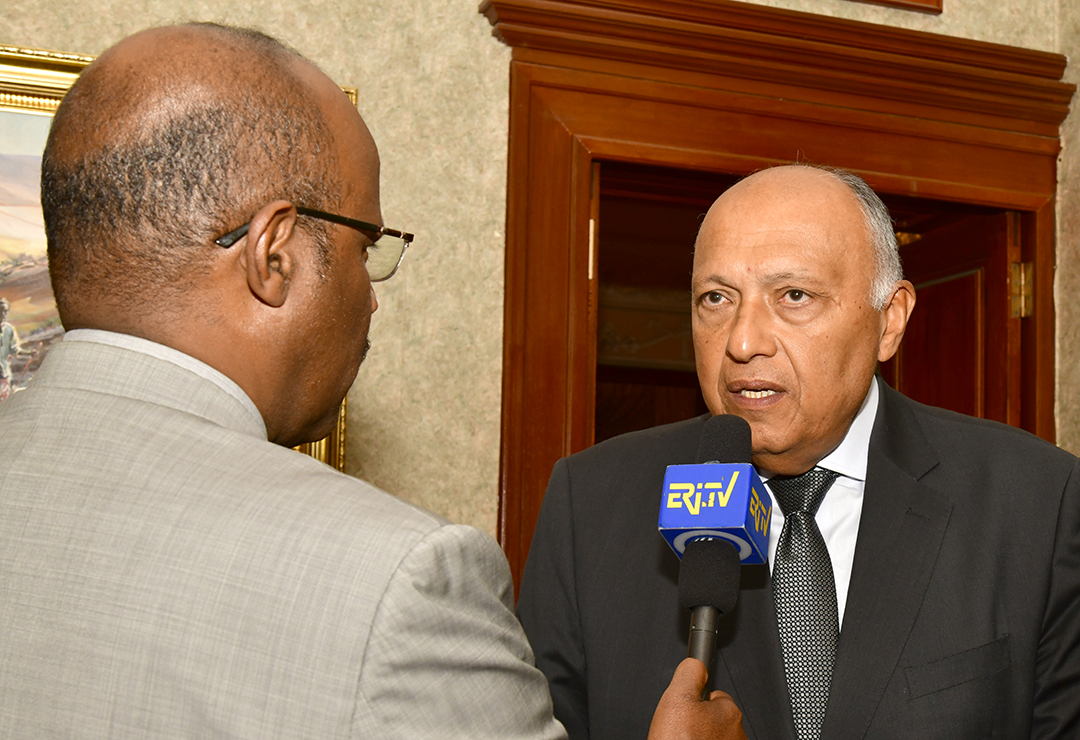
In a statement to Erina, Mr. Sameh H. Shoukry mentioned that his visit to Eritrea involved conveying a message of peace and goodwill from the Egyptian leadership and people to the leadership and people of Eritrea. He emphasized that his meeting with President Isaias was a continuation of regular consultations between the two countries, aiming to review the progress of implementation of previously reached bilateral agreements.
President Abdel Fattah el-Sisi extended an invitation to President Isaias Afwerki to visit Egypt.
Minister Osman Saleh and Minister Sameh H. Shoukry have held a similar meeting.
Mr. Shoukry arrived in Asmara in the afternoon hour of today.
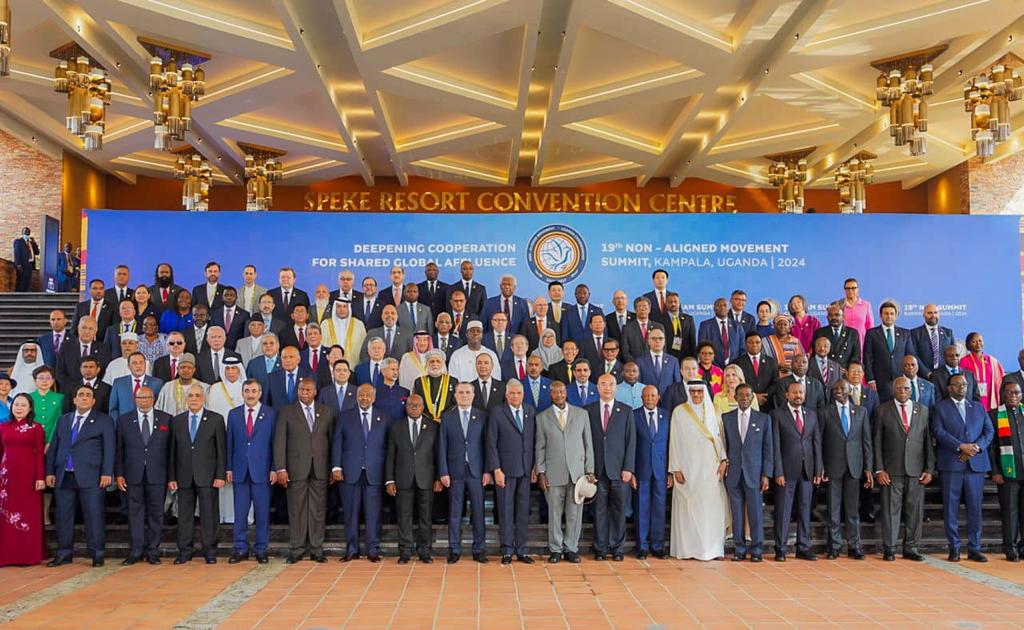
Eritrea Participates in the 19th Non-Aligned Movement Summit
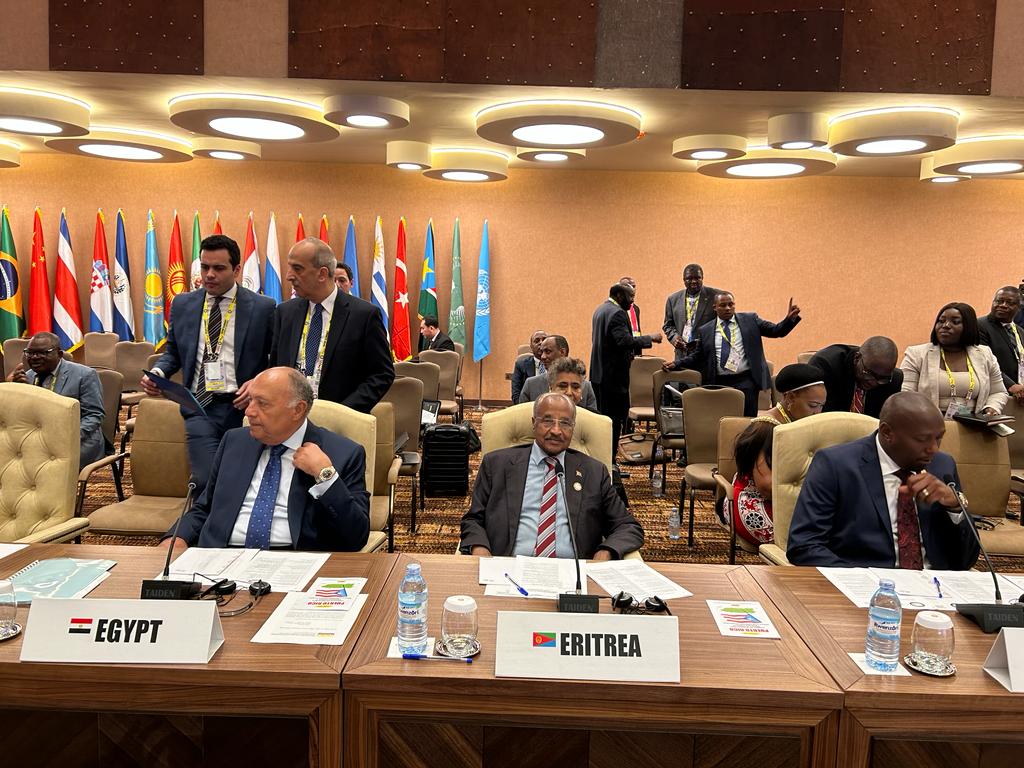
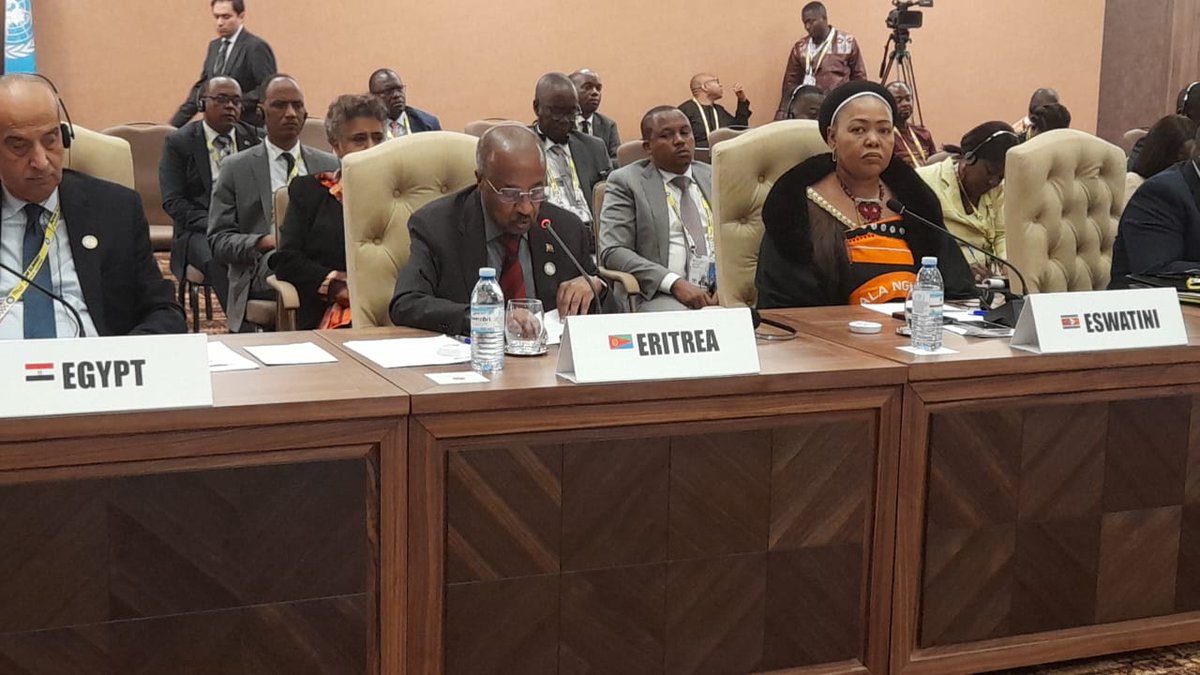
#Eritrea is participating in the 19th Non-Aligned Movement Summit, currently taking place in Kampala, Uganda. This event is followed by the 3rd Summit of the G-77 and China. The 19th Non-Aligned Movement Summit is being conducted under the theme "Deepening Cooperation for Shared Global Affluence," while the Summit of the G-77 and China is focused on the theme "Leaving No One Behind."
The Summit was preceded by a two-day meeting of high officials, where intensive discussions were held and outcome documents were finalized for adoption at the Heads of States Summit.
The Eritrean delegation, led by Mr. Osman Saleh, Minister of Foreign Affairs, and including Ms. Sophia Tesfamariam, Eritrea’s Permanent Representative to the UN, is participating in both Summits.
On the margins of the Summit, Eritrea's delegation participated in the 5th Ministerial Meeting of the Group of Friends in Defense of the UN Charter.
Efforts Intensify to Boost Date Farming in Eritrea
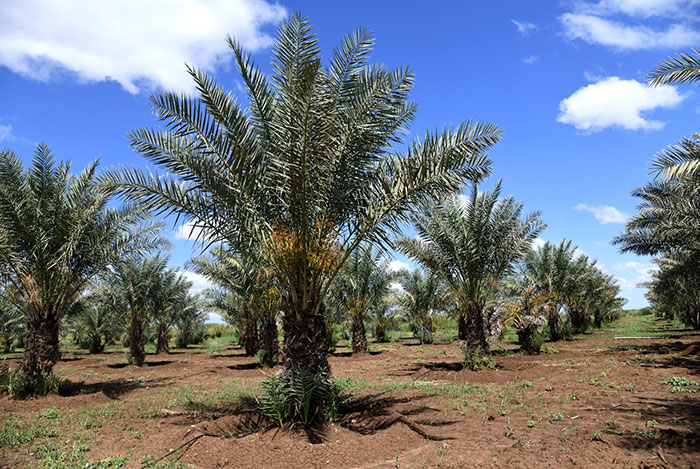
The Ministry of Agriculture has announced intensified efforts to expand date farming in #Eritrea. Originating in the late 1990s with a few dedicated farmers in the Sheib sub-zone, date farming initially saw limited advancement.
However, a significant shift occurred in 2017 when the Ministry launched a major initiative to promote this agricultural sector in the Northern and Southern Red Sea regions. This initiative included providing specialized training to farmers and introducing high-quality date seedlings.
Mr. Musie Fekadu, Head of Bio-Technology at the National Agricultural Research Institute and coordinator of the date farming project, reported substantial progress. Approximately 23,000 date trees have been successfully planted and are currently thriving. Mr. Musie highlighted that each tree yields between 75 to 200 kilograms of dates.
Furthermore, Mr. Musie mentioned that at the 7th International Date Summit held in Dubai, United Arab Emirates, in 2022, Eritrea proudly became the 41st member of the Date Producing and Processing Countries, marking a significant milestone in its agricultural journey.
Looking ahead, Mr. Musie revealed ambitious plans to increase the number of date trees in the targeted regions to 300,000 by 2030. This expansion aims to bolster Eritrea's position in the global date market and contribute significantly to the nation's agricultural output.
#Eritrea: FM Osman Saleh Statement at 19th NAM Summit
Statement by H.E. Osman Saleh
Foreign Minister of the State of Eritrea
At the 19th Summit of Heads of State and Government of the Non-Aligned Movement (NAM)
19-20 January, 2024
Kampala, Uganda
Your Excellency, Mr.Yoweri Museveni,
President of the Republic of Uganda,
Distinguished Heads of State and Government,
Excellencies,
Allow me first to congratulate the Republic of Uganda for assuming the NAM Chairmanship and express my profound gratitude for the warm reception accorded to my delegation. While wishing success for the coming three years, I assure you of Eritrea’s full support.
I would also like to thank the Republic of Azerbaijan for the able stewardship of the works of the Group and for putting in the necessary efforts to facilitate this crucial Summit.
Let me also welcome and congratulate the Republic of South Sudan for joining our Movement.
Mr. President,
As we assemble today at the 19th Summit of our Movement under a well-timed theme “Deepening Cooperation for Shared Global Affluence”, humanity is going through perilous global peace and security as well as dwindling socio-economic and environmental crises requiring us for genuine cooperation and renewed commitment.
Inter and intra-state wars, geopolitical rivalries, socio-economic inequalities, and the adverse impact of climate changes and pandemics are posing unprecedented ramifications on the lives of millions, who are already deprived and marginalized in the Global South.
Mr. President,
The underlying causes of these interlocking and intertwined crises are attributed to multiple factors. However, the systemic failures of the existing global governance architecture remain at the core. Guided by the ill-premised “rules-based international order”, the global governance architecture has been and continues to foment conflicts, deprive societies and monopolize resources, and abrogate the principles of international law and the UN Charter.
The negative ramifications of this dysfunctional global governance architecture are not confined to the sovereign nations and peoples of the Global South. Extreme and ludicrous inequalities where less than 1% of the population own 99% of the national wealth; unbridled consumerism which has bred and continues to aggravate climate change; atomization of societies that have literally decimated social compassion and community-care by fostering exclusive and unnatural individualism; are dangerous trends that will ultimately undermine the social fabric and stability in individual countries and our global village at large.
Mr. President,
The existing global economic and financial institutions – the embodiment of the unfair and non-inclusive international order - are essentially designed to sustain the very few and narrow ideals of the ‘neo-liberal economic’ outlook through exploitation and monopoly of the global economy and affluence while aggravating poverty across nations.
The magnitude of exploitation of the resources in developing countries through the ‘neo-colonial’ arrangements is evident to merit explanation. The experience of Africa, a Continent endowed with 60% of the World’s natural resources, is an object lesson. Ironically, this rich Continent remains the source of raw materials needed for the economies and technological products of the covetous few ‘developed countries’ at a minimal price. In turn, the Continent purchases back value-added products at an exponentially high price, and this keeps most African nations under acute trade deficit and hence poverty.
Mr. President,
My country, Eritrea, is not spared of the continued viciousness and injustices of the dysfunctional international order and hegemonic ‘unipolarity.’ At the time when most African countries were gaining their “independence,” the People of Eritrea were doomed to be annexed under the yoke of the Ethiopian Imperial regime for the sole purpose of the US misguided foreign policy of favouritism to its anchor states.
Even decades after its hard-won liberation and independence, Eritrea has been and continues to be vilified by those erroneous and nefarious policies. For almost a decade, the country and its people were subjected to unwarranted UN Security Council sanctions, based on fabricated allegations. Yet, the country is further sustaining the illegal unilateral sanctions imposed by the US and EU. Regrettably, several NAM Member States are victims of such outrageous Western foreign policy tools. These illicit and arbitrary measures must be categorically rejected by our Movement and immediately annulled as they are in contravention of the UN Charter, principles of international law, and multilateralism.
Mr. President,
The idea of “shared global affluence” could only be convincing and practical once the ramifications of the above-highlighted ill-premises of the existing global governance architecture are rectified.
Realizing such a noble vision entails forging meaningful and symmetric ties of cooperation and partnership to boost our collective commitments and resources based on mutual respect for national independence and sovereignty. To that end, our Movement will require higher standards and a revitalized perspective to redress the injustices created by the dysfunctional global governance and accomplish the objectives laid before us, and thus reawaken our collective responsibility to achieve a shared global affluence.
To conclude, Eritrea calls upon all NAM member states to mobilize their untapped resources and demonstrate the requisite resolve to forge a global order predicated on the equal and full participation of all member States as opposed to unilateralism and the ‘rules-based order.’ NAM member States need to reassert their peculiar and historical responsibility to uphold the sacrosanct principles of equality, respect of sovereignty, territorial integrity, and political independence of all nations and peoples as enshrined in the UN Charter and the Bandung Principles.
I Thank You!
Development in Eritrea: past the Misguided Assumptions (part I)
Dr. Fikrejesus Amahazion
Editor’s note: this article is the first in a two-part series detailing Eritrea’s development progress, contextual challenges, and guiding principles.
In thinking about how African countries are covered within mainstream media, one quickly comes to realize that they largely aren’t. However, in terms of the small body of coverage that exists, African countries are portrayed and analyzed in a manner that leaves much to be desired.
Africa, a huge continent home to 54 countries, over a billion people, numerous ethnolinguistic groups, over 2000 languages, and enormous complexity is more often than not over-generalized and reduced to what Reinhold Niebuhr once called “emotionally potent oversimplifications.” Invariably, it is painted with a crude brush and broad strokes, while being spoken about as if it was a homogenous, uniform entity.
What is more, coverage of Africa remains fixated on an extremely narrow circle of topics: rampant corruption, debilitating poverty, drought and famine, savage conflicts, hordes of migrants at the gates, and terrorism. There is hardly ever any nuance or context within stories, while positive developments across the continent, of which there are many, tend to be disregarded or not afforded the level and depth of attention they merit.
In disconcerting echoes of the past, the language and tone used present African countries as perennially inconsequential and lacking significant global import. It seems that some remain unable to accept the fact that Africans have agency and they can find creative answers, develop effective solutions, and produce things of considerable merit. Africa is framed as feeble, dependent, and an eternal, hapless victim in need of saving, with the prevailing narrow-minded conventional wisdom suggesting that no problems can be solved, that no challenges or obstacles can be surmounted, that no true progress can be made, unless it is external – Western – actors that are doing the directing and implementing.
Of course, this troubling affliction is not limited to the mainstream media. It is also prevalent within the West’s political structures, the hallowed ivory towers of academia, and other institutions. It is also worth noting that when it comes to African countries, mainstream media and leading institutions seem to only hold up Westerners as experts and authoritative voices, although these individuals frequently cannot speak the languages of or have never actually set foot on the continent. At the same time sad and astonishing, they unwaveringly persist in platforming these individuals as preeminent experts and authorities despite the fact that they “boast” a long track record of only highly flawed assessments, analyses disconnected from reality, and wildly inaccurate predictions. Meanwhile, thoroughly qualified and highly experienced individuals from across Africa are rarely looked to for their views or analyses of their own countries, let alone the West.
Ultimately, the result of this multilevel framework is tired clichés, nauseating stereotypes, facile assumptions, and gross distortions that fail to provide an even vaguely accurate account of the countries of the continent or their objective, on-the-ground realities. Sadly, we are left with a deep lack of clarity, at times shocking levels of ignorance, and a vast lacuna in understanding about Africa, its people, its history, and its ongoing circumstances.
Everything traced above – the grossly distorted narrative, the demonization and dehumanizing, the rigid, paternalistic framing, and the patronizing condescension – has been a defining characteristic of coverage about Eritrea.
Certainly, Eritrea, like all other countries, has challenges. However, along the lines of Chimamanda Adichie’s cautionary articulations about the weighty dangers of a single story, there are also many other dimensions to Eritrea, far beyond the harshly negative, sensationalized depiction that remains front, center, and overwhelmingly dominant. The pursuit of deeper understanding, the search for collective sense-making, the quest for advancing knowledge necessitates moving beyond rigidity and acknowledging that there is good, worth, and dignity everywhere in the world. As rightly put by Bhikhu Parekh, “No culture has a monopoly on wisdom, no culture embodies all the great values, and therefore each culture has a great deal to learn from others, through dialogue.”
Past the misguided assumptions and sensationalized headlines, Eritrea has made important developmental progress in several areas.
For example, in terms of the child mortality rate, regarded by health experts worldwide as an effective proxy indicator for overall child health and well-being, Eritrea has dramatically improved from 146 deaths per 1,000 live births in 1991 to 38 in 2021. Placing that into better context, it has moved from having one of the worst under-five mortality rates anywhere on the planet to now being among the leaders on the continent and within the developing world. Notably, Eritrea’s average annual rate of reduction across the period is around 4.5 percent – one of the fastest in the world.
My longitudinal analysis exploring these tremendous gains in-depth, based on a multimethodological research approach and published in a book released last year, found that there is no single cause that accounts for the country’s success in reducing child mortality. Instead, Eritrea’s substantial progress, which interestingly has gone largely unrecognized within media and scholarship, has been driven by a mix of factors that cut across several sectors. These include, inter alia, high-level political will and commitment, female education, and expansion of access to healthcare and services.
Another driving factor has been routine childhood vaccination, a simple, cost-effective intervention that has helped prevent serious illness, disability, and death caused by a range of dangerous, debilitating diseases. At independence, there were only six vaccines available for children and the nation’s coverage rate stood at less than 10 percent. Across subsequent years, however, the routine vaccination program has steadily grown; today, Eritrea administers 14 vaccines with national coverage rates being nearly universal in the high 90s – which is significantly higher than both the continental and global average.
Notably, during an extended working visit to Eritrea in late 2021, Mohammed Malick Fall, UNICEF’s Regional Director for East and Southern Africa, explained that he was, “struck by the level of immunization [of children in Eritrea],” before going on to note that there, “are many advanced countries that have a hard time reaching [those coverage levels].”
Eritrea has also greatly reduced maternal mortality, which remains a terrible blight on the globe’s collective conscience. According to UNICEF and the UNDP, it once had the highest maternal mortality ratio in the entire world, with more than 1500 maternal deaths per 100,000 births. Yet, today it is among the best on the continent, with less than 200 deaths, and is currently projected to achieve the associated UN SDG target.
Additionally, through a series of high-impact interventions and a comprehensive, multi-sectoral approach, remarkable success has been achieved in halting the spread of HIV. To be exact, the country has sustained a long-term decline in prevalence and incidence, with the former now standing at 0.4 percent and the latter at a miniscule 0.06. Again, these improvements have seen Eritrea climb precipitously from having some of the worst figures on the planet to now being categorized as among the best in Africa and the developing world.
What’s more, in terms of malaria, the deadliest of all mosquito-borne diseases, the country is steadily transitioning from pre-elimination towards elimination status. In fact, its record stands up formidably well against that of the international development and aid industrial complex, which has drawn hundreds of millions of dollars in financing.
Alongside all of this, major inroads have been made against an array of developing world scourges, including, among others, tuberculosis, hepatitis B, and neglected tropical diseases, while life expectancy has soared from less than 50 at independence to above 67 last year – a steep upward trajectory positively distinguished from many others on the continent.
Another area of noteworthy progress has been within education, universally regarded as a fundamental human right, a pivotal catalyst for inclusive socioeconomic growth and broad-based development, and, as declared by Mandela, “the most powerful weapon one can use to change the world.”
Historically, education in Eritrea was in dire straits, being restricted to only an extremely thin, select sliver of the population, while enrolment and literacy were pitifully low. During Italian colonization, the policy toward locals was to “keep the Eritrean’s belly filled while keeping his brain empty”, while in the mid-1970s, amidst Eritrea’s fight for freedom, approximately 95 percent of Eritrean women were illiterate, with males only marginally better off.
However, recent decades have witnessed gargantuan strides made. Within both urban and rural areas, hundreds of new schools, learning centers, and libraries have been built, as older ones have been markedly renovated or upgraded. The number of schools at all levels has multiplied from just over 500 in 1991 to nearly 2,300 last year, with many more currently under planning or in the process of being constructed. As a result, capacity has been expanded, overcrowding greatly reduced, and total enrolments have been raised from less than 250,000 in 1992 to around 700,000 at present.
Parallel to these advances, literacy has also been improved, with adult literacy jumping from less than 50 percent to about 80, while youth literacy has shot up from about 60 percent to 93 percent. According to UNESCO’s Institute for Statistics, Eritrea’s increases in youth literacy are not just positively distinguished worldwide, they are among the largest anywhere in the world over the past 50 years.
In other areas of development, there has been a respectable improvement in building infrastructure, expanding the national road network, reducing poverty, raising agricultural production and productivity, and ensuring food and nutrition security. Likewise, access to electricity, water, sanitation, and hygiene, among other critical services, have been expanded, with notable expansions in rural and hard-to-reach areas.
Well worth mentioning, too, is that Eritrea’s cultural contributions are rich in the fields of music and art, while its achievements in athletics relative to the size of its population and national wealth are outstanding and have yielded consistently impressive performances in regional and global competitions in recent years.
Among the most inspiring areas of advancement have been gender equality and empowerment. Mainly from the days of the protracted, bitter armed struggle and larger social revolution, and especially in the years since the momentous achievement of national independence, Eritrea’s girls and women have proven themselves to be immensely strong and doggedly resilient exceptions to outdated, patriarchal rules. Reflecting agency, empowerment, and initiative, they have been tangibly contributing within all areas of society and in many diverse, important ways, ultimately playing a vital role in families, communities, the nation’s socio-economic improvement, and its general development. To adapt the words of the late John Lewis, without its gallant women, Eritrea would be a bird without wings.
“Here, you learn about Resilience and self-reliance and, Basically, a country Wanting to define its own Development Trajectory”, Mr. Aeneas Chuma
By : - Sabrina Solomon
Our special guest today, Mr. Aeneas Chapinga Chuma, United Nations Resident Coordinator (UNRC) in Eritrea, has completed his 15-month working tour in the country. In this interview, he shares some of his thoughts, insights, and experiences during his stay in Eritrea.
Would you tell us some of your most significant personal experiences during your stay in Eritrea?
The privilege of visiting #Eritrea and the privilege to work here and, more importantly, to learn about this beautiful country’s history; its accomplishments and challenges has been a very splendid experience for me. Those fifteen months have gone by very fast. I wish I could stay here a bit longer. I’ll, of course, come back as an individual, not as an official. It has, overall, been a very positive learning experience and quite enjoyable.
How would you describe UNRC’s working relations with the Government of the State of Eritrea?
I think the United Nations in Eritrea has an excellent working relationship with the Government of the State of Eritrea. And that’s not taken for granted. The UN is also recognizing that Eritrea is unique, which has its own national development plan and strategy. The important thing is to find ways of being a partner to the government of Eritrea. I think the government does regard the UN as an important development partner and not as a donor. As a result, an excellent relationship has been formed between the government and the United Nations.
In your view, what are some of the key challenges and opportunities for development and cooperation that Eritrea faces? How have you addressed these challenges?
Well, Eritrea is like other developing countries. It has its priorities and strategies; and, the purpose is to raise the quality of life of the honourable people of Eritrea. So, the challenges are not unique to Eritrea; these are challenges that all countries face. But Eritrea does also face challenges related to the impact of sanctions against the country that limit its capacity to realize its full potential. This also limits the capacity of the United Nations, as a partner, to mobilize resources to support the national development strategy.
There are issues of overall development like improving access to education for all citizens; improving the status of women and girls; giving equal access to opportunities (opportunities for employment for young people; improving health services and access to health facilities and quality education. Also, because of its location, Eritrea faces climate change challenges as it is part of the Horn of Africa. The Horn of Africa has periodic droughts and those droughts have recently been occurring more often and becoming more severe. They threaten the livelihood of people particularly in rural areas. But, as I mentioned, they are not unique to Eritrea as other countries face these challenges in different degrees.
In your interactions with the Eritrean people, what have you found to be their main aspirations and concerns regarding development and well-being?
I find the Eritrean people honourable, upright, and principled. They subscribe to the noble values of their societies. It was, indeed, a great pleasure to interact with Eritreans despite the challenges of a developing country. They are proud of their country, their history and their accomplishments. And as a Zimbabwean, I can relate to them as we face challenges of development as well. Here, you learn about resilience and self-reliance and, basically, a country wanting to define its own development trajectory. The people that I’ve met and have had the privilege of working and learning with have made me realize that they’re self-sufficient. And this must have to do with the type of investments the government has made in people, local communities, and in promoting resilience and self-reliance despite the challenges.
Before your arrival here, I understand you closely monitored Eritrea’s successes in the fight and control of HIV/AIDS…
I think Eritrea has dealt very well in that respect. I was the original director of UN Aids for Eastern and Southern Africa, which includes Eritrea. Because of the strength of the leadership provided by the government through the Ministry of Health, the spread and incidence of HIV/AIDS have largely been contained. The level of morbidity has declined, and the level of mother-to-child transmission has almost been totally wiped out. The government’s effort and the partnership with world Health Organization (WHO) have made a tremendous accomplishment in this case.
What aspects of cooperation between Eritrea and the United Nations do you believe have been most fruitful or impactful?
I think there’s plenty of fruitful developments and accomplishments. First comes the principle of understanding Eritrea’s priorities, vision, strategy, and desire to own their development journey. Once you start from that position, you engage. There are several areas where this approach has worked. We see this in the areas of education and areas that are mostly supported by UNICEF and areas such as health with WHO. All these entities work under the direction of the government and in partnership with the government. Recognizing the government’s belief in self-reliance and ownership of the development trajectory, we, as a partner, then identify the areas where we can make a constructive contribution based on our mandate and limited resources. That’s where the partnership becomes quite successful, and that shouldn’t be taken for granted. Above all, recognize that this is a country that needs to own its development journey.
While working in Eritrea, have you noticed any specific areas where the country could benefit from increased international cooperation?
Eritrea is very important in the Horn of Africa and it’s quite stable. If you see the conflict in the neighbouring country Sudan, for instance, a lot of its citizens are coming to Eritrea as it is a safe country. So, the role of Eritrea is very important politically, economically, and developmentally, particularly in the developments regarding climate change and climate impact. I also think that going forward, regional cooperation is important for improved trade relations among the nations of the Horn of Africa, in advancing peace and stability, and in preparing for the conflicts that are sponsored by outside forces.
As you bid farewell to Eritrea, what message would you like to share with the government and people of Eritrea and the international community regarding Eritrea’s progress and potential?
Well, I have been here for only one year. So I think it’ll be arrogant to guess about the future. I’m grateful for the opportunity to have served in Eritrea. I’m also grateful to learn a bit more about Eritrea. The only message is one of optimism in the future and encouragement to carry out the course and own the development trajectory and journey at least on the national level. I wish the honourable people of Eritrea peace and prosperity, moving forward in their development journey. Thank you.
Ministry of Agriculture Holds Annual Assessment Meeting
The Ministry of Agriculture (MoA) conducted its annual assessment meeting on 25 and 26 January in Asmara, under the theme "Safe and Nutritious Food for Everyone, Everywhere."
According to the report from the Agricultural Extension Department, in 2023, soil and water conservation activities covered a total of 26,000 hectares of land, while approximately 5,600 cubic meters of check-dams were constructed during the same year. The report highlights a 61% increase compared to the previous year, emphasizing the need for even greater efforts to achieve better outcomes.
The report also notes the successful completion of 16 micro-dams in 2023, thanks to the collaborative efforts of agriculture experts, local communities, and members of the defense forces. Additionally, construction is currently underway for 25 more micro-dams, with plans to commence and conclude an additional 17 micro-dams within the year 2024.
Across the six administrative regions, more than 521,000 hectares of land were cultivated with crops during the rainy season, with cereals accounting for 83%, pulses for 13%, and oil crops for 4% of the total. This cultivation represents 92% of the planned agricultural activity.
Regarding fruits and vegetable production, the report indicates a harvest of about 178,000 tons of various vegetables from approximately 13,000 hectares, with over 5,000 hectares dedicated to fruit cultivation, yielding around 76,000 tons.
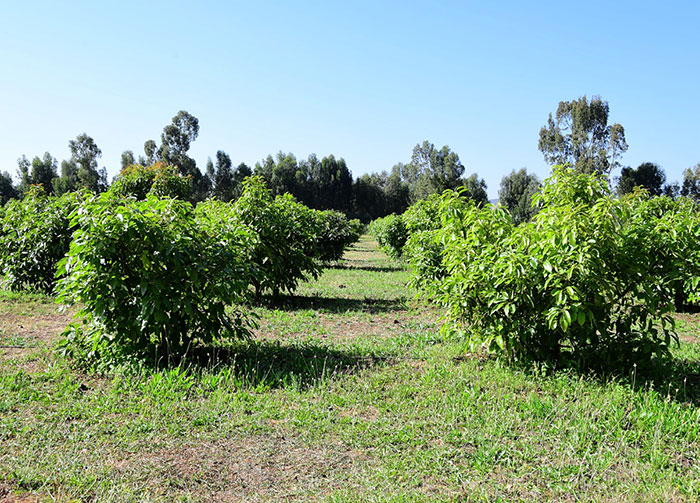
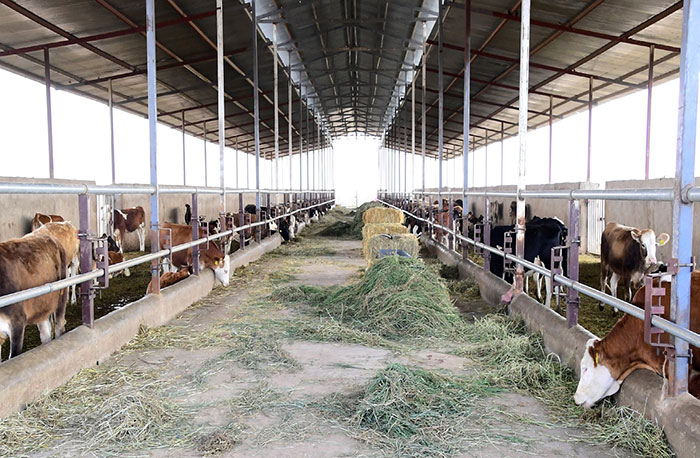
Notable trends in this sub-sector include the involvement of approximately 920 farmers, majority of who are new, in sweet potato cultivation and a total of 23,000 date palm trees. Additionally, significant achievements were recorded in the livestock sub-sector and beekeeping, with over 1 million livestock receiving vaccinations.
The report presented by the National Agricultural Research Institute (NARI) highlights key accomplishments, such as the multiplication of improved bread and pasta wheat varieties, pioneering in-country development of hybrid maize, the commencement of cassava production, effective research on nutritious foods, tissue-culture-based production of improved plant varieties, breeding of more productive dairy cattle, enhancement of forage-based dairy production systems, and the identification of meritorious livestock breeds.
Furthermore, intensive surveillance activities covered a total of 1.8 million hectares of land, mainly in the Northern Red Sea Region, focusing on desert locust control. This effort successfully contained desert locust infestations in over 31,000 hectares of land. Tree locust infestations on 38,000 hectares in the western lowlands were also controlled, following surveillance on approximately 150,000 hectares. In 2023, the Ministry, in collaboration with relevant bodies, managed to control outbreaks of the African Armyworm on 430 hectares in the Central, Southern, and Anseba Regions.
The Regulatory Services Department (RSD) reported that regular inspections were conducted at meat and milk production and processing facilities, as well as slaughterhouses.
The department, in collaboration with relevant bodies, published and distributed an updated version of the seed policy and a new policy on organic fertilizer in the previous year, along with other policy manuals and guidelines.
A significant achievement of the National Animal and Plant Health Laboratory in 2023 was the production of standard and internationally recognized PPR and NCD livestock vaccines.
In his closing remarks, Mr. Arefaine Berhe, the Minister of Agriculture, announced the official launch of the new 2024-2028 strategic plan of the Ministry, aligned with the roadmap of "Safe and Nutritious Food for Everyone, Everywhere." Minister Arefaine emphasized that this roadmap's main focus is to enable every Eritrean household to produce safe and nutritious food or purchase it at a fair price.
He stressed that achieving this goal relies on the active participation of small and medium commercial farmers, the implementation of the Minimum Integrated Household Agricultural Package, and the involvement of all farmers in crop and livestock production.
Minister Arefaine concluded by highlighting the importance of empowering experts working at the village and administrative area levels to realize the goal.
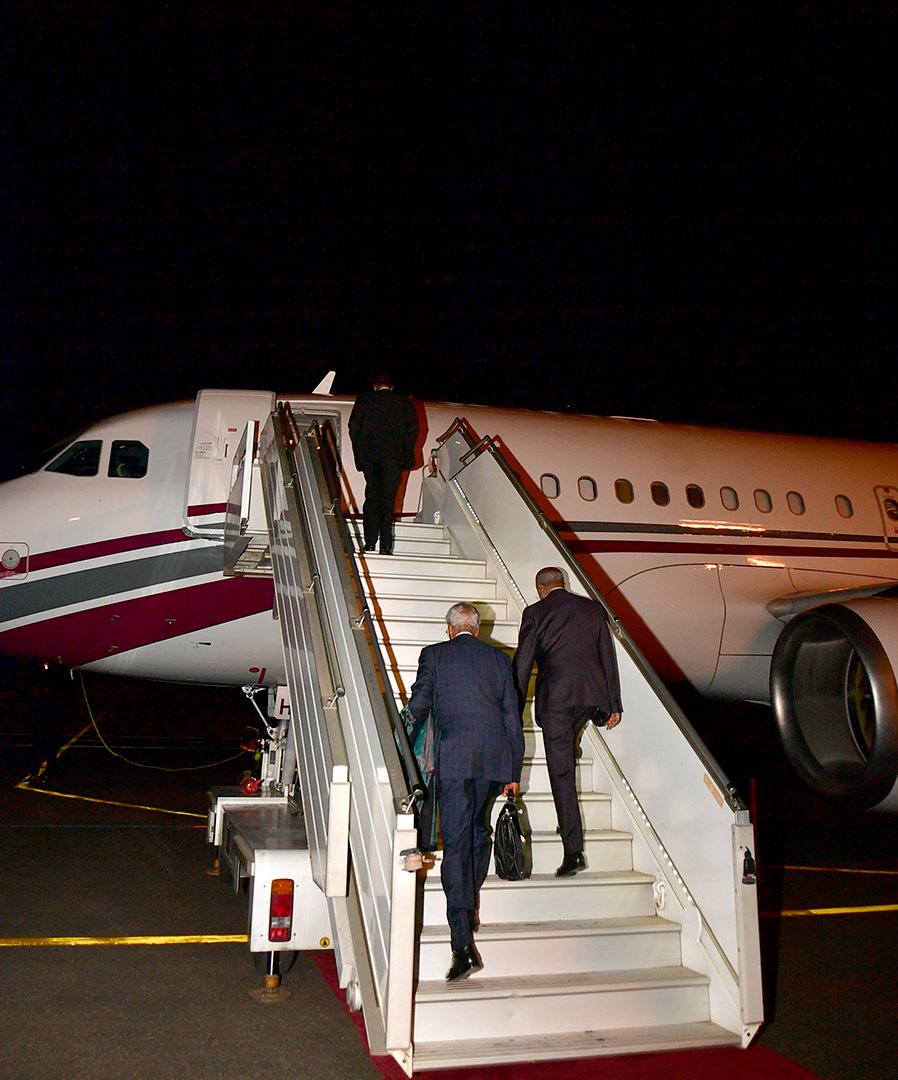
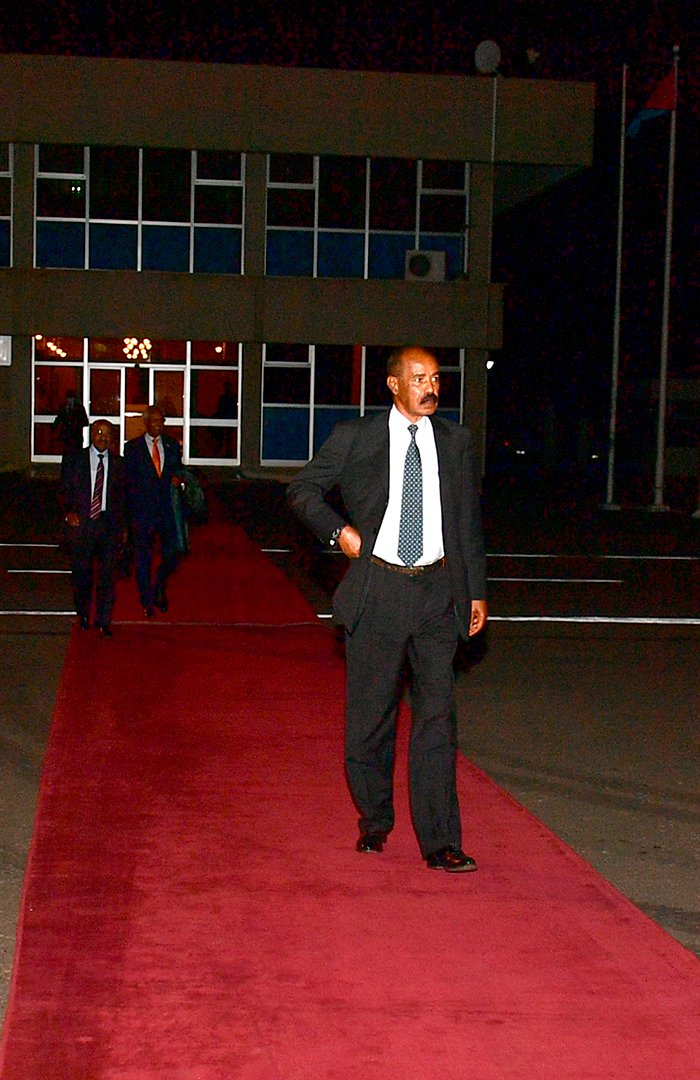
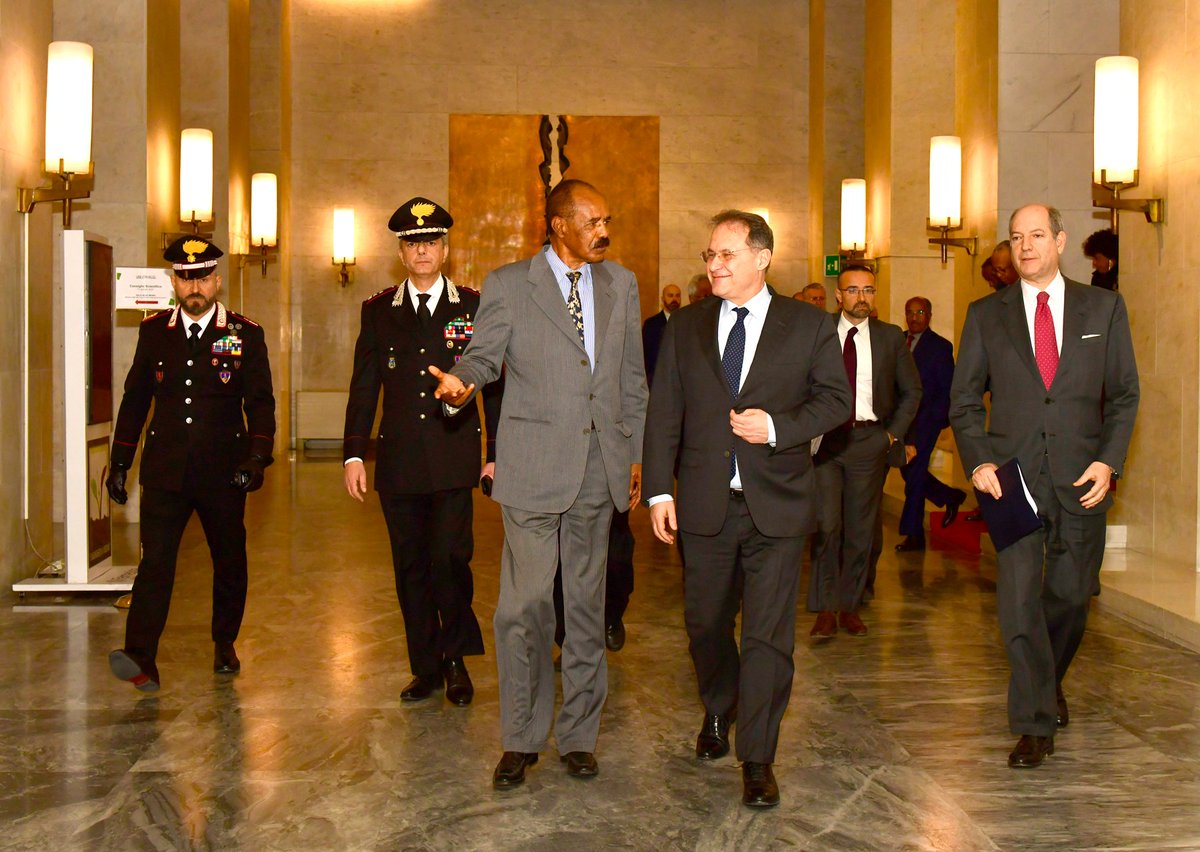
President Isaias Afwerki departed to Italy in early morning hours today to participate at the Africa-Italy Summit. Presidential entourage includes Foreign Minister Osman Saleh and Commissioner for Culture and Sport, Amb. Zemede Tecle
President Isaias Afwerki departs to Italy
#Eritrea
On invitation by the Italian Government President Isaias Afwerki in the early morning hours today, 28 January departed to the Republic of Italy to participate in the Africa-Italy Summit.
President Isaias and his delegation arrived in Rome in Mid-day today.
The two-day Africa-Italy Summit which will be conducted under the theme “A Bridge For Common Growth” will focus on fostering equal partnership across various sectors including economy and infrastructure, food security, energy security and transition, and vocational training and culture.
The Presidential Delegation includes Mr. Osman Saleh, Minister of Foreign Affairs, and Ambassador Zemede Tekle, Commissioner of Culture and Sports.
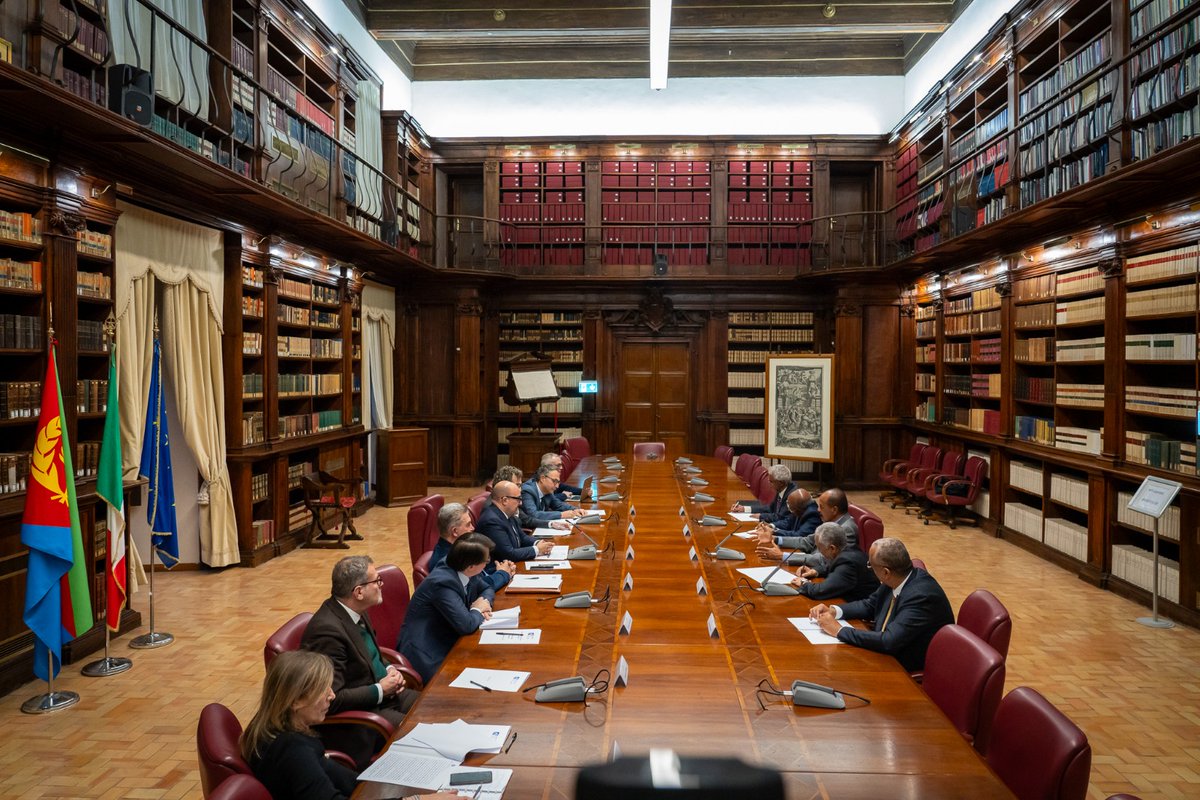
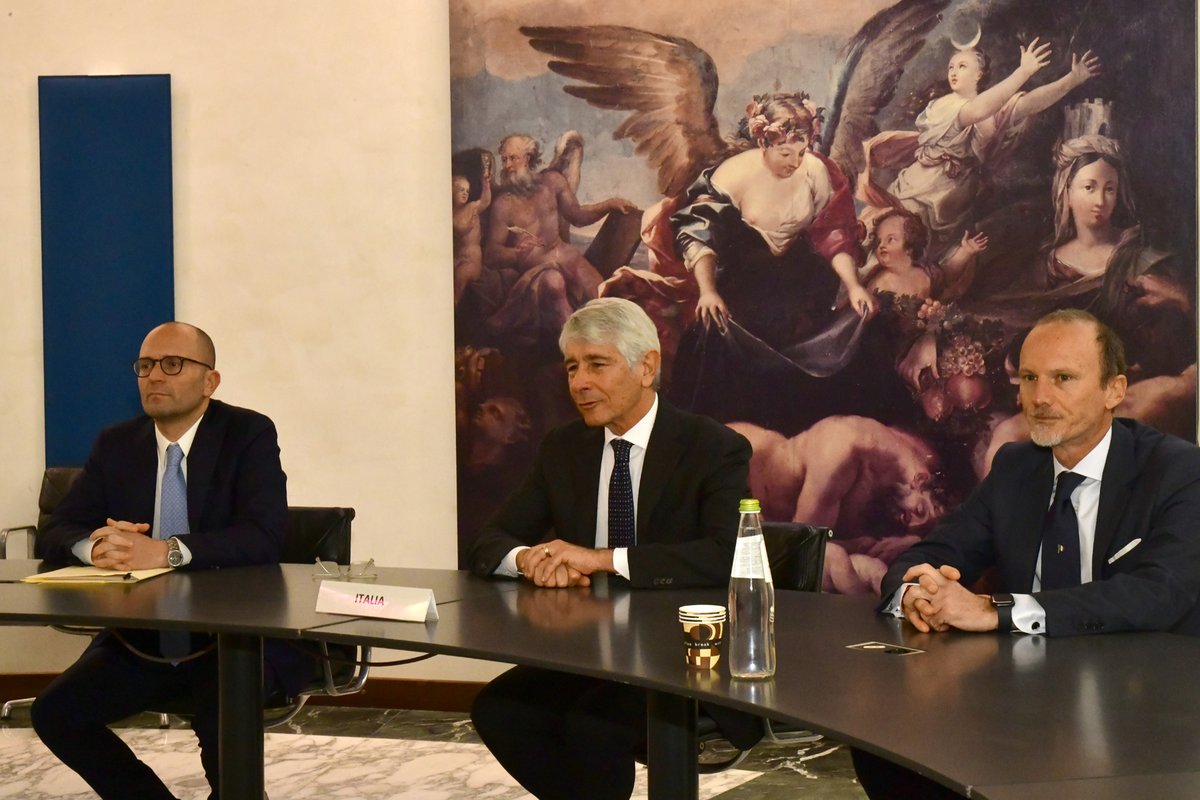
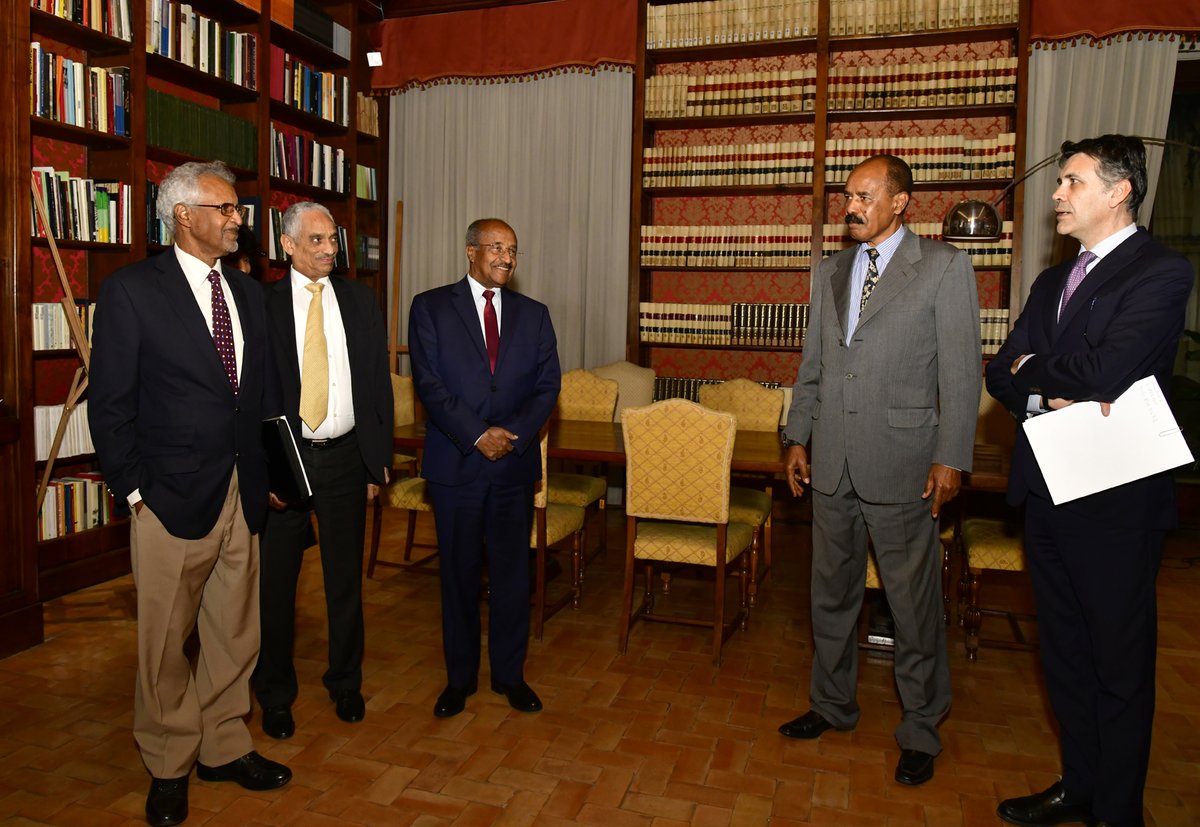
President Isaias & his delegation met yesterday evening Italian Minister of Culture, Gennaro Sangiuliano. Themes discussed include access to & establishment of Musuem in Asmara on archives of colonial period; formation of Joint Committee for archeological excavations in Adulis..
President Isaias Afwerki also met the Representative of Italian Agricultural Enterpreneurs, Mr. Coldritti A. Paretti, to discuss cooperation & emulation of best practices in the production and marketing of high quality agricultural produce
President Isaias met and held talks with Italian Minister of Culture
Asmara, 31 January 2024- President Isaias Afwerki and his delegation, as part of their series of meetings with Italian officials and institutions, in the evening hours yesterday, 30 January, met and held talks with Mr. Gennaro Sangiuliano, Minister of Culture.
At the meeting agreement was reached to have access to visit the archive and obtain documents that Eritrea has been seeking especially regarding the files of the thousand Eritreans that were unwillingly conscripted by Italy in its war in Libya and Ethiopia.
The Italian Ministry of Culture announced plans to establish a museum in Asmara to preserve these documents, aiming to bolster the historical connections between Italy and Eritrea.
The meeting also resulted in agreements to enhance and expand ongoing archaeological research and excavations at Adulis by Italian and Eritrean experts. The understanding also includes that Italian experts to travel to Eritrean to share their expertise, provide training for Eritrean artists in music and arts, the organization of joint festivals, and the formation of a committee to oversee these initiatives.
They also agreed to conduct meetings in the near future and draft a document for mutual understanding.
Furthermore, President Isaias and his delegation held discussions with Mr. Antonio Paretti, representative of Italian Agricultural Entrepreneurs. During this meeting, President Afwerki emphasized the importance of producing high-quality products and acquiring technological knowledge to enable Eritrean farmers export their goods, which would significantly benefit local agriculture.
President Isaias also highlighted Eritrea's rich agricultural potential and expressed a willingness to collaborate closely in this area.
Combating a Perennial threat to Food Security and Livelihoods
By :- Dr. Fikrejesus Amahazion
Late last week, the Ministry of Agriculture (MoA) conducted its annual assessment meeting in Asmara, under the theme “Safe and Nutritious Food for Everyone, Everywhere.” At the gathering, led by Arefaine Berhe, the Minister of Agriculture, reports were delivered on progress made in different areas related to food and agriculture during 2023. In addition to updates about various crops, fruits, vegetables, and livestock, and the announcement of the launch of the MoA’s new strategic plan for 2024-2028, brief discussions were held about the threat posed by pests, including desert locusts. Last year saw intensive surveillance activities across a total area of 1.8 million hectares of land, mainly in the Northern Red Sea Region. These efforts helped to successfully contain desert locust infestations across more than 31,000 hectares of land.
Taking off from the recent MoA meeting, the following paragraphs delve a little further into the topic of desert locusts, which have remained a serious problem throughout the Horn of Africa over the past several years.
Understanding the threat posed by the world’s most destructive migratory pest
The desert locust is a type of grasshopper. However, it is far more destructive than the common garden variety, often being described as “the world’s most devastating pest”. Desert locusts have the ability to form swarms, which can be very dense and highly mobile. With favorable winds, they can fly as much as 150km a day. (This mobility helps them to avoid most natural enemies and predators. It also helps explain their movement across the Red Sea.) According to analysts and experts, an adult desert locust can consume its own weight in fresh food per day (that is, approximately several grams), while just one small swarm (approximately 1 km2) has the potential to eat the same amount of crops in one day as about 35,000 people. During quiet periods, which are referred to as “recessions”, desert locusts are generally restricted to semi-arid and arid deserts. This includes parts of about 30 countries within Africa, the Near East, and southwest Asia. However, during upsurges, or what are commonly known as plagues, desert locusts may spread over an enormous area and can reach as many as 60 countries (which collectively represent more than 20 percent of the entire land surface of the world).
Locust swarms can vary in size: ranging anywhere from less than 1km2 to over 1000km2. In each square kilometer of a swarm, there can be between 40 million and sometimes as many as 80 million locust adults. With each individual locust capable of eating its own weight in crops and vegetation each day, it is relatively simple to see how a desert locust invasion can lead to a considerable drop in agricultural and food production, severely damage livelihoods, deplete food stocks, and create significant risks for a population’s food security.
Recent challenges and local efforts to ensure prevention and control
While locusts have been a challenge across the region for centuries, large scale locust invasions have unfolded in recent years across the Greater Horn of Africa. Back towards the end of 2019, a major upsurge of swarms was seen in parts of Ethiopia, Eritrea, Djibouti, Somalia, Kenya, Uganda, South Sudan, and Tanzania.
These swarms were an outgrowth of regional weather patterns during 2018, cyclones in the surrounding region, and particular environmental conditions that provided favorable settings for locusts to thrive and proliferate. According to researchers, the locust invasions in the region during the past years were the worst in several decades, negatively impacting tens of millions of people and with damages and losses totaling billions of dollars.
In Eritrea, desert locusts have been seen in all regions of the country across recent years. For the most part, the swarms have originated from neighboring countries, many of which have been confronted by an array of crises that has made combating locusts even more challenging. According to recent reports from the FAO, the second generation of winter breeding began last week across several countries along the Red Sea and the Gulf of Aden. Moreover, the threats and challenges posed by desert locusts will persist.
To date, Eritrea has been undertaking different measures to combat the threats posed by desert locusts in order to minimize their negative impact on local communities, farms, livelihoods, and food security in the country. For one, intensive surveillance, regular monitoring, and early warning systems have been established. This includes the FAO-supported eLocust3 system, which gathers and transmits data on locust breeding and movement from “out in the field” directly to the MoA’s Desert Locust Unit in Asmara. Through these various systems, the MoA, local administrations, and the Eritrean Defense Forces (EDF) are able to find and treat locust breeding areas and infestations early. Early and decisive action helps to ensure that young locusts (which are referred to as juvenile locusts or “hoppers”) cannot gather to take flight and prevents the growth and spread of large, uncontrollable swarms.
As well, across the country, the EDF, alongside technical experts from the MoA, are regularly deployed with chemicals and pesticides sprayed from hand-held tanks. Importantly, all those involved receive extensive training at in-depth workshops and are provided with appropriate equipment (such as protective masks, goggles, gloves, boots, and coveralls), ultimately ensuring safety and effectiveness.
In all areas of the country, local communities have also been mobilized in locust control campaigns. It is not uncommon to see entire communities – men, women, and youth of all ages and backgrounds – enthusiastically participating in these campaigns. As well as receiving information, regular updates, early warnings, and general training, community members, with the support of the EDF and local administrationsorganize themselves into groups and conduct early morning campaigns to apply pesticides.
Furthermore, members of farming communities, through the consultation, advice, and assistance of the MoA, often work together to collect their harvests quickly and efficiently, thus keeping production away from hungry locusts and minimizing losses.
Notably, high levels of social cohesion, solidarity, and trust have also regularly been demonstrated in the national fight against desert locusts. When losses do occur, the government has extended various forms of support (such as food, cash handouts, basic items, and other assistance) to vulnerable and affected households. As well, several years ago, after having already donated millions of dollars to support their homeland during the COVID-19 pandemic, as well as support to the families of martyrs, and other health-related initiatives, Eritreans residing overseas established a voluntary national support fund to raise money and resources to help the country combat locusts.
Encouragingly, reports and announcements made by the MoA across recent years have been consistent in stating that damage caused by locusts – to valuable crops, livelihoods, and national food security – has been relatively minimal. This is not only positive and encouraging, but also a powerful testament to the tremendous work, deep commitment, and high-levels of coordination demonstrated by local government administrations, the MoA, and the EDF. It also reflects the great efforts and resilience of local communities.










![shabait's tweet photo. Development in Eritrea: past the Misguided Assumptions (part I)
Dr. Fikrejesus Amahazion
Editor’s note: this article is the first in a two-part series detailing Eritrea’s development progress, contextual challenges, and guiding principles.
In thinking about how African countries are covered within mainstream media, one quickly comes to realize that they largely aren’t. However, in terms of the small body of coverage that exists, African countries are portrayed and analyzed in a manner that leaves much to be desired.
Africa, a huge continent home to 54 countries, over a billion people, numerous ethnolinguistic groups, over 2000 languages, and enormous complexity is more often than not over-generalized and reduced to what Reinhold Niebuhr once called “emotionally potent oversimplifications.” Invariably, it is painted with a crude brush and broad strokes, while being spoken about as if it was a homogenous, uniform entity.
What is more, coverage of Africa remains fixated on an extremely narrow circle of topics: rampant corruption, debilitating poverty, drought and famine, savage conflicts, hordes of migrants at the gates, and terrorism. There is hardly ever any nuance or context within stories, while positive developments across the continent, of which there are many, tend to be disregarded or not afforded the level and depth of attention they merit.
In disconcerting echoes of the past, the language and tone used present African countries as perennially inconsequential and lacking significant global import. It seems that some remain unable to accept the fact that Africans have agency and they can find creative answers, develop effective solutions, and produce things of considerable merit. Africa is framed as feeble, dependent, and an eternal, hapless victim in need of saving, with the prevailing narrow-minded conventional wisdom suggesting that no problems can be solved, that no challenges or obstacles can be surmounted, that no true progress can be made, unless it is external – Western – actors that are doing the directing and implementing.
Of course, this troubling affliction is not limited to the mainstream media. It is also prevalent within the West’s political structures, the hallowed ivory towers of academia, and other institutions. It is also worth noting that when it comes to African countries, mainstream media and leading institutions seem to only hold up Westerners as experts and authoritative voices, although these individuals frequently cannot speak the languages of or have never actually set foot on the continent. At the same time sad and astonishing, they unwaveringly persist in platforming these individuals as preeminent experts and authorities despite the fact that they “boast” a long track record of only highly flawed assessments, analyses disconnected from reality, and wildly inaccurate predictions. Meanwhile, thoroughly qualified and highly experienced individuals from across Africa are rarely looked to for their views or analyses of their own countries, let alone the West.
Ultimately, the result of this multilevel framework is tired clichés, nauseating stereotypes, facile assumptions, and gross distortions that fail to provide an even vaguely accurate account of the countries of the continent or their objective, on-the-ground realities. Sadly, we are left with a deep lack of clarity, at times shocking levels of ignorance, and a vast lacuna in understanding about Africa, its people, its history, and its ongoing circumstances.
Everything traced above – the grossly distorted narrative, the demonization and dehumanizing, the rigid, paternalistic framing, and the patronizing condescension – has been a defining characteristic of coverage about Eritrea.
Certainly, Eritrea, like all other countries, has challenges. However, along the lines of Chimamanda Adichie’s cautionary articulations about the weighty dangers of a single story, there are also many other dimensions to Eritrea, far beyond the harshly negative, sensationalized depiction that remains front, center, and overwhelmingly dominant. The pursuit of deeper understanding, the search for collective sense-making, the quest for advancing knowledge necessitates moving beyond rigidity and acknowledging that there is good, worth, and dignity everywhere in the world. As rightly put by Bhikhu Parekh, “No culture has a monopoly on wisdom, no culture embodies all the great values, and therefore each culture has a great deal to learn from others, through dialogue.”
Past the misguided assumptions and sensationalized headlines, Eritrea has made important developmental progress in several areas.
For example, in terms of the child mortality rate, regarded by health experts worldwide as an effective proxy indicator for overall child health and well-being, Eritrea has dramatically improved from 146 deaths per 1,000 live births in 1991 to 38 in 2021. Placing that into better context, it has moved from having one of the worst under-five mortality rates anywhere on the planet to now being among the leaders on the continent and within the developing world. Notably, Eritrea’s average annual rate of reduction across the period is around 4.5 percent – one of the fastest in the world.
My longitudinal analysis exploring these tremendous gains in-depth, based on a multimethodological research approach and published in a book released last year, found that there is no single cause that accounts for the country’s success in reducing child mortality. Instead, Eritrea’s substantial progress, which interestingly has gone largely unrecognized within media and scholarship, has been driven by a mix of factors that cut across several sectors. These include, inter alia, high-level political will and commitment, female education, and expansion of access to healthcare and services.
Another driving factor has been routine childhood vaccination, a simple, cost-effective intervention that has helped prevent serious illness, disability, and death caused by a range of dangerous, debilitating diseases. At independence, there were only six vaccines available for children and the nation’s coverage rate stood at less than 10 percent. Across subsequent years, however, the routine vaccination program has steadily grown; today, Eritrea administers 14 vaccines with national coverage rates being nearly universal in the high 90s – which is significantly higher than both the continental and global average.
Notably, during an extended working visit to Eritrea in late 2021, Mohammed Malick Fall, UNICEF’s Regional Director for East and Southern Africa, explained that he was, “struck by the level of immunization [of children in Eritrea],” before going on to note that there, “are many advanced countries that have a hard time reaching [those coverage levels].”
Eritrea has also greatly reduced maternal mortality, which remains a terrible blight on the globe’s collective conscience. According to UNICEF and the UNDP, it once had the highest maternal mortality ratio in the entire world, with more than 1500 maternal deaths per 100,000 births. Yet, today it is among the best on the continent, with less than 200 deaths, and is currently projected to achieve the associated UN SDG target.
Additionally, through a series of high-impact interventions and a comprehensive, multi-sectoral approach, remarkable success has been achieved in halting the spread of HIV. To be exact, the country has sustained a long-term decline in prevalence and incidence, with the former now standing at 0.4 percent and the latter at a miniscule 0.06. Again, these improvements have seen Eritrea climb precipitously from having some of the worst figures on the planet to now being categorized as among the best in Africa and the developing world.
What’s more, in terms of malaria, the deadliest of all mosquito-borne diseases, the country is steadily transitioning from pre-elimination towards elimination status. In fact, its record stands up formidably well against that of the international development and aid industrial complex, which has drawn hundreds of millions of dollars in financing.
Alongside all of this, major inroads have been made against an array of developing world scourges, including, among others, tuberculosis, hepatitis B, and neglected tropical diseases, while life expectancy has soared from less than 50 at independence to above 67 last year – a steep upward trajectory positively distinguished from many others on the continent.
Another area of noteworthy progress has been within education, universally regarded as a fundamental human right, a pivotal catalyst for inclusive socioeconomic growth and broad-based development, and, as declared by Mandela, “the most powerful weapon one can use to change the world.”
Historically, education in Eritrea was in dire straits, being restricted to only an extremely thin, select sliver of the population, while enrolment and literacy were pitifully low. During Italian colonization, the policy toward locals was to “keep the Eritrean’s belly filled while keeping his brain empty”, while in the mid-1970s, amidst Eritrea’s fight for freedom, approximately 95 percent of Eritrean women were illiterate, with males only marginally better off.
However, recent decades have witnessed gargantuan strides made. Within both urban and rural areas, hundreds of new schools, learning centers, and libraries have been built, as older ones have been markedly renovated or upgraded. The number of schools at all levels has multiplied from just over 500 in 1991 to nearly 2,300 last year, with many more currently under planning or in the process of being constructed. As a result, capacity has been expanded, overcrowding greatly reduced, and total enrolments have been raised from less than 250,000 in 1992 to around 700,000 at present.
Parallel to these advances, literacy has also been improved, with adult literacy jumping from less than 50 percent to about 80, while youth literacy has shot up from about 60 percent to 93 percent. According to UNESCO’s Institute for Statistics, Eritrea’s increases in youth literacy are not just positively distinguished worldwide, they are among the largest anywhere in the world over the past 50 years.
In other areas of development, there has been a respectable improvement in building infrastructure, expanding the national road network, reducing poverty, raising agricultural production and productivity, and ensuring food and nutrition security. Likewise, access to electricity, water, sanitation, and hygiene, among other critical services, have been expanded, with notable expansions in rural and hard-to-reach areas.
Well worth mentioning, too, is that Eritrea’s cultural contributions are rich in the fields of music and art, while its achievements in athletics relative to the size of its population and national wealth are outstanding and have yielded consistently impressive performances in regional and global competitions in recent years.
Among the most inspiring areas of advancement have been gender equality and empowerment. Mainly from the days of the protracted, bitter armed struggle and larger social revolution, and especially in the years since the momentous achievement of national independence, Eritrea’s girls and women have proven themselves to be immensely strong and doggedly resilient exceptions to outdated, patriarchal rules. Reflecting agency, empowerment, and initiative, they have been tangibly contributing within all areas of society and in many diverse, important ways, ultimately playing a vital role in families, communities, the nation’s socio-economic improvement, and its general development. To adapt the words of the late John Lewis, without its gallant women, Eritrea would be a bird without wings.](https://pbs.twimg.com/media/GEiE8XdbEAA8Oj4.jpg)
![shabait's tweet photo. Development in Eritrea: past the Misguided Assumptions (part I)
Dr. Fikrejesus Amahazion
Editor’s note: this article is the first in a two-part series detailing Eritrea’s development progress, contextual challenges, and guiding principles.
In thinking about how African countries are covered within mainstream media, one quickly comes to realize that they largely aren’t. However, in terms of the small body of coverage that exists, African countries are portrayed and analyzed in a manner that leaves much to be desired.
Africa, a huge continent home to 54 countries, over a billion people, numerous ethnolinguistic groups, over 2000 languages, and enormous complexity is more often than not over-generalized and reduced to what Reinhold Niebuhr once called “emotionally potent oversimplifications.” Invariably, it is painted with a crude brush and broad strokes, while being spoken about as if it was a homogenous, uniform entity.
What is more, coverage of Africa remains fixated on an extremely narrow circle of topics: rampant corruption, debilitating poverty, drought and famine, savage conflicts, hordes of migrants at the gates, and terrorism. There is hardly ever any nuance or context within stories, while positive developments across the continent, of which there are many, tend to be disregarded or not afforded the level and depth of attention they merit.
In disconcerting echoes of the past, the language and tone used present African countries as perennially inconsequential and lacking significant global import. It seems that some remain unable to accept the fact that Africans have agency and they can find creative answers, develop effective solutions, and produce things of considerable merit. Africa is framed as feeble, dependent, and an eternal, hapless victim in need of saving, with the prevailing narrow-minded conventional wisdom suggesting that no problems can be solved, that no challenges or obstacles can be surmounted, that no true progress can be made, unless it is external – Western – actors that are doing the directing and implementing.
Of course, this troubling affliction is not limited to the mainstream media. It is also prevalent within the West’s political structures, the hallowed ivory towers of academia, and other institutions. It is also worth noting that when it comes to African countries, mainstream media and leading institutions seem to only hold up Westerners as experts and authoritative voices, although these individuals frequently cannot speak the languages of or have never actually set foot on the continent. At the same time sad and astonishing, they unwaveringly persist in platforming these individuals as preeminent experts and authorities despite the fact that they “boast” a long track record of only highly flawed assessments, analyses disconnected from reality, and wildly inaccurate predictions. Meanwhile, thoroughly qualified and highly experienced individuals from across Africa are rarely looked to for their views or analyses of their own countries, let alone the West.
Ultimately, the result of this multilevel framework is tired clichés, nauseating stereotypes, facile assumptions, and gross distortions that fail to provide an even vaguely accurate account of the countries of the continent or their objective, on-the-ground realities. Sadly, we are left with a deep lack of clarity, at times shocking levels of ignorance, and a vast lacuna in understanding about Africa, its people, its history, and its ongoing circumstances.
Everything traced above – the grossly distorted narrative, the demonization and dehumanizing, the rigid, paternalistic framing, and the patronizing condescension – has been a defining characteristic of coverage about Eritrea.
Certainly, Eritrea, like all other countries, has challenges. However, along the lines of Chimamanda Adichie’s cautionary articulations about the weighty dangers of a single story, there are also many other dimensions to Eritrea, far beyond the harshly negative, sensationalized depiction that remains front, center, and overwhelmingly dominant. The pursuit of deeper understanding, the search for collective sense-making, the quest for advancing knowledge necessitates moving beyond rigidity and acknowledging that there is good, worth, and dignity everywhere in the world. As rightly put by Bhikhu Parekh, “No culture has a monopoly on wisdom, no culture embodies all the great values, and therefore each culture has a great deal to learn from others, through dialogue.”
Past the misguided assumptions and sensationalized headlines, Eritrea has made important developmental progress in several areas.
For example, in terms of the child mortality rate, regarded by health experts worldwide as an effective proxy indicator for overall child health and well-being, Eritrea has dramatically improved from 146 deaths per 1,000 live births in 1991 to 38 in 2021. Placing that into better context, it has moved from having one of the worst under-five mortality rates anywhere on the planet to now being among the leaders on the continent and within the developing world. Notably, Eritrea’s average annual rate of reduction across the period is around 4.5 percent – one of the fastest in the world.
My longitudinal analysis exploring these tremendous gains in-depth, based on a multimethodological research approach and published in a book released last year, found that there is no single cause that accounts for the country’s success in reducing child mortality. Instead, Eritrea’s substantial progress, which interestingly has gone largely unrecognized within media and scholarship, has been driven by a mix of factors that cut across several sectors. These include, inter alia, high-level political will and commitment, female education, and expansion of access to healthcare and services.
Another driving factor has been routine childhood vaccination, a simple, cost-effective intervention that has helped prevent serious illness, disability, and death caused by a range of dangerous, debilitating diseases. At independence, there were only six vaccines available for children and the nation’s coverage rate stood at less than 10 percent. Across subsequent years, however, the routine vaccination program has steadily grown; today, Eritrea administers 14 vaccines with national coverage rates being nearly universal in the high 90s – which is significantly higher than both the continental and global average.
Notably, during an extended working visit to Eritrea in late 2021, Mohammed Malick Fall, UNICEF’s Regional Director for East and Southern Africa, explained that he was, “struck by the level of immunization [of children in Eritrea],” before going on to note that there, “are many advanced countries that have a hard time reaching [those coverage levels].”
Eritrea has also greatly reduced maternal mortality, which remains a terrible blight on the globe’s collective conscience. According to UNICEF and the UNDP, it once had the highest maternal mortality ratio in the entire world, with more than 1500 maternal deaths per 100,000 births. Yet, today it is among the best on the continent, with less than 200 deaths, and is currently projected to achieve the associated UN SDG target.
Additionally, through a series of high-impact interventions and a comprehensive, multi-sectoral approach, remarkable success has been achieved in halting the spread of HIV. To be exact, the country has sustained a long-term decline in prevalence and incidence, with the former now standing at 0.4 percent and the latter at a miniscule 0.06. Again, these improvements have seen Eritrea climb precipitously from having some of the worst figures on the planet to now being categorized as among the best in Africa and the developing world.
What’s more, in terms of malaria, the deadliest of all mosquito-borne diseases, the country is steadily transitioning from pre-elimination towards elimination status. In fact, its record stands up formidably well against that of the international development and aid industrial complex, which has drawn hundreds of millions of dollars in financing.
Alongside all of this, major inroads have been made against an array of developing world scourges, including, among others, tuberculosis, hepatitis B, and neglected tropical diseases, while life expectancy has soared from less than 50 at independence to above 67 last year – a steep upward trajectory positively distinguished from many others on the continent.
Another area of noteworthy progress has been within education, universally regarded as a fundamental human right, a pivotal catalyst for inclusive socioeconomic growth and broad-based development, and, as declared by Mandela, “the most powerful weapon one can use to change the world.”
Historically, education in Eritrea was in dire straits, being restricted to only an extremely thin, select sliver of the population, while enrolment and literacy were pitifully low. During Italian colonization, the policy toward locals was to “keep the Eritrean’s belly filled while keeping his brain empty”, while in the mid-1970s, amidst Eritrea’s fight for freedom, approximately 95 percent of Eritrean women were illiterate, with males only marginally better off.
However, recent decades have witnessed gargantuan strides made. Within both urban and rural areas, hundreds of new schools, learning centers, and libraries have been built, as older ones have been markedly renovated or upgraded. The number of schools at all levels has multiplied from just over 500 in 1991 to nearly 2,300 last year, with many more currently under planning or in the process of being constructed. As a result, capacity has been expanded, overcrowding greatly reduced, and total enrolments have been raised from less than 250,000 in 1992 to around 700,000 at present.
Parallel to these advances, literacy has also been improved, with adult literacy jumping from less than 50 percent to about 80, while youth literacy has shot up from about 60 percent to 93 percent. According to UNESCO’s Institute for Statistics, Eritrea’s increases in youth literacy are not just positively distinguished worldwide, they are among the largest anywhere in the world over the past 50 years.
In other areas of development, there has been a respectable improvement in building infrastructure, expanding the national road network, reducing poverty, raising agricultural production and productivity, and ensuring food and nutrition security. Likewise, access to electricity, water, sanitation, and hygiene, among other critical services, have been expanded, with notable expansions in rural and hard-to-reach areas.
Well worth mentioning, too, is that Eritrea’s cultural contributions are rich in the fields of music and art, while its achievements in athletics relative to the size of its population and national wealth are outstanding and have yielded consistently impressive performances in regional and global competitions in recent years.
Among the most inspiring areas of advancement have been gender equality and empowerment. Mainly from the days of the protracted, bitter armed struggle and larger social revolution, and especially in the years since the momentous achievement of national independence, Eritrea’s girls and women have proven themselves to be immensely strong and doggedly resilient exceptions to outdated, patriarchal rules. Reflecting agency, empowerment, and initiative, they have been tangibly contributing within all areas of society and in many diverse, important ways, ultimately playing a vital role in families, communities, the nation’s socio-economic improvement, and its general development. To adapt the words of the late John Lewis, without its gallant women, Eritrea would be a bird without wings.](https://pbs.twimg.com/media/GEiE8UwaMAA_NW_.jpg)













![shabait's tweet photo. Development in Eritrea: past the Misguided Assumptions (part I)
Dr. Fikrejesus Amahazion
Editor’s note: this article is the first in a two-part series detailing Eritrea’s development progress, contextual challenges, and guiding principles.
In thinking about how African countries are covered within mainstream media, one quickly comes to realize that they largely aren’t. However, in terms of the small body of coverage that exists, African countries are portrayed and analyzed in a manner that leaves much to be desired.
Africa, a huge continent home to 54 countries, over a billion people, numerous ethnolinguistic groups, over 2000 languages, and enormous complexity is more often than not over-generalized and reduced to what Reinhold Niebuhr once called “emotionally potent oversimplifications.” Invariably, it is painted with a crude brush and broad strokes, while being spoken about as if it was a homogenous, uniform entity.
What is more, coverage of Africa remains fixated on an extremely narrow circle of topics: rampant corruption, debilitating poverty, drought and famine, savage conflicts, hordes of migrants at the gates, and terrorism. There is hardly ever any nuance or context within stories, while positive developments across the continent, of which there are many, tend to be disregarded or not afforded the level and depth of attention they merit.
In disconcerting echoes of the past, the language and tone used present African countries as perennially inconsequential and lacking significant global import. It seems that some remain unable to accept the fact that Africans have agency and they can find creative answers, develop effective solutions, and produce things of considerable merit. Africa is framed as feeble, dependent, and an eternal, hapless victim in need of saving, with the prevailing narrow-minded conventional wisdom suggesting that no problems can be solved, that no challenges or obstacles can be surmounted, that no true progress can be made, unless it is external – Western – actors that are doing the directing and implementing.
Of course, this troubling affliction is not limited to the mainstream media. It is also prevalent within the West’s political structures, the hallowed ivory towers of academia, and other institutions. It is also worth noting that when it comes to African countries, mainstream media and leading institutions seem to only hold up Westerners as experts and authoritative voices, although these individuals frequently cannot speak the languages of or have never actually set foot on the continent. At the same time sad and astonishing, they unwaveringly persist in platforming these individuals as preeminent experts and authorities despite the fact that they “boast” a long track record of only highly flawed assessments, analyses disconnected from reality, and wildly inaccurate predictions. Meanwhile, thoroughly qualified and highly experienced individuals from across Africa are rarely looked to for their views or analyses of their own countries, let alone the West.
Ultimately, the result of this multilevel framework is tired clichés, nauseating stereotypes, facile assumptions, and gross distortions that fail to provide an even vaguely accurate account of the countries of the continent or their objective, on-the-ground realities. Sadly, we are left with a deep lack of clarity, at times shocking levels of ignorance, and a vast lacuna in understanding about Africa, its people, its history, and its ongoing circumstances.
Everything traced above – the grossly distorted narrative, the demonization and dehumanizing, the rigid, paternalistic framing, and the patronizing condescension – has been a defining characteristic of coverage about Eritrea.
Certainly, Eritrea, like all other countries, has challenges. However, along the lines of Chimamanda Adichie’s cautionary articulations about the weighty dangers of a single story, there are also many other dimensions to Eritrea, far beyond the harshly negative, sensationalized depiction that remains front, center, and overwhelmingly dominant. The pursuit of deeper understanding, the search for collective sense-making, the quest for advancing knowledge necessitates moving beyond rigidity and acknowledging that there is good, worth, and dignity everywhere in the world. As rightly put by Bhikhu Parekh, “No culture has a monopoly on wisdom, no culture embodies all the great values, and therefore each culture has a great deal to learn from others, through dialogue.”
Past the misguided assumptions and sensationalized headlines, Eritrea has made important developmental progress in several areas.
For example, in terms of the child mortality rate, regarded by health experts worldwide as an effective proxy indicator for overall child health and well-being, Eritrea has dramatically improved from 146 deaths per 1,000 live births in 1991 to 38 in 2021. Placing that into better context, it has moved from having one of the worst under-five mortality rates anywhere on the planet to now being among the leaders on the continent and within the developing world. Notably, Eritrea’s average annual rate of reduction across the period is around 4.5 percent – one of the fastest in the world.
My longitudinal analysis exploring these tremendous gains in-depth, based on a multimethodological research approach and published in a book released last year, found that there is no single cause that accounts for the country’s success in reducing child mortality. Instead, Eritrea’s substantial progress, which interestingly has gone largely unrecognized within media and scholarship, has been driven by a mix of factors that cut across several sectors. These include, inter alia, high-level political will and commitment, female education, and expansion of access to healthcare and services.
Another driving factor has been routine childhood vaccination, a simple, cost-effective intervention that has helped prevent serious illness, disability, and death caused by a range of dangerous, debilitating diseases. At independence, there were only six vaccines available for children and the nation’s coverage rate stood at less than 10 percent. Across subsequent years, however, the routine vaccination program has steadily grown; today, Eritrea administers 14 vaccines with national coverage rates being nearly universal in the high 90s – which is significantly higher than both the continental and global average.
Notably, during an extended working visit to Eritrea in late 2021, Mohammed Malick Fall, UNICEF’s Regional Director for East and Southern Africa, explained that he was, “struck by the level of immunization [of children in Eritrea],” before going on to note that there, “are many advanced countries that have a hard time reaching [those coverage levels].”
Eritrea has also greatly reduced maternal mortality, which remains a terrible blight on the globe’s collective conscience. According to UNICEF and the UNDP, it once had the highest maternal mortality ratio in the entire world, with more than 1500 maternal deaths per 100,000 births. Yet, today it is among the best on the continent, with less than 200 deaths, and is currently projected to achieve the associated UN SDG target.
Additionally, through a series of high-impact interventions and a comprehensive, multi-sectoral approach, remarkable success has been achieved in halting the spread of HIV. To be exact, the country has sustained a long-term decline in prevalence and incidence, with the former now standing at 0.4 percent and the latter at a miniscule 0.06. Again, these improvements have seen Eritrea climb precipitously from having some of the worst figures on the planet to now being categorized as among the best in Africa and the developing world.
What’s more, in terms of malaria, the deadliest of all mosquito-borne diseases, the country is steadily transitioning from pre-elimination towards elimination status. In fact, its record stands up formidably well against that of the international development and aid industrial complex, which has drawn hundreds of millions of dollars in financing.
Alongside all of this, major inroads have been made against an array of developing world scourges, including, among others, tuberculosis, hepatitis B, and neglected tropical diseases, while life expectancy has soared from less than 50 at independence to above 67 last year – a steep upward trajectory positively distinguished from many others on the continent.
Another area of noteworthy progress has been within education, universally regarded as a fundamental human right, a pivotal catalyst for inclusive socioeconomic growth and broad-based development, and, as declared by Mandela, “the most powerful weapon one can use to change the world.”
Historically, education in Eritrea was in dire straits, being restricted to only an extremely thin, select sliver of the population, while enrolment and literacy were pitifully low. During Italian colonization, the policy toward locals was to “keep the Eritrean’s belly filled while keeping his brain empty”, while in the mid-1970s, amidst Eritrea’s fight for freedom, approximately 95 percent of Eritrean women were illiterate, with males only marginally better off.
However, recent decades have witnessed gargantuan strides made. Within both urban and rural areas, hundreds of new schools, learning centers, and libraries have been built, as older ones have been markedly renovated or upgraded. The number of schools at all levels has multiplied from just over 500 in 1991 to nearly 2,300 last year, with many more currently under planning or in the process of being constructed. As a result, capacity has been expanded, overcrowding greatly reduced, and total enrolments have been raised from less than 250,000 in 1992 to around 700,000 at present.
Parallel to these advances, literacy has also been improved, with adult literacy jumping from less than 50 percent to about 80, while youth literacy has shot up from about 60 percent to 93 percent. According to UNESCO’s Institute for Statistics, Eritrea’s increases in youth literacy are not just positively distinguished worldwide, they are among the largest anywhere in the world over the past 50 years.
In other areas of development, there has been a respectable improvement in building infrastructure, expanding the national road network, reducing poverty, raising agricultural production and productivity, and ensuring food and nutrition security. Likewise, access to electricity, water, sanitation, and hygiene, among other critical services, have been expanded, with notable expansions in rural and hard-to-reach areas.
Well worth mentioning, too, is that Eritrea’s cultural contributions are rich in the fields of music and art, while its achievements in athletics relative to the size of its population and national wealth are outstanding and have yielded consistently impressive performances in regional and global competitions in recent years.
Among the most inspiring areas of advancement have been gender equality and empowerment. Mainly from the days of the protracted, bitter armed struggle and larger social revolution, and especially in the years since the momentous achievement of national independence, Eritrea’s girls and women have proven themselves to be immensely strong and doggedly resilient exceptions to outdated, patriarchal rules. Reflecting agency, empowerment, and initiative, they have been tangibly contributing within all areas of society and in many diverse, important ways, ultimately playing a vital role in families, communities, the nation’s socio-economic improvement, and its general development. To adapt the words of the late John Lewis, without its gallant women, Eritrea would be a bird without wings.](https://pbs.twimg.com/media/GEiE8Yza4AAYFly.jpg)