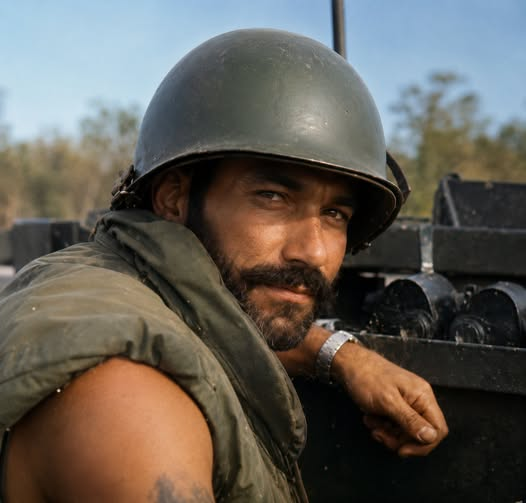
This is an Army of Veterans
who are prepared to do whatever is necessary
to uphold the Constitution.
Their numbers are growing by the thousands.
Re-post if you support this!
🚨BOOM BIG BACKFIRE: Hochul’s anti-ICE law just exploded in her face.🚨
Fifteen New York sheriffs just sued her.
Not activists. Not politicians. Elected sheriffs from across the state just hauled the governor into federal court over her ban on 287(g) agreements with ICE.
She told them “bring it on.”
They did.
The law that was supposed to stop local law enforcement from cooperating with federal immigration authorities is now being challenged by the very officers she tried to handcuff. They’re calling it unconstitutional overreach that strips independently elected sheriffs of their authority and puts public safety second.
Hochul threatened to sue the sheriffs if they didn’t comply.
Now they’re suing her.
This is not a small protest. This is a direct legal revolt from law enforcement against the governor of New York.
The backfire is real — and it’s just getting started.
He took a submarine into a shallow enemy harbor packed with 30 ships, blew them apart, then ran for an hour across a minefield on the surface to escape. And in five war patrols he never lost a single man. This is Lucky Fluckey and the USS Barb.
Eugene Fluckey earned his Medal of Honor for a night in January 1945 that reads like fiction. He had tracked a huge concentration of Japanese ships, more than 30 of them, into Namkwan Harbor along the China coast. The catch was that the harbor was shallow, uncharted, sprinkled with mines and rocks, water so thin his submarine was practically scraping the bottom. Any sensible commander would have stayed away.
Fluckey took the Barb in anyway, creeping into water only about 30 feet deep, right into the middle of the anchored fleet. He fired everything, scored hit after hit on six different targets, and blew up a massive ammunition ship in a stupendous explosion. Then came the escape, an hour long run at full speed on the surface, in the dark, through the mines and rocks and shoals, gambling everything on getting out before the enemy could react. He made it clean.
And that was just one night in a career of audacity. Fluckey pioneered new tactics, made the Barb the first American submarine to fire rockets in combat, and in one of the most famous stunts of the war he put a landing party of eight men ashore on Japanese home soil to plant explosives on a railway and blow up a passing train, the only ground combat action on the Japanese homeland in the entire war.
He won the Medal of Honor and four Navy Crosses, one of the most decorated men in the submarine force, and through all of it, all that reckless brilliance, he brought every one of his men home alive. They did not call him Lucky Fluckey for nothing.
Pvt. Jeremy Wells, 19, of Adairsville, Georgia, died August 1, 2018, following a training accident at Fort Campbell, Kentucky, and his loss reflects the daily risks American soldiers accept in the course of routine military readiness. Wells served as an aircraft electrician with the 101st Combat Aviation Brigade, part of the storied 101st Airborne Division, and was conducting small-arms weapons training at the time of the incident. He was evacuated to Blanchfield Army Community Hospital on post but could not be saved, and no other soldiers were injured.
Wells enlisted in 2017 and arrived at Fort Campbell in 2018 after completing his initial entry training, a path that reflects the pipeline sustaining Army aviation units responsible for maintaining the rotary-wing aircraft central to air assault operations. His decorations included the National Defense Service Medal, the Global War on Terrorism Medal, the Army Service Ribbon, and the Basic Aviation Badge, and he was posthumously awarded the Army Commendation Medal and Army Good Conduct Medal. The 101st Combat Aviation Brigade, known within the division as the "Destiny" family, called his loss the loss of an incredible member of their team as the incident remains under investigation.
Training accidents like this one are a sober reminder that the readiness underpinning America's aviation and ground forces carries inherent risk even far from any battlefield. As the Army continues to prioritize safety reforms across training ranges nationwide, the sacrifice of soldiers like Pvt. Wells deserves continued attention from the public they serve. Stay informed on how the military addresses training safety and honors those who give their lives in service to the nation.
#USArmy #101stAirborne #USMilitary #FortCampbell #NeverForget
https://t.co/qy1RIosz4T
Raymond Hodges had just turned 20. Nineteen days later, he was dead.
Raymond Hodges had been in Vietnam since April 1969, long enough to go from an 18-year-old kid from Lawton, Oklahoma, to a sergeant fighting a war on the other side of the world.
Then came August 28, 1970.
An aircraft went down in Binh Dinh Province. Raymond was aboard. He was only 20 years old an had spent more than a year in Vietnam living through many of us will never experience.
Please take a moment of silence to remember Raymond Leon Hodges Jr.
#TheVietnamWar #RIP 🕊️
#Military
Gary Wetzel was a South Milwaukee kid who joined the Army at 18. By early 1968 he was a private first class and a helicopter door gunner, one of the men who hang out the open sides of a Huey behind a machine gun. On January 8, 1968, near a place called Ap Dong An, his helicopter was shot down, and what he did in the rice paddy afterward is almost hard to read.
The survivors of the crash came down into heavy enemy fire, pinned in the open. Wetzel was moving to help his badly wounded aircraft commander when two enemy rockets exploded just inches from him and blew him into the rice paddy. The blast nearly tore his left arm off and tore into his right arm, his chest, and his left leg. He was, by any measure, out of the fight. A man in that condition should have been dying quietly in the mud.
Instead, bleeding out, with his left arm hanging by ruin, Gary Wetzel dragged himself back up to his machine gun. His gun was the only weapon putting effective fire on the enemy, and he knew it. So he stayed there and worked it, one armed, until he had knocked out the automatic weapons position that had been cutting the Americans to pieces and pinning them down. He silenced the gun that was killing his friends.
Only then did he try to go back to help his aircraft commander, and the blood loss finally took him and he passed out. He woke up and would not stay down. He started dragging himself across the paddy again, by one arm, toward his wounded crewmate, refusing to let his own shredded body stop him, until he reached the crew chief who was pulling the commander to cover.
Gary Wetzel lived. His left arm had to be amputated. President Johnson placed the Medal of Honor around his neck in 1968. He came home a young man with one arm and spent the rest of his life as one of the most tireless veterans advocates in the country, showing up for other vets for decades. He is alive today. A 20 year old door gunner who, with one arm blown away, crawled back to his gun because his gun was the only thing keeping his brothers alive.
🚨INCREDIBLE: In 2013, little American girl Jocelyn Rojas, aged 5, was innocently playing in her family's yard. She was only thinking about having fun when a car pulled up next to her. An unknown man got out and began speaking to her kindly, offering her something that would tempt any child: an ice cream.
With just a few words, he managed to convince her to get into his car, then he drove off with her, turning a simple moment of play into a kidnapping that shook the entire local community and quickly made headlines in the media.
But what the kidnapper hadn't anticipated was that someone had seen everything.
A 15-year-old teenager, Temar, was nearby with his friend Chris. When they realized what had just happened, they didn't wait for the police or the adults. They immediately hopped on their bikes and set off in pursuit of the car.
The two boys embarked on a daring chase that lasted nearly 15 minutes, following the vehicle through the streets with incredible determination, refusing to give up despite the enormous difference between a bike and a car.
As the pursuit continued, the kidnapper began to realize he was being followed. Under the pressure and fear of being exposed, he eventually panicked. Finally, he abruptly stopped the car and opened the door, letting the little girl run out.
Jocelyn immediately rushed toward Temar, terrified, asking to see her mother. At that moment, everyone understood that the courage of two teenagers who hadn't hesitated to act had saved a child from an unknown fate.
Their story quickly spread through media outlets around the world and became a striking example that heroism doesn't require superpowers, but simply a brave heart and the ability to act at the right moment.
I have undertaken this project to put a face to 9/11 by posting photos of everyone killed that day. If after everything that happened you can vote for the ideology that caused it then it's as if you are killing them yourself! Pictured below was 29 year old Christopher Amoroso who was a Port Authority police officer. Here he is famously shown helping a pregnant woman out of the towers. He ran back in four times and was killed when the North Tower imploded. He left behind a wife and 19 month old daughter and to forget even a single one of these people is a blasphemy!
Today we honor the sacrifice of
Army Spc. James H. Pirtle
Died October 4, 2003 Serving During Operation Iraqi Freedom
27, of La Mesa, N.M.; assigned to C Company, 2nd Battalion, 8th Infantry Regiment, Fort Hood, Texas; killed when an RPG struck his Bradley Fighting Vehicle on Oct. 4 in Assadah, Iraq.
#FreedomIsNeverFree
REMEMBER RICHARD EARL MARTINEZ
Today, August 28th, I want to remember a sailor whose name should never be forgotten.
Richard Earl Martinez was 34 years old.
He had served long enough to become a Petty Officer First Class, a Boatswain’s Mate, and a veteran sailor with River Assault Squadron 13, serving in the river war in Vietnam.
On August 28, 1969, Richard died in Dinh Tuong Province.
His death was officially recorded as non-hostile.
But let that sink in for a moment.
War does not always take a man with an enemy bullet. Sometimes it takes him another way. And regardless of how it happened, a family still received the knock on the door. A shipmate was gone. A brother in uniform would never come home.
Richard was only one month away from his 35th birthday.
Take a moment today to remember Richard and all those whose names are etched in stone, but whose stories are too often forgotten.
🫵🏻😳🇺🇸🫡🇺🇸🫡🇺🇸🫡🇺🇸🫡🇺🇸
Can you imagine surviving 27 gunshots and still fighting your way out? 🇺🇸💪
The story of Navy SEAL Mike Day is an incredible example of courage, toughness, and refusing to quit under unimaginable circumstances. Men like this remind us what American warriors are made of. 🦅🇺🇸🔥
Honor our heroes. Never forget their sacrifice. 🎖️🙏
Nichole M. Frye, a courageous Army Reservist who gave her life in service during Operation Iraqi Freedom.
Born on April 10, 1984, in Wisconsin, Nichole enlisted in the Army Reserve in 2002 as a Civil Affairs Specialist and was assigned to Company A, 415th Civil Affairs Battalion.
Deployed to Iraq, she was killed on February 16, 2004, at age 19, when an improvised explosive device struck her convoy near Baqubah.
Clarence Sasser was a college kid from Texas, studying chemistry at the University of Houston, when the draft pulled him into the Army in 1967. They trained him as a combat medic and sent him to the Mekong Delta, the maze of rice paddies and canals in the far south of Vietnam. He was 20 years old, and what he lived through on January 10, 1968, is almost impossible to believe a person could survive, let alone keep working through.
His company, about 115 men, air assaulted by helicopter into an open rice paddy and landed in a trap. Viet Cong opened up on them from three sides at once, and within the first few minutes 30 Americans were down. The men were pinned in the open, in the water and the mud, with no cover and wounded everywhere crying for a medic. So Doc Sasser got up and ran into it.
He was hit in the leg almost immediately, and he kept going, splashing across the paddy from one wounded man to the next, dragging them to what little cover there was and patching them up under a storm of fire. A mortar round burst near him and drove hot shrapnel into his back. He refused to stop for his own wounds and kept moving to the next man. Then he was hit again, in both legs, and now he could not stand or walk at all.
He still did not quit. For the next five hours, through the rest of that day and into the night, Clarence Sasser dragged his own shattered body through the mud and water of that rice paddy by his arms, pulling himself from one wounded soldier to another, treating them, calming them, keeping them alive. He could not walk, he was bleeding from multiple wounds, and he spent five hours crawling through a killing field so that other men would see the morning. When help finally came, he had kept alive men who would certainly have died without him, and he had never once treated his own wounds first.
President Nixon gave Clarence Sasser the Medal of Honor in 1969, one of the first Black soldiers of the war to receive it. He came home, went back to school, worked in chemistry and later for the Veterans Administration, and lived a quiet Texas life for more than fifty years. He died in 2024 at the age of 76. A drafted college student who, with both legs torn up, crawled through a paddy for five hours because he was the Doc, and the Doc does not leave the wounded behind.
August 28, 2013.
FOB Ghazni. Afghanistan.
The wall is breached. Suicide vests. Rockets. Small arms. Chaos.
Staff Sgt. Michael H. Ollis, 10th Mountain Division, 24 years old, from Staten Island, does not fall back.
He gets his men to cover. Then he goes toward the fight.
He finds a wounded Polish lieutenant who cannot walk.
An insurgent comes around the corner.
Ollis steps between them.
He fires. The vest detonates.
Ollis falls. The other man lives.
Poland honored him for saving one of their own.
America gave him the Medal of Honor.
Never forget his name.
#ThisDayInHistory #MedalOfHonor #Ollis #10thMountain #NeverForget
As our Nation marks five years since the attack at Abbey Gate, we honor the memory of the thirteen service members who made the ultimate sacrifice.
Their memory will forever live in the heart of a grateful nation.
U.S. Marine Corps Private First Class Ramon Romero was killed on August 22, 2005 when the vehicle in which he was was riding was struck by an Improvised Explosive Device in Anbar Province, Iraq. Ramon was 19 years old and from Huntington Park, California. 2nd Battalion, 7th Marine Regiment, 1st Marine Division. Remember Ramon. Semper Fidelis.🇺🇸
I see all these Patriots on here and so called military supporters yet I can't even get a tenth of my followers to acknowledge me to honor my Fallen son. If any of you can even imagine for one moment the tears I have shed,.....
Today, we remember the 13 American service members who lost their lives at Abbey Gate.
We honor their service, remember their sacrifice, and stand with their Gold Star Families.
God bless our heroes. 🇺🇸
August 26, 1993
Task Force Ranger hit the ground running.
3rd Battalion, 75th Ranger Regiment and Delta Force operators landed in Somalia with a single mission: find and capture warlord Mohamed Farrah Aidid.
No easy days. They walked into a city controlled by heavily armed clan militias, thin intelligence, restrictive rules of engagement, and an enemy who knew the streets better than anyone. Every move risked ambush. Every raid could turn into a firefight. The heat, the chaos, the constant threat of rocket-propelled grenades and technicals—none of it slowed them down.
Elite operators. Unforgiving mission. Hostile ground.
They didn’t come for a parade. They came to hunt.
Lest We Forget...
On July 24, 1970 US Army Spec 5 Greg Douglas Stevenson was killed in action while commander of a military vehicle on a RECON mission. During the mission the vehicle slid over an embankment and overturned. He was only 21 years old at the time of his death.
#Army #Military #History #Cavalry #Militarylife