𝐓𝐡𝐨𝐦𝐚𝐬 𝐌𝐚𝐧𝐭𝐨𝐧 𝐚𝐠𝐚𝐢𝐧𝐬𝐭 𝐭𝐡𝐞 𝐞𝐫𝐫𝐨𝐫 𝐨𝐟 𝐭𝐡𝐨𝐬𝐞 𝐰𝐡𝐨 𝐭𝐞𝐚𝐜𝐡 𝐭𝐡𝐞 𝐠𝐨𝐬𝐩𝐞𝐥 𝐢𝐬 𝐧𝐨𝐭 𝐚 𝐥𝐚𝐰—𝐞𝐱𝐜𝐞𝐫𝐩𝐭𝐬 𝐟𝐫𝐨𝐦 𝐡𝐢𝐬 𝐬𝐞𝐫𝐦𝐨𝐧 𝐨𝐧 𝐑𝐨𝐦. 𝟖:𝟐, “𝐅𝐨𝐫 𝐭𝐡𝐞 𝐥𝐚𝐰 𝐨𝐟 𝐭𝐡𝐞 𝐬𝐩𝐢𝐫𝐢𝐭 𝐨𝐟 𝐥𝐢𝐟𝐞 𝐢𝐧 𝐂𝐡𝐫𝐢𝐬𝐭 𝐉𝐞𝐬𝐮𝐬 𝐡𝐚𝐭𝐡 𝐦𝐚𝐝𝐞 𝐦𝐞 𝐟𝐫𝐞𝐞 𝐟𝐫𝐨𝐦 𝐭𝐡𝐞 𝐥𝐚𝐰 𝐨𝐟 𝐬𝐢𝐧 𝐚𝐧𝐝 𝐝𝐞𝐚𝐭𝐡”:
“First, In opening the words observe,—
1. Here is law opposed to law.
2. By the one we are freed from the other. […]
The covenant of grace is called the 'law of the spirit of life in Christ Jesus.' A law it is, for it hath all the requisites of a law, a precept, and a sanction. They err certainly, that tell us the gospel is no law; for if there were no law, there would be no governor, and no government, no duty, no sin, no judgment, no punishment, nor reward. […]
That the gospel hath the force of a law, I shall evidence by th[e] consideratio[n] that man, being God's creature, is his subject, and standeth related to him, as his rightful governor, and therefore is to receive what laws he is pleased to impose upon him: Is. xxxiii. 22, 'The Lord is our judge, the Lord is our law-giver, the Lord is our king, and he will save us;' and James iv. 21, 'There is one law-giver, who is able to save and to destroy.' […]
The gospel, which is both our rule and charter, is the law which in Christ’s name is given to the world. That appeareth,—
[1.] By the titles or terms wherein it is expressed ; as, Is. ii. 3, ‘Out of Zion shall go forth the law, and the word of God from Jerusalem.’ So Isa. lxii. 4, ‘The isles shall wait for his law ;’ and Is. li. 4, ‘A law shall proceed from me, and I will make my judgment to rest for a light to the people.’ And in the New Testament it is called ‘The law of faith,’ Rom. iii. 27, and the ‘Law of Christ,’ Gal. v. 2, so that the doctrine of salvation by Christ is that law which we should abide by.
[2.] The reason of the thing showeth it. For here is a governor or ruler, the Lord Christ, who hath acquired a new dominion and empire over the world, to save and to rule men upon his own terms…Christ being possessed of this lordship and dominion, hath made a new law of grace, which is propounded as a remedy for the relieving and restoring the lapsed world of mankind to the grace and favour of God; granting pardon and life to all that sincerely repent and believe in him, and live in new obedience; and peremptorily concluding and damning those to everlasting death that shall refuse these terms.
This new constitution and gospel covenant hath all the formalities of a law…it is not only enacted pleno jure, by an absolute and uncontrollable right; but proclaimed by authorised messengers sent by the Lord Christ, who in his name were to require the obedience of the world to his new law, cf. Mat. 28:19-20.
There is not only direction given to us to obey the gospel, but a charge and obligation is laid upon us…There is a coactive power in laws; God hath not left the creatures to comply with his directions if they please; no, there is a strict charge laid upon them; they must do it at their peril. Laws have a binding force, from the authority of their law-giver…Therefore we read much of the 'Obedience of faith' (cf. Rom. 1, 16, Acts 5, 6, 2 Cor. 10, 2 Pet. 1)…All this is said to show it is not arbitrary or indifferent, but we are bound by the authority of this new law.
This law hath a sanction, otherwise it were but an arbitrary direction, though delivered in a preceptive form. The sanction is by promises of reward, or by threatenings of punishment…The law of grace threateneth us with the highest penalties (cf. John 3:19, Heb. 10:29)…This sanction supposeth an exercise of government according to law; and so that there is a just governor and administrator, who will take account how this new law of grace is kept or broken…God's external government is according to the law of the gospel.”
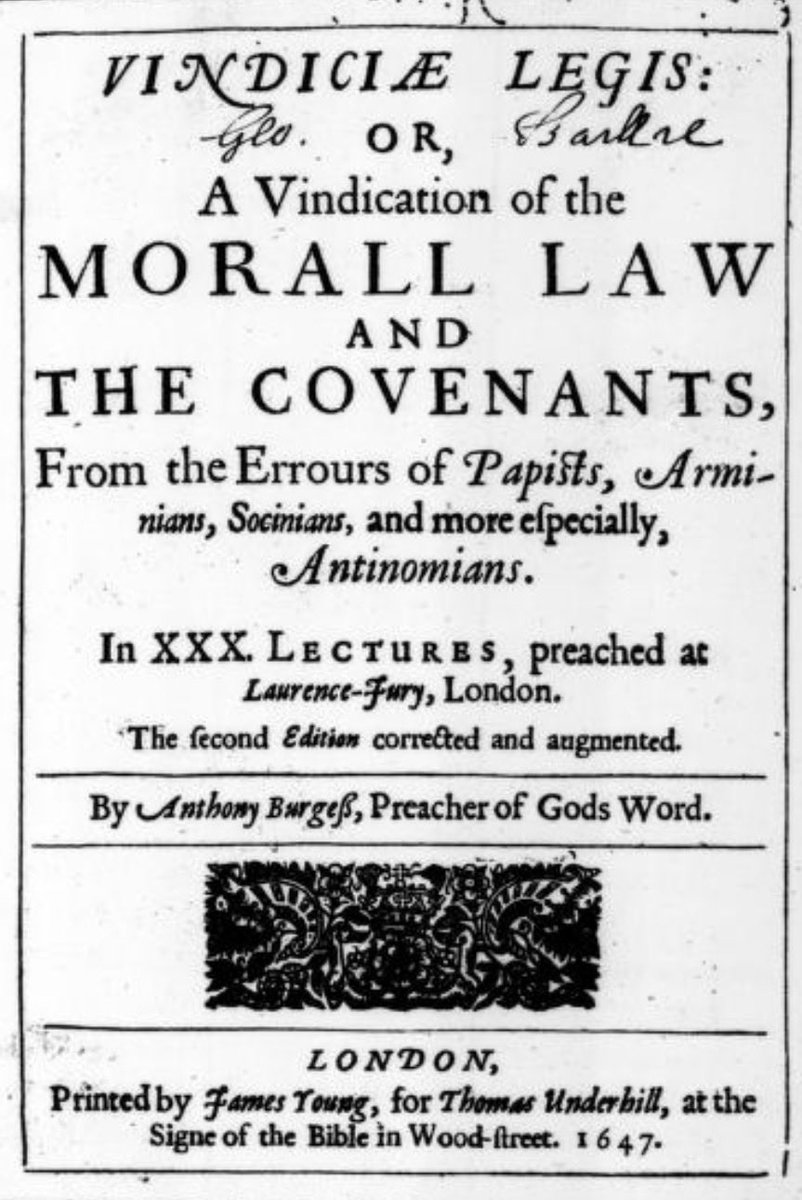
“I contest the idea that even under the Gospel, all sins are forgiven to the justified person at once. Although they are put into a state of justification where no condemnation awaits, their sins are not forgiven until they are committed and repented of. We pray for the daily pardon of sins, not solely for the assurance of pardon, but for the actual forgiveness itself.”
—Anthony Burgess, Vindiciae Legis, Lect. XXV
With your definition of “doing”, the only way we are justified apart from “doing” is absolute non-activity. In other words, even the decision to listen to the preaching of the Gospel is a work that someone has to do to be justified, and hence once can’t even be justified by faith in your theology of “doing.”
It is absurd and I believe many Protestants are taking note of how extreme your view is.
“In the Scriptures, then, to be blameless and righteous (Luke 1:6) is not to be sinless, unless reference is being made to Jesus. It is a vain imagination to suppose that we exalt the grace of God by suggesting that the only righteousness pleasing to God is Christ's righteousness. God manifests his grace in providing not only a righteousness that can withstand the full demands of the law, but also an inherent righteousness that he declares to be both good and pleasing.”
—Mark Jones, Antinomianism: Reformed Theology's Unwelcome Guest
Every so often I hear this idea in one form or another, that I do what I do for the money. I see regular RC comments, for example, claiming that I only don't convert because I wouldn't want to lose my paycheck.
The thing about this is that being a Lutheran theologian is about the dumbest financial decision I could have possibly made. I'm in a church body with less than a hundred congregations, with a seminary that cannot employ professors full-time. There are no big organizations to sponsor me, and there is no Lutheran speaking circuit to profit off of. There is no market for Lutheran theology. I've largely had to create one on my own.
If my goal was money, I never would have chosen to study theology. And if my theological goals were financial, I'd make *so* much more being RC or EO.
The "grifter" accusation has just become the go-to way to dismiss anyone who has a public platform these days to such an extent that the term hardly even means anything anymore.
All is see is blue paint. And images that are projections of the painters’ minds, not reality itself.
On the contrary:
I was baptized into the name of God, the Father, the Son, and the Holy Spirit.
In *God’s* name, not the name of a church, bishop, priest, ideology.
His name is His Presence, or, Himself, in all His fullness of the Blessed God who exists mysteriously as Triune.
He claimed me in baptism for himself, from the clutches of Satan, sin, death, and every man-made allegiance.
That God in love sent the Son, to assume my humanity, to die to satisfy justice for my sins, to be buried as the sin-bearer so sins would be buried, and to rise as the acceptable sacrifice so that I might be justified.
I believe in him. As he promised, I have already passed from death to life. I already have eternal life. He is the Way. He is the Door.
He accomplished all this and said all this for all sinners—before any blue paint was smeared, any arch was constructed, any artist hundreds and hundreds of years later decided in his fallen mind to project his fantasy of what Jesus looked like onto a ceiling.
“I would much rather give children hymns that they can grow into, rather than songs they will grow out of.”
—Rev. Pres. Mark Chepulis, LCMS North Dakota District, in the ND District News insert in The Lutheran Witness, May 2026
Nigerian Christians sing at the burial of their loved ones who were slaughtered by Islamic terrorists.
They sing that they are “Trusting in the Lord Jesus.”
The Reformed discord zoomers have uploaded most of the 17th century scholastics to their cerebral cortex & as a result are reverse engineering 19th century American Presbyterianism, finding out it agrees with a bunch of theologians who shall not be named instead of Owen & Co.
@Canonandcreed I’d highly recommend everyone to download the “Greystone Theological Institute” app. The membership is so worth it, there’s countless series and resources from Dr. Mark Garcia, Dr. Michael Lynch, etc. Watching the “Intro to Reformed Catholicity” Series rn 🔥
It is among the most ignored statements in the Westminster Standards because it is utterly incompatible and irreconcilable with conventional evangelicalism and with some of what is mistakenly called “Reformed” teaching in American church and social media contexts:
Q. 85. What does God require of us that we may escape his wrath and curse due to us for sin?
A. To escape the wrath and curse of God due to us for sin, God requires of us faith in Jesus Christ, repentance unto life, *with the diligent use of all the outward means whereby Christ communicates to us the benefits of redemption.*
Required (not merely recommended) *to escape God’s wrath and curse* (i.e., not merely to “evidence” our justification or grow in sanctification):
1. Faith in Jesus Christ
2. Repentance
3. *Diligent* use of all the *outward means* (preached Word and the sacraments) *by which* Christ communicates to us the benefits of redemption
Not one. Not two. All three.
It says volumes about our situation that some contemporary voices think this way of speaking is Roman Catholic and that it requires the Roman view of merit or of how the sacraments are means of saving grace, when it’s in fact just classic Westminster (i.e., confessionally Reformed catholic rather than unreformed Roman Catholic).
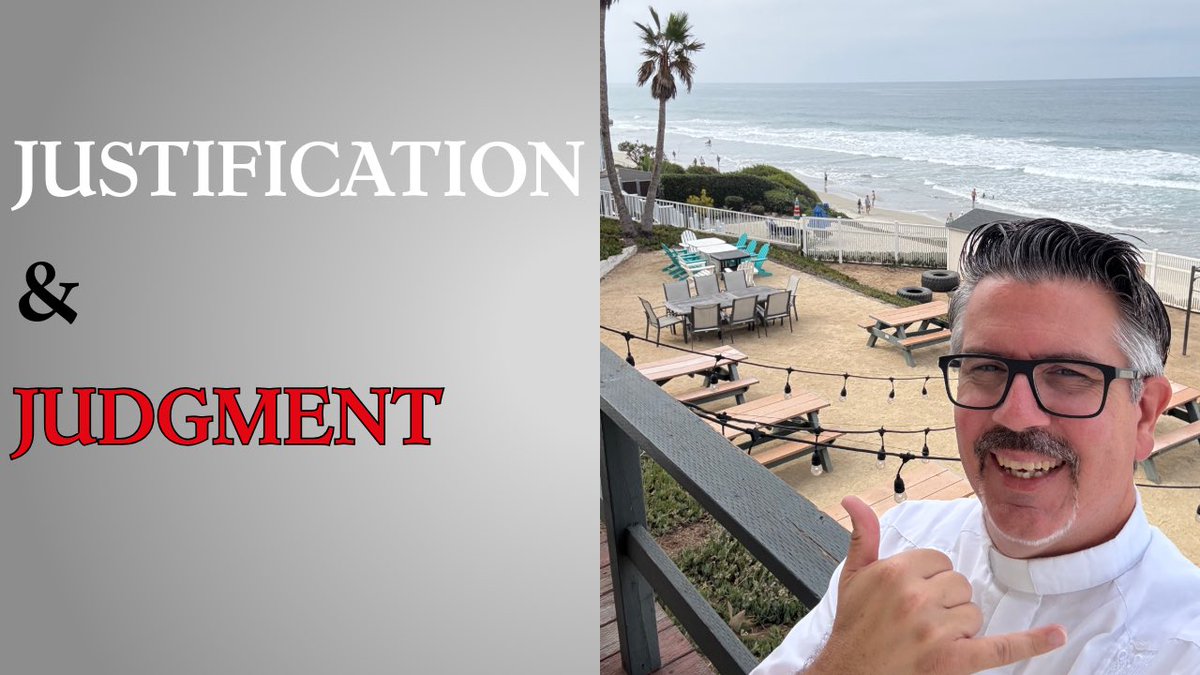
How do justification by faith alone & final judgment according to works fit together?
Paul holds together 2 truths: justification apart from works & judgment according to works.
What will the final judgment reveal about the realities of the human heart?
🔗 in comments below





![7ummumbonum's tweet photo. 𝐓𝐡𝐨𝐦𝐚𝐬 𝐌𝐚𝐧𝐭𝐨𝐧 𝐚𝐠𝐚𝐢𝐧𝐬𝐭 𝐭𝐡𝐞 𝐞𝐫𝐫𝐨𝐫 𝐨𝐟 𝐭𝐡𝐨𝐬𝐞 𝐰𝐡𝐨 𝐭𝐞𝐚𝐜𝐡 𝐭𝐡𝐞 𝐠𝐨𝐬𝐩𝐞𝐥 𝐢𝐬 𝐧𝐨𝐭 𝐚 𝐥𝐚𝐰—𝐞𝐱𝐜𝐞𝐫𝐩𝐭𝐬 𝐟𝐫𝐨𝐦 𝐡𝐢𝐬 𝐬𝐞𝐫𝐦𝐨𝐧 𝐨𝐧 𝐑𝐨𝐦. 𝟖:𝟐, “𝐅𝐨𝐫 𝐭𝐡𝐞 𝐥𝐚𝐰 𝐨𝐟 𝐭𝐡𝐞 𝐬𝐩𝐢𝐫𝐢𝐭 𝐨𝐟 𝐥𝐢𝐟𝐞 𝐢𝐧 𝐂𝐡𝐫𝐢𝐬𝐭 𝐉𝐞𝐬𝐮𝐬 𝐡𝐚𝐭𝐡 𝐦𝐚𝐝𝐞 𝐦𝐞 𝐟𝐫𝐞𝐞 𝐟𝐫𝐨𝐦 𝐭𝐡𝐞 𝐥𝐚𝐰 𝐨𝐟 𝐬𝐢𝐧 𝐚𝐧𝐝 𝐝𝐞𝐚𝐭𝐡”:
“First, In opening the words observe,—
1. Here is law opposed to law.
2. By the one we are freed from the other. […]
The covenant of grace is called the 'law of the spirit of life in Christ Jesus.' A law it is, for it hath all the requisites of a law, a precept, and a sanction. They err certainly, that tell us the gospel is no law; for if there were no law, there would be no governor, and no government, no duty, no sin, no judgment, no punishment, nor reward. […]
That the gospel hath the force of a law, I shall evidence by th[e] consideratio[n] that man, being God's creature, is his subject, and standeth related to him, as his rightful governor, and therefore is to receive what laws he is pleased to impose upon him: Is. xxxiii. 22, 'The Lord is our judge, the Lord is our law-giver, the Lord is our king, and he will save us;' and James iv. 21, 'There is one law-giver, who is able to save and to destroy.' […]
The gospel, which is both our rule and charter, is the law which in Christ’s name is given to the world. That appeareth,—
[1.] By the titles or terms wherein it is expressed ; as, Is. ii. 3, ‘Out of Zion shall go forth the law, and the word of God from Jerusalem.’ So Isa. lxii. 4, ‘The isles shall wait for his law ;’ and Is. li. 4, ‘A law shall proceed from me, and I will make my judgment to rest for a light to the people.’ And in the New Testament it is called ‘The law of faith,’ Rom. iii. 27, and the ‘Law of Christ,’ Gal. v. 2, so that the doctrine of salvation by Christ is that law which we should abide by.
[2.] The reason of the thing showeth it. For here is a governor or ruler, the Lord Christ, who hath acquired a new dominion and empire over the world, to save and to rule men upon his own terms…Christ being possessed of this lordship and dominion, hath made a new law of grace, which is propounded as a remedy for the relieving and restoring the lapsed world of mankind to the grace and favour of God; granting pardon and life to all that sincerely repent and believe in him, and live in new obedience; and peremptorily concluding and damning those to everlasting death that shall refuse these terms.
This new constitution and gospel covenant hath all the formalities of a law…it is not only enacted pleno jure, by an absolute and uncontrollable right; but proclaimed by authorised messengers sent by the Lord Christ, who in his name were to require the obedience of the world to his new law, cf. Mat. 28:19-20.
There is not only direction given to us to obey the gospel, but a charge and obligation is laid upon us…There is a coactive power in laws; God hath not left the creatures to comply with his directions if they please; no, there is a strict charge laid upon them; they must do it at their peril. Laws have a binding force, from the authority of their law-giver…Therefore we read much of the 'Obedience of faith' (cf. Rom. 1, 16, Acts 5, 6, 2 Cor. 10, 2 Pet. 1)…All this is said to show it is not arbitrary or indifferent, but we are bound by the authority of this new law.
This law hath a sanction, otherwise it were but an arbitrary direction, though delivered in a preceptive form. The sanction is by promises of reward, or by threatenings of punishment…The law of grace threateneth us with the highest penalties (cf. John 3:19, Heb. 10:29)…This sanction supposeth an exercise of government according to law; and so that there is a just governor and administrator, who will take account how this new law of grace is kept or broken…God's external government is according to the law of the gospel.”](https://pbs.twimg.com/media/HJbgdNeaUAAJ64u.jpg)