Selecting Luanna Jiang as #Harvard’s graduate speaker was not a wise decision. The choice presumably aimed to showcase the benefits of internationalisation and diversity in American higher education. It had the opposite effect: it has unintentionally reinforced the stereotype of elite U.S. institutions as serving global elites (criticism particularly arose from those of authoritarian regimes) while appearing indifferent, if not complicit, to malign foreign influence.
Jiang’s address centred on the concept of a “shared future of humanity,” a phrase that mirrors the ideological framework of “人類命運共同體,” or “community with a shared future for mankind,” first introduced by Chinese President Xi Jinping in 2017. The underlying premise is clear: the Chinese Communist Party seeks to expand its global influence under the guise of promoting the common good, all while rejecting accountability within international mechanisms. This vision of a shared future rests on a unipolar, Sino-centric worldview designed to allow Beijing to bypass democratic norms and scrutiny. The goal is not cooperation, but dominance through coercion or inducement.
We fail if we don’t take the threats from malign actors seriously. Under Xi, the People’s Republic of China has intensified its authoritarian expansionism and increasingly undermines the international order. Whether we wish to view Xi as “an enemy” is beside the point; what matters is that his regime decided to act like one long ago.
What concerns me most is how these sugar-coated pacifist messages can blur the judgment of even the most intelligent minds. It will ultimately lead to more suffering around the world because dictators don’t get as much scrutiny and accountability. This speech delegation decision may deepen public scepticism toward institutions like Harvard, casting them as naive (or worse, complicit) in the face of obvious danger.
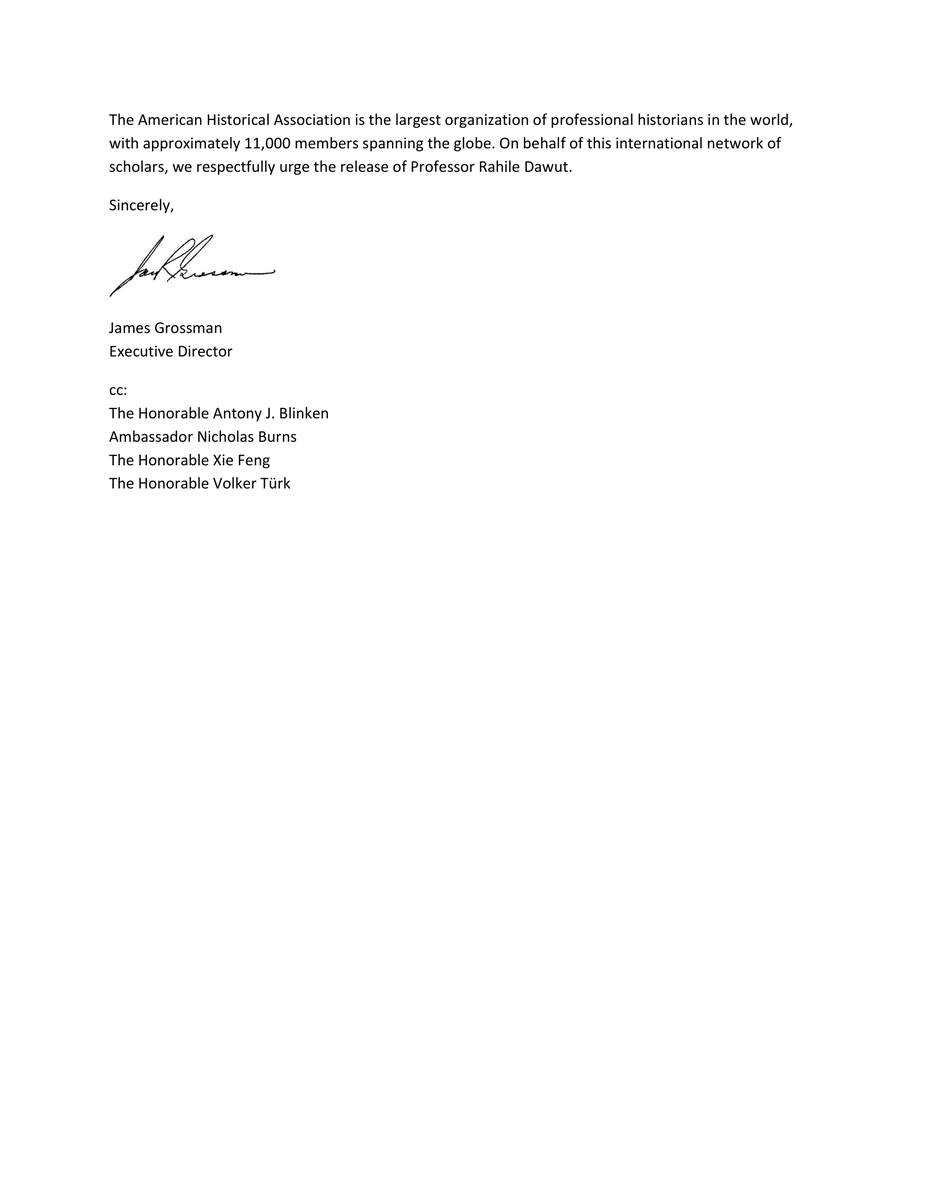
Important letter #FreeRahile 🕊️
The American Historical Association, the world's largest organization of professional historians, appeals for release of Uyghur anthropologist Rahile Dawut.
@AHAhistorians@JimGrossmanAHA
https://t.co/izmRgZwgPy
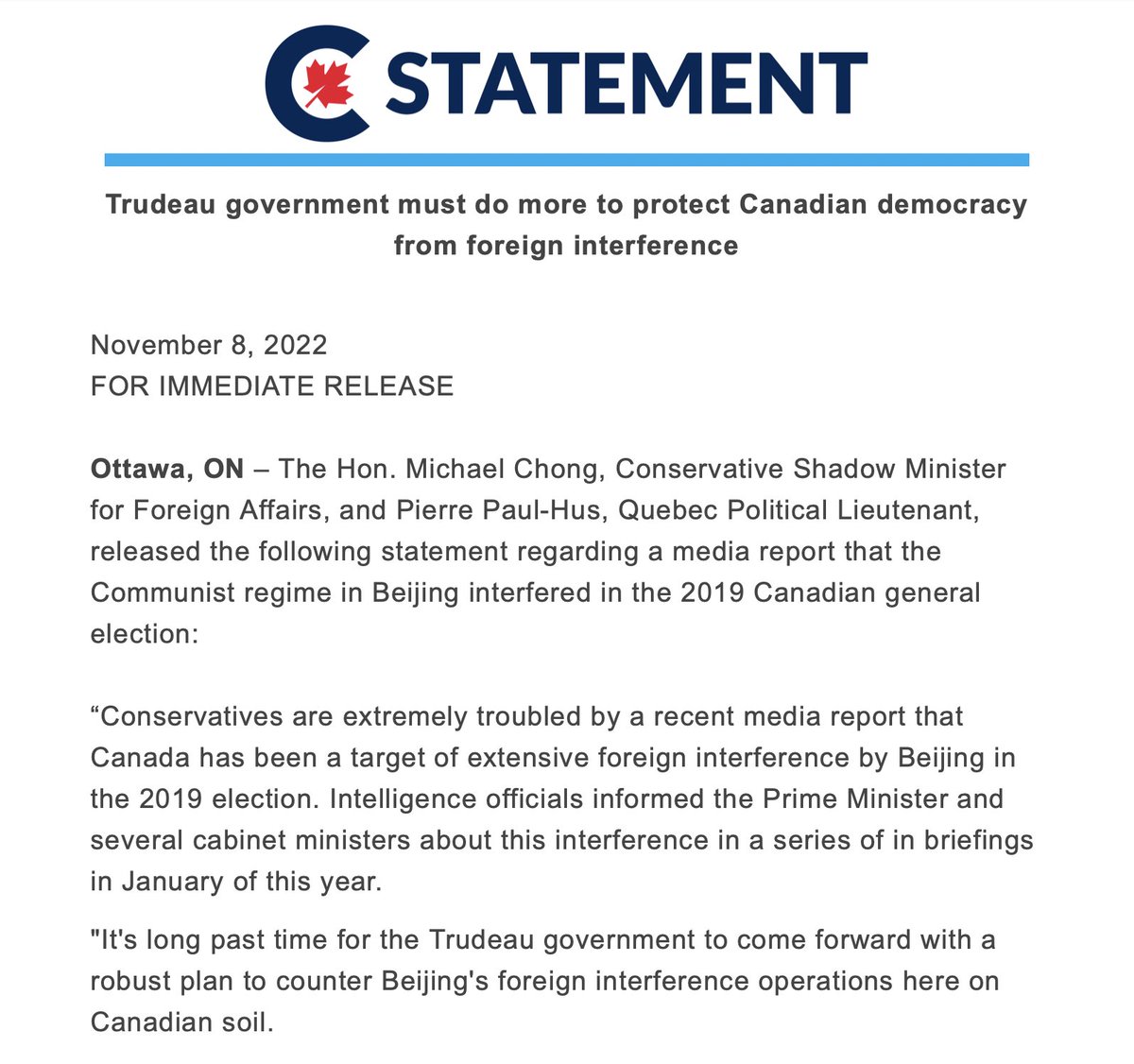
BIG: NDP is proposing a public inquiry on foreign election interference, this will be moved tomorrow, "power to order and review all documents, including national security documents." This could split the NDP and Liberals.
#HongKong: How far this "not British colony" has fallen?
"Protesters can now demonstrate more freely on the mainland than they can in the former British colony", @mbrookerhk writes https://t.co/TvYvkbUUzv via @opinion
Autocratic leaders tend to be stiff, humorless, and paranoid about any potential slight. Contrast this with #Taiwan President @iingwen, who leads one of the most vibrant democracies in Asia. (Try imagining Xi Jinping in such a scene!)
Reflecting on the Handover anniversary, ex-Hong Kong leader Leung Chun-ying told TVB on Sunday that Hong Kong "doesn't earn a living through politics."