The Christian Church is a great mission-house. Each Christian in it is a missionary sent out by God into his own circle to convert others.
-CFW Walther
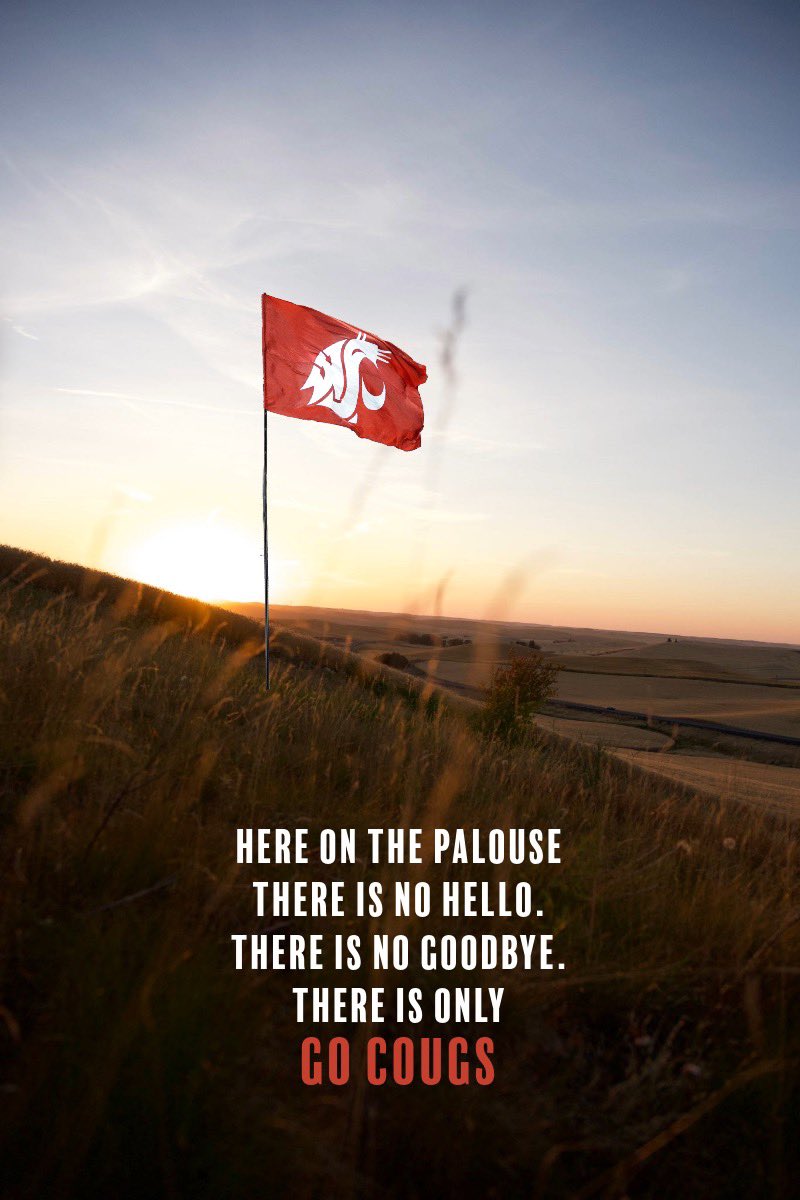
2024 will be a season like no other.
Beavs & Cougs around the world - Welcome, to the Fight!
Full video: https://t.co/4aWYp8Wzco
@BeaverFootball x @WSUCougarFB
being pivotal) & practice (e.g., no church fellowship with those who teach, tolerate, or by church fellowship approve of any contrary doctrine). N.B.: It goes without saying that the externals of church life are to be lovingly adapted to local custom and circumstances (1Cor 9:22)
Evangelical Lutheran identity in any non-trivial sense rests not on ethnic, historical, administrative, ritual-ceremonial, or any other purely external customs or continuities, but strictly on faithfulness to the Lutheran Confession in doctrine (justification and the Sacrament
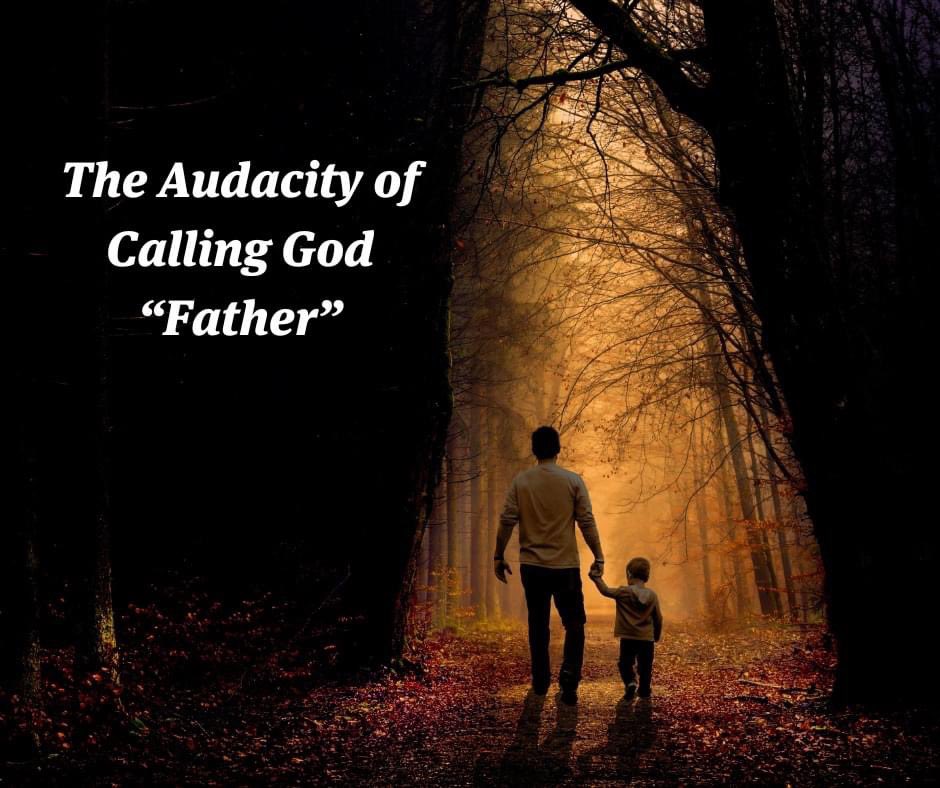
The Audacity of Calling God “Father”
If I call God “God” I speak truthfully.
If I call God “Lord” I speak submissively.
If I call God “King” I speak servilely.
But if I dare to call God “my Father,” I speak with a brassy audacity, chutzpah, that is shockingly familiar and intimate. So it seems anyway.
You dare to call the Master of the Universe “Father”?
You dare to call the One who controls heaven and hell “Father”?
You call the Omnipotent one “Father”?
Who do you think you are?
It is difficult to imagine a more audacious act than to stand before the Creator of the world and to name him “Father.” And mean it. And not only to mean it, but to act and speak as a child acts and speaks before a loving and doting Dad.
It’s shocking. It’s exhilarating.
And it’s beautiful beyond words.
But here’s a secret: it’s not really chutzpah. It’s not some brassy boldness that we work ourselves into, nor it is gained by swallowing a bottle of liquid spiritual courage, as it were.
To call God “Father” is simply to live in the space which Jesus created. To move from residing far from God as his enemy; or on the other side of town from him as a stranger; or down the street as an acquaintance; or in an adjoining house as a servant; and to move into our own bedroom as a child in his family. To wake up in the morning and see our Father sipping a cup of coffee and saying, “Good morning, my child,” as we respond, “Good morning, Father.”
You see, when we live in this house, when we move into the room built by Jesus, we inhabit the home not merely of a Master or Lord or King, but the one who’s given us his name and made us his own, now and forever.
“Our Father”: two of the most amazing words ever uttered.
++++++
This post reflects one of the chapters we read today in Bible in One Year. For more information, go to: https://t.co/XxNvEtNH7e
Why Was Moses Not Allowed to Enter the Promised Land?
There are three reasons that are usually considered. Each of them reflects the biblical language in Psalm 106 and Numbers 20 (one of the chapters we read today in Bible in One Year ([https://t.co/XxNvEtNH7e ]).
First, the action of Moses is highlighted. God told him to speak to the rock, but instead, Moses struck it twice. Second, some highlight the character of Moses since he was irate with the people that day. Third, the words of Moses are sometimes given as the reason, because he called the people “rebels” and said, “Shall we [himself and Aaron] bring water for you out of this rock….” (Num. 20:10). Some argue that Moses implied that he and his brother were the source of this miracle rather than God.
The Lord explained it to Moses and Aaron this way: “Because you did not believe in me, to uphold me as holy in the eyes of the people of Israel, therefore you shall not bring this assembly into the land that I have given them” (20:12). Psalm 106 says that the Israelites “angered [God] at the waters of Meribah, and it went ill with Moses on their account, for they made his life bitter, and he spoke rashly with his lips” (vv. 32-33).
Pulling this all together, Moses did not trust God that day, did not treat him as holy, was embittered, and spoke rash words. As a result, it would not be Moses but Joshua who led the people into the promised land.
Many centuries later, Moses stood beside the new and greater Joshua, Jesus the Messiah, atop the Mount of Transfiguration (Matt. 17:13). So, Moses did in fact make it to the land of promise, but only in Jesus.
As it was for Moses, so it is for us. Only in Christ are we, sinners like Moses, entering into the kingdom of God. Jesus and Jesus alone gets us there. And he gets us there solely by grace, for “the law was given through Moses; grace and truth came through Jesus Christ” (John 1:17).
@EricOswald1 This Wednesday at noon was the same! I walked right up since no one was there. Took 5 minutes to be dropped off and then through security. I was shocked.
One of the main struggles people have with the reality that God uses baptism to deliver the forgiveness of sins that Jesus won on the cross, for all, and to give us His Holy Spirit, is that they get stuck defending the bottom line.
@EricOswald1 It's always the biggest service for us! Simply massive amounts of people every year. Luckily I think the morning services alleviated how many people came to that service
Cool outreach idea my church did today.
A few guys decided to go to U of Cincinnati and give away free hot dogs and a drink if they’d simply “Ask a Christian a question.”
Posted up in a high traffic area. Tons of people came. It was simple and fun.
I had people ask me, “what’s your favorite Bible verse?” Or “what do you like best about being a Christian?”
One guy asked my friend Eric, “what is the fruit of the Spirit?” As he answered the question more people listened in. Was able to talk about “works of the flesh” while he was at it.
People were open. Friendly conversations, gospel presentations, and prayer. Will definitely do it again.




![birdchadlouis's tweet photo. Why Was Moses Not Allowed to Enter the Promised Land?
There are three reasons that are usually considered. Each of them reflects the biblical language in Psalm 106 and Numbers 20 (one of the chapters we read today in Bible in One Year ([https://t.co/XxNvEtNH7e ]).
First, the action of Moses is highlighted. God told him to speak to the rock, but instead, Moses struck it twice. Second, some highlight the character of Moses since he was irate with the people that day. Third, the words of Moses are sometimes given as the reason, because he called the people “rebels” and said, “Shall we [himself and Aaron] bring water for you out of this rock….” (Num. 20:10). Some argue that Moses implied that he and his brother were the source of this miracle rather than God.
The Lord explained it to Moses and Aaron this way: “Because you did not believe in me, to uphold me as holy in the eyes of the people of Israel, therefore you shall not bring this assembly into the land that I have given them” (20:12). Psalm 106 says that the Israelites “angered [God] at the waters of Meribah, and it went ill with Moses on their account, for they made his life bitter, and he spoke rashly with his lips” (vv. 32-33).
Pulling this all together, Moses did not trust God that day, did not treat him as holy, was embittered, and spoke rash words. As a result, it would not be Moses but Joshua who led the people into the promised land.
Many centuries later, Moses stood beside the new and greater Joshua, Jesus the Messiah, atop the Mount of Transfiguration (Matt. 17:13). So, Moses did in fact make it to the land of promise, but only in Jesus.
As it was for Moses, so it is for us. Only in Christ are we, sinners like Moses, entering into the kingdom of God. Jesus and Jesus alone gets us there. And he gets us there solely by grace, for “the law was given through Moses; grace and truth came through Jesus Christ” (John 1:17).](https://pbs.twimg.com/media/GMuhFhBXoAAiaUO.jpg)