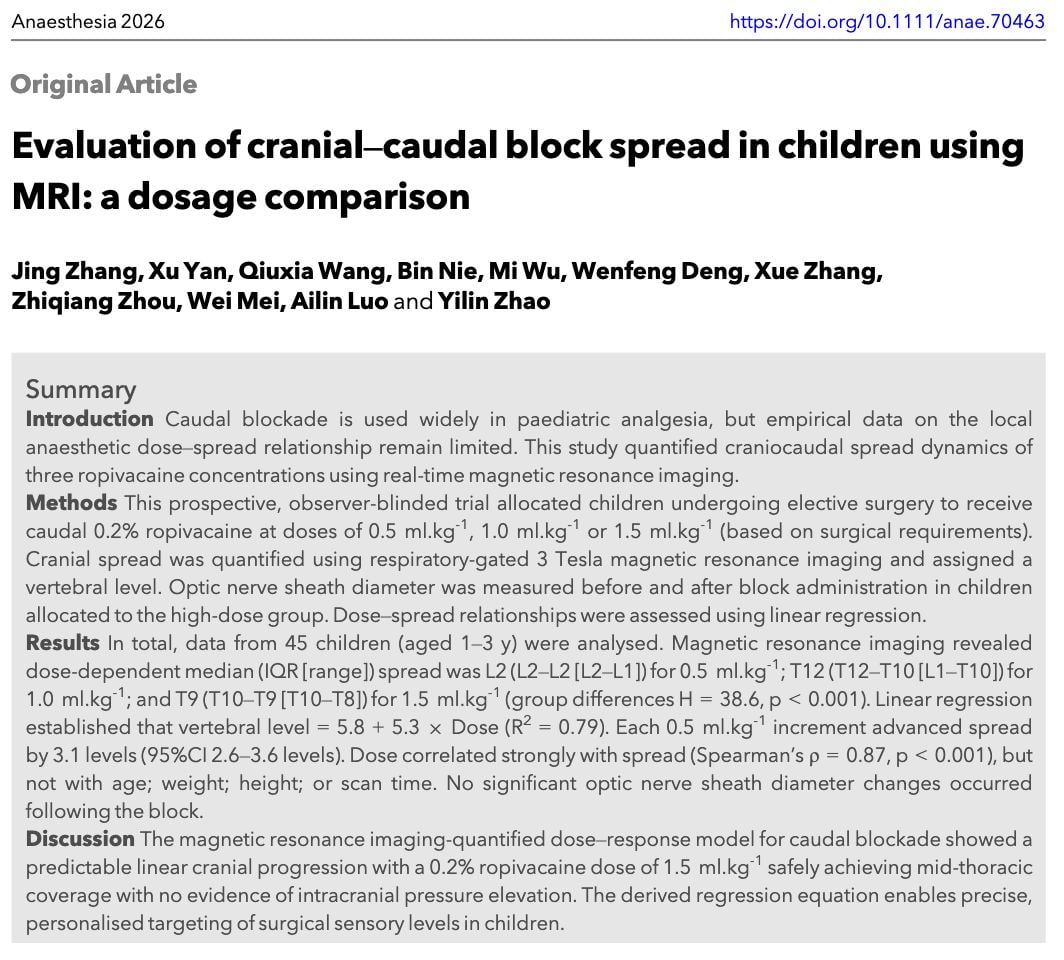
Where does the local anaesthetic spread to when you perform a caudal in a child?
This team used MRI in 45 children to figure it out!
Turns out that each 0.5 ml/kg increment advanced spread by 3.1 vertebral levels.
#anaesthesia#MedX#MedTwitter
https://t.co/u1xKk11zCI
Scheffenbichler et al investigate #neuromuscular monitoring in #children (kinemyography vs electromyography) after injection of rocuronium and sugammadex and highlight the importance of a baseline before NMBA.
https://t.co/3fuzrGycln
TIVA vs volatile anesthesia — VITAL trial, JAMA:
• No meaningful difference in days alive/out of hospital at 30 days
• Complications, delirium, death similar
• Two cases of unintentional awareness under anesthesia were reported in the TIVA group
https://t.co/LKX53qoFdZ
🧠 How might sevoflurane affect the brain at the cellular level?
A new narrative review examines the complex pathways involved in sevoflurane-associated neuronal cell death, particularly in the developing and aging brain.
The authors explore multiple cell-death mechanisms—including apoptosis, ferroptosis, necroptosis, and pyroptosis—along with mitochondrial dysfunction and oxidative stress. They also examine potential protective mechanisms and strategies for minimizing neurotoxic effects in at-risk populations.
https://t.co/CJ8y4F9Ub1
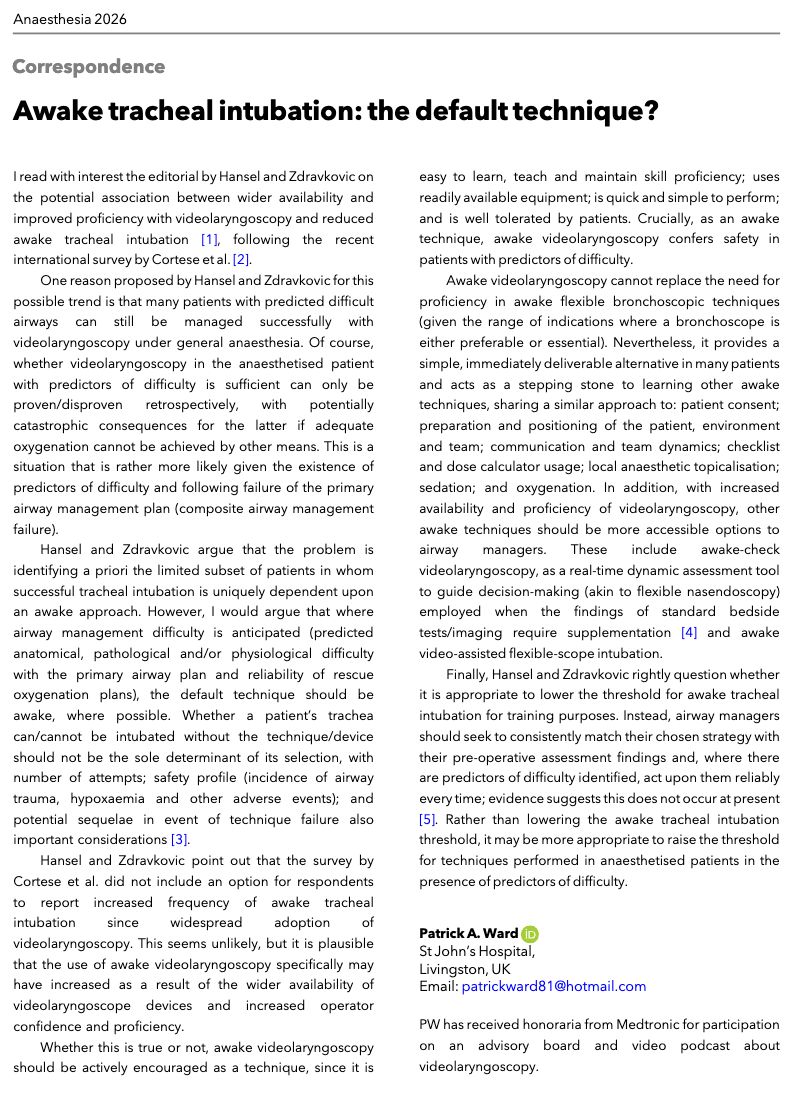
Awake tracheal intubation: the default technique?
Where there is predicted anatomical, pathological and/or physiological difficulty with the primary airway plan and reliability of rescue oxygenation plans, the default technique should be awake, where possible.
#anaesthesia #MedTwitter #MedX
https://t.co/1iHUlonC8K
Recent research from Wellesley College provides empirical evidence linking consciousness to quantum processes within neuronal microtubules.
By analyzing anesthetic interactions with tubulin dimers, researchers observed that gases like isoflurane bind to hydrophobic pockets, suppressing megahertz-scale quantum dipole oscillations essential for coherence.
Crucially, the study demonstrated that microtubule-stabilizing drugs significantly delay the onset of unconsciousness in vivo. This identifies microtubules—rather than just synaptic proteins—as a primary functional target of anesthesia.
These findings decouple conscious states from classical neurotransmission, supporting the Penrose-Hameroff "Orch OR" theory. In this framework, consciousness is viewed as an orchestrated quantum state within the cellular scaffold.
This discovery marks a pivotal shift in our understanding of the physical basis of the mind.
https://t.co/oAIek3aZuA
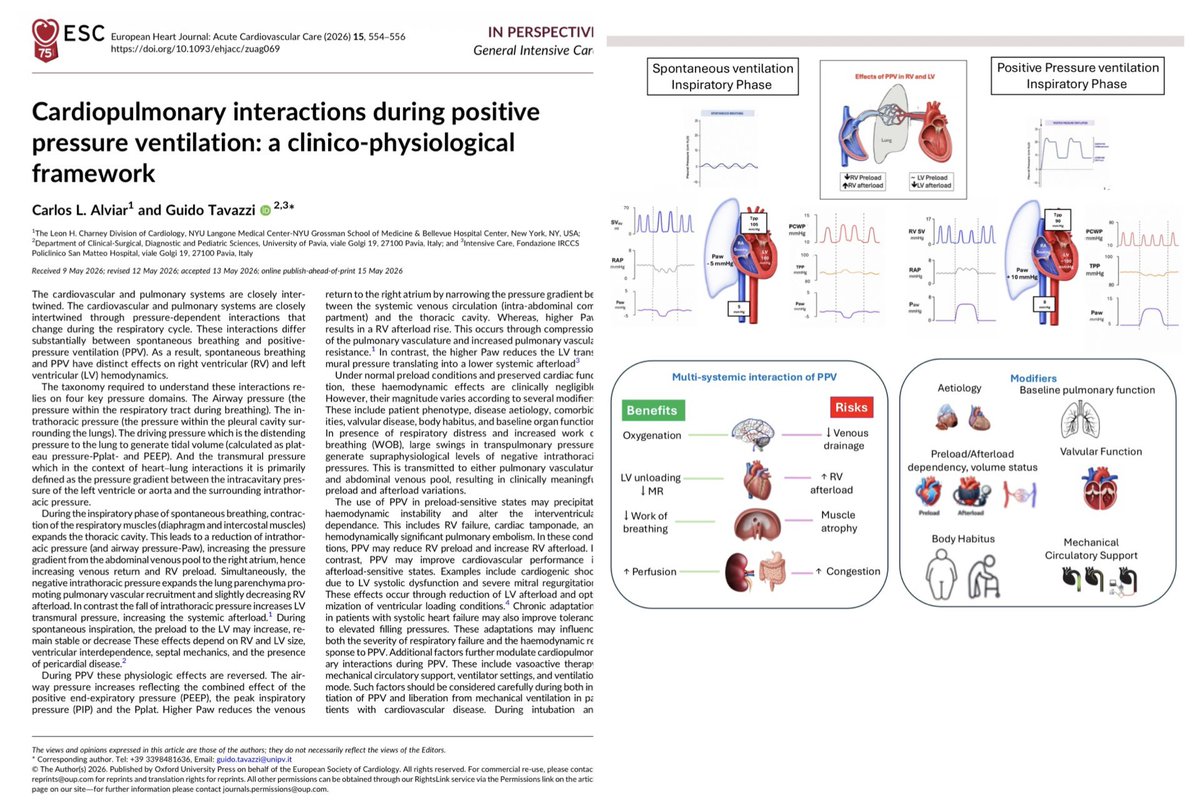
Interacción cardiopulmonar
Durante la inspiración espontánea:
✅Disminuye la presión intratorácica.
✅Aumenta el gradiente de retorno venoso.
✅Incrementa la precarga del ventrículo derecho.
✅Disminuye discretamente la poscarga del VD por reclutamiento vascular pulmonar.
✅Aumenta la presión transmural del VI, incrementando su poscarga.
Ventilación con presión positiva
Durante la inspiración con VPP ocurre el fenómeno opuesto:
Sobre el ventrículo derecho
✅Disminuye el retorno venoso.
✅Disminuye la precarga.
✅Aumenta la resistencia vascular pulmonar.
✅Incrementa la poscarga del VD.
Sobre el ventrículo izquierdo
✅Disminuye la presión transmural.
✅Disminuye la poscarga sistémica.
✅Facilita la eyección ventricular.
Situaciones donde la VPP puede ser perjudicial
La VPP puede precipitar inestabilidad hemodinámica en pacientes dependientes de precarga, como:
❌Falla ventricular derecha.
❌Taponamiento cardíaco.
❌Tromboembolia pulmonar masiva.
En estas condiciones reduce aún más la precarga del VD y aumenta su poscarga, favoreciendo el deterioro del gasto cardíaco.
Situaciones donde la VPP es beneficiosa
En pacientes dependientes de poscarga, la VPP mejora el desempeño cardiovascular:
✅Choque cardiogénico por disfunción sistólica del VI.
✅Insuficiencia mitral grave.
✅Edema agudo pulmonar cardiogénico
🤓🫀We keep asking: “What’s the cardiac output?”
But maybe the better question is:
“How efficiently is the heart working?”
In septic shock, we often focus on:
Preload
Cardiac output
MAP
But we forget something fundamental:
👉 The heart doesn’t work alone.
👉 It works against the arterial system.
1. The missing concept: Ventriculo–arterial coupling (LVAC)
LVAC = interaction between:
Ees → contractility
Ea → arterial load
👉 Expressed as Ea / Ees
This ratio reflects:
How efficiently the heart converts energy into forward flow
2. What is “normal”?
LVAC ≈ 0.5 → optimal efficiency
LVAC ≈ 1 → maximal stroke work
LVAC > 1 → uncoupling (inefficient system)
But here’s the twist:
👉 In septic shock, LVAC is often >1
👉 Not just due to vasodilation—but also myocardial dysfunction
3. Why this matters clinically
Two patients can have:
Same MAP
Same CO
But completely different physiology:
✔ One → efficient coupling
❌ One → energy wasted, poor flow generation
4. The key insight
Septic shock is NOT just:
❌ “low preload”
❌ “vasodilation”
It is:
👉 A mismatch between heart and arterial system
5. Therapy changes the balance
Fluids → may improve coupling (↓ LVAC)
Norepinephrine → can improve OR worsen coupling
Inotropes → target Ees
Important:
👉 Increasing MAP ≠ improving flow
👉 Increasing pressure can worsen afterload
6. The most interesting part
From the data:
LVAC >1 can predict response to norepinephrine
But improving LVAC ≠ guaranteed tissue perfusion and outcomes follow a U-shaped curve
👉 Both too high AND too low LVAC can be harmful
7. The limitation we must respect
Even if you “optimize” LVAC:
👉 Microcirculation may still be impaired
👉 Lactate may still rise
👉 Shock may persist
Because: Macro ≠ micro
🤓Final message
We need to move from:
❌ “Fix the blood pressure”
To:
✅ “Optimize the interaction between heart and vessels”
LVAC doesn’t replace hemodynamics.
It completes it.
📃Reference
Caicedo Ruiz JD et al. Journal of Critical Care, 2026. https://t.co/1ZNMHqwBl4
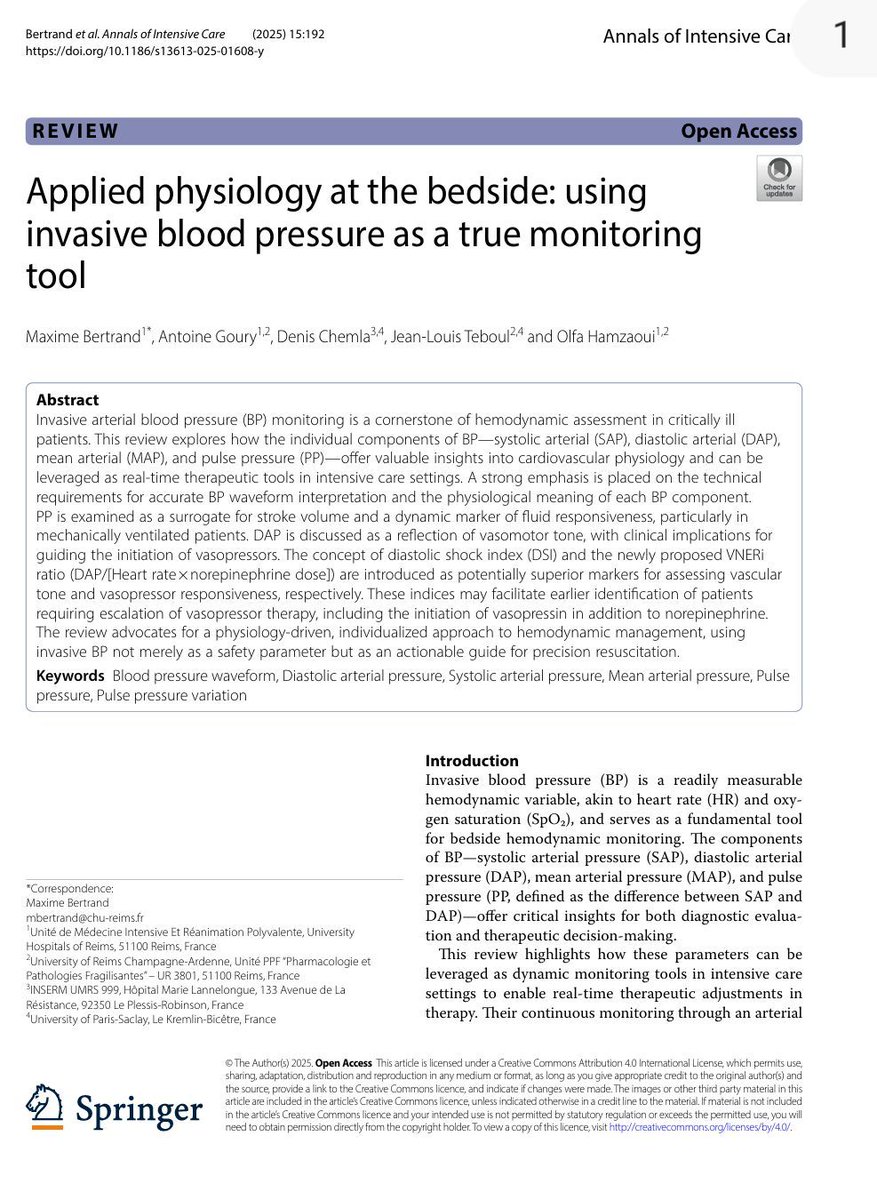
🫀 Applied physiology at the bedside: Are we underusing arterial pressure monitoring?
Invasive blood pressure is often simplified to a single target: MAP 😑
However, this excellent review highlights that arterial pressure should be interpreted as a composite physiological signal, not just a safety threshold.
🔍 Key insights:
1. Each BP component reflects a different physiological domain
• SAP → systolic performance / stroke volume
• DAP → vascular tone
• PP → dynamic flow marker
2. Pulse pressure as a dynamic tool
• Surrogate of stroke volume
• Marker of fluid responsiveness (especially in ventilated patients)
3. Diastolic pressure as a marker of vasoplegia
• Low DAP → early sign of distributive shock
• Useful to guide vasopressor initiation
4. Emerging indices for precision resuscitation
🔹 Diastolic Shock Index (HR/DAP)
🔹 VNEri (DAP / HR × norepinephrine dose)
👉 Potential tools to better assess vascular tone and vasopressor responsiveness
🎯 Take-home message:
The arterial line should not be seen as a passive monitor, but as an active, real-time guide for individualized hemodynamic management.
Bertrand et al. Annals of Intensive Care (2025) 15:192 https://t.co/9xTt2IkuI3
#CriticalCare #Hemodynamics #ICU #Shock #Anesthesiology #POCUS #MedicalEducation
🧵 TRATAMIENTO DE Helicobacter pylori: lo NUEVO según JAMA 2026
1️⃣ ¿Por qué importa? 🦠
Helicobacter pylori infecta millones de personas y está asociado a:
▪️ Gastritis crónica
▪️ Úlcera péptica
▪️ Cáncer gástrico
👉 Erradicarlo = prevenir complicaciones graves
2️⃣ ⚠️ PROBLEMA CENTRAL:
👉 Resistencia antibiótica creciente
Especialmente a:
❌ Claritromicina
❌ Levofloxacina
Esto ha obligado a CAMBIAR completamente el enfoque terapéutico.
3️⃣ 🔑 MENSAJE CLAVE (take-home):
👉 La terapia clásica triple con IBP + claritromicina YA NO es de primera línea
🚫 Uso empírico NO recomendado
4️⃣ 🥇 PRIMERA LÍNEA ACTUAL
👉 Terapia cuádruple con bismuto (BQT) por 14 días
💊 Incluye:
▪️ IBP
▪️ Bismuto
▪️ Tetraciclina
▪️ Metronidazol
📈 Erradicación ≈ 81% (superior a terapia triple)
5️⃣ ⚠️ ERRORES FRECUENTES en BQT:
❌ <10 días de tratamiento
❌ Dosis bajas de metronidazol
❌ Sustituir tetraciclina
❌ IBP en dosis subóptima
👉 Resultado: FALLA TERAPÉUTICA
6️⃣ 🧠 ALTERNATIVAS (si no puedes usar BQT):
🔹 Terapia triple con rifabutina
🔹 Terapia dual con vonoprazán (PCAB) + amoxicilina
📌 Útiles pero con menor evidencia comparativa directa
7️⃣ 💡 NUEVO PROTAGONISTA:
👉 Vonoprazán (PCAB)
Ventajas:
⚡ Supresión ácida más potente
⚡ Menor dependencia de CYP2C19
⚡ Mejores resultados en resistencia
8️⃣ ⚠️ PACIENTE CON FALLA TERAPÉUTICA
👉 Regla de oro:
NO repetir el mismo esquema
✔️ Si no recibió BQT → usar BQT
✔️ Si ya recibió BQT → usar rifabutina
9️⃣ 🔬 TEST DE CURA = OBLIGATORIO
Siempre confirmar erradicación:
✔️ Test de aliento
✔️ Antígeno fecal
✔️ Biopsia
⏱️ ≥4 semanas post tratamiento
🔟 🤯 DATO CLAVE
👉 Adherencia y efectos adversos:
📌 BQT: más efectos leves, pero similar abandono
📌 Rifabutina: mejor tolerancia en rescate
1️⃣1️⃣ 🧠 PUNTO AVANZADO:
👉 La guía NO recomienda rutinariamente pruebas de sensibilidad antibiótica
Pero considerar si:
✔️ Fallas múltiples
✔️ Consideras claritromicina
1️⃣2️⃣ 🚨 LIMITACIÓN IMPORTANTE
👉 Evidencia centrada en Norteamérica
⚠️ En LATAM (como Colombia), la resistencia puede ser AÚN mayor
👉 BQT cobra aún más relevancia
1️⃣3️⃣ 💥 Para llevar a casa 🏠
📌 Olvida la triple terapia clásica
📌 Usa BQT como estándar
📌 Confirma erradicación SIEMPRE
📌 Personaliza según tratamientos previos
👉 Esto impacta directamente en cáncer gástrico
📲 Sígueme en X: @rksanti
📚 Únete al canal de Telegram y descarga: https://t.co/RnTJbpwPHU
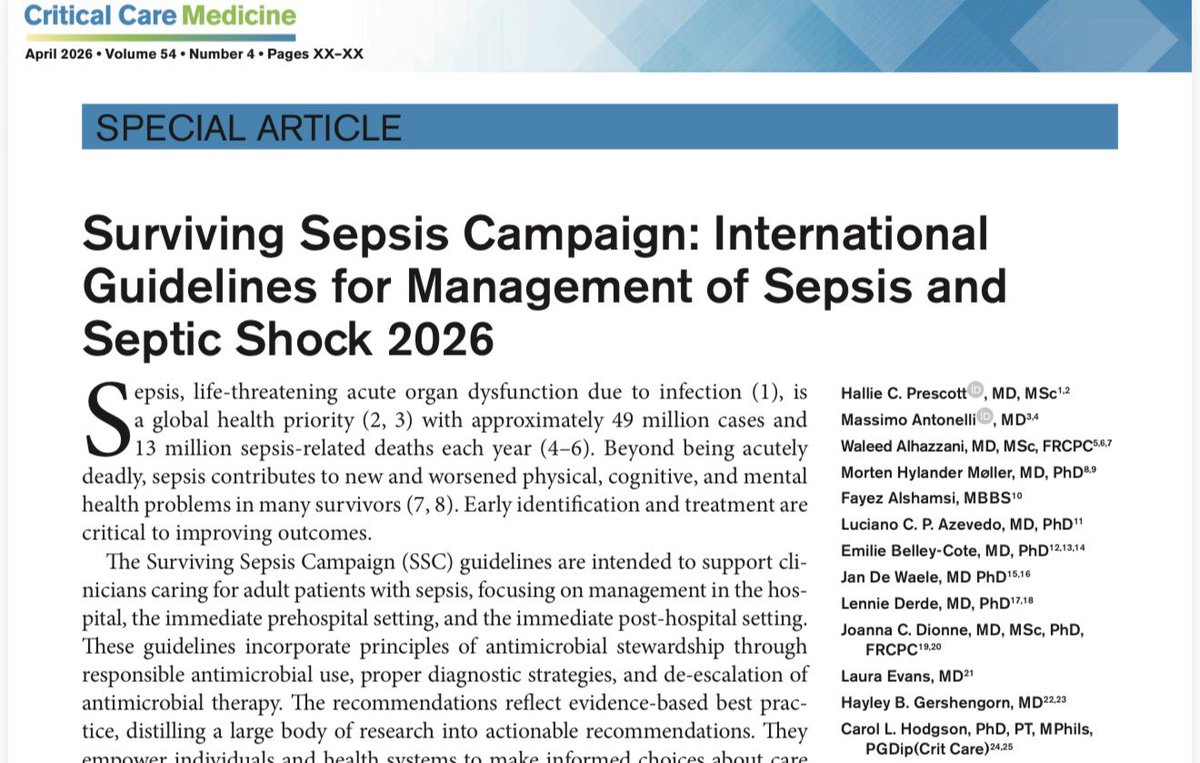
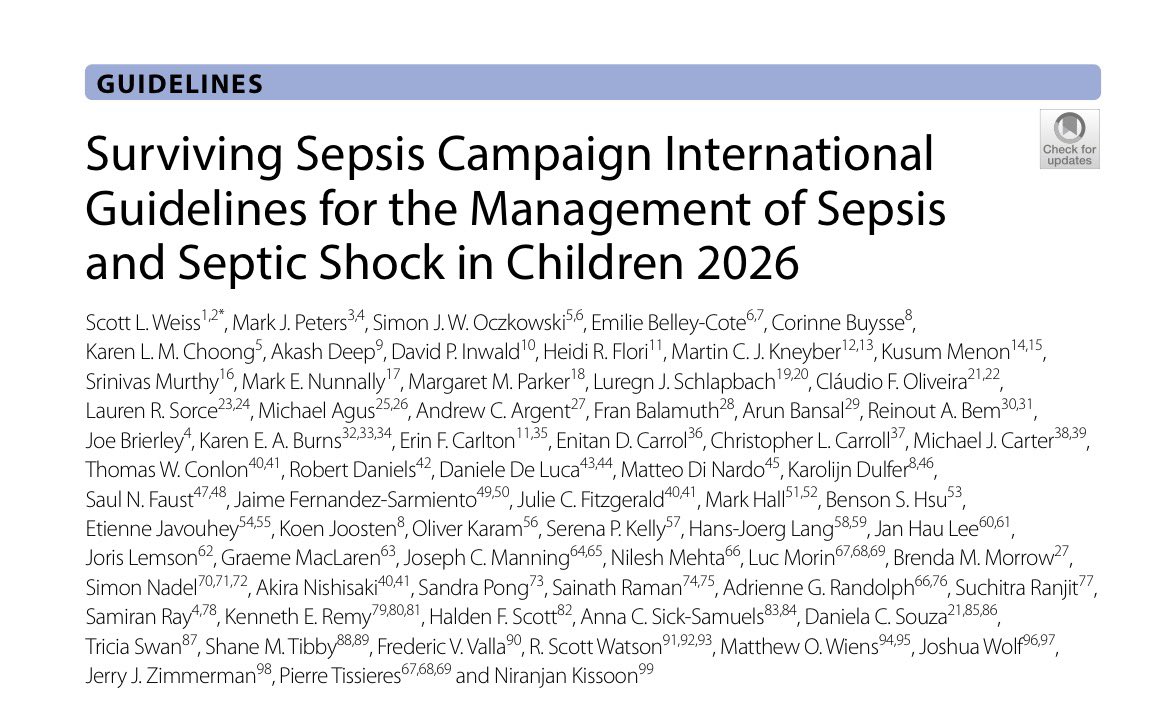
¿Acaso es Navidad? Nuevas guías Surviving Sepsis 2026, tanto adultos como niños.
Lectura obligada para los profesionales de la salud 🔥🔥🔥🔥
Acceso gratuito.
Referencia: https://t.co/33vJ0a3iut
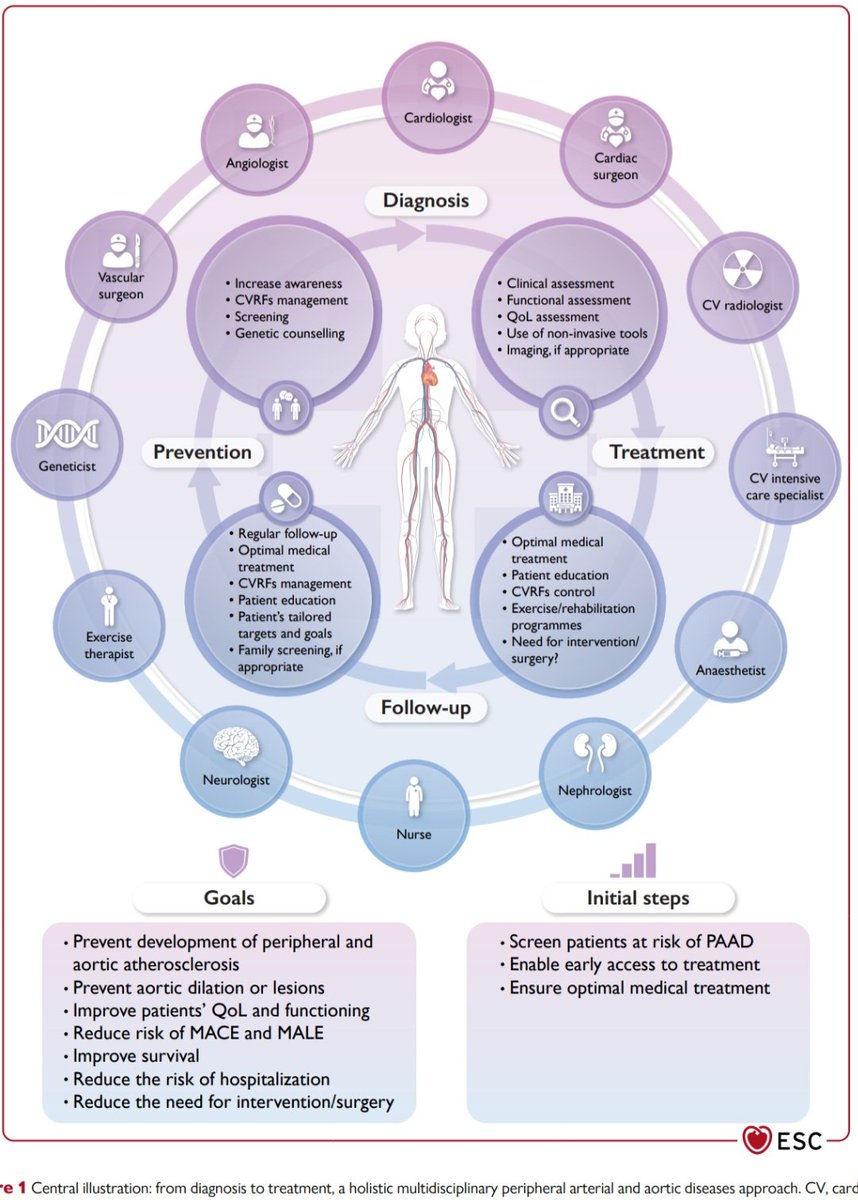
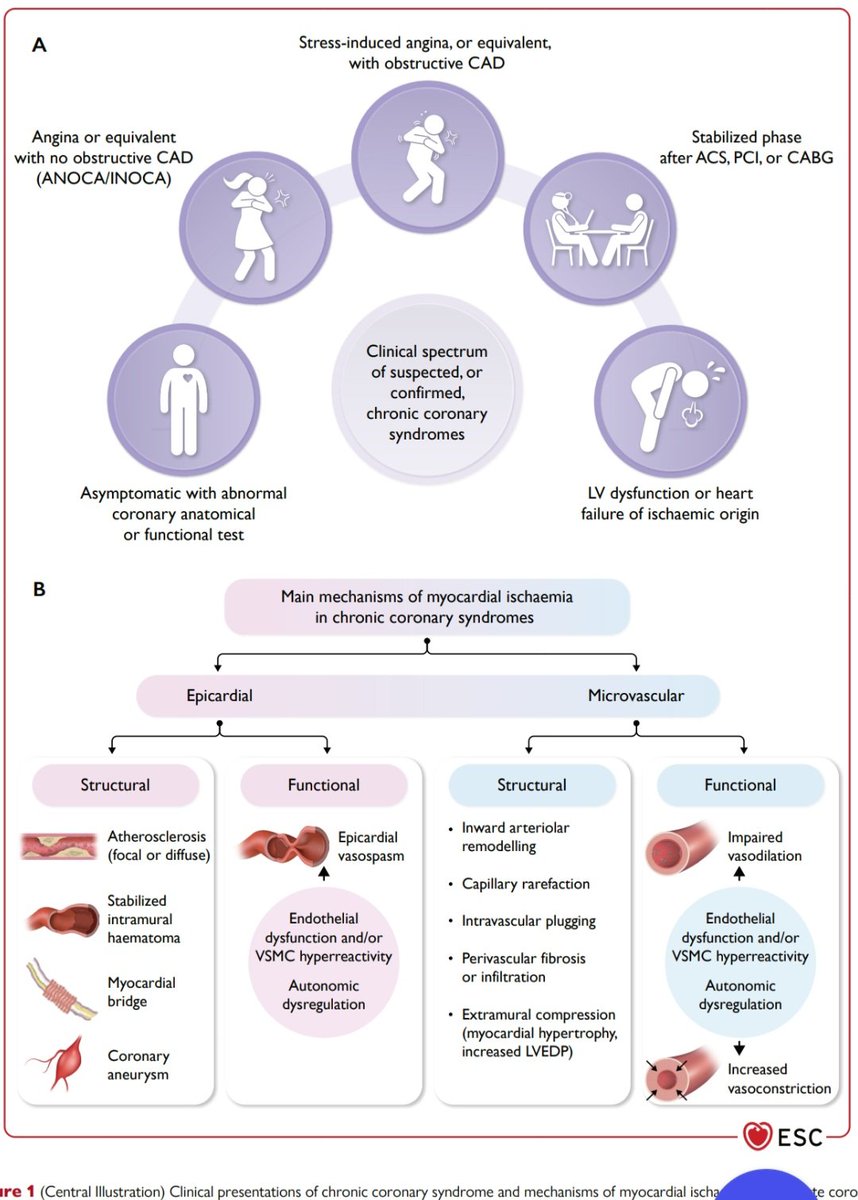
📣4 nuevas Guías ESC 2024‼️ #ESCCongress 💯👌🏻🫀
1️⃣Manejo de la Fibrilación Auricular. 🫀⚡️
https://t.co/6t9kQxpHbv
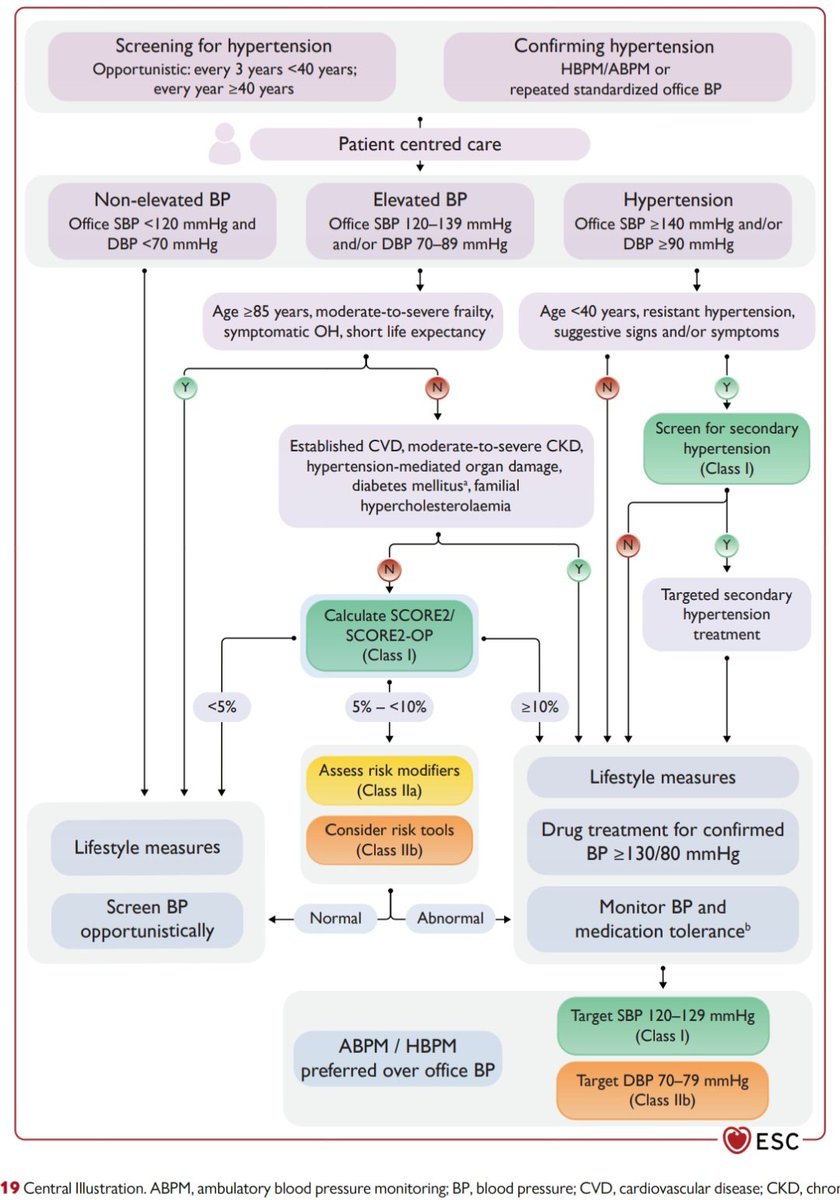
2️⃣Manejo de la Hipertensión Arterial. 🫀💢
https://t.co/wHqbwZMBH8
3️⃣Manejo del síndrome coronario crónico. 🫀💥
https://t.co/GWUpDJM59v
4️⃣Manejo de la Enfermedad Arterial Periférica y enfermedades de la aórta. 🫀🩸
https://t.co/vJTiuwVcba
📥⤵️:
https://t.co/vJTiuwVcba