Journal of Systematics and Evolution (JSE) is a bi-monthly international English language journal dedicated to the understanding of biodiversity and evolution.
The Journal of Systematics and Evolution welcomes papers in #phylogenetics, phylogenomics, biogeography, biosystematics, taxonomic revisions/monographs, molecular evolution, #evodevo, evolutionary ecology, population biology, conservation biology, paleobiology, etc.
Analysis of fine-scale spatial #genetic structure of Roscoea spp. with different mating systems finds that seed dispersal, historical population dynamics, and #environmental heterogeneity can override the impact of mating systems.
https://t.co/r9jdsa5bP7 @WileyEcology#PlantSci
Pollen limitation is a prevalent, multi-factor phenomenon in animal-pollinated #crops.
Hao et al. highlight the roles of #phylogeny, #plant traits, and pollinator attributes in predicting the magnitude of #pollen limitation.
https://t.co/LWkYZbwKYb @WileyEcology#JSE#PlantSci
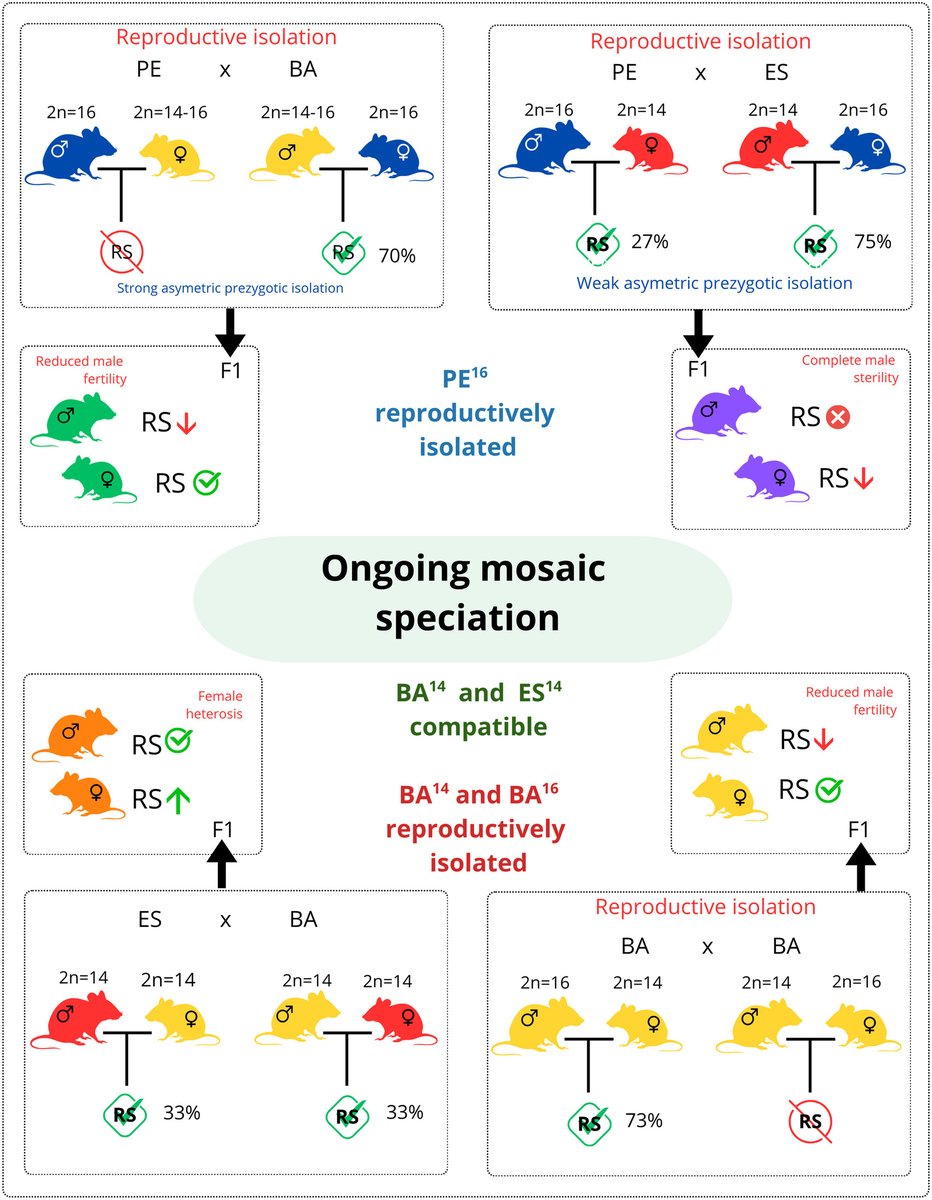
🐭Using an analysis that included 300 experimental crosses, Hasse et al. reveal how geographic and chromosomal divergences shape reproductive isolation in the polymorphic rodent Akodon cursor.
🎯Read it for free⬇️#OpenAccess
https://t.co/xKsB0ctKzU @WileyEcology#JSE#evolution
Analyzing ancient megafauna #DNA through #genomic sequencing enables reconstruction of #phylogeny, population structure, and demographic history-providing insights into megafauna #evolution and responses to Quaternary #climate variation.
https://t.co/TPf7NTOaYs @WileyEcology#JSE
Accelerated spp. discovery in the Diaporthales (a large and ecologically diverse #fungal order that includes devastating phytopathogens) has made #classification complex. Check out Jiang et al.'s updated molecular #phylogeny--new in #JSE!
https://t.co/Q2xmyQlvwn @WileyEcology
Critically endangered tree species Carya kweichowensis faces habitat fragmentation and population decline. Cui et al. combined population #genomic analyses with species distribution modeling to inform #conservation strategies.
https://t.co/paH62vEwfw @WileyEcology#JSE#PlantSci
Wang et al. demonstrate a simple LMD method that minimizes competitive exclusion, enabling the cultivation of previously unculturable, slow-growing, and #phylogenetically deep bacterial lineages using standard #lab conditions.
https://t.co/WovG8ZqAT2 @WileyEcology#JSE#TechNews
Antimicrobial resistance is a major threat to humans and wildlife.
Li et al. report #metagenomic insights into cross-species #antibiotic resistance #gene sharing and potential horizontal gene transfer risk in mixed-species waterbirds.
https://t.co/Xk6ZjBDsc0 @WileyEcology#JSE
Unified #taxonomic classification of flowering #plants is essential for successful #PlantScience research. APG-V is a remarkable update, 10 years in the making!
Read for🆓https://t.co/2XAlFHmDpJ
Poster download⬇️
https://t.co/EHS11iNXIU
@WileyEcology#evolution#systematics
This study reveals the role of insect #endosymbionts as crucial #evolutionary drivers, ultimately leading to the formation of morphologically similar yet genetically distinct cryptic #insect species through multiple mechanisms.
https://t.co/IhNoUTBy5G @WileyEcology#PlantSci#JSE
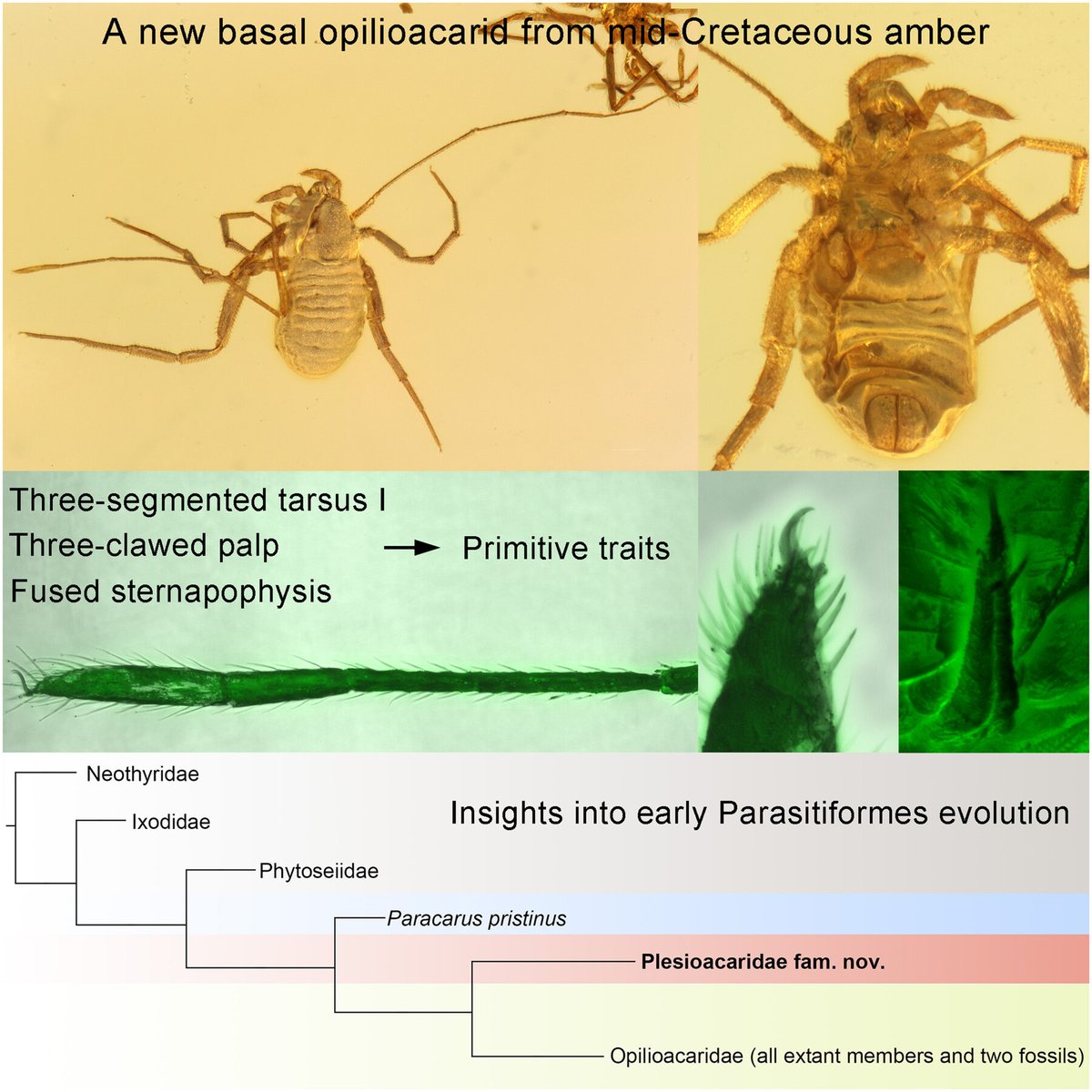
Discovery of a new #Cretaceous opilioacarid family sheds light on the #evolution of Parasitiformes, expanding known diversity and providing crucial info for reconstructing ancestral morphology and early evolutionary history.
https://t.co/1DetT0MXJ7 @WileyEcology#systematics#JSE
Have you seen this gorgeous poster of the latest APG community-based classification of flowering #plants?
Download it for *free* here!
https://t.co/EHS11iNXIU
...and read all about APG-V in #JSE!
🆓https://t.co/2XAlFHmDpJ @WileyEcology#evolution#systematics#APGV
Bulbostylis is an ecologically important genus with remarkable morphological #diversity.
This revised infrageneric classification by Morel et al. forms a foundation for future #taxonomic and #evolutionary studies.
https://t.co/xF5IfeHbZv @WileyEcology#PlantSci#ecology#C4
📢Only in #JSE!
APG V, the 5th community-based classification of flowering #plants, is now available!
This revision of the APG #classification marks a shift from mainly #plastid-based classification to nuclear-#genome-informed #systematics.
🆓https://t.co/2XAlFHnbfh @WileyEcology