Another interesting read in Tiro Journal! Ji Tang, a leading authority on Chinese stenography, walks us through research undertaken on the demand for traditional shorthand services across China.
https://t.co/FgdWKszYvB
#TraditionalShorthand#Stenography#YaweiSteno
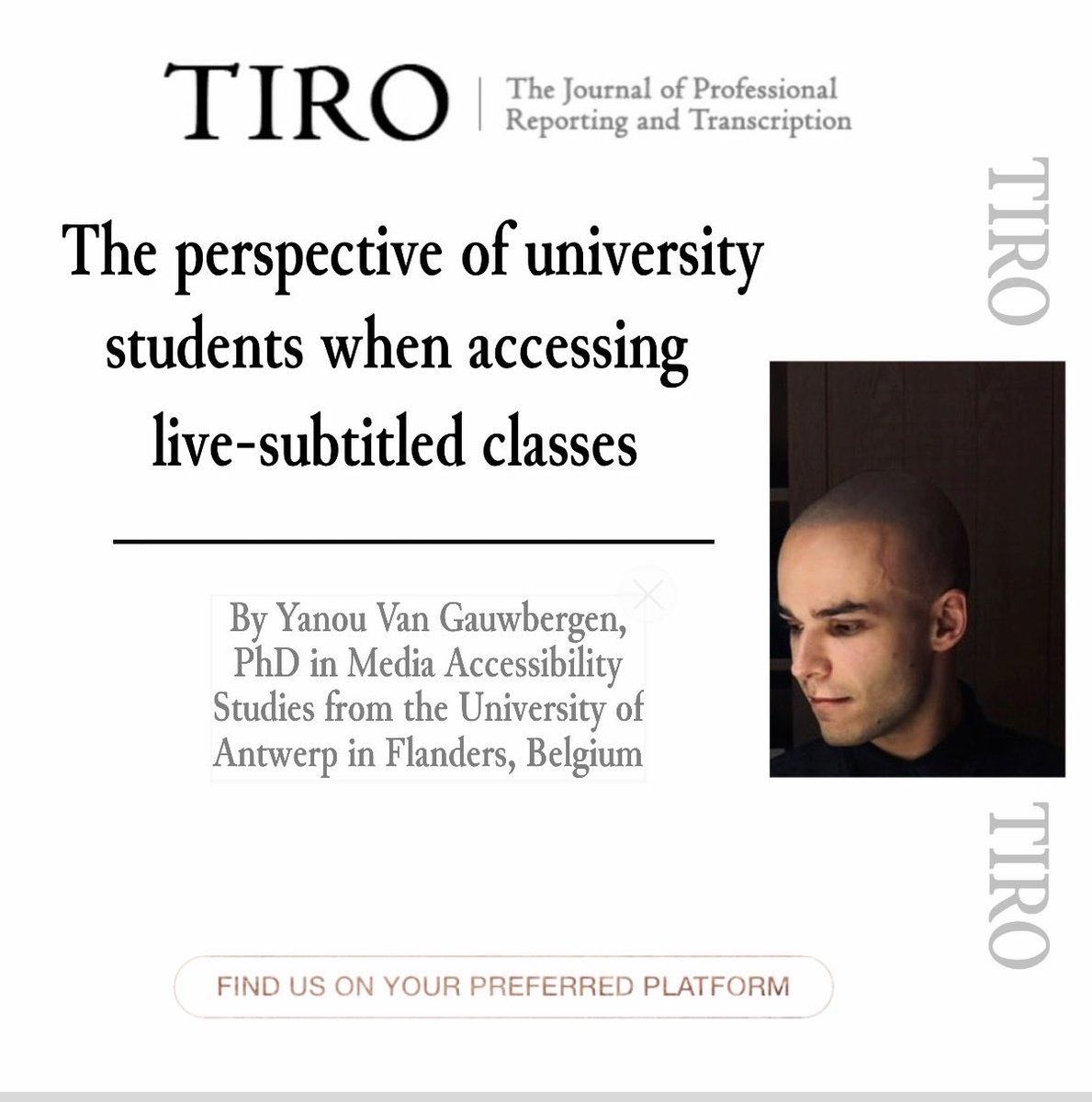
Yanou Van Gauwbergen talks about focus groups that carried out investigations regarding whether “intralingual live subtitling can offer a form of language support that balances accessibility with academic expectations”.
https://t.co/tAUlrhZuct
🇧🇪 🌎
#Accessibility
In her article, Ana Luísa Reis, a reporter in the Portuguese Parliament, demonstrates some of the mishaps and how human supervision is still absolutely necessary when using artificial intelligence-based tools.
https://t.co/nVbRdhw39p
🇵🇹 🌎
#PortugueseParliament#Intersteno
A study has been undertaken in the Portuguese Parliament on how grammatical correction of plenary reports may be influenced by the automatic speech recognition systems (ASR) used.
https://t.co/b5uj435nl8
🇵🇹 🌎
#ParliamentaryReporting#ParliamentOfPortugal#Grammar#ASR
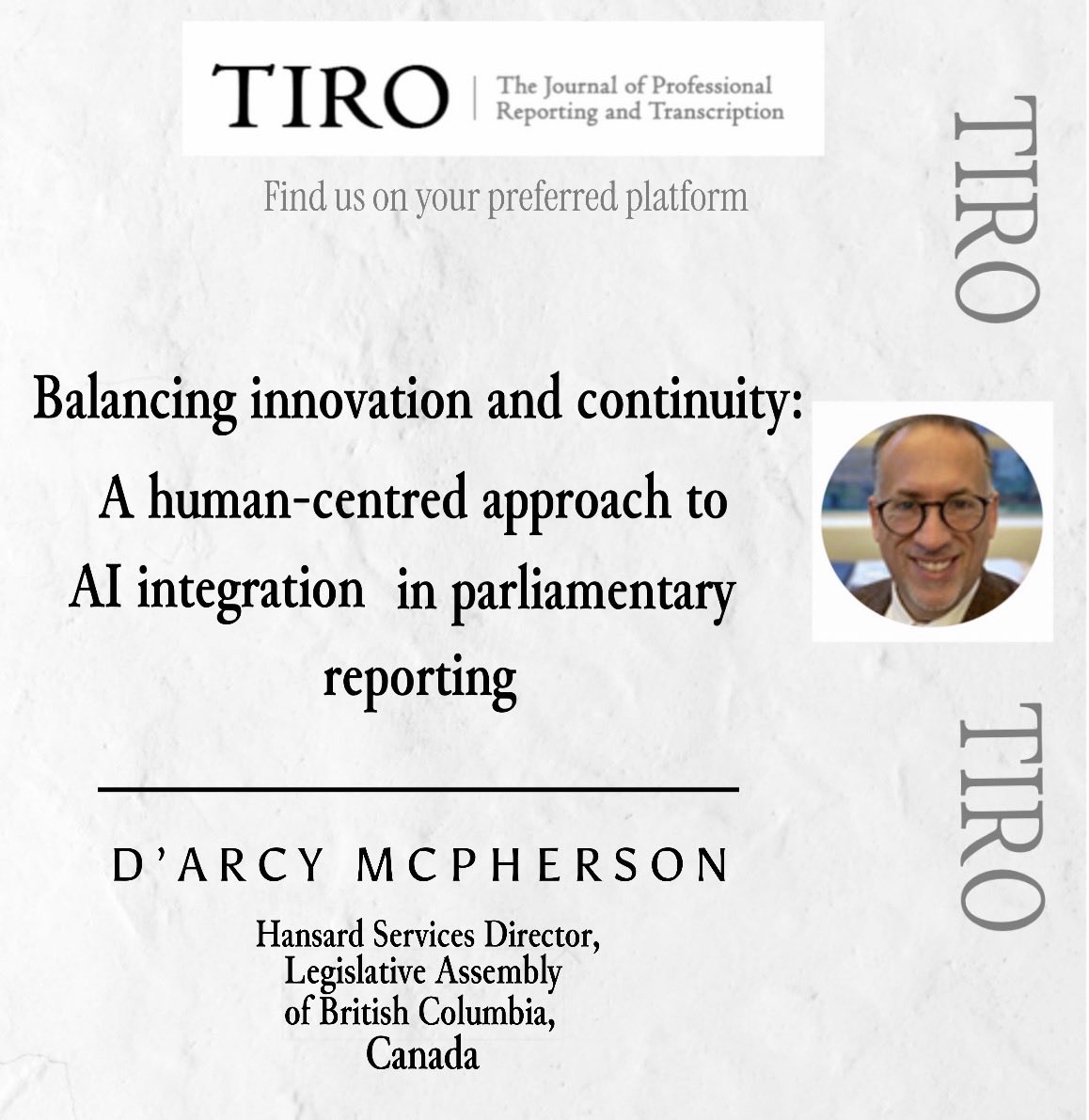
In this article, D’Arcy McPherson explains how Parrot, an automatic speech recognition (ASR) tool, is being integrated into Hansard Services at the Legislative Assembly in British Columbia.
🇨🇦 🌎
https://t.co/IiSocjnANv
#Intersteno#CourtReporting#ParliamentaryReporting#ASR
If you haven’t spent time with the latest issue of Tiro Journal yet, now’s the perfect moment.
Spotlighting the articles, we begin with the “Human Reporting”editorial by Eero Voutilainen
https://t.co/ItwO8p4xW0
#Intersteno#CourtReporting#ParliamentaryReporting#VoiceWriting
Alongside Facebook, Instagram and X, Tiro Journal is finally on LinkedIn, so you can now follow us wherever you’re most comfortable.
Whichever platform you prefer, we’ll be sharing the same journal news, updates and highlights.
#EnjoyTheRead#TiroJournal
A fascinating article by Tiro’s resident Scientific Adviser, Carlo Eugeni, on how the language someone speaks can influence the way they see the world, a phenomenon known as the Sapir–Whorf hypothesis.
https://t.co/zoPvNctfXg
#linguistics#TiroJournal#Intersteno#SapirWhorf
To quote or not to quote? That is the question.
In this article, Lauri Haapanen, a former journalist, explores when quotation marks should & shouldn’t be used across the diverse world that is journalism.
https://t.co/kEYNpis5Jg
🇫🇮 🌎
#TiroJournal#Intersteno#Journalism
An article by Kristján F. Sigurðsson, an editor for speeches and documents in the Parliament of Iceland, was published in our latest edition. Kristján gives us interesting insight into the linguistic phenomena of an MP’s speech.
https://t.co/HvwmmPzoRg
🇮🇸 🌎
#Althingi
Eero Voutilainen & Finnish parliamentary reporter Riikka Kuronen investigate how national parliaments in Europe make their text alternatives for videos. In this article, they share the findings of their research.
https://t.co/s4BJ1IMIqY
🇪🇺 🌎 🇫🇮
#TextAlternatives#Tiro
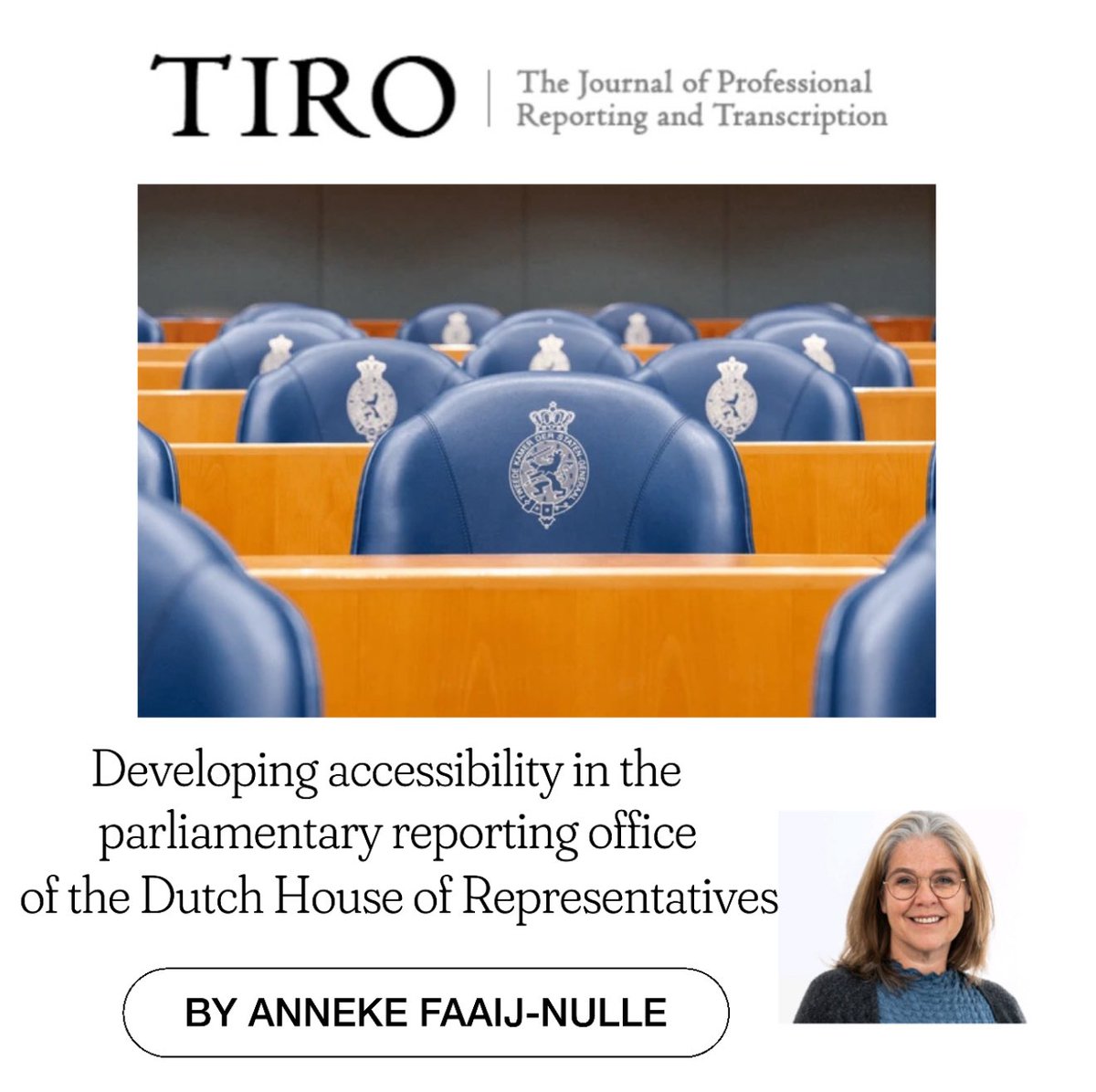
Anneke Faaij-Nulle, who works in the Dutch House of Representatives, explains how debates are made transparent through parliamentary reports, and questions if they’re usable for everyone.
🇳🇱 🌎
https://t.co/DMwjrsDrqw
#TiroJournal#DutchParliament#ParliamentaryReports
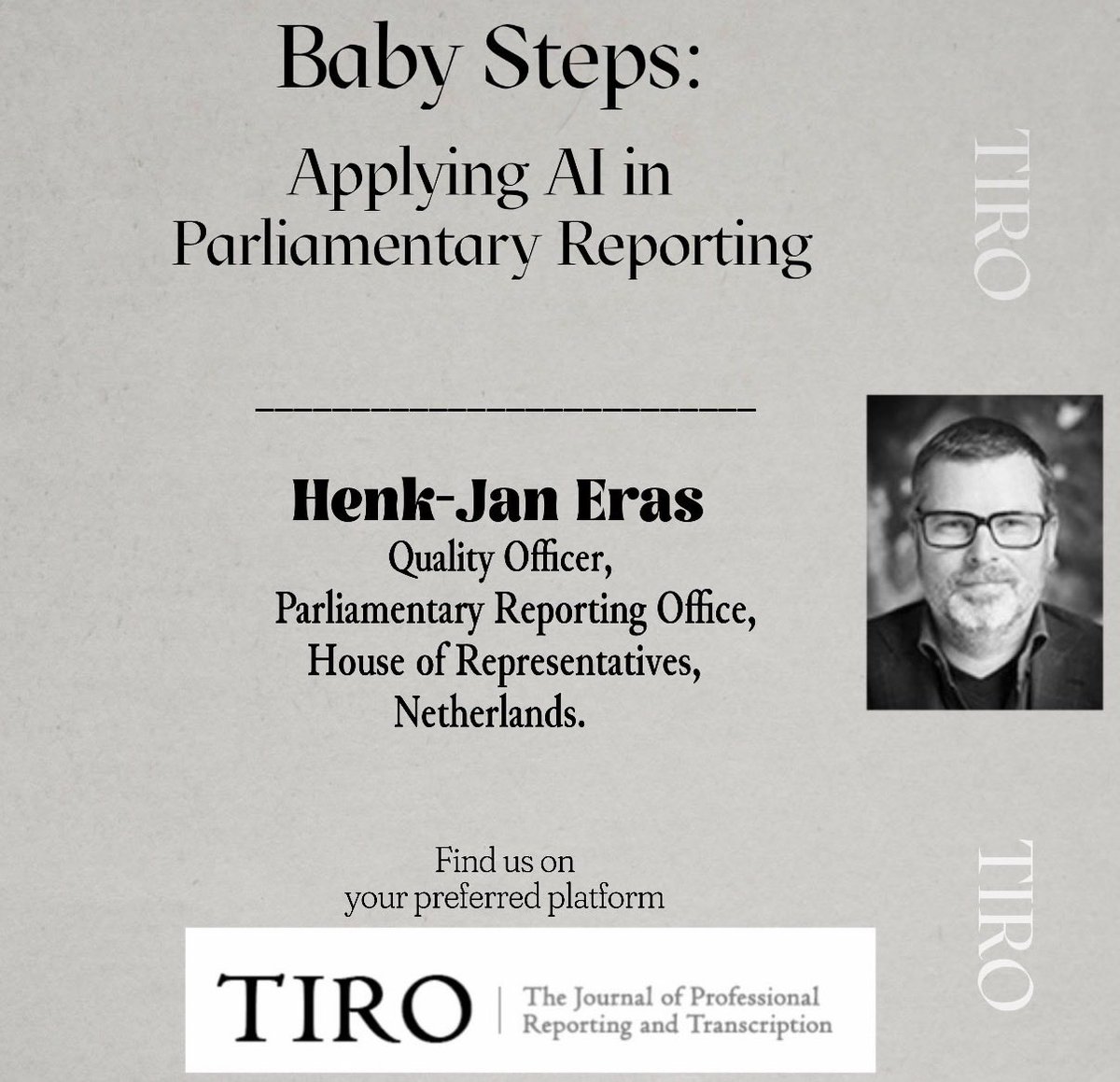
In this article, Henk-Jan Eras, a Quality Officer in the House of Representatives of the Netherlands, updates us on adjusted perspectives regarding political deepfakes, as well as the new EU AI Act 2024, and more.
https://t.co/xxpE82hOnE
#deepfakes#TiroJournal#Intersteno
“How can we use official meeting transcripts for video captions?” That’s one of the questions asked by three Japanese professors who have authored this article in our latest edition.
https://t.co/zRaHNfOKDY
🇯🇵
#JapaneseParliament#TiroJournal#Intersteno
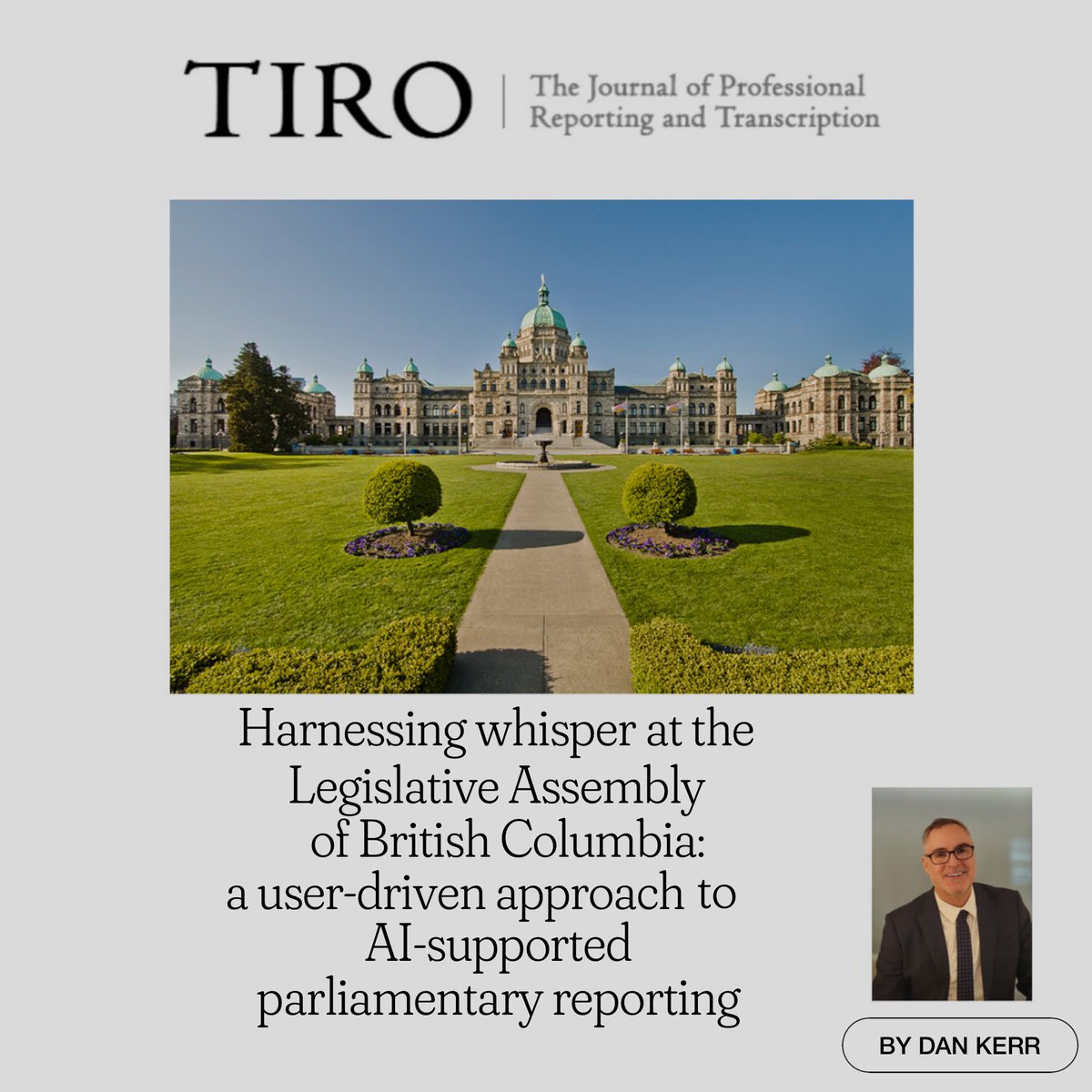
Dan Kerr, the Manager of Publishing Systems at the Legislative Assembly of British Columbia in Canada, walks us through how an ASR and AI approach has been implemented, with ever-continuing improvements, in the BC parliament.
https://t.co/Q5M0i7TEx1
🇨🇦 #BritishColumbia#Tiro
In his editorial, Eero Voutilainen says “This issue brings us many new perspectives on professional reporting and transcription.”
From AI to ASR, three different reporting principles, & more, you’ll find his brief synopsis the perfect start to Issue 11.
https://t.co/CL0QUIMBJG