Dear all. As recent developments on Twitter / X do not seem to be in line with the values of the academic community, this is the last tweet we will publish. We are leaving this account open for consultation. Join us, from now on, on BlueSky!
These analyses raise questions about the relation between states, scholarly networks and the IOM. This enigmatic organization and its predecessors have long dominated migration management. This article especially fills a gap in IOM-migration historiography for the 1960s and 1970s
A few weeks ago, we published a new article: "Fifty Years of Technocracy. International Migration Management as an Evolving Discourse Coalition" - https://t.co/S5SCNdddty
At the core of this coalition is the International Organization for Migration (IOM) and its predecessors. This coalition was also able to reproduce and adapt in a world where Europe changed from an emigration to an immigration continent.
Interested in the application of #3D and #VR technologies to #mediaheritage collections? We are hiring for a funded PhD position in Digital Approaches in Media Heritage @Cultuur_OU. Deadline 26 May, start date 1 September @OU_Nederland 👉 https://t.co/AUjSkyQ4KV @AlexanderPeine
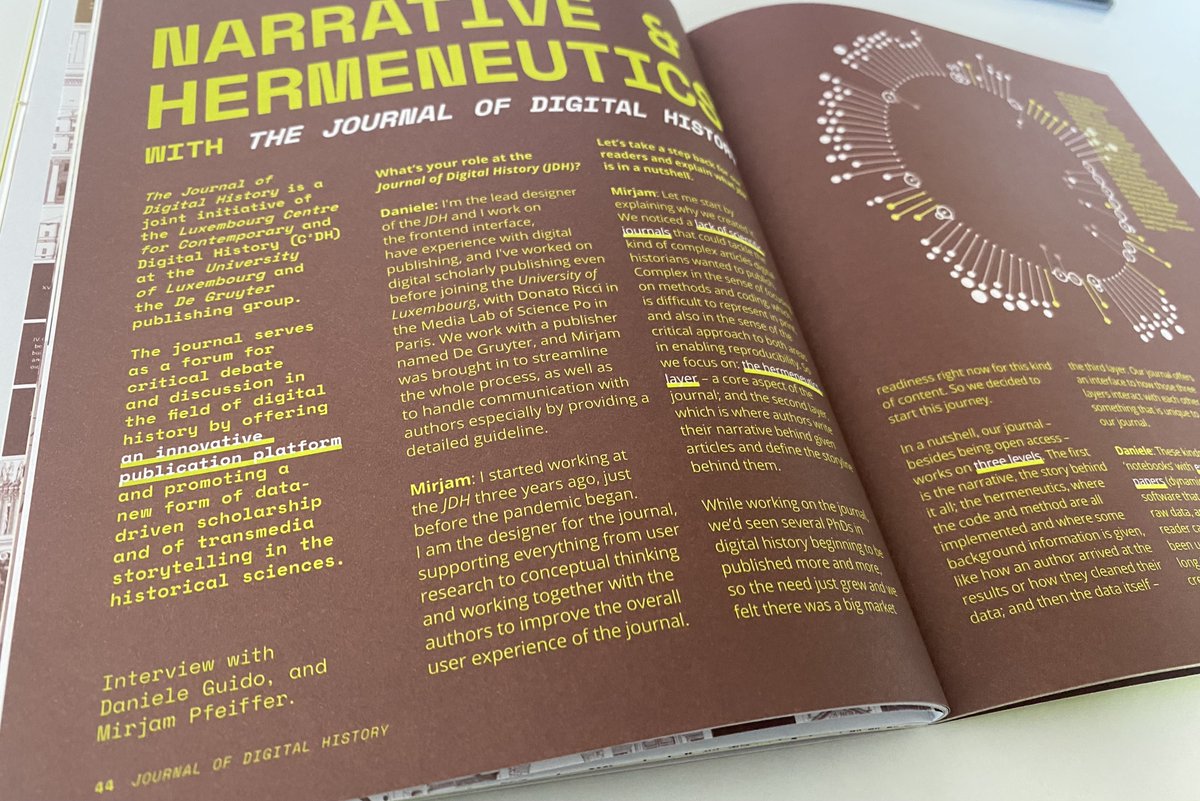
Vou encerrar a aula comentando a publicação multi-camadas (narrativa, hermenêutica e dados) do @Journal_DigHist (iniciativa conjunta dos colegas do @C2DH_LU + @dg_history). Deixo o link pra quem está acompanhando esse tweet e ainda não conhece a revista: https://t.co/LkiOkGpaSb
New article just came out! I continue my analysis of European social democracy at the beginning of the Cold War, but I do so through the tools of digital humanities, particularly quantitative text analysis!
Finally, it is not enough to apply new tools, developed for literature or other historical periods, to old material. Digital historians of the Cold War must develop specific methods and instruments, such as list of ngrams tailored for the political language of the time.
DH tackles a key methodological question: with mass politics involving hundreds of politicians and millions of activists, is it enough to just do close reading of few selected speeches? Big data brings new insights into XXth Century mass parties
https://t.co/Sv4Kl1CNY0