A community for journalists, authors, and media professionals. Industry dinners, happy hours, and professional workshops across NYC. Founded by @philrosenn.
Journalists Club is where reporters, editors and media pros make friends IRL.
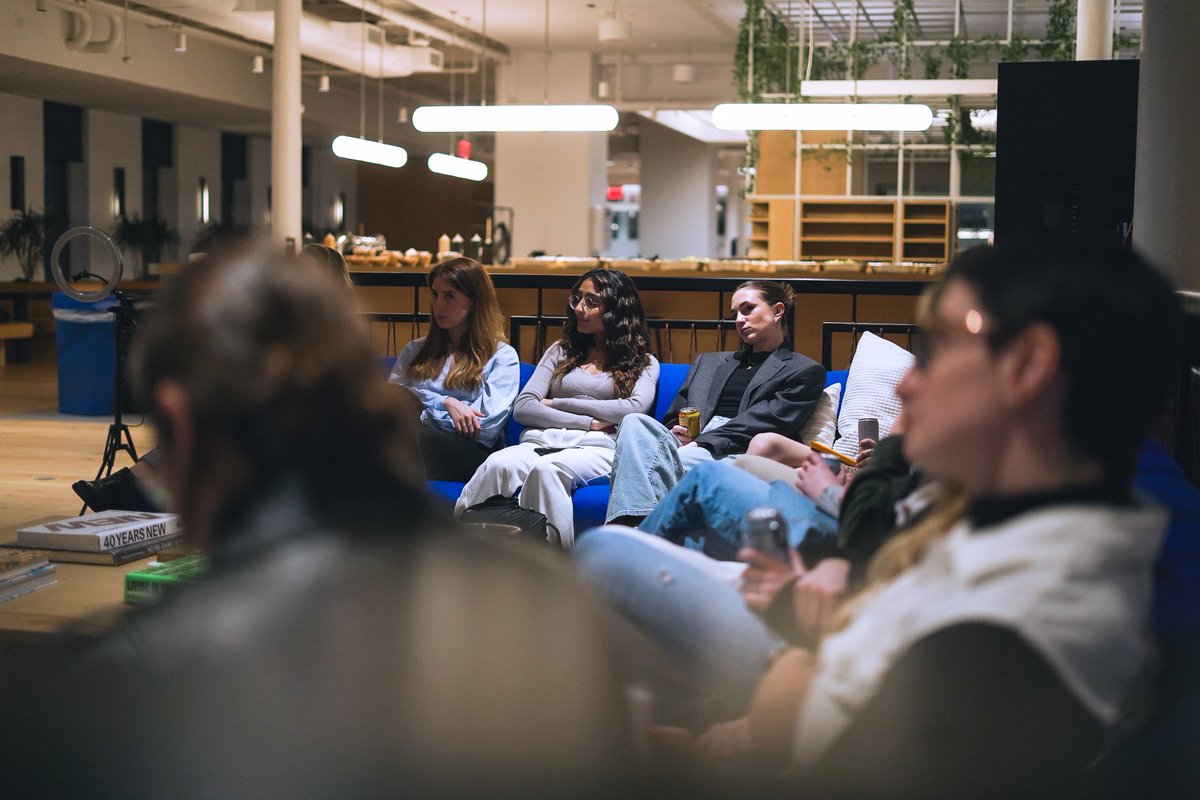
We just hosted 60 journalists for a fireside chat and happy hour featuring @jappleby, @JoeMilord, and Morning Brew
Reach out if you're interested in meeting people in your own industry!
I've hosted hundreds of reporters for media dinners and events over the last 2 years through @JournalistsClub.
Journalists, editors and producers from every newsroom have attended. Many have secured jobs through this network.
Awesome to see it covered in @talkingbiznews.
Warren Buffett's new shareholder letter is full of simple wisdom.
1. “Don’t beat yourself up over past mistakes – learn at least a little from them and move on. It is never too late to improve.”
2. “Kindness is costless but also priceless.”
3. “Decide what you would like your obituary to say and live the life to deserve it.”
4. “Remember to thank America for maximizing your opportunities. But it is – inevitably – capricious and sometimes venal in distributing its rewards.”
5. “Choose your heroes very carefully and then emulate them. You will never be perfect, but you can always be better.”
No wonder Berkshire Hathaway has been so strong for so many decades.
AI has been supercharging startups for 3 years and big companies are just now catching up, which is why hiring is slowing so suddenly (and why there's no dip in productivity).
It's getting harder to think of a job that AI won't transform versus the ones it will.
We don't need the government jobs report to tell us the labor market is in trouble. Record high Google Search trends for:
- "second job"
- "new job"
- "job security"
- "part time"
Above 2008 and pandemic levels for every term.
Young people are stuck in a historically awful job market. Labor force participation has fallen off a cliff for 16-24 year olds compared to every other age group.
Just wrapped up at @NYSE breaking down the second-half outlook for the Fed and stocks.
Excited to be joining as a regular guest with @ICEHousePodcast@LanceGlinn to chat markets moving forward!
New from me: Inflation, housing costs and AI are crushing Gen Z's economic outlook and the numbers justify the malaise.
Hard data confirms young people are not simply imagining the headwinds in the labor and housing markets—no matter how invisible these issues seem to older generations. Gen Z is cost-burdened AND income restrained to a historic extent.
NYC is the best place to be for the AI boom.
The technology already feels mainstream here. As it does in SF.
But it's easy to forget that outside these metropolitan hubs, AI is still a fringe idea.
To most of the world, AI is abstract, unfamiliar, and irrelevant.
I meet NYC founders every week building tools that would sound like sci-fi anywhere else.
One engineer I met during @Techweek_ is working on an AI-powered video application that can transform basic iPhone footage into an expensive-looking, studio-level production.
Another is developing a platform that lets users generate convincing AI videos of themselves, speaking about any topic.
Hollywood in your pocket.
Virtual clones built from selfies.
Demos like these have become the background noise of my week.
These tools are not theoretical. They already work.
But you'd only know it if you lived in the right city.
Peeking out from behind the tech bubble underscores that the AI revolution is profoundly local.
Proximity to innovation has a way of distorting reality. Dense ecosystems like NYC and SF create the illusion that widespread adoption of AI has already arrived.
This just isn’t the case.
Whenever engineers build something reality-shattering, they don’t change the world until they become invisible.
AI today is still in its “interface” era. You still have to think about it when you use it.
Most of these new tools demand prompting and skill for compelling results.
That friction curbs its reach to other cities.
It’s why for most people AI is still a curious plaything for tinkerers and nerds, rather than an asset to teachers, warehouse managers or travel agents.
To be clear, nothing I’ve tested is perfect.
But the novelty is compelling enough to tolerate the bugs.
But again, that's a view unique to early adopters
The future has always started with delusion and emerged in pockets. The real inflection point will arrive in 2 steps.
First, these conversations have to become pervasive.
Then, paradoxically, people will have to stop talking about AI altogether.
Just as no one discusses what it's like to use the internet or an iPhone, at some point AI will just be something that works so well it’s forgotten.
And soon, you won’t need a New York zip code to realize it.
a16z believes the future of media is in newsletters and YouTube.
Some incredible creators and newsletter writers at @Techweek_'s "Titans of New Media" dinner.
20 rules to 10x your writing:
1. Write everyday: Great writing demands volume.
2. Punch immediately: Your first sentence does 80% of the work.
3. Simple is smart: If an 8th grader can’t understand, try again.
4. Write how you talk: Use jargon at your own risk.
5. Use anecdotes: Real stories make wisdom concrete.
6. Use short words: Enough said.
7. Clarity wins: Avoid winks, riddles, inside jokes.
8. Use fewer words: Trim everything.
9. Write for 1 person: Everyone else will feel like you wrote it for them, too.
10. Avoid cliches: These are lazy and unoriginal.
11. Aim for a body of work: Not a 1-hit wonder or virality.
12. Read more than you write: Stand on shoulders of giants.
13. Delight, educate, or surprise: Everything else is noise.
14. Build rhythm: Mix short + long sentences.
15. Very short also works: 1- and 2-word sentences punch hard.
16. Byline is brand: Write every piece like its a resume.
17. Don’t hedge: Bold, confident statements only.
18. Leave white space: Short paragraphs are easier to read than big blocks of text.
19. Pursue what’s interesting: If it bores you, it will bore readers.
20. End memorably: People remember a killer kicker.
Never have I waited in a 40-minute line to buy a book I knew nothing about.
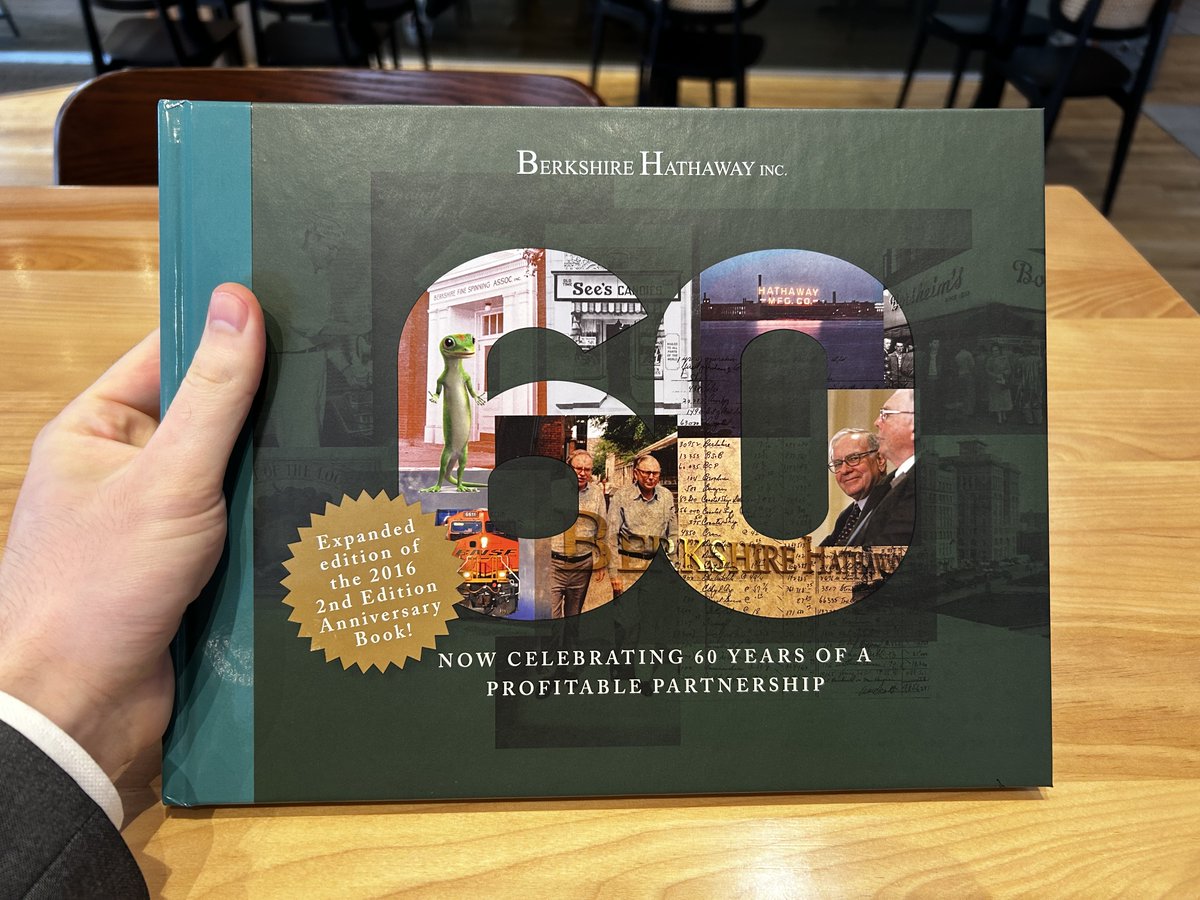
But that’s what happened at Berkshire Hathaway’s annual shareholder meeting, which told its 40,000 attendees it would have only 5,000 copies of this year’s book on site in Omaha.
It’s the second year in a row Warren Buffett promoted just one title at his event. In 2024, to honor the late Charlie Munger, it was "Poor Charlie's Almanack."
"60 Years of Berkshire Hathaway," according to the conference, would not be sold online or in stores.
I didn’t know anything about "60 Years" until I had it in my hand.
Those who waited in line next to me said the same.
But because it’s Berkshire Hathaway — and because it’s Buffett — we were all happy to wait as long as it took.
The attendees I’ve met all agreed the contents of the book mattered less than the fact they secured one.
The demand would be overwhelming no matter what the book was.
The book — a slim volume of archival material, historical documents and commentary — was produced in close collaboration with Buffett himself. It celebrates him and Munger’s six-decade partnership.
Like Buffett, the book is not flashy.
But it does feel built to last.
One year ago I announced Opening Bell Daily with a tweet from a coffee shop with bad WiFi.
I had just quit my job at Business Insider.
I was excited but nervous.
Our startup had no brand affinity, no staff, no blueprint — just a conviction that financial news could be better.
More useful, transparent and accountable to real people trying to make sense of markets and the economy.
Since then, my co-founder @APompliano and I have published our newsletter every single morning.
We can now reach half a million readers on any given day. Things keep accelerating.
You can find our reporting on Bloomberg Terminals and Inc. Magazine.
And we've done this while staying lean and independent.
We've built trust by communicating directly with readers. They hold us to a high standard — when they catch something missing in my reporting, they tell me and I make it right.
This kind of direct dialogue is rare in mainstream media. For us, it's foundational to what we're building.
It's been a rewarding and challenging first year.
Our team is using this anniversary to double down on the consistency and hard work that got us here.
It's the only way to move the needle, after all.
@ReadOpeningBell isn't just a reaction to what's broken in legacy media. It's our work-in-progress answer to what's possible when you put readers first in the digital age.
All this is to say it is still Day 1!
Journalists in NYC don't often hangout outside the newsroom. @JournalistsClub changes that.
So great hosting a group of star reporters from Bloomberg, Business Insider, Pitchbook + more
Over 220+ journalists have attended an event over the last year. DM me to get involved!