📌 7 THINGS THE CATHOLIC CHURCH TEACHES ABOUT HEAVEN THAT MOST CATHOLICS HAVE NEVER BEEN TOLD
1. YOU WILL STILL BE YOU
The Church teaches that in heaven you retain your personal identity, your memories, your personality, your relationships. The resurrection of the body means YOU, not a generic soul mist, will be there. (CCC 1023)
2. YOU WILL KNOW AND BE KNOWN
The Beatific Vision is not the erasure of self, it is the perfection of it. St. Thomas Aquinas teaches that in heaven we know God directly, face to face. And in knowing God, we know everything truly. Including those we love.
3. THERE ARE DEGREES OF GLORY
Not everyone experiences heaven identically. St. Paul writes: “Star differs from star in glory.” (1 Cor 15:41). How we loved, served, and suffered on earth shapes the depth of our eternal joy.
4. THE SAINTS IN HEAVEN ARE ACTIVE
They are not asleep. They intercede for us. They worship. They rejoice when sinners repent (Luke 15:7). Heaven is alive with communion and love in motion.
5. TIME AS WE KNOW IT ENDS
Heaven is not “a very long time.” It is outside of time altogether, eternal in the fullest sense. Every moment is the fullness of joy, complete and inexhaustible.
St. Augustine: “Our heart is restless until it rests in Thee.”
6. YOUR RESURRECTED BODY WILL BE GLORIFIED
Four gifts: impassibility (no suffering), subtlety (not bound by matter), agility (movement without limit), clarity (radiant with divine light).
This is not mythology. This is the Scholastic theology of resurrection.
7. HEAVEN IS RELATIONSHIP, NOT REWARD
The essence of heaven is not “getting something,” it is being in perfect, unobstructed union with God and with all those who love Him.
It is love without limits.
Joy without end.
Home without exile.
This is what you are living toward.
Never forget it.
“Eye has not seen, nor ear heard, nor has it entered the human heart what God has prepared for those who love Him.”
1 CORINTHIANS 2:9
Jesus Personally Taught St. Faustina How To Survive Spiritual Attacks…
Here are 10 Instructions That Could Change Everything.
1. Trust Me completely
→ Distrust opens the soul to fear. Trust disarms it.
Jesus repeatedly says that graces flow according to trust (Diary 1578) and that the soul that trusts Him is never lost (Diary 723).
2. Run to My Heart immediately in temptation
→ Do not dialogue with temptation. Refuge is victory.
“When you are about to fall, run at once to My Heart” (Diary 1485).
He warns not to engage temptation but to flee to Him immediately.
3. Reveal temptations in confession
→ Darkness loses power when brought into the light.
“The priest is My representative… reveal your soul to him” (Diary 1725).
Confession breaks the power of hidden struggles.
4. Do not be guided by feelings
→ Feelings change. The will chooses love.
“Do not be guided by feeling, because it is not always in your power” (Diary 1760).
Faithfulness is measured by the will, not emotion.
5. Practice humility and patience with yourself
→ Impatience weakens the soul. Humility strengthens it.
“My daughter, know that you are what you are before Me… nothing more” (Diary 56).
Jesus calls the soul to patience in weakness and growth (Diary 1488).
6. Accept suffering with love
→ United to Christ, suffering becomes redemptive.
“You will save more souls through prayer and suffering than through activity” (Diary 1767).
Suffering embraced in union with Him has real spiritual power.
7. Remain obedient to legitimate spiritual authority
→ Obedience protects against deception.
“My will is that you should obey your confessor in everything” (Diary 639).
Obedience is tied to safety in the spiritual life.
8. Avoid curiosity about the future
→ Trust God’s timing. Curiosity breeds anxiety.
“Do not be curious about the future… I am your security” (Diary 293).
He redirects the soul from curiosity to trust.
9. Reject discouragement immediately
→ Discouragement never comes from God.
“Why are you afraid…? Do you not know that I am always with you?” (Diary 613).
Jesus corrects discouragement with His presence and truth.
10. Fight with courage, knowing I am with you
→ Courage rooted in Christ causes fear to retreat
“Do not fear… I am with you always” (Diary 586).
“Fight like a knight… do not be discouraged” (Diary 450).
💬 Is your spiritual life built on discipline… or just motivation when you feel like it?
For as much as people want to claim that the Catholic Church is “irrelevant” or a relic from a medieval past, notice how when the Church speaks on faith and morals, the world stops. Even if the world doesn’t faithfully follow the Church’s directives, the Church is still a “main character”. The Church is still a target of the world’s fluctuating emotions: anger and rage, awe and reverence, curiosity and inquiry.
Patriarch Bartholomew, the woman in Canterbury, the Mormon prophet—none captures the global attention. There isn’t 24/7 news coverage on the election of the president of the Southern Baptist Convention. No one ever hears about the Dalai Lama anymore.
Anthropic wouldn’t waste its time joining a Methodist convention on AI. Major news outlets and journalists wouldn’t flock to Geneva to hear what Lutherans have to say about artificial intelligence. When Islamic imams issue a fatwa, very rarely does anyone blink an eye. These religions and denominations don’t ever come off as having a moral authority beyond that of their own people.
But when the Catholic Church and the pope speaks, the world stops. Maybe the vast majority of people will argue and rant against its teaching (Humanae Vitae, 1968). Maybe what is taught will win favor among world leaders (Laudato Si, 2015). But the fact remains that the Church is seen as a major player on the world’s stage.
As I sit down to read Pope Leo XIV’s “Magnifica Humanitas” (Encyclical Letter on Safeguarding the Human Person in the Time of Artificial Intelligence), I realize that, like Catholics across millennia, I belong to not only a church, but the Church. I am a member of a supernatural society, one that continues the mission of Christ today, through His Spirit.
Whether it is mocked or praised, the Church has “main character energy”, because it simply is the main character of history. And when the main character speaks, you stop for a moment to listen. Or in this case, to read a 42,300-word encyclical.
THE CHURCH FATHER WHO WROTE THIS IN 107 AD AND IT SILENCES EVERY PROTESTANT ARGUMENT
St. Ignatius of Antioch was a student of the Apostle John. He was arrested and sent to Rome to be eaten by lions.
On the way, he wrote seven letters. In 107 AD, within living memory of the Apostles, he wrote:
“Where the bishop is, there let the multitude of believers be; even as where Jesus is, there is the Catholic Church.” (Letter to the Smyrnaeans, 8:2)
This is the first recorded use of the term “Catholic Church” and it comes from a man who personally knew the Apostle who leaned on Jesus’ chest at the Last Supper.
He also wrote:
“Take note of those who hold heterodox opinions… They abstain from the Eucharist and from prayer, because they do not confess that the Eucharist is the flesh of our Savior Jesus Christ.”
Real Presence of Christ in the Eucharist. The Catholic Church by name. Obedience to bishops in apostolic succession.
107 AD. Not the Council of Trent. Not the Middle Ages.
The next time someone tells you the Catholic Church invented these doctrines centuries later, show them Ignatius.
He wrote this on the way to die for it.
Who will share this?
The Catholic Church is not just ROMAN.
The Catholic Church is LATIN - traced to St. Peter in Rome.
The Catholic Church is COPTIC - traced to St. Mark in Alexandria.
The Catholic Church is ETHIOPIAN - traced to St. Mark.
The Catholic Church is ERITREAN - traced to St. Mark.
The Catholic Church is MARONITE - traced to St. Peter in Antioch and St. Maron.
The Catholic Church is SYRIAC - traced to the Church of Antioch founded by St. Peter.
The Catholic Church is SYRO-MALANKARA - traced to St. Thomas the Apostle.
The Catholic Church is CHALDEAN - traced to St. Thomas and St. Addai.
The Catholic Church is SYRO-MALABAR - traced to St. Thomas the Apostle.
The Catholic Church is ARMENIAN - traced to St. Gregory the Illuminator.
The Catholic Church is BYZANTINE - traced to Constantinople and the ancient Christian East.
One Church, many rites, ancient roots, apostolic foundation.
This is Catholicism.
Which rites do you belong to?
The first Christians did not gather around a Bible study.
They gathered around the Eucharist.
The New Testament canon would not be finalized for centuries, but the Mass was already the center of Christian life from the beginning.
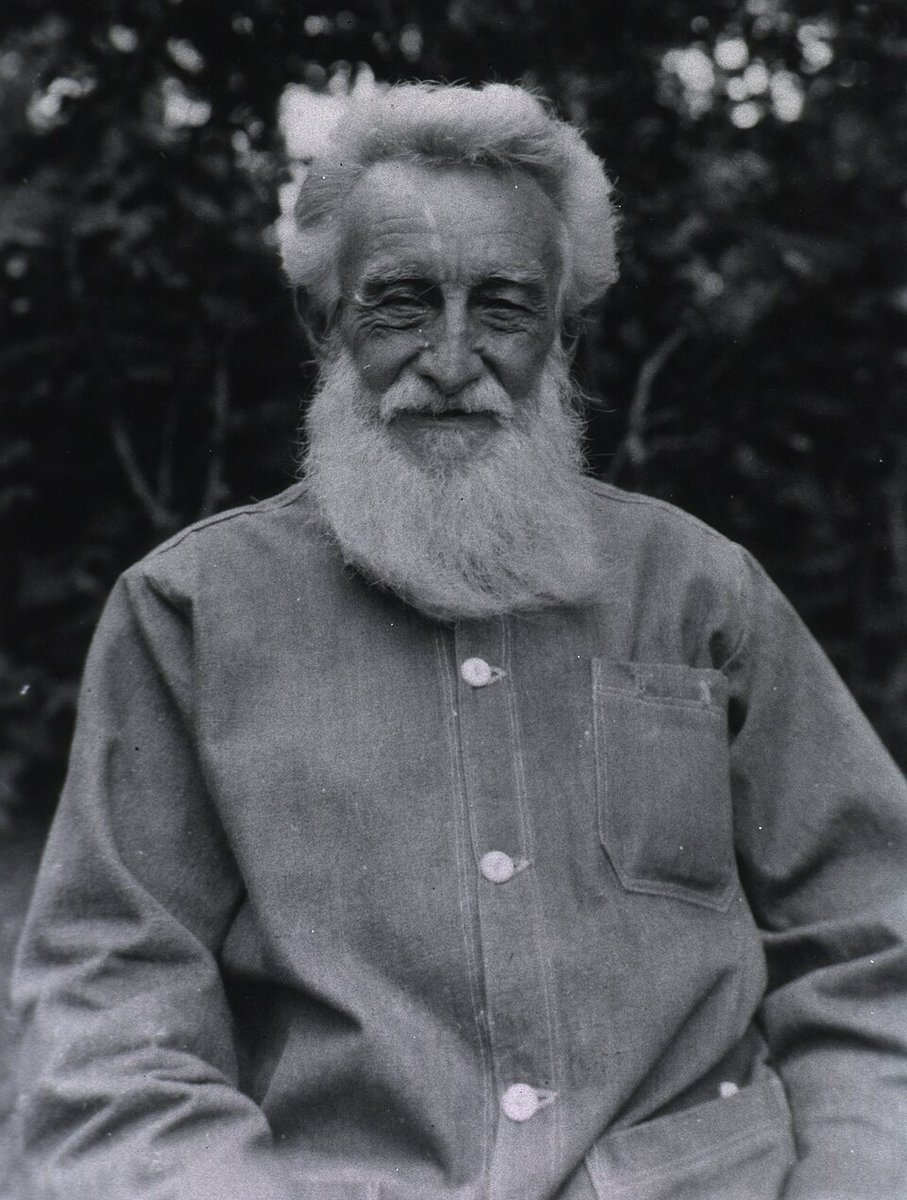
Joseph Dutton was the last of our saints to join the mission to the leper colony on Kalaupapa.
Joseph had survived the Civil War, but he suffered from PTSD. And like many who don’t get the help they need, he turned to the bottle for comfort. As an angry alcoholic, he ruined his marriage and ended up divorced.
Hitting rock bottom opened his eyes and led him to the Catholic Faith. He felt like he had wasted his life and wanted to make atonement to God for his mistakes, but his baptist upbringing didn’t make space for that deep need. He turned to Catholicism and was baptized at the age of forty.
The rest of his life was a ride on a wave of grace.
He decided to go to a Trappist monastery. After twenty months and discerning it wasn’t his calling, he learned about the mission at Kalaupapa—where St. Damien and St. Marianne Cope were giving their lives in service to lepers. He learned that they needed more hands to help. He also learned that, for reasons understandable, no one was volunteering.
“Why not me?” he thought. So he did.
He arrived on Kalaupapa in 1886 and he never left. Though he stayed there longer than any of them, dying in 1931, forty-four years later.
He was beloved by the patients, whom he had loved so much. As he aged to the point of hobbling, and blind, those he had cared for ended up holding him up and leading him around by the arm. Though I suppose that’s what they had done for him all along. They had given him a place he truly belonged and felt needed. They healed him.
Joseph didn’t let his messy past and unanswered questions stop him from doing something truly heroic. You shouldn’t either. You don’t have to “have it all together” to start giving, and living like a saint.
Jesus never said “If you’ve found yourself, then you can pick up your cross and follow me.”
Quite the opposite. He said if you feel lost and want to be found, try the paradoxical path of losing your life even more…and throwing it away in love. Then you’ll find it. (See Matthew 16:25, Matthew 10:39, Luke 9:24, and Luke 17:33. Though you can see it lived out by Jesus in pretty much every other verse too.)
Joseph Dutton’s cause for canonization has been opened. Miracles attributed to his intercession can be reported to the Joseph Dutton Guild. One is currently under investigation to push him to the status of a Blessed in the Catholic Church.
Maybe your past includes things like his did: addiction, anger, a divorce you caused because of it, or worse.
That’s okay. Maybe your future includes things like his life too: heroism, service, and the path to sainthood.
If Jesus can raise the dead to life, surely he can make saints out of you and me.
Signup for the Daily Anchor here: https://t.co/6cWyTAuJmG
I’ll hop back into meditations on Kalaupapa tomorrow, but on this feast of Our Lady of Fatima, I need to veer to Fatima.
The visions of Fatima were world changing. Literally. In them, Mary predicted that Russia would “spread its errors throughout the world.” At that time, the best political analysts wouldn’t have foreseen the spreading of communism and the Iron Curtain throughout Eastern Europe, let alone the three shepherd children from rural Portugal. But within weeks of that prophecy, the Bolshevik Revolution erupted.
Mary told the children to tell the world to pray for Russia. My father remembers doing so after Mass every week as a child. He didn’t think it would do any good. No one did.
He was shocked when, without a shot being fired, and thanks largely to the Church’s work and John Paul II’s support of the Solidarity Movement, communism toppled in Eastern Europe without a shot being fired in 1991.
There is so much more to say about Fatima and the miracles that took place there. But for now, I want to focus on the miracle of prayer. Prayer can change international events. It can topple mighty regimes, peacefully. It can change the course of history.
The world is messy today. You know it. I know it. A Wall Street Journal poll recently showed that 80% of Americans don’t expect their children’s lives to be better than theirs…a notable shift from our typical “onward and upward” American optimism.
Polls show that most Americans are worried. Worried about communist China growing in power and global influence. Worried the Ukraine war will never end. Worried about Israel. Worried about Iran.
But, in the words of Rick Warren, worry is “stewing without doing.” When you find yourself stewing on something, maybe that’s God telling you to do something: pray.
Will you join me in a rosary today for peace in the world? Prayer changes things. It has before. It can again.
*The photo shows Pope Paul VI with Sister Lúcia in Fátima on 13 May 1967
Thomas Aquinas taught that faith alone saves, two centuries before Martin Luther.
Wait. Read that again.
Aquinas didn't teach sola fide. He taught something far more precise, and his precision is exactly why Luther's formulation fails.
In the Summa Theologiae (I-II, Q. 109), Aquinas asks whether faith alone is sufficient for salvation. His answer: no. Not because faith doesn't matter, but because faith divorced from charity is a dead thing. It is "unformed faith," fides informis, which even demons possess.
The real category is fides caritate formata. Faith formed by charity. Faith that is alive because grace has actually transformed the soul from within.
This is the key distinction Protestants often miss.
Luther treated justification as a legal declaration. God pronounces you righteous while you remain, in Luther's own words, "simul justus et peccator," simultaneously just and a sinner. The righteousness stays outside you, imputed but not infused.
Aquinas saw something different in Scripture. Romans 5:5: "The love of God has been poured into our hearts through the Holy Spirit." Not credited to our account. Poured in.
Infused grace actually changes you. The theological virtues, including faith, are real habits of the soul, not legal fictions.
So when Trent defined justification against Luther in Session VI, it wasn't inventing new theology. It was defending Aquinas. And Aquinas was defending Paul.
The debate was never faith vs. works. It was always: does grace transform you, or merely cover you?
Which answer does Romans 5:5 actually support?
On Mother’s Day I know it’s traditional to post the image of the Blessed Virgin Mary punching the Devil, but this year I hope people don’t forget about the cool manuscript illumination where she has an angel babysit Jesus while she wrestles a demon and makes him cry “uncle”.
Why does Mary look younger than Jesus in Michelangelo's Pietà?
The answer is one of the most beautiful in art history...
Mary is holding the body of her 33 year old son, but she looks 20. Critics noticed it the moment the sculpture was unveiled in 1499. The mother of a man who has just been crucified would have been in her late forties or early fifties. Michelangelo had carved her as a girl.
His own biographer, Ascanio Condivi, was the one who finally asked him why. The answer Michelangelo gave is preserved in Condivi's Life of Michelangelo and has been repeated for centuries: "Do you not know that chaste women stay fresh much more than those who are not chaste? How much more in the case of the Virgin, who had never experienced the least lascivious desire that might change her body?"
Most modern critics treat this answer as a half-serious deflection. Michelangelo was famous for his sharp tongue and refused to explain himself to people he considered beneath his intellect.
The deeper answer is older, and it lies inside one of the greatest poems ever written. In the final canto of Dante's Paradiso, Saint Bernard of Clairvaux begins his prayer to the Virgin with one of the most extraordinary lines in Italian literature:
"Vergine madre, figlia del tuo figlio."
"Virgin mother, daughter of your own son."
Michelangelo, who knew Dante by heart, was carving that line into stone. Mary is younger than Jesus because Jesus is older than the universe... because she gave birth to her own creator.
But there is another reading, simpler than either of those, and it is the one I find myself thinking of today. Every mother who has held her child has held them at every age at once. The infant is still inside the toddler. The toddler is still inside the teenager. The young man on her lap, even dead, is also the boy she nursed and the baby she first carried home.
And maybe that's why Michelangelo did not carve Mary as the years had aged her. He carved her as love had kept her: outside of time, outside of grief, holding her son the way she had always held him...
Happy Mother's Day.
-- -- --
If you enjoyed this, I write a weekly newsletter read by over 50,000 people who love rediscovering the beauty of the past. You can join us here:
https://t.co/hgJUdR0jlx
I write about beauty in all its forms. If you'd like to support my work, a paid subscription is what makes it possible.
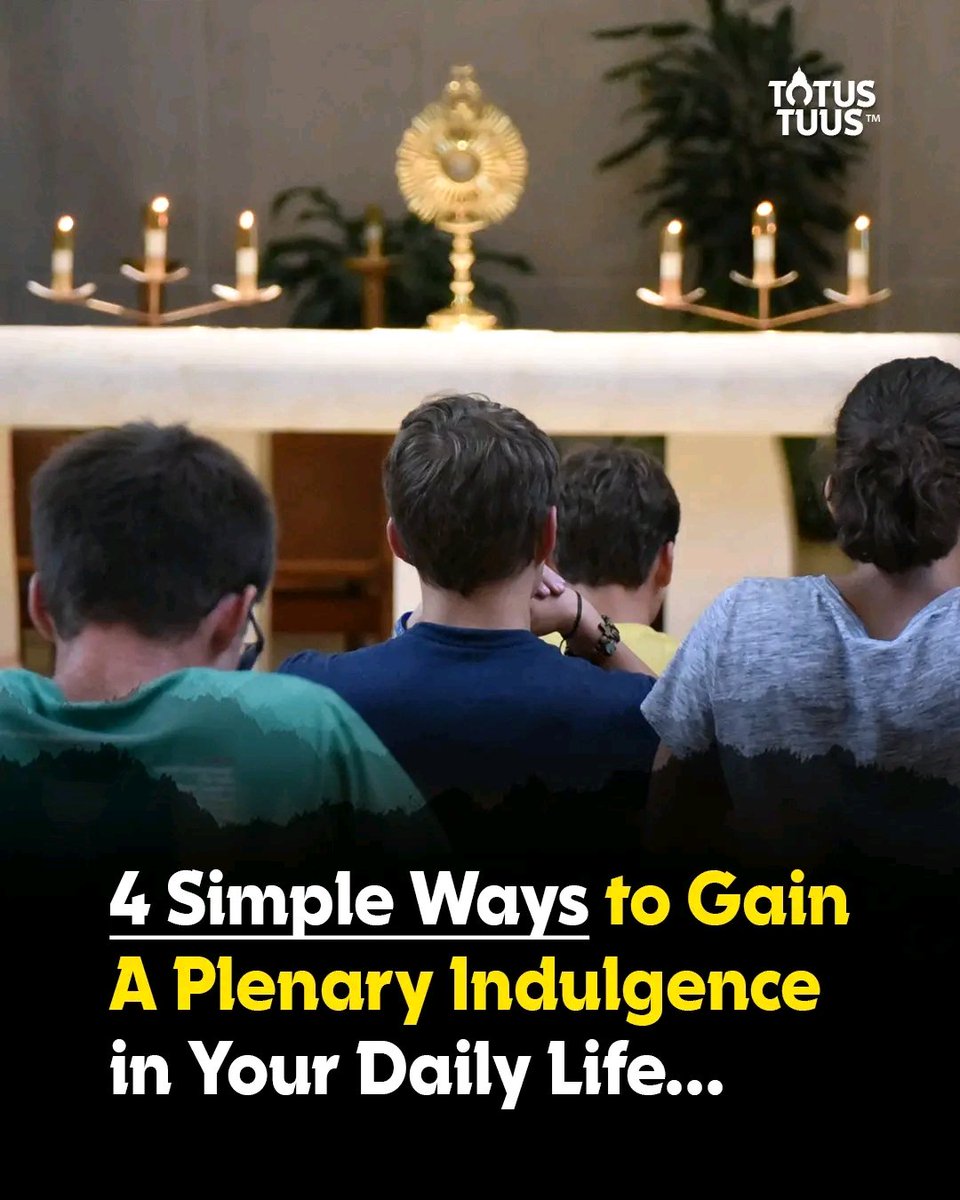
Did you know you can gain a plenary indulgence every single day?
A plenary indulgence is the complete remission of all temporal punishment due to sin, an incredible gift from God through the Church that we can apply to ourselves or to the souls in Purgatory!
All you need are these 3 conditions:
🔸 Sacramental Confession (can be done within ~20 days)
🔸Holy Communion
🔸Prayer for the Pope’s intentions (one Our Father + Hail Mary is enough)
And then choose one of these 4 simple practices:
▶ Adore the Blessed Sacrament for at least 30 minutes
▶ Pray the Rosary in a group, with family, or even following the Holy Father live
▶ Read the Bible (or listen to it) for at least 30 minutes with reverence
▶ Pray the Stations of the Cross (or meditate on the Passion for 15+ minutes if you can’t physically move between stations)
These are all things we can realistically do in our daily lives!
Which one will you try this week?
- Totus Tuus
St. Don Bosco worked with struggling youth his entire life... and he left us a blueprint most Catholics have forgotten...
St. John Bosco (aka Don Bosco) had a deep concern for young people growing up in a world filled with temptation, impurity, and bad influences. He taught that purity is not something outdated or impossible. It is a virtue worth protecting because it helps keep the heart close to God.
And honestly? The world today often treats purity like a joke.
What used to shock people is now pushed as normal everywhere: on phones, in entertainment, in conversations, and even in the way many people talk about relationships. Don Bosco warned young people to be careful about the influences they allow into their lives because he understood how easily sin can take root in the heart.
A quote commonly attributed to him says: “Guard your eyes, for they are the windows through which sin enters the soul.” While the exact wording is difficult to verify, it reflects his real teaching about guarding the senses and being careful with what we choose to look at and entertain in our minds.
One careless habit can slowly shape what your heart accepts.
Don Bosco gave simple and practical advice that still matters today. Stay busy with good work, prayer, study, and serving others. Avoid people, places, and habits that pull you toward sin. When temptation comes, turn to prayer quickly instead of trying to fight it alone. He had a strong devotion to the Blessed Virgin Mary and encouraged young people to pray the Hail Mary often in times of struggle.
He also taught self-discipline and custody of the senses. That means learning to say no to things that damage the soul, even when the world says they are harmless. Purity is not weakness. It takes real strength to live differently in a culture that constantly pushes lust, impurity, and selfishness.
Most people today protect their phones better than their souls.
Don Bosco believed God’s grace could help anyone begin again, even after falling into sin. The Church does not teach that a person is hopeless because they struggle. God’s mercy is real, and holiness is still possible.
If you are struggling today, do not give up. Go to Confession. Pray honestly. Stay close to Jesus in the Eucharist. Ask Our Lady and St. John Bosco to pray for you. Holiness is still possible, even in a distracted and impure world.
💬 What do you think is the biggest thing making purity so hard to live out today?
Most Catholics know
St. Maximilian Kolbe died in Auschwitz.
Fewer know the Marian secret behind his courage.
The Immaculata.
CCC 491 says Mary was redeemed from the moment of her conception.
CCC 492 says her unique holiness came wholly from Christ.
So the Immaculate Conception is not Mary competing with Jesus.
It is Jesus saving Mary perfectly.
Kolbe understood this.
He gave himself totally to the Immaculata because Mary belongs totally to Christ.
And when Auschwitz demanded self-preservation, Kolbe chose sacrifice.
That is Marian devotion at its highest:
Not reassurance.
Not filler.
Total surrender to Jesus through Mary.
The Immaculata forms saints.
My Queen and my Mother, I give myself entirely to you; and to show my devotion to you, I consecrate to you this day my eyes, my ears, my mouth, my heart, my whole being without reserve.
Wherefore, good Mother, as I am your own, keep me, guard me, as your property and possession.
Amen.🌹🌹🌹
St. Maximilian Kolbe pray for us.
I am just a poor sinner working in the Lord's vineyard.
Help me share the beauty of our Catholic faith. 🔁
There are two main camps of philosophical thought which emerge out of human history, and within those camps there is a diversity of thinkers. Those two main camps can be described as the objective and the subjective camps. The objective camp would argue that truth is determined by a conformity between the subjective and the objective, between the intellect and reality (St. Thomas Aquinas, De Ver., q.1, a.1). The subjective camp would argue that truth is not necessarily bound to what is outside of my mind. This camp, in varying degrees, centers truth more on historical development, personal perception, human consciousness, and experience. Granted, some may admit to some form of objective reality “out there,” there is still a primacy placed on, and subordinated to, the subjective.
If the objective is our starting place, then we admit that there are universal and unchanging truths about the human person, human sexuality, God, and the world, which remain unchanged despite changes of time, place, and culture (Mal. 3:6; Heb. 13:8; CCC 1954–1960). If we accept the latter, then universal truths become subject to change, since they change with history. This is extremely dangerous to assert; this is the essence of modernism, of which Pope Pius X warned in Pascendi Dominici Gregis.
It is one thing to, for pastoral purposes, adjust or change the language used. It is another to use language that would either explicitly or implicitly alter the meaning we wish to convey in matters of faith or morals (Gal. 1:8; Jude 1:3). Furthermore, to reject terminology or definitions, in the name of pastoral sensitivity, risks communicating acceptance of sin or alteration of Church doctrine (Isa. 5:20).
Truth and love must go together (Eph. 4:15), and if we wish to help souls, we must speak in such a way as to aid these same souls in getting to heaven. Otherwise, our mission becomes solely about inclusion while neglecting the fact that people will, in fact, be excluded from heaven if they do not repent (Luke 13:3; 1 Cor. 6:9–10). Love of the person and calling them to repentance need not be in contradiction.
If you only wish to express to them their dignity and how much God loves them, while at the same time never helping them to change, it is a false Gospel (John 8:11). It is the Gospel of modernism and not of Christ.
“The first Christian service on our soil was a Catholic mass.”
US Secretary of State Marco Rubio deliveres a powerful speech reminding America of its deep Catholic heritage
“God, at the moment of absolution, throws our sins over his shoulder. He forgets them, he annihilates them, they shall never reappear.”
St. John Vianney 🕊️