#TeamAssam is ready.
CM Dr. @himantabiswa has announced the portfolio allocation for the Council of Ministers, paving the way for accelerated growth and development.
Phase 1 of #Census2027, i.e. Houselisting and Housing Census (HLO), is being conducted across the country in a phased manner.
Residents may undertake Self-Enumeration through the official portal during the notified period in their respective States/UTs, followed by House-to-House visits by Enumerators for Houselisting Operations.
📍Check the schedule for your State/UT below.
🔗 Self-Enumerate at: https://t.co/RQvfqZMvC6
#जनगणना2027
@PIBHomeAffairs@PIB_India@MIB_India
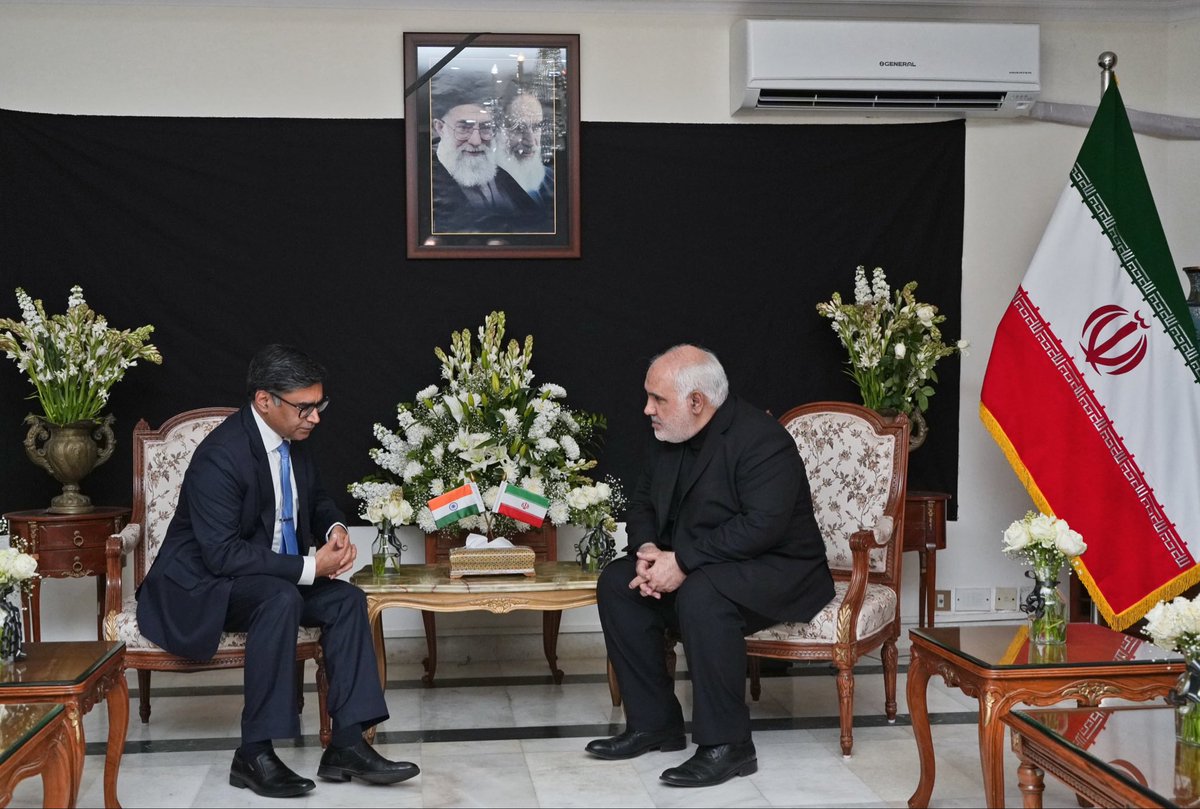
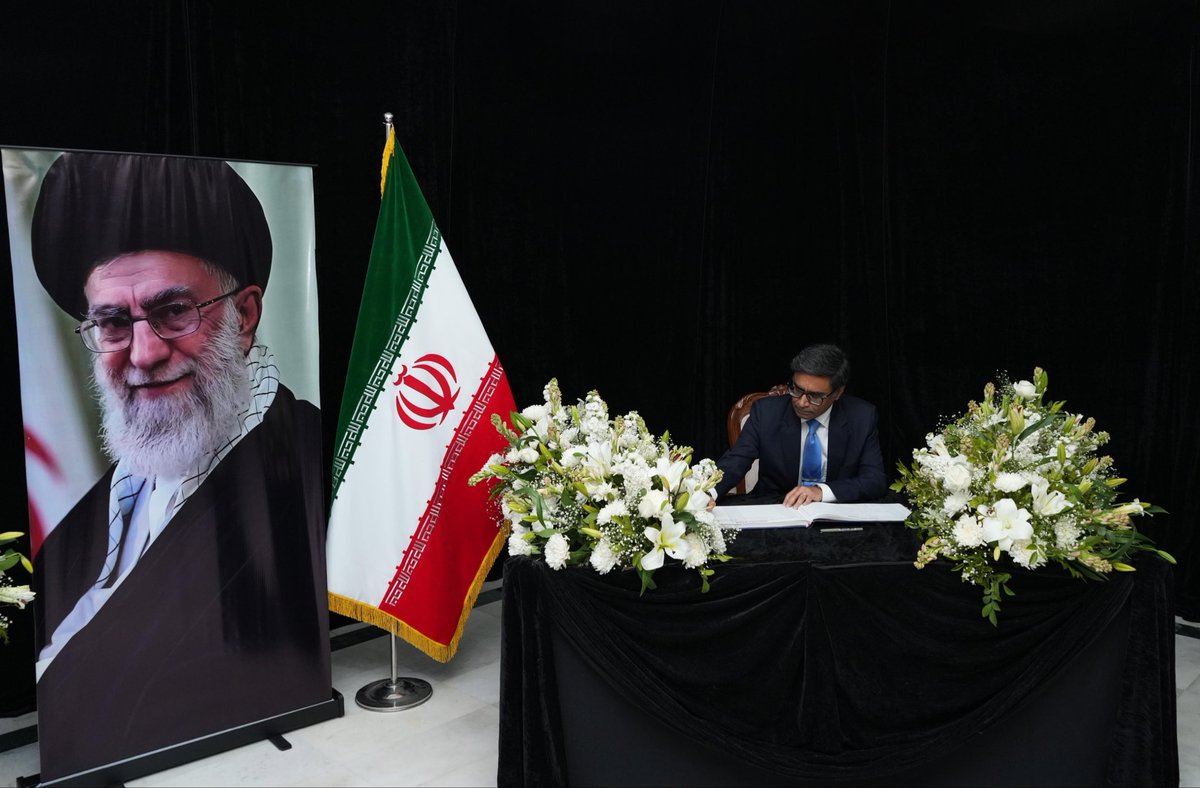
Foreign Secretary Shri Vikram Misri visited the Embassy of the Islamic Republic of Iran and signed the condolence book, on behalf of the people and the Government of India, on the demise of Supreme Leader Ayatollah Syed Ali Khamenei.
🚨 𝗜𝗠𝗣𝗢𝗥𝗧𝗔𝗡𝗧 𝗕𝗢𝗨𝗡𝗗𝗔𝗥𝗬 𝗟𝗜𝗡𝗘𝗦
1) India – Pakistan → Radcliffe Line
2) Pakistan – Afghanistan → Durand Line
3) India – China → McMahon Line
4) Poland – Germany → Oder–Neisse Line
5) Lebanon – Israel → Blue Line
6) Iran – Iraq → 31st Parallel (partial)
7) North Vietnam – South Vietnam → 17th Parallel
8) Libya – Sudan → 20th Parallel
9) Egypt – Sudan → 22nd Parallel
10)North Korea – South Korea → 38th Parallel
11) United States – Canada → 49th Parallel
12)USA – Canada (traditional name) → Medicine Line
🚨 Why Iran Stands Alone Against Israel and the U.S. While Other Muslim States Align with Washington
Before 1979, Iran under Mohammad Reza Pahlavi was actually a close U.S. ally and had quiet relations with Israel.
Everything changed after the Islamic Revolution led by Ruhollah Khomeini.
The new regime defined itself on three pillars:
•Opposition to Western domination
•Rejection of Israel’s legitimacy
•Governance based on Shia Islamic political theology
So hostility toward the U.S. and Israel became part of the state identity, not just foreign policy.
✅ Religious Identity:-
Iran is the largest Shia Muslim-majority nation in the Middle East, whereas most Arab countries are predominantly Sunni Muslim.
The Sunni–Shia split began in 632 CE after Prophet Muhammad’s death — it was originally about who should lead the Muslim community.
•Sunnis believed leadership should go to the most capable companion (Abu Bakr).
•Shias believed leadership belonged to the Prophet’s family, specifically Ali.
Over centuries, this political disagreement became theological.
Today:
•~85–90% of Muslims globally are Sunni
•~10–15% are Shia
•Iran is ~90–95% Shia
•Most Arab states (Saudi Arabia, Egypt, Jordan, etc.) are Sunni-majority
✅ What Makes Shia Political Thought Different?
Shia Islam has a concept absent in Sunni theology:
👉 The Hidden Imam
Twelver Shias believe the 12th Imam disappeared and will return as Mahdi.
This created a political problem:
Who rules in the absence of the Imam?
For centuries, Shia scholars avoided direct political rule — they guided society morally but did not govern.
That changed in 1979.
✅ Velayat-e Faqih – The Radical Shift
After the revolution, Ruhollah Khomeini introduced the doctrine of:
Velayat-e Faqih (Guardianship of the Islamic Jurist)
His argument:
Since the Imam is absent, a senior Shia jurist must govern to ensure Islamic justice.
This created:
•A Supreme Leader
•Clerical oversight over elected institutions
•A state built explicitly on Shia jurisprudence
This model is unique in the Muslim world.
No Sunni-majority state has an equivalent clerical supremacy system.
✅ Why This Creates Regional Tension
Now we move from theology to geopolitics.
Because Iran’s state is built on Shia political theology:
•It sees itself as protector of Shia communities
•It supports Shia movements in Iraq, Lebanon, Yemen
•It frames politics as resistance against injustice and “oppression”
Sunni monarchies — especially Saudi Arabia — see this as:
•A challenge to their legitimacy
•A threat to Sunni dominance
•A potential source of internal unrest (since they have Shia minorities)
So what looks like “sectarian conflict” is actually:
Religious identity + political legitimacy + power competition
✅ Persian vs Arab Identity Layer
There’s also a civilizational factor.
Iran is:
•Persian (non-Arab)
•Has its own language (Farsi)
•Has imperial history older than Islam
Most Middle Eastern states are Arab.
So Iran is different in:
•Ethnicity
•Language
•Historical memory
•Religious orientation
This compounds the sense of separateness.
✅ Why Most Muslim States Don’t Confront the U.S.
This is not mainly about religion — it’s about regime survival.
🇸🇦 Saudi Arabia
•Sunni monarchy
•Security partnership with U.S.
•Oil–security bargain since 1945
•Prioritizes regime stability over ideological confrontation
🇯🇴 Jordan
•Small, resource-poor state
•Depends heavily on U.S. aid
•Seeks stability
🇪🇬 Egypt
•After Camp David (1978), aligned strategically with U.S.
•Receives significant military aid
These states are not necessarily ideologically pro-Israel —
they are strategically aligned with Washington for survival and economic stability.
Iran also competes with Sunni powers for regional leadership.
For example:
•Saudi Arabia sees itself as leader of Sunni Islam.
•Iran positions itself as leader of “resistance.”
Now Enrolling for Spring 2026 Short-Term Programmes at Nalanda University ✨
Discover certificate and semester courses in Sanskrit, Pali, Korean, Tibetan, Japanese, European & Classical languages, along with Yoga, English, Archaeology, Philosophy, Disaster Management, Geoinformatics and more — available in online and offline modes.
🗓️ Apply before: 31 December 2025
Register here: https://t.co/ByjC4dS5jX
#NalandaUniversity #Spring2026 #AdmissionsOpen #ShortTermProgrammes #LearnAtNalanda
@MEAIndia@APanagariya@Sachin_Chat@mygovindia@IndianDiplomacy@PIB_India@PIBHindi@IPRDBihar
Those who wanted to help Dipu Chandra Das.
Bank Account Details:
Bank Name: Sonali Bank PLC
Account Name: (Father) Rabindranath Chandra Das
Accont Number:3327401013231
Routing Number: 200612269
Branch: Tarakanda Branch