THE TWO REALMS OF LASTING INFLUENCE
Apostle Joshua Selman reminds us that our greatness is ultimately measured by two foundational things: the mastery of our craft, and the number of people who can attest to their lives changing because of what we do.
#apostlejoshuaselman
#thegospelspot247
Not every closed door is a sign that God has said no. Sometimes the opportunity is there, but it requires faith, persistence, and spiritual engagement before it becomes a reality. Throughout Scripture, God often invites His people to participate in what He has already prepared for them rather than waiting passively for everything to happen on its own.
Apostle Michael Orokpo explains that, prophetically, a door represents more than an entrance it signifies access to new dimensions and opportunities connected to God’s purpose. He teaches that Scripture uses doors to illustrate advancement into greater levels of favor, authority, influence, and destiny. Referencing Revelation 4:1, he points out that John’s invitation to come up here reveals a door as an access point into a higher dimension of spiritual experience.
Apostle Michael Orokpo also emphasizes that doors do not open automatically simply because they exist. Using Matthew 7:7, he explains that asking, seeking, and knocking demonstrate the spiritual principle of making a demand. According to him, while some doors respond to persistent knocking, others require believers to exercise spiritual authority against longstanding resistance. Drawing from Samson’s encounter with the gates of Gaza, he illustrates that there are moments when believers must confront obstacles in prayer rather than accept them as permanent barriers. He encourages believers to approach such situations with confidence, knowing that God has authorized them to pursue the opportunities He has prepared for them.
INSIGHT
Throughout the Bible, God consistently invites His people to respond in faith rather than remain passive. Noah had to build the ark before the flood came. Joshua had to step into the Jordan before the waters parted. Blind Bartimaeus had to keep calling until Jesus stopped. God’s promises often require active participation from those who receive them.
Persistence should never be confused with trying to persuade God to be good. Instead, it reflects a heart that refuses to surrender what God has promised simply because the journey has become difficult. Faith continues to seek God, obey His instructions, and stand firm even when immediate results are not visible.
At the same time, spiritual persistence must remain anchored in God’s will. Scripture encourages believers to pray boldly, but always in submission to His wisdom and timing. True spiritual authority flows from intimacy with God and alignment with His purposes, not merely from determination. When faith, obedience, and perseverance work together, believers are better positioned to walk through the doors God opens before them.
APPLICATION
If you believe God has placed a promise or assignment before you, don’t allow delays to produce discouragement. Continue seeking Him in prayer, obey what He has already revealed, and remain steadfast in faith while trusting Him to open every door that aligns with His purpose for your life.
KEY TAKEAWAY
God’s opportunities are embraced through faith-filled persistence, not passive expectation.
ADDITIONAL RESOURCE
If you’d like to study this teaching in greater depth, watch Bethel: Altar of Generational Blessings by Apostle Michael Orokpo, Ph.D.
Everyone desires increase, but few people stop to consider the principles that produce it. In God’s kingdom, harvest is never where the process begins. Before there is multiplication, there must first be a seed willingly placed in God’s hands.
Pastor Sarah Omakwu teaches that giving is more than a financial activity it is a kingdom principle that reflects God’s own nature. She explains that throughout Scripture, giving comes before receiving. Just as God demonstrated His love by giving His Son, believers are called to cultivate a lifestyle of generosity, recognizing that what they sow becomes the reference point for what they will later reap. According to her, the measure a person gives is the measure by which they receive.
Pastor Sarah Omakwu also emphasizes that generosity should be intentional rather than occasional. She teaches that believers should plan to give by setting aside a portion of their income instead of waiting until someone asks for help. Giving, however, must be guided by wisdom and the leading of the Holy Spirit, particularly when honoring God and supporting His kingdom. She further explains that generosity protects the heart from the love of money because every act of giving declares that God not wealth is the believer’s true source and security. While the believer faithfully sows the seed, God alone determines the harvest.
INSIGHT
Giving has always been an expression of trust before it becomes an expression of generosity. Every time believers release what God has entrusted to them, they acknowledge that their confidence rests in the Lord rather than in their possessions. Generosity reminds the heart that resources are gifts to be stewarded, not idols to be clung to.
Scripture consistently presents giving as part of faithful stewardship, not as a transaction to control God. Wise generosity is motivated by love, gratitude, and obedience rather than the expectation of immediate return. When believers give with the right motive, they reflect the character of a God who delights in blessing others.
Generosity also reshapes the giver. It cultivates compassion, weakens the grip of selfishness, and trains the heart to see resources as tools for advancing God’s purposes. Whether the gift is large or small, each act of obedience becomes another opportunity to trust God’s faithfulness and participate in His work.
APPLICATION
Develop a habit of intentional giving. Prayerfully set aside a portion of what God provides, ask Him where He wants you to sow it, and give with a willing heart that seeks to honor Him above everything else.
KEY TAKEAWAY
Kingdom increase begins with faithful stewardship and generous obedience.
ADDITIONAL RESOURCE
If you’d like to study this teaching in greater depth, watch Finances In A Sweet Marriages | 2nd Service | by Pastor Sarah Omakwu.
Money is rarely the real problem in a marriage. More often, financial conflict exposes deeper issues such as poor communication, hidden decisions, or a lack of unity. When a husband and wife approach finances with different priorities and separate agendas, what should strengthen their partnership can easily become a source of tension.
Pastor Sarah Omakwu teaches that God’s design for marriage is built on the principle of oneness. She explains from Genesis 2:24 that becoming one flesh extends beyond the physical relationship to every area of married life, including finances. According to her, couples should see themselves as one unit, making financial decisions together rather than operating as two independent individuals.
Referencing Amos 3:3, Pastor Sarah Omakwu emphasizes that agreement is essential for a healthy marriage. She explains that financial peace cannot thrive where there is secrecy or divided direction. Husbands and wives should be transparent about their income, debts, investments, and financial commitments, ensuring that major decisions are made together. She further teaches that when couples embrace biblical oneness, money becomes a tool for strengthening the marriage instead of creating division.
INSIGHT
Financial unity is built on trust long before it is reflected in a bank account. Couples who communicate honestly about money create an environment where both people feel respected, heard, and secure. Transparency protects a marriage from unnecessary suspicion and helps both spouses carry financial responsibilities together.
The biblical idea of oneness also challenges the mindset of mine and yours. Marriage is a covenant in which two people learn to steward God’s resources together. This does not erase personal responsibility or healthy financial planning, but it does call for openness, shared vision, and mutual accountability. Decisions that affect the family should be approached with prayer, wisdom, and agreement.
Unity does not mean couples will never have different opinions about money. Healthy discussions are normal, and disagreements can become opportunities to grow in understanding and wisdom. The goal is not to avoid every difference but to work through them with love, honesty, and a commitment to protecting the relationship above personal preferences. When trust and communication remain strong, finances become a platform for partnership rather than a source of conflict.
APPLICATION
Take time to have an honest conversation about your financial goals, responsibilities, and expectations. Where trust has been weakened by secrecy or poor communication, begin rebuilding it through openness, prayer, and a shared commitment to honoring God in the way you manage your resources together.
KEY TAKEAWAY
Financial peace grows where trust, transparency, and oneness are intentionally cultivated.
ADDITIONAL RESOURCE
If you’d like to study this teaching in greater depth, watch Finances in Sweet Marriages by PASTOR SARAH OMAKWU
Not every difficult season is a sign that you’ve missed God’s will. Sometimes the greatest frustration comes just before God opens a new chapter. What feels like resistance today may actually be part of the process God is using to prepare you for a place of greater fruitfulness.
Pastor Debola Deji-Kurunmi teaches that Isaac’s journey in Genesis 26 reveals that divine enlargement is often preceded by contention. Although God blessed Isaac abundantly, his prosperity attracted opposition from the Philistines, who repeatedly stopped up the wells connected to his inheritance. Rather than interpreting these conflicts as evidence that God had abandoned him, Isaac continued moving forward, digging new wells until he reached Rehoboth the place where God finally made room for him.
Using Isaac’s response as a model, Pastor Debola Deji-Kurunmi explains that seasons of Esek and Sitnah should not be viewed as interruptions to God’s promise but as part of the journey toward its fulfillment. She emphasizes that spiritual maturity is demonstrated by the ability to keep trusting God when circumstances become difficult. Isaac refused to become discouraged or attached to one location because he understood that his confidence rested in God’s presence, not in a particular well. His willingness to keep moving and keep digging positioned him to experience the enlargement God had already planned for him.
INSIGHT
One of the greatest temptations during difficult seasons is to assume that opposition means God has closed the door. Yet throughout Scripture, God often accomplished His purposes through people who encountered resistance before they experienced breakthrough. Opposition is not always a sign that you are on the wrong path; sometimes it confirms that your faith is being refined and your dependence on God is growing deeper.
Isaac’s story also reminds believers not to define their future by a single disappointment. It is easy to become emotionally attached to one opportunity, one relationship, or one season and conclude that everything is over when it doesn’t work out. But God’s provision has never been limited to one place or one possibility. When our confidence is rooted in Him rather than in circumstances, we are free to move forward with hope, trusting that He is able to open new doors in His perfect timing.
Perseverance is not passive endurance; it is active faith. It is choosing to obey God, to continue sowing, praying, serving, and believing even when results are delayed. Often, the people who eventually arrive at their Rehoboth are simply those who refused to stop digging when previous wells became places of contention.
APPLICATION
If you are facing repeated setbacks, don’t allow disappointment to convince you that God has forgotten you. Stay faithful, remain teachable, and continue doing what God has asked of you. Your current season may be preparing you for the very place where He intends to make room for you.
KEY TAKEAWAY
God’s promise is often fulfilled through perseverance, not convenience.
ADDITIONAL RESOURCE
If you’d like to study this teaching in greater depth, watch Believe Again: God Is Making Room for You by Pastor Debola Deji-Kurunmi.
Some of God’s greatest works are not accomplished overnight. They are built through years of faithful obedience, consistent growth, and a willingness to remain available for His purposes. While many people desire quick results, God’s pattern is often to prepare His servants over time before entrusting them with greater influence.
Pastor Debola Deji-Kurunmi teaches that the anointing is essential for fulfilling a divine assignment, but it also requires time to mature. She explains that God places great value on believers who walk with Him faithfully over many years because longevity allows the anointing to deepen, broaden its influence, and produce greater impact. According to her, the anointing is not merely for personal encouragement but a divine resource that equips believers to carry significant responsibilities in their generation.
Highlighting the purpose of the anointing, Pastor Debola Deji-Kurunmi also explains that it is designed to build systems, preserve legacies, and advance God’s agenda within families, institutions, and nations. She emphasizes that as believers remain faithful over time, the anointing develops their character, strengthens their capacity, and prepares them to steward influence with wisdom. The commitment to long-term faithfulness enables a person’s life to produce fruit that extends beyond their own lifetime.
INSIGHT
God is often more interested in preparing a person than promoting them. While we naturally celebrate visible success, Scripture repeatedly shows that lasting influence is built through seasons of hidden growth, perseverance, and faithful stewardship. Character and capacity develop gradually, not instantly.
Longevity is one of the greatest testimonies of God’s sustaining grace. Remaining faithful through changing seasons, unexpected challenges, and delayed expectations demonstrates a heart that values God’s purposes above temporary recognition. The greatest legacies are usually built one faithful day at a time.
The influence God desires to produce through His people is meant to outlive them. As believers continue to walk closely with Him, their obedience can establish foundations that strengthen future generations and advance His kingdom far beyond their own lifetime.
APPLICATION
Stay committed to the process God has you in. Resist the urge to measure your progress only by immediate results, and remain faithful in the daily disciplines that allow God to mature your character, increase your capacity, and prepare you for greater responsibility.
KEY TAKEAWAY
Long-term faithfulness gives the anointing room to produce lasting impact.
ADDITIONAL RESOURCE
If you’d like to study this teaching in greater depth, watch Believe Again: God Is Making Room for You by Pastor Debola Deji-Kurunmi.
Healthy relationships are not sustained by good intentions alone. They thrive when both individuals understand their values, recognize their vulnerabilities, and establish boundaries that protect what matters most. Without clear boundaries, even sincere convictions can gradually be compromised.
Anwinli Ojeikere teaches that setting healthy boundaries begins with understanding yourself. She explains that before deciding what should remain out of bounds, a person must first identify their own tendencies, desires, and areas of weakness. According to her, values alone are not enough they must be protected by practical boundaries that prevent unnecessary compromise.
Highlighting the importance of self-awareness, Anwinli Ojeikere explains that every individual has unique emotional triggers and love languages that require wisdom. She points out that someone who is deeply influenced by gifts, words of affirmation, or physical touch should establish appropriate limits to avoid becoming emotionally attached before the relationship has a solid foundation. She also emphasizes that being strict with personal boundaries is not a sign of fear or rigidity but an expression of maturity and a commitment to protecting one’s convictions.
INSIGHT
Boundaries are not barriers that keep people out; they are safeguards that protect what God has entrusted to us. They help preserve emotional health, spiritual integrity, and wise decision-making, especially during seasons when emotions can easily cloud judgment.
Self-awareness is one of the greatest gifts a believer can cultivate. Understanding your strengths, weaknesses, and patterns allows you to make decisions proactively instead of reacting after damage has already been done. Wisdom often begins with an honest assessment of ourselves.
Healthy boundaries are ultimately an act of stewardship. They reflect a desire to honor God, respect others, and build relationships on trust, wisdom, and genuine commitment rather than unchecked emotions or temporary feelings.
APPLICATION
Take time to identify the situations, conversations, or behaviors that weaken your convictions. Establish practical boundaries that align with your values, and don’t be afraid to communicate them with wisdom and confidence.
KEY TAKEAWAY
Strong values remain strong when they are protected by healthy boundaries.
ADDITIONAL RESOURCE
If you’d like to study this teaching in greater depth, watch Truths Singles Must Know by Anwinli Ojeikere.
A successful marriage is built long before two people exchange vows. The quality of a relationship is often shaped by the character each person brings into it. While many singles spend time praying for the right partner, they sometimes overlook the importance of becoming the right person themselves.
Anwinli Ojeikere teaches that character should take priority over compatibility during the journey toward marriage. She explains that character cannot remain hidden forever because it eventually reveals itself through everyday attitudes, words, and actions. According to her, this includes a person’s behavior on social media, where comments, posts, and online interactions often reflect what is truly in the heart.
Addressing the role of personal growth, Anwinli Ojeikere also emphasizes the importance of receiving honest feedback from trusted friends and loved ones. She explains that unresolved character flaws such as pride or an unwillingness to apologize can damage healthy relationships or even cause someone to miss the right spouse. She further points out that godly character is revealed in how people treat everyone, regardless of status, and in their ability to exercise self-control in both public and private settings. Preparing for marriage, therefore, involves developing the maturity, wisdom, and conduct that honor God.
INSIGHT
Character is formed through consistent choices rather than occasional moments of good behavior. While outward appearance or chemistry may create attraction, lasting relationships are sustained by integrity, humility, kindness, and emotional maturity. These qualities cannot be manufactured overnight; they are cultivated over time.
Growth also requires humility. Receiving correction is rarely comfortable, but it is often one of God’s greatest tools for transformation. People who are willing to listen, learn, and change position themselves for healthier relationships because they recognize that maturity is a lifelong journey.
Preparing for marriage is not simply about waiting for the right person to appear. It is about allowing God to shape your heart so that, when the relationship comes, you are equipped to love, serve, forgive, and lead with wisdom.
APPLICATION
Take an honest look at your character. Invite trusted people to speak into your life, receive correction with humility, and intentionally develop the qualities that reflect Christ in your relationships and everyday interactions.
KEY TAKEAWAY
The best way to prepare for the right relationship is to become the right person.
ADDITIONAL RESOURCE
If you’d like to study this teaching in greater depth, watch Truths Singles Must Know by Anwinli Ojeikere.
Many believers desire a spiritually strong family, yet often assume that attending church alone is enough to produce one. While corporate worship is essential, God’s design has always been for spiritual life to extend beyond the church building and become the culture of the home. A healthy Christian family is built intentionally through consistent devotion, prayer, and God’s Word.
Apostle Dr. Arome Osayi teaches that the spiritual culture experienced in the local church should be reproduced within the home. He explains that a husband carries the responsibility of serving as the priest and spiritual leader of his family, ensuring that biblical values, sound doctrine, and spiritual disciplines become part of everyday family life. According to him, children are shaped not only by what they are taught but also by what they consistently observe in their parents.
Using the pattern of apostolic gatherings as an example, Apostle Dr. Arome Osayi explains that families should intentionally create moments for Bible study, prayer, fellowship, and spiritual conversations within their homes. He also emphasizes the importance of maintaining a book of remembrance to record prayers, decisions, and God’s faithfulness. As families consistently build these spiritual habits, they establish an altar that strengthens their unity, deepens their relationship with God, and equips them to withstand spiritual opposition.
INSIGHT
The home is often the first place where faith is either strengthened or weakened. While churches play a vital role in discipleship, they were never meant to replace the daily influence of a godly household. The habits cultivated within a family often shape future generations more deeply than occasional spiritual experiences.
Children learn as much from observation as they do from instruction. A home where prayer, Scripture, forgiveness, and worship are consistently practiced provides an environment where faith becomes a lived reality rather than merely a weekly activity. Spiritual leadership is demonstrated through example before it is communicated through words.
Building a Christ-centered home requires intentionality. It may involve setting aside regular times for family prayer, discussing God’s Word together, or simply creating an atmosphere where seeking God becomes a normal part of daily life. Over time, these consistent practices establish a spiritual legacy that can influence generations.
APPLICATION
Take one practical step toward strengthening your family’s spiritual life this week. Whether it’s beginning regular family prayer, reading Scripture together, or creating time for meaningful conversations about God, small and consistent habits can have a lasting impact.
KEY TAKEAWAY
A strong church begins with spiritually healthy homes.
ADDITIONAL RESOURCE
If you’d like to study this teaching in greater depth, watch How to Build Capacity for the Work of the Kingdom by Apostle Dr. Arome Osayi.
Many people think of salvation only in terms of where they will spend eternity. While that hope is central to the Christian faith, Scripture also reveals that salvation transforms how believers live today. God’s desire is not merely to prepare His people for heaven but to bring them into a living relationship with Him that shapes their character, choices, and daily walk.
Drawing from John 17:3, Dr. Arome Osayi explains that eternal life is more than endless existence. He teaches that Jesus defined eternal life as knowing the only true God and Jesus Christ whom He has sent. According to him, eternal life is the very life of God imparted to the believer, giving them the capacity to walk in fellowship with God and overcome the desires of the flesh.
Apostle Dr. Arome Osayi also warns against treating salvation as a license for spiritual carelessness. Drawing attention to passages such as Hebrews 3:12–13 and Hebrews 10:26–29, he explains that Scripture repeatedly calls believers to remain watchful because the deceitfulness of sin can gradually harden the heart. He emphasizes that God’s grace should produce perseverance and obedience, not complacency. The precious gift of salvation calls believers to continually walk with God, honoring the sacrifice of Christ and refusing to allow persistent sin to weaken their fellowship with Him.
INSIGHT
Grace was never intended to make believers passive about their spiritual lives. Instead, it empowers them to pursue holiness while remaining completely dependent on Christ. The repeated biblical warnings to remain watchful are not invitations to live in fear but reminders to live with humility, faith, and perseverance.
Sin rarely hardens the heart overnight. It often begins with small compromises that, if left unchecked, gradually dull spiritual sensitivity. This is why regular repentance, obedience, and fellowship with God are essential for maintaining a healthy spiritual life.
The Christian journey is one of continual dependence on God’s grace. As believers remain rooted in His Word and responsive to His Spirit, they grow in the knowledge of God and experience the transforming power of the eternal life He has given them.
APPLICATION
Guard your relationship with God by responding quickly to His conviction, staying rooted in His Word, and refusing to normalize attitudes or habits that pull your heart away from Him. A consistent walk with Christ strengthens your spiritual sensitivity and keeps you growing in His grace.
KEY TAKEAWAY
Eternal life is not only the promise of heaven it is the life of God at work in every believer today.
ADDITIONAL RESOURCE
If you’d like to study this teaching in greater depth, watch How to Build Capacity for the Work of the Kingdom by Dr. Arome Osayi.
Many believers are passionate about experiencing God’s power, yet far fewer are intentional about preserving what He has entrusted to them. While a strong beginning is worth celebrating, the Christian life is ultimately measured by faithfulness to the end. Spiritual longevity is not achieved by occasional moments of zeal but through a consistent walk with God.
According to Apostle Femi Lazarus, one of the greatest tragedies is becoming formerly anointed. He explains that many people who once carried God’s power eventually lost their influence because they neglected the spiritual disciplines that sustained them. Rather than treating the anointing as a permanent possession, believers should recognize it as a sacred responsibility that must be guarded through fasting, prayer, and consistent study of God’s Word.
Apostle Femi Lazarus also teaches that spiritual disciplines are not religious routines but the foundation of a life that remains sensitive to God. He emphasizes that as influence increases, the temptation to depend on personal strength also grows. The Jezebel system seeks to exploit this by attacking the moral integrity of God’s servants, making purity a non-negotiable requirement for anyone who desires to finish well. He further explains that hosting God’s presence requires patience, obedience, and a continual return to the secret place, where the oil is preserved and renewed.
INSIGHT
One of the greatest dangers in the Christian life is assuming that yesterday’s encounters with God are enough to sustain today’s walk. Spiritual vitality cannot be inherited from past experiences; it must be cultivated through an ongoing relationship with the Lord. Every generation of believers must learn to seek God afresh rather than relying on former victories.
Scripture consistently shows that those who finished well were people who remained dependent on God throughout their journey. Public influence should never replace private devotion, and visible success should never become a substitute for spiritual intimacy. The strength to endure is developed long before it is displayed.
God’s desire is not simply to raise believers who burn brightly for a season but to shape men and women whose lives remain faithful until the very end. A life rooted in prayer, God’s Word, holiness, and obedience is far less vulnerable to the distractions and compromises that can slowly extinguish spiritual fire.
APPLICATION
Evaluate your spiritual disciplines honestly. Make time for prayer, the study of God’s Word, and personal holiness, not as religious obligations but as daily practices that keep your heart aligned with God and strengthen you to remain faithful.
KEY TAKEAWAY
The anointing is not only received it must be faithfully guarded.
ADDITIONAL RESOURCE
If you’d like to study this teaching in greater depth, watch UNMASKING JEZEBEL by Apostle Femi Lazarus.
Many believers assume that every spiritual attack is random, yet Scripture reveals that the kingdom of darkness operates with strategy rather than chaos. When challenges seem to arise from every direction, the temptation is often to react emotionally, make hasty decisions, or blame people. However, God’s Word calls believers to discern what is happening spiritually before responding naturally.
Drawing from Ephesians 6:11, Apostle Femi Lazarus emphasized that the devil operates through carefully designed strategies, which Scripture describes as the wiles of the enemy. He teaches that Satan is neither careless nor disorganized but works intelligently, seeking opportunities to exploit moments of weakness. Using the illustration of a wounded lion, Apostle Femi Lazarus points out that predators often target those who are isolated, exhausted, or vulnerable. This is why fellowship within the local church is not optional but a vital source of strength, accountability, and protection for every believer.
Apostle Femi Lazarus also emphasizes that the believer’s battle is not against flesh and blood but against an organized system of principalities, powers, and rulers of darkness. According to him, the enemy often coordinates multiple attacks within a short period to create fear, confusion, and pressure, hoping believers will make decisions they later regret. Instead of responding impulsively, Christians are instructed to stand firm, put on the whole armor of God, and fight from the position of victory secured through Christ’s finished work on the cross.
INSIGHT
One of the enemy’s greatest tactics is distraction. When believers become consumed with blaming people or reacting to circumstances alone, they can lose sight of the spiritual realities behind the conflict. Scripture consistently reminds us that discernment is essential because not every battle is merely natural in origin.
This teaching also highlights the importance of Christian community. Isolation often weakens spiritual resilience, while healthy fellowship provides encouragement, accountability, and support during difficult seasons. God’s design has always been for believers to grow and stand together rather than face spiritual battles alone.
Finally, standing firm requires confidence in Christ’s victory rather than confidence in our own strength. The armor of God is not merely defensive equipment it is a daily reminder that believers overcome by remaining rooted in God’s truth, righteousness, faith, salvation, His Word, and persistent prayer.
APPLICATION
If you are facing repeated challenges, resist the urge to make fear-driven decisions. Stay grounded in God’s Word, remain connected to a healthy community of believers, and respond with prayer and spiritual discernment rather than panic.
KEY TAKEAWAY
The enemy may have strategies, but believers overcome by standing firm in Christ’s victory.
ADDITIONAL RESOURCE
If you’d like to study this teaching in greater depth, watch UNMASKING JEZEBEL by Apostle Femi Lazarus.
Healthy relationships are not sustained by good intentions alone. They thrive when both individuals understand their values, recognize their vulnerabilities, and establish boundaries that protect what matters most. Without clear boundaries, even sincere convictions can gradually be compromised.
Anwinli Ojeikere teaches that setting healthy boundaries begins with understanding yourself. She explains that before deciding what should remain out of bounds, a person must first identify their own tendencies, desires, and areas of weakness. According to her, values alone are not enough they must be protected by practical boundaries that prevent unnecessary compromise.
Highlighting the importance of self-awareness, Anwinli Ojeikere explains that every individual has unique emotional triggers and love languages that require wisdom. She points out that someone who is deeply influenced by gifts, words of affirmation, or physical touch should establish appropriate limits to avoid becoming emotionally attached before the relationship has a solid foundation. She also emphasizes that being strict with personal boundaries is not a sign of fear or rigidity but an expression of maturity and a commitment to protecting one’s convictions.
INSIGHT
Boundaries are not barriers that keep people out; they are safeguards that protect what God has entrusted to us. They help preserve emotional health, spiritual integrity, and wise decision-making, especially during seasons when emotions can easily cloud judgment.
Self-awareness is one of the greatest gifts a believer can cultivate. Understanding your strengths, weaknesses, and patterns allows you to make decisions proactively instead of reacting after damage has already been done. Wisdom often begins with an honest assessment of ourselves.
Healthy boundaries are ultimately an act of stewardship. They reflect a desire to honor God, respect others, and build relationships on trust, wisdom, and genuine commitment rather than unchecked emotions or temporary feelings.
APPLICATION
Take time to identify the situations, conversations, or behaviors that weaken your convictions. Establish practical boundaries that align with your values, and don’t be afraid to communicate them with wisdom and confidence.
KEY TAKEAWAY
Strong values remain strong when they are protected by healthy boundaries.
ADDITIONAL RESOURCE
If you’d like to study this teaching in greater depth, watch Truths Singles Must Know by Anwinli Ojeikere.
A successful marriage is built long before two people exchange vows. The quality of a relationship is often shaped by the character each person brings into it. While many singles spend time praying for the right partner, they sometimes overlook the importance of becoming the right person themselves.
Anwinli Ojeikere teaches that character should take priority over compatibility during the journey toward marriage. She explains that character cannot remain hidden forever because it eventually reveals itself through everyday attitudes, words, and actions. According to her, this includes a person’s behavior on social media, where comments, posts, and online interactions often reflect what is truly in the heart.
Addressing the role of personal growth, Anwinli Ojeikere also emphasizes the importance of receiving honest feedback from trusted friends and loved ones. She explains that unresolved character flaws such as pride or an unwillingness to apologize can damage healthy relationships or even cause someone to miss the right spouse. She further points out that godly character is revealed in how people treat everyone, regardless of status, and in their ability to exercise self-control in both public and private settings. Preparing for marriage, therefore, involves developing the maturity, wisdom, and conduct that honor God.
INSIGHT
Character is formed through consistent choices rather than occasional moments of good behavior. While outward appearance or chemistry may create attraction, lasting relationships are sustained by integrity, humility, kindness, and emotional maturity. These qualities cannot be manufactured overnight; they are cultivated over time.
Growth also requires humility. Receiving correction is rarely comfortable, but it is often one of God’s greatest tools for transformation. People who are willing to listen, learn, and change position themselves for healthier relationships because they recognize that maturity is a lifelong journey.
Preparing for marriage is not simply about waiting for the right person to appear. It is about allowing God to shape your heart so that, when the relationship comes, you are equipped to love, serve, forgive, and lead with wisdom.
APPLICATION
Take an honest look at your character. Invite trusted people to speak into your life, receive correction with humility, and intentionally develop the qualities that reflect Christ in your relationships and everyday interactions.
KEY TAKEAWAY
The best way to prepare for the right relationship is to become the right person.
ADDITIONAL RESOURCE
If you’d like to study this teaching in greater depth, watch Truths Singles Must Know by Anwinli Ojeikere.
Many believers desire a spiritually strong family, yet often assume that attending church alone is enough to produce one. While corporate worship is essential, God’s design has always been for spiritual life to extend beyond the church building and become the culture of the home. A healthy Christian family is built intentionally through consistent devotion, prayer, and God’s Word.
Apostle Dr. Arome Osayi teaches that the spiritual culture experienced in the local church should be reproduced within the home. He explains that a husband carries the responsibility of serving as the priest and spiritual leader of his family, ensuring that biblical values, sound doctrine, and spiritual disciplines become part of everyday family life. According to him, children are shaped not only by what they are taught but also by what they consistently observe in their parents.
Using the pattern of apostolic gatherings as an example, Apostle Dr. Arome Osayi explains that families should intentionally create moments for Bible study, prayer, fellowship, and spiritual conversations within their homes. He also emphasizes the importance of maintaining a book of remembrance to record prayers, decisions, and God’s faithfulness. As families consistently build these spiritual habits, they establish an altar that strengthens their unity, deepens their relationship with God, and equips them to withstand spiritual opposition.
INSIGHT
The home is often the first place where faith is either strengthened or weakened. While churches play a vital role in discipleship, they were never meant to replace the daily influence of a godly household. The habits cultivated within a family often shape future generations more deeply than occasional spiritual experiences.
Children learn as much from observation as they do from instruction. A home where prayer, Scripture, forgiveness, and worship are consistently practiced provides an environment where faith becomes a lived reality rather than merely a weekly activity. Spiritual leadership is demonstrated through example before it is communicated through words.
Building a Christ-centered home requires intentionality. It may involve setting aside regular times for family prayer, discussing God’s Word together, or simply creating an atmosphere where seeking God becomes a normal part of daily life. Over time, these consistent practices establish a spiritual legacy that can influence generations.
APPLICATION
Take one practical step toward strengthening your family’s spiritual life this week. Whether it’s beginning regular family prayer, reading Scripture together, or creating time for meaningful conversations about God, small and consistent habits can have a lasting impact.
KEY TAKEAWAY
A strong church begins with spiritually healthy homes.
ADDITIONAL RESOURCE
If you’d like to study this teaching in greater depth, watch How to Build Capacity for the Work of the Kingdom by Apostle Dr. Arome Osayi.
Many people think of salvation only in terms of where they will spend eternity. While that hope is central to the Christian faith, Scripture also reveals that salvation transforms how believers live today. God’s desire is not merely to prepare His people for heaven but to bring them into a living relationship with Him that shapes their character, choices, and daily walk.
Drawing from John 17:3, Dr. Arome Osayi explains that eternal life is more than endless existence. He teaches that Jesus defined eternal life as knowing the only true God and Jesus Christ whom He has sent. According to him, eternal life is the very life of God imparted to the believer, giving them the capacity to walk in fellowship with God and overcome the desires of the flesh.
Apostle Dr. Arome Osayi also warns against treating salvation as a license for spiritual carelessness. Drawing attention to passages such as Hebrews 3:12–13 and Hebrews 10:26–29, he explains that Scripture repeatedly calls believers to remain watchful because the deceitfulness of sin can gradually harden the heart. He emphasizes that God’s grace should produce perseverance and obedience, not complacency. The precious gift of salvation calls believers to continually walk with God, honoring the sacrifice of Christ and refusing to allow persistent sin to weaken their fellowship with Him.
INSIGHT
Grace was never intended to make believers passive about their spiritual lives. Instead, it empowers them to pursue holiness while remaining completely dependent on Christ. The repeated biblical warnings to remain watchful are not invitations to live in fear but reminders to live with humility, faith, and perseverance.
Sin rarely hardens the heart overnight. It often begins with small compromises that, if left unchecked, gradually dull spiritual sensitivity. This is why regular repentance, obedience, and fellowship with God are essential for maintaining a healthy spiritual life.
The Christian journey is one of continual dependence on God’s grace. As believers remain rooted in His Word and responsive to His Spirit, they grow in the knowledge of God and experience the transforming power of the eternal life He has given them.
APPLICATION
Guard your relationship with God by responding quickly to His conviction, staying rooted in His Word, and refusing to normalize attitudes or habits that pull your heart away from Him. A consistent walk with Christ strengthens your spiritual sensitivity and keeps you growing in His grace.
KEY TAKEAWAY
Eternal life is not only the promise of heaven it is the life of God at work in every believer today.
ADDITIONAL RESOURCE
If you’d like to study this teaching in greater depth, watch How to Build Capacity for the Work of the Kingdom by Dr. Arome Osayi.
Many believers are passionate about experiencing God’s power, yet far fewer are intentional about preserving what He has entrusted to them. While a strong beginning is worth celebrating, the Christian life is ultimately measured by faithfulness to the end. Spiritual longevity is not achieved by occasional moments of zeal but through a consistent walk with God.
According to Apostle Femi Lazarus, one of the greatest tragedies is becoming formerly anointed. He explains that many people who once carried God’s power eventually lost their influence because they neglected the spiritual disciplines that sustained them. Rather than treating the anointing as a permanent possession, believers should recognize it as a sacred responsibility that must be guarded through fasting, prayer, and consistent study of God’s Word.
Apostle Femi Lazarus also teaches that spiritual disciplines are not religious routines but the foundation of a life that remains sensitive to God. He emphasizes that as influence increases, the temptation to depend on personal strength also grows. The Jezebel system seeks to exploit this by attacking the moral integrity of God’s servants, making purity a non-negotiable requirement for anyone who desires to finish well. He further explains that hosting God’s presence requires patience, obedience, and a continual return to the secret place, where the oil is preserved and renewed.
INSIGHT
One of the greatest dangers in the Christian life is assuming that yesterday’s encounters with God are enough to sustain today’s walk. Spiritual vitality cannot be inherited from past experiences; it must be cultivated through an ongoing relationship with the Lord. Every generation of believers must learn to seek God afresh rather than relying on former victories.
Scripture consistently shows that those who finished well were people who remained dependent on God throughout their journey. Public influence should never replace private devotion, and visible success should never become a substitute for spiritual intimacy. The strength to endure is developed long before it is displayed.
God’s desire is not simply to raise believers who burn brightly for a season but to shape men and women whose lives remain faithful until the very end. A life rooted in prayer, God’s Word, holiness, and obedience is far less vulnerable to the distractions and compromises that can slowly extinguish spiritual fire.
APPLICATION
Evaluate your spiritual disciplines honestly. Make time for prayer, the study of God’s Word, and personal holiness, not as religious obligations but as daily practices that keep your heart aligned with God and strengthen you to remain faithful.
KEY TAKEAWAY
The anointing is not only received it must be faithfully guarded.
ADDITIONAL RESOURCE
If you’d like to study this teaching in greater depth, watch UNMASKING JEZEBEL by Apostle Femi Lazarus.
Some families seem to preserve godly influence for generations, while others repeatedly struggle with the same battles. The difference is not always intelligence, opportunity, or background. Often, it is the presence or absence of spiritual principles that are faithfully practiced from one generation to the next. Kingdom legacies are not built by accident; they are sustained by divine patterns that people choose to live by.
Drawing from Genesis 12, Genesis 22, Romans 4, 1 Samuel 16, Genesis 18:19, Joshua 24:15, 1 Corinthians 2:6–8, Jeremiah 33:3, Ephesians 4:27, and Isaiah 60:15, Apostle Michael Orokpo teaches that every family God establishes carries spiritual secrets or divine codes that preserve its destiny. According to him, Abraham’s secret was obedient faith, David’s was a perfect and teachable heart, while the Rechabites were preserved through unwavering obedience to their father’s instruction. These were not random qualities but spiritual ordinances that sustained their influence across generations. Apostle Michael Orokpo further explains that every believer must seek God personally to discover the consecrations and principles that will preserve their own family line. When God reveals hidden weaknesses such as pride, immorality, dishonesty, or compromise, He also reveals the wisdom required to overcome them and establish a lasting spiritual legacy.
INSIGHT
Every lasting legacy is built on convictions that refuse to change with culture. Families often pass down more than names and possessions they pass down values, disciplines, priorities, and patterns of living. The question is whether those patterns draw future generations closer to God or further away from Him. The choices we consistently make today become the inheritance others may one day receive.
God still entrusts spiritual wisdom to those who seek Him diligently. While there are timeless biblical principles that apply to every believer, the Holy Spirit also provides specific direction for individuals and families. A life of prayer, obedience, and intimacy with God positions believers to receive the wisdom needed not only for personal victory but for the generations that will follow.
APPLICATION
Ask God to reveal the spiritual disciplines and biblical principles He wants to establish in your life and family. Then commit to living them consistently until they become part of your legacy.
KEY TAKEAWAY
The legacy you leave tomorrow is shaped by the spiritual principles you live by today.
ADDITIONAL RESOURCE
If you’d like to study this teaching in greater depth, watch Bethel: Altar of Generational Blessings || by Apostle Michael Orokpo, Ph.D.
Life has a way of leaving wounds. Betrayal, disappointment, rejection, unanswered conversations, and painful relationships can quietly shape the heart if they are left unresolved. While we cannot always control what people do to us, we are responsible for what those experiences are allowed to produce within us. The greatest danger is not always the event itself but the condition of the heart afterward.
Drawing from Proverbs 4:23 and 2 Corinthians 5:17–21, Rev. Dr. Sam Oye explores the danger of a hardened heart. He explains that no one is born with a hard heart; it develops gradually when pain, offense, pride, and unforgiveness are allowed to settle within. The message warns that people who were once loving, trusting, and compassionate can become guarded and emotionally distant because of what they have experienced. Rather than allowing wounds to redefine their character, believers are encouraged to guard their hearts diligently, forgive those who have offended them, and respond to the Holy Spirit’s promptings toward reconciliation. According to Rev. Dr. Sam Oye, God’s desire is to replace a heart of stone with a heart that remains soft, teachable, and available for His purposes.
INSIGHT
Pain changes people but it does not have to harden them. One of the enemy’s subtle victories is not simply causing hurt but allowing that hurt to reshape our character. When disappointment turns into bitterness, or betrayal turns into distrust of everyone, the wound begins to influence decisions far beyond the original event. Healing involves more than moving on; it involves refusing to let yesterday’s pain dictate tomorrow’s relationships.
Guarding the heart requires continual surrender to God. Forgiveness does not excuse wrongdoing, but it prevents the offense from taking permanent residence within us. As God’s Word renews our minds and His Spirit softens our hearts, we become free to love again, trust wisely, and reflect Christ even after painful experiences.
APPLICATION
Ask God to reveal any unresolved offense or bitterness you may be carrying. Choose forgiveness where it is needed, and allow His Word not your wounds to shape the condition of your heart.
KEY TAKEAWAY
Don’t let what happened to you become who you are.
ADDITIONAL RESOURCE
If you’d like to study this teaching in greater depth, watch 4 Dysfunctional Family Backgrounds (Part 1) | Relationship Today by Rev. Dr. Sam Oye.
No one chooses the family they are born into. Some people grow up in homes filled with love, encouragement, and healthy values, while others carry painful memories of rejection, abuse, conflict, or dysfunction. Although our backgrounds shape many of our early experiences, they do not have to determine the direction of our future.
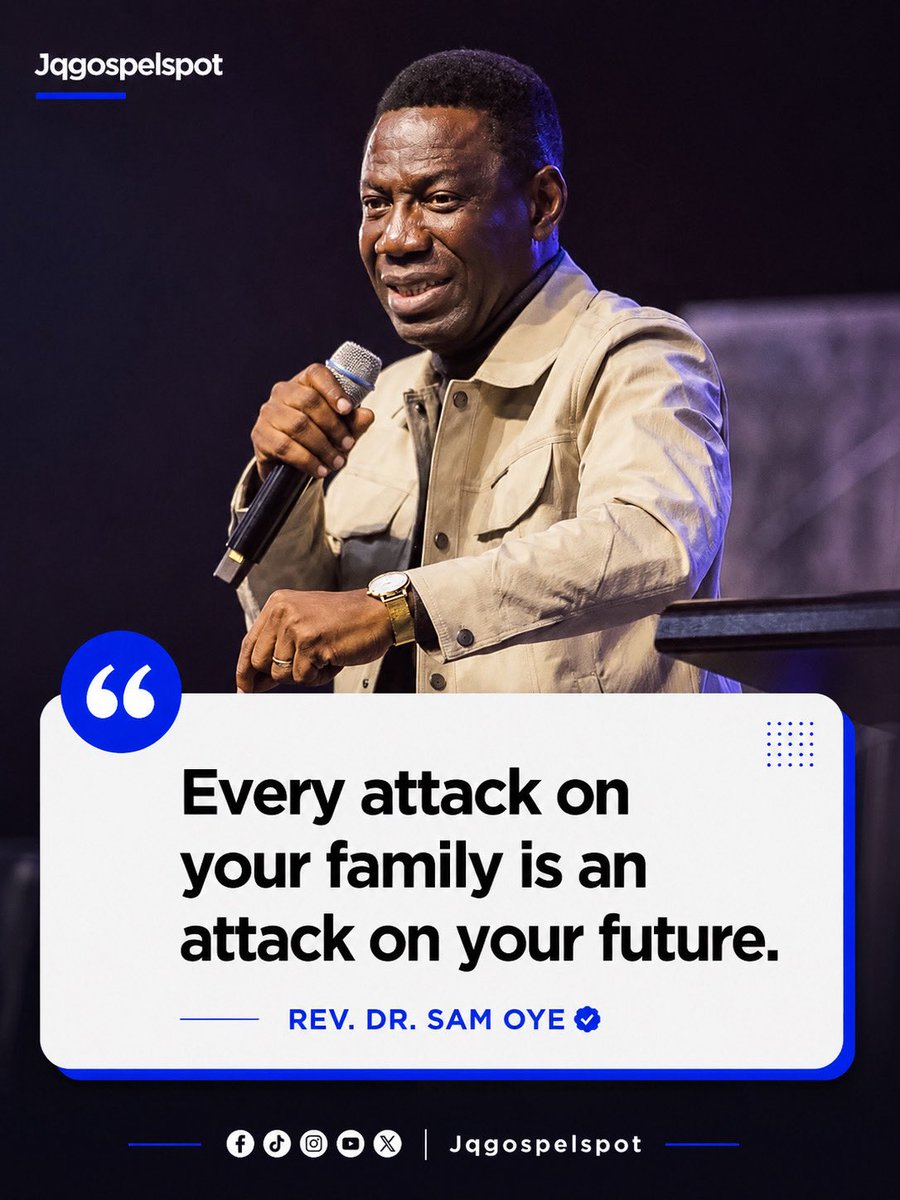
Drawing from Genesis 37:18-20, 2 Samuel 13:1-20, and Psalm 41:9, Rev. Dr. Sam Oye examines the profound influence of family on a person’s identity and destiny. He describes the family as a child’s first school, first church, first leadership academy, and first counseling center, making it one of the most important institutions God established. Because of its significance, he notes that the enemy frequently targets families in an attempt to derail future generations.
Using biblical examples, the message shows how attacks against relationships often become attacks against purpose. Rev. Dr. Sam Oye also explains that while every family passes down both nature and nurture, believers are not condemned to repeat unhealthy patterns. Through Christ, people can break destructive cycles, renew their minds, and intentionally build families that reflect God’s design rather than the brokenness they may have inherited.
INSIGHT
Our past may explain some of our struggles, but it should never become an excuse for remaining trapped by them. Healing begins when we acknowledge the impact of our experiences without allowing them to become our permanent identity. God’s grace enables believers to confront painful histories while embracing the hope of a transformed future.
Breaking unhealthy family patterns is rarely automatic. It requires intentional choices, renewed thinking, forgiveness where necessary, and a commitment to live according to biblical principles rather than inherited behaviors. Every generation has the opportunity to make decisions that positively influence the generations that follow.
APPLICATION
Identify one unhealthy pattern you have observed in your family history and prayerfully commit to replacing it with a biblical principle. Let your decisions today become the foundation for a healthier legacy tomorrow.
KEY TAKEAWAY
Your background may shape your beginning, but your obedience to God shapes your future.
ADDITIONAL RESOURCE
If you’d like to study this teaching in greater depth, watch 4 Dysfunctional Family Backgrounds (Part 1) | Relationship Today by Rev. Dr. Sam Oye.
Many people find themselves repeating patterns they never chose. Some families seem to pass down cycles of poverty, broken relationships, delayed progress, or recurring struggles from one generation to the next. These experiences can leave believers wondering whether they are destined to relive the same story as those before them. Yet the hope of the gospel is that no believer is condemned to remain trapped by yesterday’s patterns.
Drawing from Genesis 1:1, Genesis 3:15, Jeremiah 35, Deuteronomy 33, and Acts 17:30, Bishop Funke Felix Adejumo explores what she describes as ancient voices decrees, patterns, and influences that attempt to shape generations. Using the example of the Rechabites in Jeremiah 35, she illustrates how decisions made by one generation can continue to affect those that follow.
The message also points to recurring family cycles that seem to resist progress, causing people to advance only to experience repeated setbacks. However, through the death, burial, and resurrection of Jesus Christ, believers are no longer defined by ancestral limitations. She also reminds listeners that God has wiped away the time of ignorance, and because the blood of Jesus has dealt with the past, the enemy has no legal right to continually accuse believers with what God has already forgiven.
INSIGHT
While families can pass down values, habits, and even unhealthy patterns, the gospel declares that our deepest identity is no longer rooted in our natural lineage but in Christ. Every believer should be careful not to surrender to hopelessness simply because certain struggles have existed for generations. God’s grace is able to begin a new story where old patterns once seemed permanent.
At the same time, freedom in Christ is not merely about rejecting the past but embracing a new way of living. As believers renew their minds with God’s Word, walk in obedience, and remain dependent on the Holy Spirit, they increasingly reflect the reality of their new identity. The cross does more than forgive sin it establishes a new foundation upon which a transformed life can be built.
APPLICATION
Refuse to define your future by the struggles you have witnessed in your family or your past. Stand on God’s promises, thank Him for the new identity you have in Christ, and continue walking in obedience to His Word.
KEY TAKEAWAY
Your history may explain your battles, but it does not have to determine your destiny.
ADDITIONAL RESOURCE
If you’d like to study this teaching in greater depth, watch MATRIARCHAL PRAYERS | FEAST by Bishop Funke Felix-Adejumo.