🛰Difundimos el conocimiento científico a la sociedad desde un pensamiento sistémico del planeta Tierra! 🌎
-
🛰We disseminate scientific knowledge to society from a systemic thinking of planet Earth! 🌎
https://t.co/EJ1q2rgZhR 🔬
New study adds evidence that the "Cold Blob" in the North Atlantic is proof of AMOC slow-down. And it can only be explained by changes in ocean heat transport (impacted by us). Continued slowdown, even shut-down cannot be excluded. An unacceptable risk. https://t.co/WsMTV61SoV
The destabilisation of the #AMOC is no longer a distant scenario - it’s a national and global security risk. In a new article in Dagens Nyheter, Iceland’s Climate Minister Jóhann Páll Jóhannsson and I outline actions to tackle this threat: https://t.co/1tfJJGNpUT (in Swedish)
🌊🌡️📈
The Northern Hemisphere mid-latitude heat keeps blowing my mind. 🤯
The 2025 summer (June-August) was not as extreme as the past two years for the North Atlantic, but the other oceans were even more extreme than both 2023 and 2024!
Here's the same region since 1854, using the @NOAA ERSST V5 dataset. August 2025 is not available yet here.
If the annual summer increase is as high as for @ECMWF ERA5 above, the ~0.4°C jump will break another y-axis...
The past 15 years show more regional warming than the preceding 150 years!
The desulphurisation of shipping clearly contributes to this, as much more sunlight is absorbed (black line) over these latitudes since Chinese coal plant desulphurisation and the 2015 and 2020 @IMOHQ Sulphur Emission Control Regulations came into effect:
The increase in outgoing heat (Longwave = red line) can't keep up, which increases the amount of regional heat accumulation.
This Net-flux increase was measured by NASA CERES Satellites and is a very strong indication of a lot more rapid regional warming in the pipeline:
https://t.co/h2jBDXXDXn
It appears to me we have passed a major tipping point in the climate with huge impacts to Antarctica. This magnitude of temperature anomaly (image) is astounding and is likely to be part of a new long term trend. This is not about merely the possibly record stratospheric warming event over the South Pole that is starting today. It’s part of a longer term trend not thought possible and completely missed by global climate modelling. Warming of the North Atlantic Ocean’s uppermost layer has translated cross hemisphere via the Indian Ocean and now through the atmosphere into the Antarctic interior which was over + 8 degrees C (+ 15 degrees F) above the average for the date for the entire month of August (image) and is even warmer today.
This makes one wonder where most of the excess heat from the current record mega marine heatwave in the North Pacific (which is likely a new permanent annually oscillating major climate phenomenon with global climate impacts on the order of the El Nino - Southern Oscillation (ENSO)) will go. Obviously much will go into the atmosphere this winter but a good deal will likely be transported through the atmosphere and the ocean via unusually strong mid latitude cyclones and increasingly meridional polar jet stream flow to additionally warm the already rapidly warming Arctic which saw surface air temperature anomalies of + 10 to + 15 degrees C (+18 to + 27 degrees F) above the average for the date for *3 months running* this past winter.
“Summer warming in the East Antarctic interior triggered by southern Indian Ocean warming” from Nature:
https://t.co/IEdrOoXFM1
“Warming Band in Southern Ocean’s Indian Sector: The Role of Remote Atlantic Buoyancy Forcing via Poleward-Shifting Circulation Response” from the Journal of the American Meteorological Society:
https://t.co/NxD9DJJntr via John Scheve
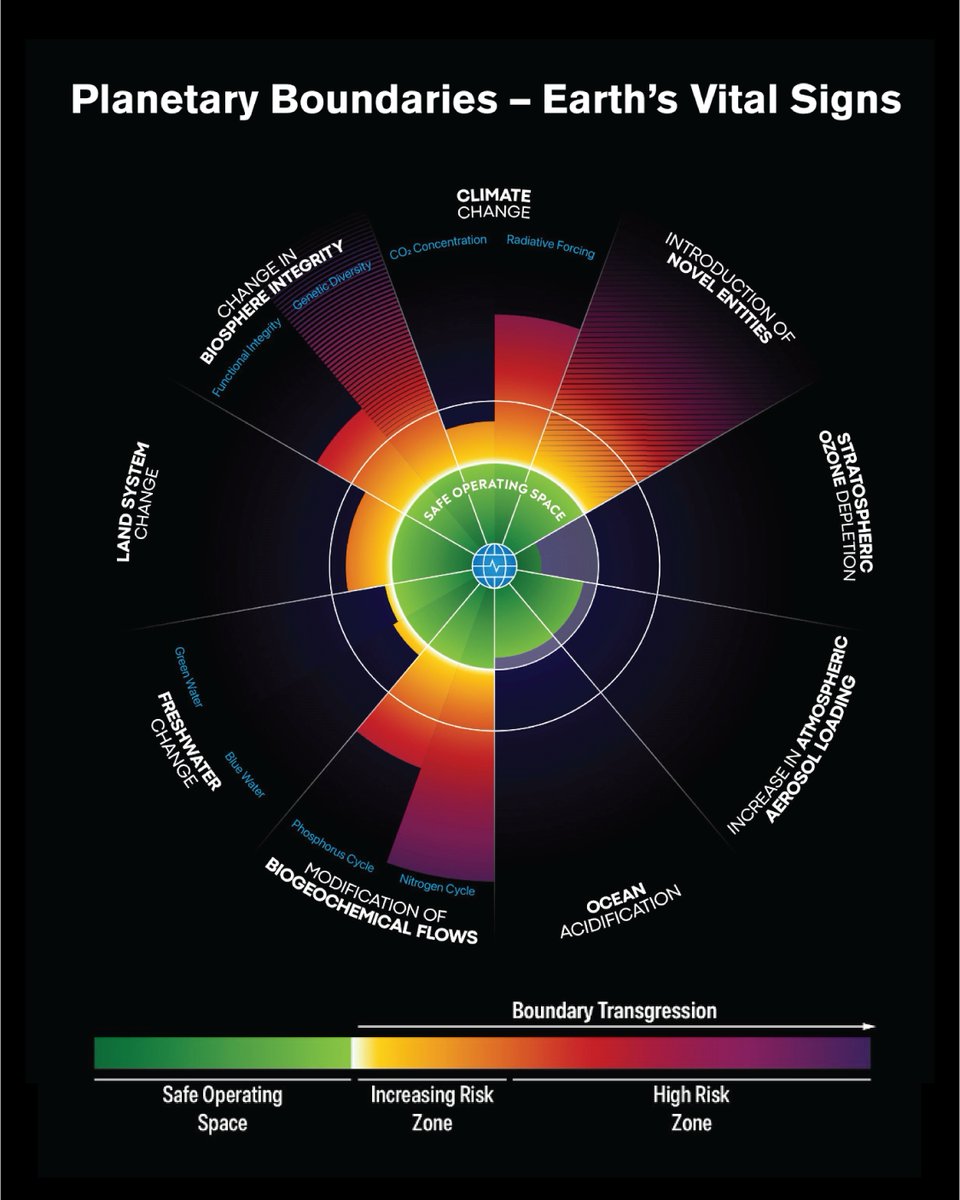
First Planetary Health Check issues red alert! Launched today during @ClimateWeekNYC, the report shows critical Earth’s systems functions are at risk, with six out of nine Planetary Boundaries breached and the imminent breach of a seventh.
Find out more ➡️https://t.co/s0x46ncFcx
También ha difundido un texto titulado "Estamos más cerca de no tener para comer, que de que vivir en Marte. Una invitación al optimismo", una carta en la que llama al "optimismo realista" frente al "pesimismo" y "tecnooptimismo cómplice", imperantes hoy en el debate social.
Solemos medir el "progreso" de los países a través del Producto Interno Bruto (PIB) y el Índice de Desarrollo Humano (IDH). Ninguno tiene en cuenta los límites planetarios.
El Índice de Desarrollo Sostenible (IDS) sí lo hace.
Ranking 2022:
1)🇨🇷
2)🇺🇾
57)🇪🇸
156)🇺🇸
Breve Hilo🧵
Hay canciones que parecen anticiparse a lo que cuentan. Y que cuentan más de lo que parecen decir a simple vista.
Y esta canción nos habló de un final, a pesar de nacer en un principio.
En el cierre de esta temporada de #LaHistorietaMusical hablaré de The End.
Hoy, The Doors.
☠️Growth Kills ⚠️
Twenty scientists and activists from Scientist Rebellion, @growth_kills , and @ExtinctionR blocked the entrances to the European Commission in #Brussels yesterday.
1/4
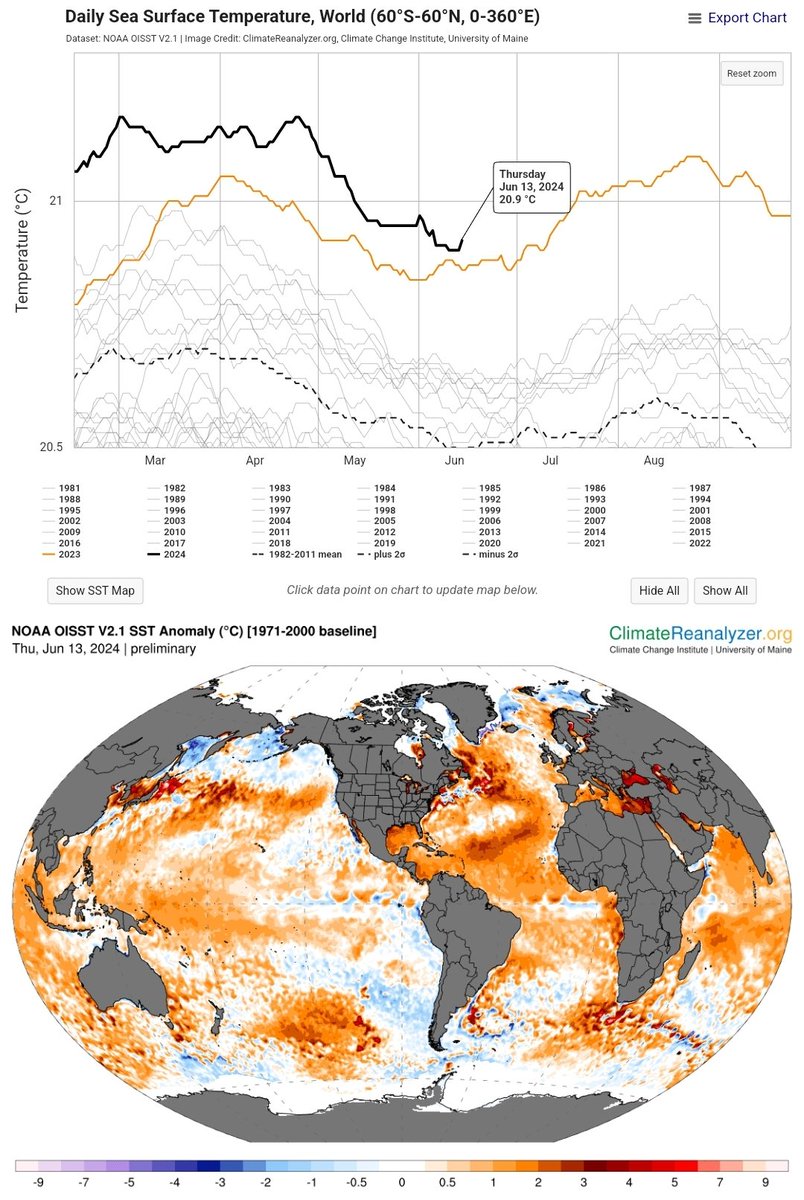
Nuestros océanos se están calentando en todo el mundo. Las temperaturas oceánicas extremadamente cálidas pueden tener efectos profundos en los ecosistemas marinos, los patrones climáticos y las actividades económicas.
Our oceans are warming around the world, and we are beginning to adapt to and prepare for this change in our climate.
Extreme warm ocean temperatures can have profound effects on marine ecosystems, weather patterns, and economic activities.
Read more: https://t.co/9jt21hfaGd