It’s okay to disappoint people sometimes, we’re human.
What’s important is that you do your part to make it safe for people to talk to you about disappointment.
You get to have boundaries, even with the people closest to you.
It’s okay to say “I’m sorry you feel that way, and I understand this is hard”
and still stick to your boundary, even if they get upset.
If someone says you hurt them…
The first thing out of your mouth shouldn’t be “but I didn’t mean to…”
Intentions are important, but so is impact.
Acknowledge their experience first, maybe apologize, and go from there.
The goal of a difficult conversation isn’t to be right.
It’s to leave understanding each other better than when you started.
And sometimes that still ends with disagreement.
Asking for what you want and what you need can feel really clunky and awkward in the beginning.
It’s okay if your first ask isn’t perfect.
You get to do it anyway and then figure out the rest from there.
I think it’s really important to realize that validation and agreement aren’t the same thing.
You can validate someone’s feelings, even if you wouldn’t feel the same way in the same situation.
Validating someone’s feelings doesn’t mean that you agree with them.
Sometimes people confuse protecting someone’s feelings with avoiding discomfort.
I can care about you *a lot* and because I care I will absolutely insist on having the uncomfortable conversation.
What do you do when the problem isn't what they said….but *how* they said it.
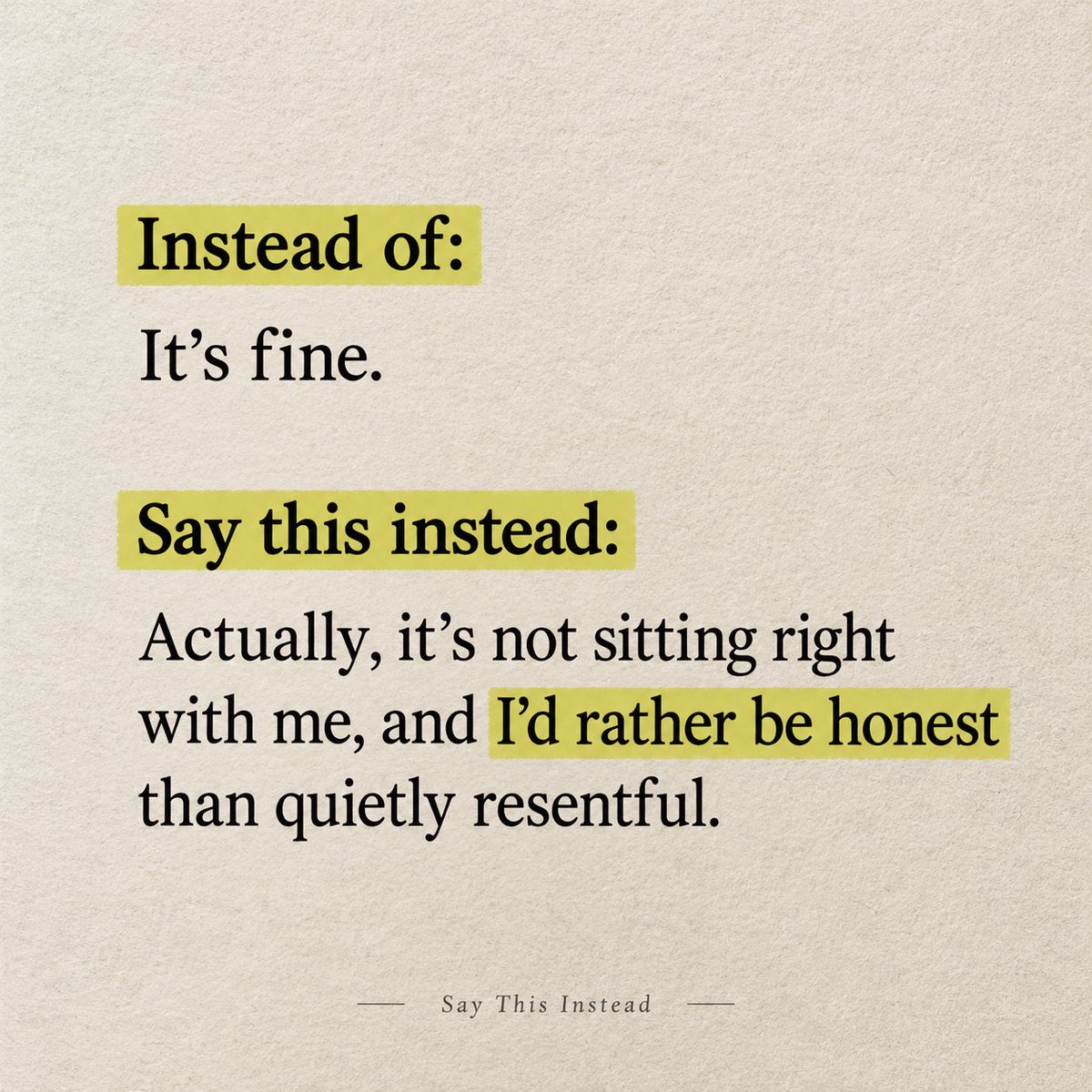
In this week's edition of Say This Instead, I walk through exactly how to address someone’s disrespectful tone at work.
You can subscribe here: https://t.co/giNk7dxHLu
Just joined @Nicolascole77's free email course, Premium Ghostwriting Blueprint.
Excited to learn the 5 steps to become a Premium Ghostwriter.
If you're looking to start monetizing your skills as a writer, you should check it out:
https://t.co/kHXjs8YV66