Frosty temperatures won’t get our Pacific common eiders in a flap! Eider down is well known for its insulating properties. These large sea ducks pluck some of their down to line their nests to keep their eggs warm in frigid Pacific coastal climates of Russia, Canada, and Alaska.
Did you enjoy NYC’s recent dusting of snow? Our white-naped cranes did too! These striking birds are native to northern Mongolia, southern Siberia, Korea, Japan, and central China. In winter, they migrate to the demilitarized zone between North and South Korea.
Once Koa is comfortable with this behavior, our veterinarian will perform an ultrasound. Koa arrived at Central Park Zoo in 2022, and this would be her first pregnancy. 🤞 (3/3)
The keepers station train Koa to put her front legs on the T-perch to expose her belly. A fake probe, which has the same shape as an actual ultrasound probe, is used to get her accustomed to the procedure. (2/3)
We are training our female black and white ruffed lemur, Koa, to voluntarily station for ultrasound exams to determine if she is pregnant!
We have observed breeding behavior & suspect that she is pregnant based on some behavioral changes & weight gain. (1/3)
Most birds wear their bills down as part of daily life, but some individuals experience overgrowth or misaligned upper and lower bills. Trimming corrects any extra growth that may make it difficult for the birds to eat. (3/4)
The Bruce’s green pigeon, also known as the yellow-bellied fruit pigeon, is a striking bird with gray-green plumage and a light yellow breast. Its wild range spans Central Africa and parts of the Middle East. They are fruit eaters (frugivores) that specialize in eating figs.
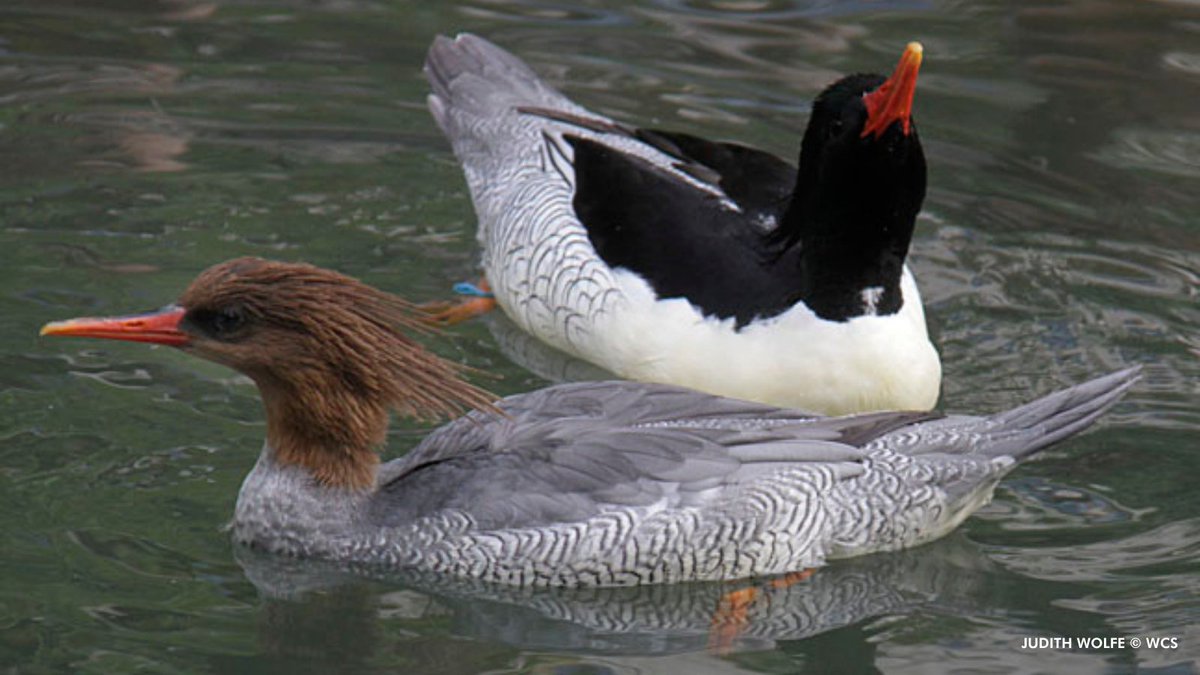
Happy National Bird Day! This rare bird is the scaly-sided merganser. These striking migratory sea ducks nest in tree cavities along the banks of wild, free-flowing rivers and streams in the Russian Far East, with small numbers in North Korea and Northeast China. (1/2)
It’s breeding season for the long-tailed glossy starlings in the Tropic Zone aviary. The adult birds have been seen taking worms to their nest. We call this process “stacking” when the birds take as many food items in their mouth as possible to feed the nestlings.
Tiny cotton-top tamarins are about 10 inches long & weigh around a pound. They are one of the most endangered primates in the world. We currently have a male & female on exhibit together. Stop by to see these diminutive New World primates, native to Colombia, in our Tropic Zone.
How did the macaroni penguin get its name? In 18th-century Europe, "macaronis" were followers of a trend in which men wore elaborate hats & wigs with ornate feathers. When British explorers reached the Falkland Islands & saw these vibrantly crested penguins, the name stuck. (1/2)
Looking for a way to celebrate Bat Week? Come hang out in Tropic Zone: The Rainforest, and you just might spot our beautiful Rodrigues fruit bats! Bats are the only mammals that can fly, and some species are flower pollinators that help spread seeds for plants like avocados.
With their beautiful feathers, Nicobar pigeons are guest favorites. Like many birds, Nicobars have a gizzard, a strong muscle in their stomach for grinding food, but theirs is extra strong and enables them to grind hard nuts that humans can only open with a nutcracker or tool.