EN DIRECTE 🔴 | El vestíbul del Mercat Central acull ara mateix la presentació de la sisena edició del Mercat de Nit 🌙, una nit màgica que tornarà a omplir de música i gastronomia el @tarragonamercat el pròxim 13 de setembre! 📅
Més detalls 👇🏻 @SantateclaTGN@TGNAjuntament
The Scoping Problem of conversational interfaces
Ever had an oblivious friend? Someone who is well-meaning, but has an opinion on everything and has no real clue what they’re actually good or bad at?
Ask them about politics and they’ll confidently rattle off what really needs to be done. Complain about a problem and they’ll tell you how to fix it.
Wise people know their scope. They can predict with great accuracy what they know better than you, and what they’re ignorant about.
Conversational AI today feels more oblivious than wise; it doesn’t know what it doesn’t know.
When you ask an AI agent to produce something outside its zone of competence, it doesn’t inform the user: “This is beyond my current capabilities.” After repeated attempts and corrections, the agent does not suggest: “Let me take a step back and try a different approach; this one doesn’t seem to be working.”
The AI doesn’t know whether it’s 90% or 60% or 20% confident, it doesn’t yet analyze the trustworthiness of its sources, it doesn’t fess up: “I’m not sure. My opinion leans X because…. but I’m uncertain about....”
The best-performing human teams operate with clarity on one another’s scope. Because of my design background, I'm confident to express an opinion about the design of a registration page. Ask me to select which database we should use, and I'l refer you to someone else.
In the human world, we know that good feedback mechanisms not only improve an individual’s work, they also reflect back to that person what their strengths and weaknesses are. With that knowledge, the person can do a better job of selecting the appropriate scope for their work and asking for help when a task is beyond their level.
One day, if AI gets to superintelligence, there will be no topic where it remains more ignorant than us puny humans. But that day isn’t here yet.
Before then, why not design for awareness and clarity of scope? After all, authenticity breeds trust.
(This is Problem #4 of the Five Big Problems of Conversational Interfaces.)
The blank page problem of AI conversational interfaces
Gartner famously noted when it comes to information “80% of the value is in asking the right questions.”
Even before the era of ChatGPT, the Internet was chock full of ways to get answers.
YouTube, Khan Academy, Coursera, and Wikipedia offer free knowledge in nearly every subject.
Yet average adult learning has barely increased — OECD surveys show that less than 10% of adults in many developed countries engage in any structured learning annually.
The problem with a blank chat box on a blank page is that it violates the first rule of a high-quality user experience: it isn’t obvious what I can do.
A blank page box puts the burden on the user to learn what to use it for.
This is not a problem for early adopters and high agency people (aka everyone reading this), who love the game of exploration and thrill of discovery.
But for the broader world, a blank page box is intimidating. A blank page box is lazy.
A blank page box reminds the user of Google Search, which famously designed itself to be an efficient router to other destinations.
The founders felt people should spend as little time on Google Search as possible, which I doubt is the goal of today’s AI companies.
The user experience of a conversational chat interface should help people understand how to get the most out of it.
Where are the templates for key use cases? Where are “trending prompts” and highlighted examples so users can learn from the community? Where are suggestions to continue past conversations?
Today, X operates as the user manual for how to use AI services; there is enormous opportunity for the services themselves to seize the opportunity to grow engagement and discovery.
If the success of social media platforms has taught us anything, it’s that starting with something to react to works far better than showing a blank page.
7 DE OCTUBRE: UNA TRAGEDIA ANUNCIADA
Según The New York Times, Israel conocía el ataque planificado por Hamás un año antes de que se produjera. Ha sido la excusa perfecta para cometer un genocidio en Gaza, impulsar la limpieza étnica en Cisjordania, invadir el Líbano y desafiar a Irán. Netanyahu ha puesto de manifiesto que la legalidad internacional es pura retórica y que EEUU y sus aliados gozan de impunidad para bombardear hospitales, escuelas, mezquitas y sedes de refugiados. La Alemania nazi también alegó que sus tropas habían sufrido un ataque para justificar la invasión de Polonia. Israel no es un país, sino una colonia de Occidente en Oriente Medio, el estado 51 de EEUU y un satélite de la UE y el Reino Unido. Su misión es proteger los intereses de estadounidenses, británicos y europeos, garantizando el control de las rutas comerciales y los recursos energéticos.
Lamento y condeno el ataque de Hamás, pero asesinar a 42.000 palestinos, la mayoría mujeres y niños, no es una respuesta legítima por un atentado que costó 1.200 víctimas, sino un acto de barbarie y sadismo. Me avergüenza que el gobierno de España no haya roto relaciones diplomáticas con Israel. Y me escandaliza que los que alzaron la voz contra la injustificable invasión de Ucrania, en gran medida propiciada por la expansión de la OTAN, hoy no digan nada sobre los niños palestinos reventados por las bombas. No encuentro ninguna excusa para los intelectuales que callan en esta hora trágica. Ya no hay voces como las de Russell o Camus, dispuestos a comprometerse con los más vulnerables.
Netanyahu se ha puesto a la altura de los grandes genocidas del siglo XX (Stalin, Hitler, Pol Pot, Kissinger) y todo indica que sus crímenes quedarán impunes. Vivimos un nuevo desorden internacional. La ONU ya es un organismo tan fallido como la antigua Sociedad de Naciones. Nos esperan tiempos difíciles. Si Irán e Israel entran en guerra, se producirá una crisis global de consecuencias impredecibles. Hemos progresado en el plano de la ciencia y la tecnología, pero seguimos estancados en la violencia y la insolidaridad.
La cúpula del los gobiernos de Esperanza Aguirre y otros cargos del PP, a excepción de la propia Aguirre, acumulan más de 100 años de cárcel en distintas condenas por corrupción. El Gobierno más corrupto en los 42 años de historia de la Comunidad de Madrid https://t.co/fCWr7qqlxW
#SantMagíTGN | 💧Del 9 al 19 d’agost, Tarragona celebra les festes de Sant Magí.
➡️Durant aquests dies, activitats tradicionals i espectacles de primer nivell fan sortir els tarragonins al carrer
📌Del 9 al 19 d’agost
ℹ️https://t.co/OuOpoHabpz
PATRIMONI | 🏰Tarragona ciutat medieval: lluita de poders
➡️Amb aquesta ruta ens endinsarem pels carrerons d’època medieval i coneixerem com era la ciutat i els seus pobladors
📌12/7 19 h
📍Plaça del Rei
🎫5 € a: https://t.co/JZ6etkjcFG
ℹ️https://t.co/kIMPO0HNAn
@GrupoCPHE
🔴 EN DIRECTE | Al vestíbul del Teatre Tarragona es fa la presentació de la Temporada d'Arts Escèniques de tardor i hivern 2023/24 de Tarragona Cultura
#TeatreTGN#tgncultura
👉 Ruta 'Històries Amagades' al Pont del Diable.
📅 Els dissabtes i diumenges de juny, oportunitat de conèixer aquest monument i l'entorn natural i patrimonial que l'envolta.
📌 17/06, 09h - Pont del Diable
🎟️ 5 € a https://t.co/R0Ni5ueT3C
📲 https://t.co/FZ46SMK98C
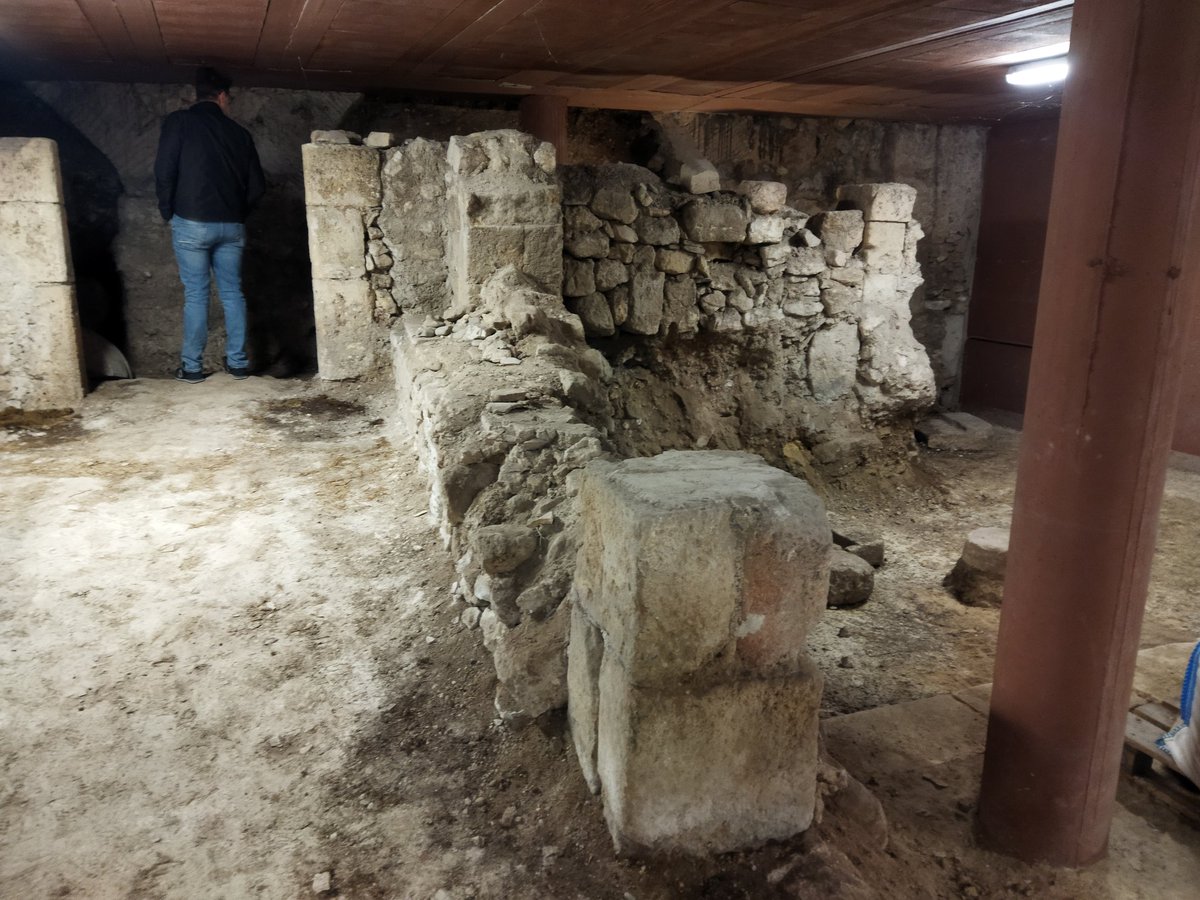
La primera parada va ser descobrir que al carrer Granada, sota la Casa Canals, es conserva un carrer medieval i unes poques construccions que, ben museïtzades, ens podrien servir per entendre millor com era la ciutat en època medieval.
🌈 Childhood joy knows no bounds!
Witness the pure magic of innocence as these young explorers embark on exciting adventures. Their laughter and imagination create a world full of wonder and endless possibilities.
#ChildhoodBliss#ImaginationUnleashed