Y q estás a punto de convertirte en ese ser q no quiere ser feliz, quiere ser usado y maltratado, y q eso va a hacer infeliz a alguien en el futuro. Y q al convertirte en ella, estás a un paso de convertirte en él, como ella lo hizo, y no ser feliz nunca más... Eso no se perdona
No es dejarla ir, no es estar sin ella, es darte cuenta q se convirtió en el q le hizo daño y la manipuló, para no sentirse sola y no dejarte ir uanq se lo pudieras mil veces, cuando era más fácil. Y luego darte cuenta q tu de alguna forma te convertiste en ella...
Angular Cheilitis aka perleche or angular stomatitis
Angular cheilitis is a condition characterized by redness, inflammation, and cracks or fissures at the corners of the mouth.
Causes:
1. Fungal infection: Candida albicans is the most common causative organism, especially in individuals with compromised immune systems or poor oral hygiene.
2. Bacterial infection: Staphylococcus aureus and Streptococcus species can also cause angular cheilitis, particularly in cases of secondary infection.
3. Nutritional deficiencies: Deficiencies of iron, vitamin B2 (riboflavin), and zinc can contribute to the development of angular cheilitis.
4. Allergies or irritants: Exposure to allergens or irritants, such as certain lip products or dental materials, can trigger or exacerbate the condition.
5. Denture-related factors: Ill-fitting dentures or poor oral hygiene in denture wearers can create a moist environment, promoting fungal or bacterial growth.
Management and Treatment:
1. Address the underlying cause: Identify and treat any underlying causes contributing to angular cheilitis, such as nutritional deficiencies or allergies.
2. Topical antifungal or antibacterial agents: Depending on the suspected cause, topical creams or ointments containing antifungal (e.g., clotrimazole) or antibacterial (e.g., mupirocin) agents may be prescribed.
3. Topical corticosteroids: In cases of severe inflammation, a short course of topical corticosteroids may be beneficial.
4. Improve oral hygiene: Encourage the patient to maintain good oral hygiene, including regular brushing, flossing, and rinsing with an antiseptic mouthwash.
5. Address denture-related factors: If dentures are contributing to the condition, adjustments or replacements may be necessary.
FAQs:
1. Can angular cheilitis be contagious? No, angular cheilitis is not typically contagious. However, if there is a secondary infection, such as a bacterial infection, it may be contagious.
2. How long does it take for angular cheilitis to heal? The healing time for angular cheilitis can vary depending on the underlying cause and the effectiveness of treatment. With appropriate management, it usually resolves within a few days to a couple of weeks.
3. Can angular cheilitis recur? Yes, angular cheilitis can recur, especially if the underlying cause is not addressed. Recurrence may also be more common in individuals with compromised immune systems or certain predisposing factors.
4. Can I use over-the-counter creams for angular cheilitis? Over-the-counter antifungal creams, such as those containing clotrimazole, may be helpful in mild cases of angular cheilitis. However, it is advisable to consult a healthcare professional for a proper diagnosis and appropriate treatment.
5. Can nutritional supplements help with angular cheilitis? Nutritional supplements may be beneficial in cases where angular cheilitis is caused by nutritional deficiencies. However, it is important to consult with a healthcare professional before starting any supplements to ensure appropriate dosing and monitoring.
Try - https://t.co/3XKwhCuWoV
Klebsiella Pneumoniae Infection:
Based on the presence of mucois colonies and the growth of gram-negative rods in the blood cultures, it is likely that the patient is suffering from a Klebsiella pneumoniae infection.
This type of infection can cause abscesses in multiple organs, including the lungs, liver, and kidneys.
Present Condition:
The patient with a history of diabetes is currently experiencing fever and abdominal pain.
The CT imaging has revealed the presence of abscesses in the lungs, liver, and kidneys. The blood cultures have grown gram-negative rods, which are consistent with a Klebsiella pneumoniae infection.
FAQS:
1. What are the risk factors for Klebsiella pneumoniae infection? - The risk factors for Klebsiella pneumoniae infection include diabetes, immunosuppression, prolonged hospitalization, invasive medical procedures, and prior antibiotic use.
2. Can Klebsiella pneumoniae infection be transmitted from person to person? - Yes, Klebsiella pneumoniae can be transmitted from person to person, especially in healthcare settings. Strict adherence to infection control measures, such as hand hygiene and proper disinfection, is important to prevent its spread.
3. How long does it take to recover from a Klebsiella pneumoniae infection? - The recovery time can vary depending on the severity of the infection and the overall health of the patient. With appropriate treatment, most patients show improvement within a few days to weeks.
4. Can Klebsiella pneumoniae infection recur? - Yes, Klebsiella pneumoniae infection can recur, especially in individuals with underlying risk factors. Close monitoring and appropriate management of risk factors are important to prevent recurrence.
5. Are there any vaccines available for Klebsiella pneumoniae infection? - Currently, there are no vaccines available specifically for Klebsiella pneumoniae infection. Prevention mainly involves infection control measures and appropriate management of risk factors.
Try - https://t.co/3XKwhCuWoV
A patient with history of diabetes presented with fever & abdominal pain. CT imaging showed abscesses in the lungs, liver & kidneys. Blood cultures grew gram negative rods. What is the likely cause/diagnosis? @DraWataru@grepmeded#MedEd
Listeriosis meningitis is an infection of the lining of the brain and spinal cord. If your loved one has been diagnosed with this severe illness, it means he or she ate food contaminated with deadly bacteria called Listeria monocytogenes.
Listeriosis is the food-borne illness caused by Listeria monocytogenes bacteria. These bacteria are particularly deadly because, after they colonize (mulitply) in the intestines, they can easily move, via the blood and tissue, to other parts of the body, including the brain. These pathogens are small enough to breach the blood-brain barrier and cause meningitis, an infection of the meninges, the membranes that surround the brain and the spinal cord.
This form of meningitis presents itself differently than other types because the bacterium can directly invade the cerebral cortex, posing additional complications. For example, seizures are often more frequent. It can be a long road to being able to walk and communicate well again.
This severe illness is caused by contaminated food. Past outbreaks have been caused by smoked salmon, soft cheese, raw milk, raw milk cheese (even hard varieties like gouda), sprouts, deli meat and prepackaged caramel apples.
When the contaminated food is eaten, the bacteria can grow in the intestines and then move to other parts of the body, including the brain. It can take up to 70 days for the bacteria to make a person sick. This is called the incubation period, and it is particularly long, making it difficult to find the source of these outbreaks. Complications can be fatal or lead to permanent disability, even such severe brain damage that the person is unable to communicate or take care of basic needs. Complications can include the following:
brain stem damage
impairment of consciousness
seizures
brain abcess
hydrocephalus
cervical cord compression (spinal injury related to hydrocephalus).
A young unvaccinated child presents with fever, sore throat, barking cough & hoarseness for 5 days. Gram stain w/gram + pleomorphic bacillus. What is the likely diagnosis? (Image: Wikipedia)
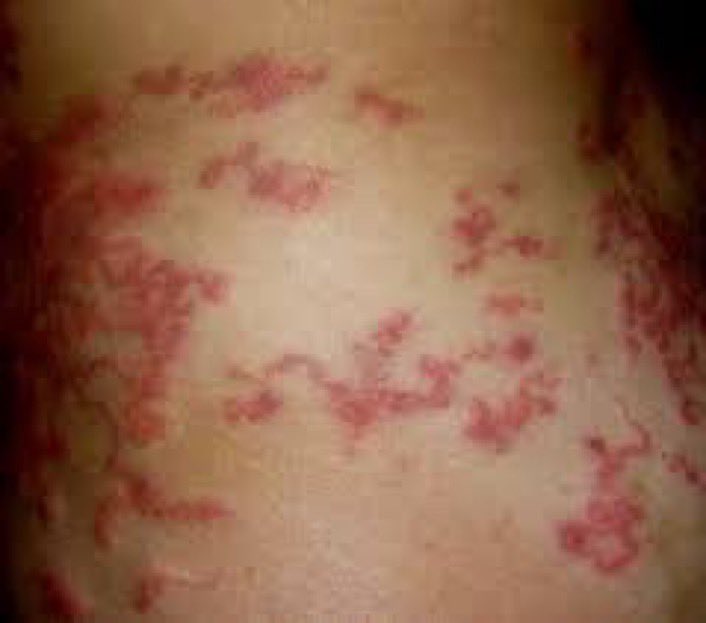
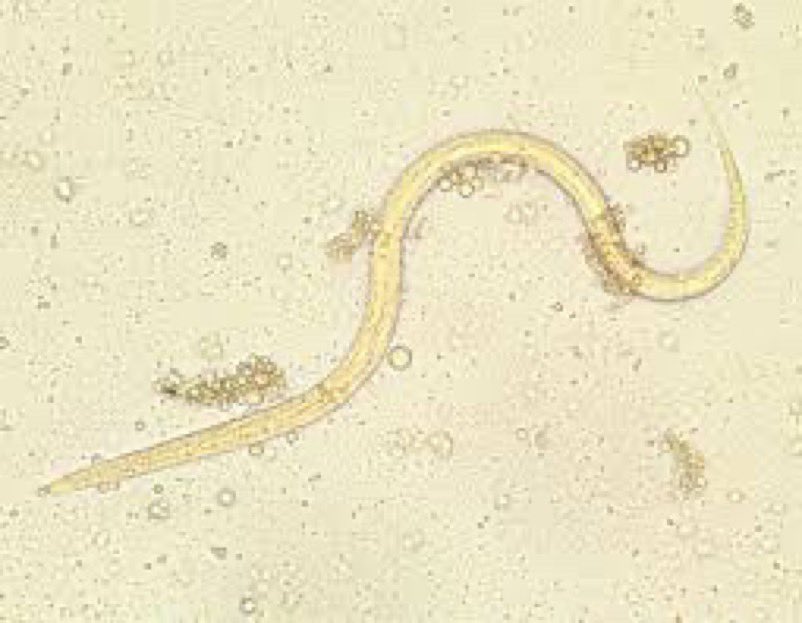
A patient with hx of lung adenocarcinoma p/w an itchy rash & diarrhea. Over the past 3 years, he had intermittent peripheral eosinophilia of unknown cause. He worked in sewage management and had lived his whole life in an urban region of Spain. What is the likely diagnosis?