“A man should hear a little music, read a little poetry, and see a fine picture every day of his life, in order that worldly cares may not obliterate the sense of the beautiful which God has implanted in the human soul.”
-Johann Wolfgang von Goethe
On Memorial Day, we pay tribute to the brave men and women in uniform who gave their lives for this country that we love. It is a debt we can never fully repay, but we must never stop trying. I’ll always be grateful to our fallen heroes and their families, whose sacrifice reminds us of what it means to live for something greater than ourselves.
“Since it is so likely that children will meet cruel enemies, let them at least have heard of brave knights and heroic courage. Otherwise you are making their destiny not brighter but darker.”
-C.S. Lewis
162 years ago today, on May 5, 1864, Ulysses S. Grant marched 120,000 men into a forest in Virginia and started a battle so horrific that wounded soldiers used their last bullets on themselves, generals wept openly at what they were ordering their men to do, and the woods themselves caught fire and burned the dying alive where they lay.
It was called the Battle of the Wilderness.
The forest had a reputation before the armies even arrived. Locals called it the Wilderness for a reason. It was second-growth scrub left over from a century of iron mining, a tangled hellscape of stunted oaks, dense thickets, and brambles so thick a man could lose sight of his own hand. Robert E. Lee picked it on purpose. He knew Grant had twice as many men and three times the artillery, and he knew none of that would matter in country where you could not see twenty feet in any direction.
The fighting started by accident. Two columns blundered into each other on the Orange Turnpike around midday and opened fire at point-blank range. Within an hour, both sides had thrown in entire corps. Men aimed at muzzle flashes because there were no targets to see. Officers lost regiments. Regiments lost companies. One Union colonel later said he fought all afternoon without ever seeing a single Confederate soldier, only smoke and screams and the occasional silhouette pitching backward into the brush.
Then the woods caught fire.
The underbrush was bone dry. Powder flashes ignited leaves. Wind fanned the flames. Within hours, walls of fire were rolling through the forest, faster than wounded men could crawl. Soldiers who had taken a bullet to the leg, or the spine, or the gut, lay helpless in the path of the flames and listened to them coming. Some called out for water. Some called out for their mothers. Some called out to be shot. Hundreds were burned alive. Survivors said the screams went on for hours and then, slowly, one by one, stopped.
A Union officer wrote in his diary that night, "It was as though Christian men had turned to fiends, and hell itself had usurped the place of earth." A Confederate captain wrote, "I have never prayed harder in my life, not to live, but to forget."
The fighting went on for three days. Lee's army nearly broke on the second morning when a Union assault punched through his right flank, only to be saved at the last possible moment by the arrival of Longstreet's corps after a forced overnight march. Longstreet himself was shot through the throat by his own men in the smoke and confusion, less than five miles from where Stonewall Jackson had been shot by his own men exactly one year and one day earlier, in the same forest, in the same kind of chaos. Lee considered it a curse on the Wilderness itself.
By the time the guns went quiet on May 7, around 29,000 men were dead, wounded, missing, or captured. It was, by any honest reckoning, a Union defeat. Grant had been outmaneuvered, outfought, and bled white in terrain that turned every advantage he had into a liability.
Every Union commander before him, after a beating like that, had turned the army around and retreated north to lick its wounds. McClellan had done it. Pope had done it. Burnside had done it. Hooker had done it. Meade had done it after Gettysburg, even after winning. It was simply what the Army of the Potomac did.
That night, the order came down to march. The men were told to pack up. They formed into columns by torchlight, exhausted and filthy and stinking of smoke, and they began to move. When they reached the crossroads at the edge of the burning forest, the road north went one way and the road south, deeper into Confederate Virginia, went the other.
Grant turned the army south.
The soldiers, who had been through this song and dance a dozen times before, took a moment to realize what was happening. Then they understood. They were not retreating. They were not going home. They were going to keep fighting, and keep fighting, and keep fighting, until the war was over.
The cheer that went up that night could be heard for miles. Confederate pickets heard it across the lines and knew, in that exact moment, that something fundamental had changed. One of Lee's officers wrote later that he heard the cheering and understood, with absolute clarity, that the Confederacy was going to lose the war.
He was right. Eleven months later, Lee surrendered at Appomattox.
But it started here, in a burning forest on May 5, 1864, when an unassuming little man with a cigar in his teeth refused to do what every other Union general had done, and pointed his army south instead of north.
This is huge for Chicago and local media coverage— especially in our current climate where a lot of news focus is often major networks. Congratulations @chicagotribune
We won the Pulitzer Prize for Local Reporting @chicagotribune! Our entire newsroom covered Midway Blitz with everything we had. I’ve never been prouder of the Tribune or its commitment to the truth. It’s an honor to be part of this team.
This has been an incredibly difficult week for our Chicago Police family. We are mourning the loss of Crittenden County Sheriff's Deputy Rick Coyle, who retired from CPD in 2019 after 28 years of service. He will be deeply missed both here in Chicago and in Crittenden County.
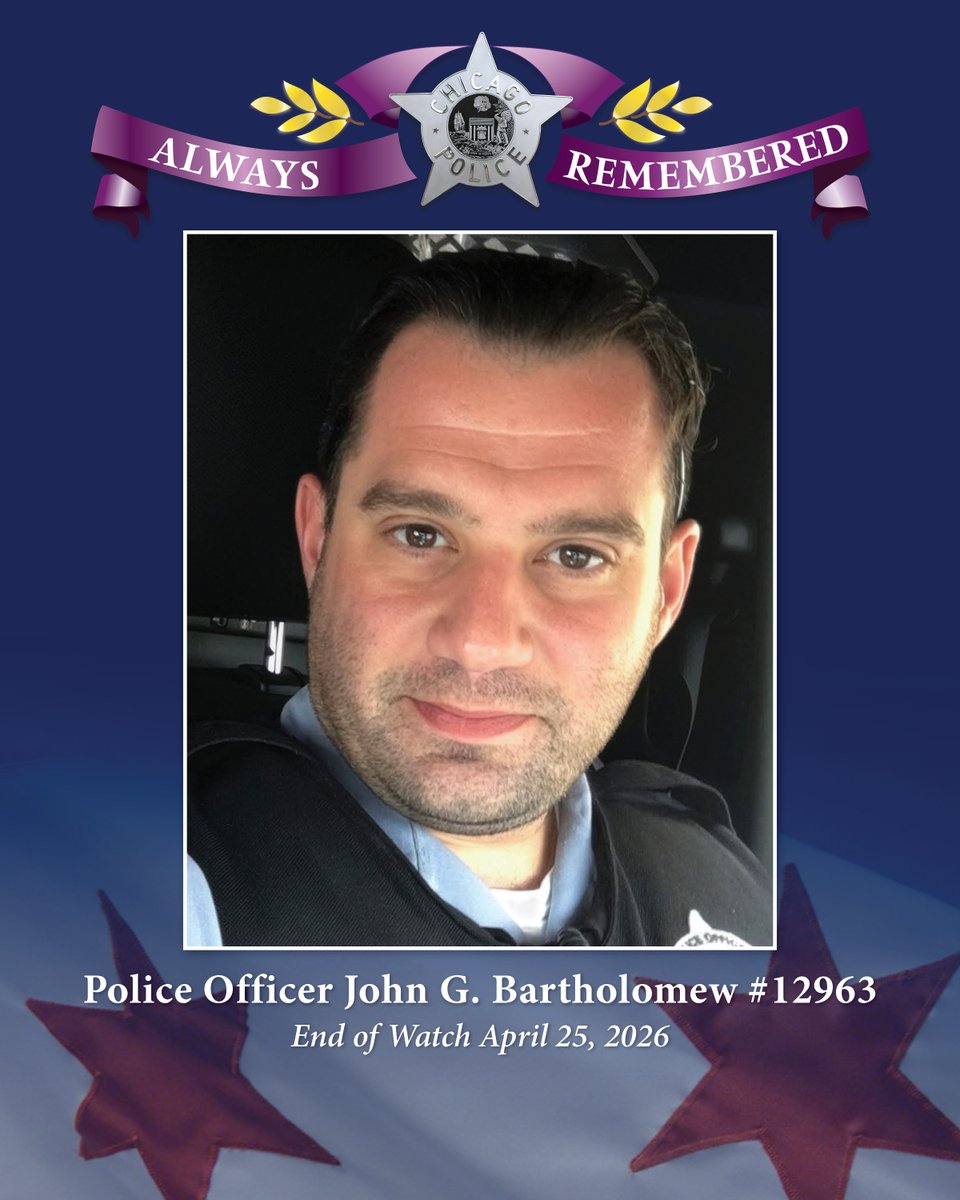
Police Officer John G. Bartholomew #12963
End of Watch: April 25, 2026
Officer Bartholomew dedicated his life to protecting his fellow Chicagoans. Above all, he was a beloved father, husband, son and brother. We promise to ensure his sacrifice will never be forgotten.
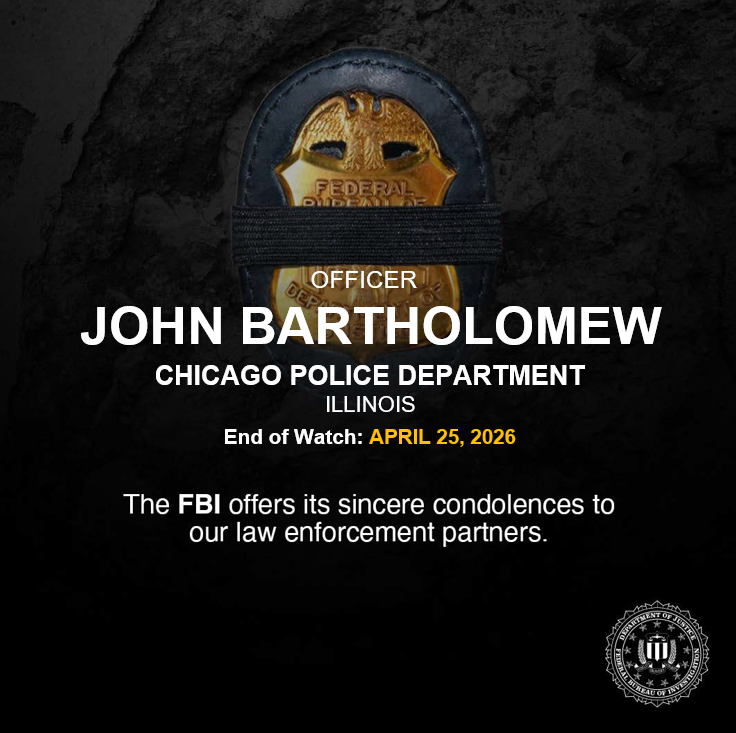
#FBIChicago sends our condolences to the family, friends, and colleagues of Officer John Bartholomew.
Officer Bartholomew served with the @Chicago_Police for over ten years. The FBI strongly condemns violence against law enforcement. May Officer Bartholomew’s selfless dedication to our city never be forgotten.
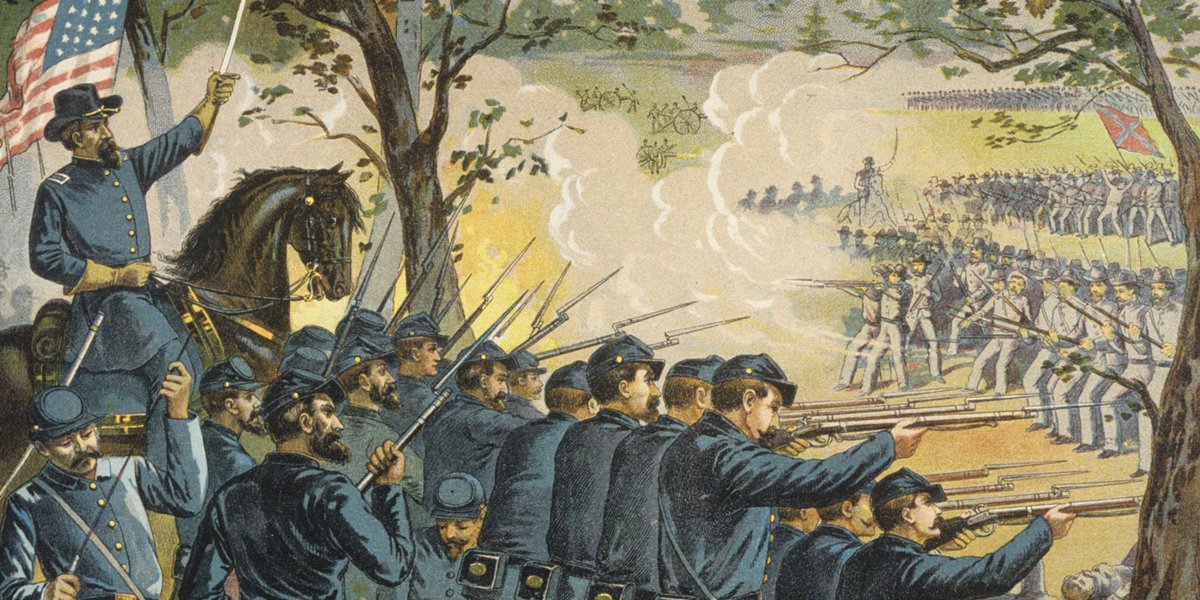
The 66th Illinois Volunteers with their Henry repeating rifles at the Battle of Atlanta, July 22, 1864. Painting by Don Troiani.
The Battle of Atlanta was a battle of the Atlanta Campaign fought during the American Civil War on July 21, 1864, just southeast of Atlanta, Georgia. Continuing their summer campaign to seize the important rail and supply center of Atlanta, Union forces commanded by William Tecumseh Sherman overwhelmed and defeated Confederate forces defending the city under John Bell Hood. Union Maj. Gen. James B. McPherson was killed during the battle. Despite the implication of finality in its name, the battle occurred midway through the campaign, and the city did not fall until September 2, 1864, after a Union siege and various attempts to seize railroads and supply lines leading to Atlanta. After taking the city, Sherman's troops headed south-southeastward toward Milledgeville, the state capital, and on to Savannah with the March to the Sea.
The fall of Atlanta was especially noteworthy for its political ramifications. In the 1864 election, former Union general George B. McClellan, a Democrat, ran against President Lincoln, on a peace platform calling for a truce with the Confederacy. The capture of Atlanta and Hood's burning of military facilities as he evacuated were extensively covered by Northern newspapers, significantly boosting Northern morale, and Lincoln was re-elected by a significant margin.
The 66th Illinois Veteran Volunteer Infantry Regiment (Western Sharpshooters) originally known as Birge's Western Sharpshooters and later as the "Western Sharpshooters-14th Missouri Volunteers", was a specialized regiment of infantry sharpshooters that served in the Union Army during the American Civil War. The regiment was intended, raised, and mustered into Federal service as the Western Theater counterpart to Army of the Potomac's 1st and 2nd United States Volunteer Sharpshooters ("Berdan's Sharpshooters").
NEW: Before the white smoke rose over the Sistine Chapel last May, Pope Francis had already made up his mind about Robert Prevost.
“Lui è un santo,” he told the Vatican journalist Salvatore Cernuzio at Casa Santa Marta.
He's a saint.
That verdict, reproduced in Cernuzio's new book “Padre,” is a detonating revelation of last year’s papal transition. https://t.co/x2qPcoXHFR
Before becoming The first African American Mayor Of Chicago in 1983, Senator Harold Washington sat down with John Calloway in 1977 to talk growing up in Bronzeville.
Happy Heavenly Birthday Harold 💙
#ChicagoHistory ☑️
“A man on a thousand-mile walk has to forget his ultimate goal and say to himself every morning, ‘Today I'm going to cover twenty-five miles and then rest up and sleep.”
— Leo Tolstoy