BIP110 supporters are pioneering a new type of attack: the 1% attack.
If successful, it would show how trivial it is to attack the Bitcoin network. Just rent 1% of the hashrate and spin up 3k nodes. Attackers can be incredibly disruptive and waste massive amounts of time for exchanges, miners, and HODLers.
The actual monetary cost?
Rented hashrate: $0 before forking, as it’s still mining BTC; post-fork ~4.5 BTC per day.
Nodes: 3k nodes for $15k a month.
The solution to mitigating 1% attacks is simply to be pragmatic and disregard them. If you entertain them, you set a precedent for more in the future since the cost is so low.
This is why BIP110 must fail.
The impulse to change Bitcoin’s rules merely to prevent others from using Bitcoin in ways you disapprove of is statist and alien to a community rooted in liberty, property rights, free markets, natural law, and Austrian economics. BIP 110 would impose monetary purity by fiat.
Satoshi solved digital scarcity. Bitcoin solved money.
When someone tells you they need another token, a money where they're the central bank, ask: Why?
If your product is valuable, why does it need its own money?
No man should work for what another man can print.
There are 110 things more dangerous to Bitcoin than spam.
BIP 110 turns a spam dispute into a consensus change that would invalidate some currently valid, fee-paying transactions.
That precedent is the danger. We should save our energy for threats that really matter. $BTC
Don't let anyone convince you that Bitcoin belongs to Wall Street or big corporations.
Its strength comes from the millions of people around the world who wake up every day and earn, save, stack, and hold.
You matter. Bitcoin has always been a grassroots monetary revolution.
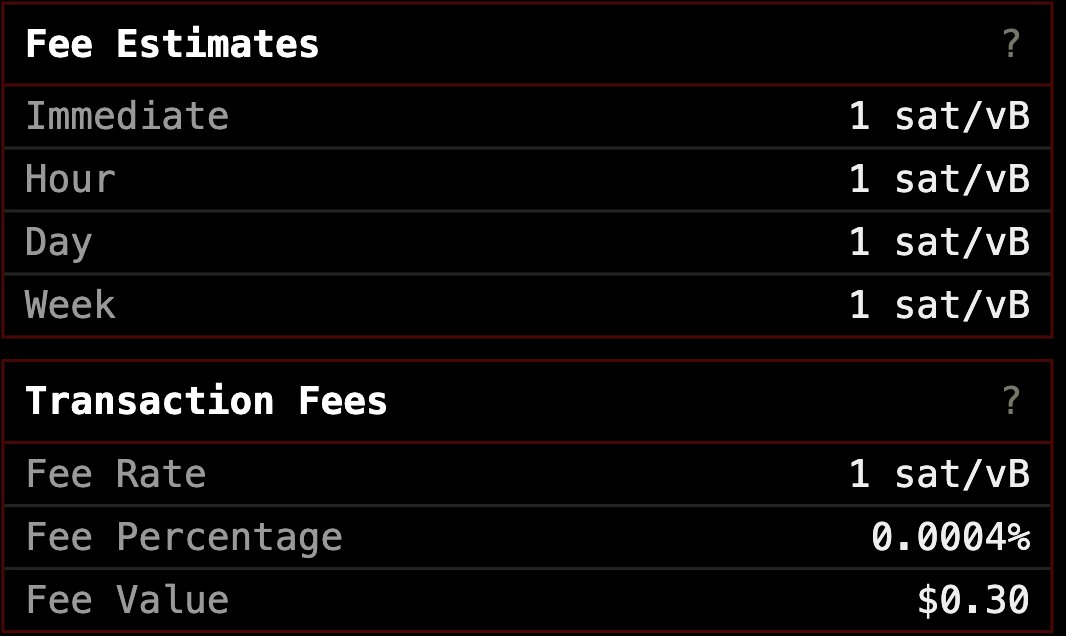
After a decade of blockspace fears and non-monetary-use panics, Bitcoin still has no spam problem. Fees are 1 sat/vB: anyone can move any amount globally with immediate processing for ~$0.30. The free market has always solved Bitcoin’s blockspace challenges. $BTC