Doctoral researcher in PoliSci @helsinkiuni, deaf, knower of European politics and a post-nihilist lad. Electoral integrity @EuropeElects, also @DatabyroFI
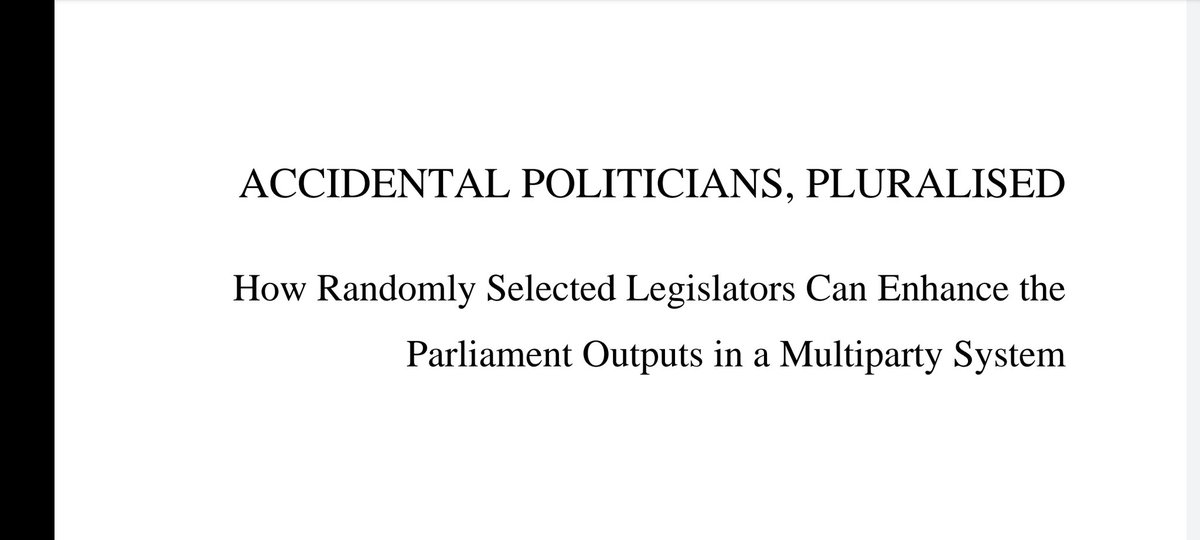
Tuottaisiko eduskunta enemmän ja parempaa lainsäädäntöä, jos edes osa edustajista arvottaisiin?
Tätä absurdiltakin kuulostavaa kysymystä tutkin kvantitatiivisesti vitosen gradussani: https://t.co/xLqUMuw1P0
Lyhyesti: tuottaisi, mikäli ~⅓ valittaisiin arpomalla vaalien sijaan.
one problem with political science is that you can’t rerun the same candidate to test them against a bunch of a different opponents of varying ideologies, except for Peru, where you can
@Nassreddin2002 In practice they get all the plus sides of governing (affecting policy) without any of the downsides (unpopular compromise friction inherent in governing).
@Nassreddin2002 We are describing the same phenomenon: SD has much power to affect policy to the direction they feel is important due to the nature of their position as C & S party.
Yet precisely for this affecting-policy-frpm-outside reason they are not dragged down by governing compromises.
@Nassreddin2002 The reason for this remains that PS is a governing party while SD is not. Sweden handed SD the power to affect government policies without being held accountable for governing, and you are seeing the results.
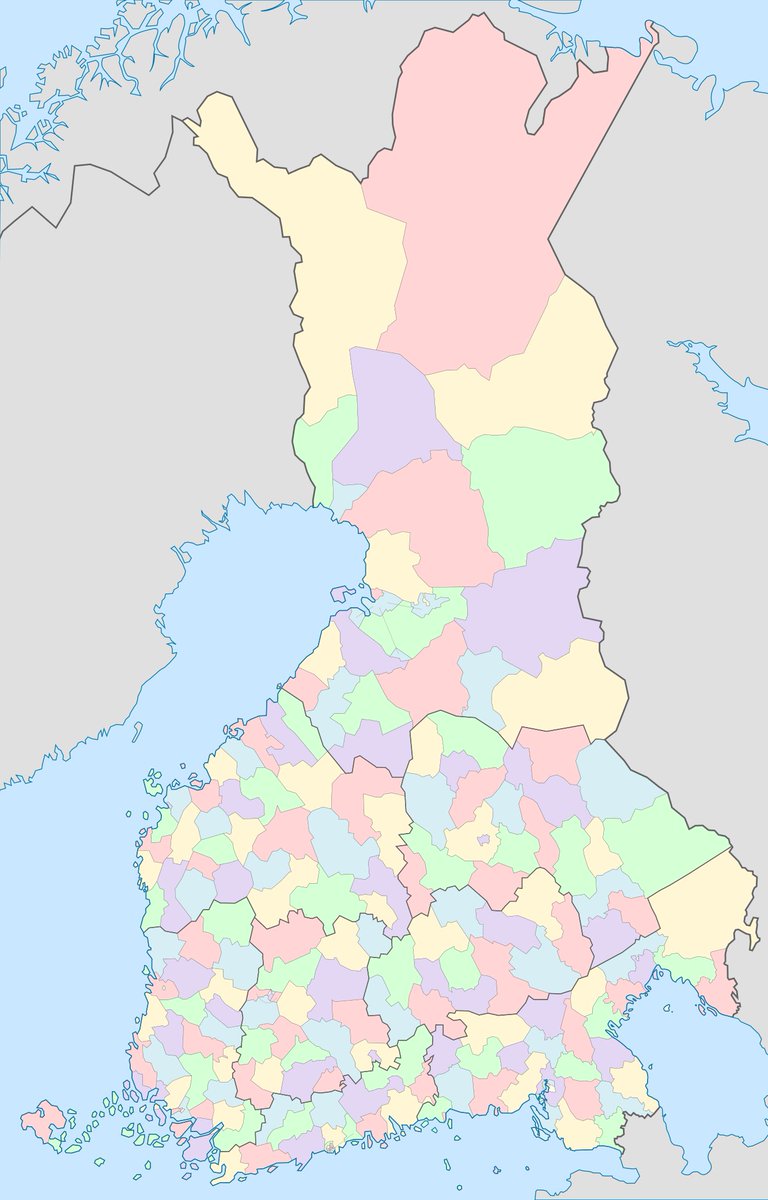
@vanhanenist Thank you for including the areas of Greenland (no data) and Faroe (no data) as insets and showing important data patterns. Really heightens the immersion.
In 1905, military recruits in Norway averaged 170 cm in height. And by 2005, the average had risen to 180 cm, about 1 mm of growth per year. So, if we extend that trend backward through history, we can conclude that the Vikings were about 50 cm tall.
@mtmalinen Happened months ago in January. I'm again asking you to establish some sort of information hygiene by consistently unfollowing and muting accounts that lie, or at least not to amplify them.
THIS GUY BUILT AN ENTIRE WIKIPEDIA THAT IS 100% AI HALLUCINATIONS AND IT'S OPEN SOURCE ON GITHUB
it's called Halupedia.
nothing on the site existed before you clicked. every article was generated the second you arrived.
the site has one rule: the universe only exists when you visit it.
it looks exactly like wikipedia. same fonts. same layout. same scholarly citations. same "stumble" button for random articles.
the only difference is none of it is real.
here are some actual articles currently in the encyclopedia:
> the great pigeon census of 1887
> the ministry of slightly wrong maps
> chaldic arithmetic — a branch of mathematics where subtraction is forbidden
> armund the river mapper — a cartographer who mapped 14,000 leagues of river without leaving his chair
> the society for the prevention of unnecessary tuesdays
every article page also tells you how many people are reading it right now. it says: "you alone are consulting this folio at present."
the creator's own tagline for the site is the most unhinged sentence i've read this year:
"an encyclopedia of a universe that does not exist until you visit it"
the entire backend is a single open source repo called vibeserver. one guy. one description on github: "a little webserver making things up just in time."
we built the largest knowledge base in human history and the very first thing a guy did with it was make a hallucinated mirror universe and put it on the open web.
the internet is healing.
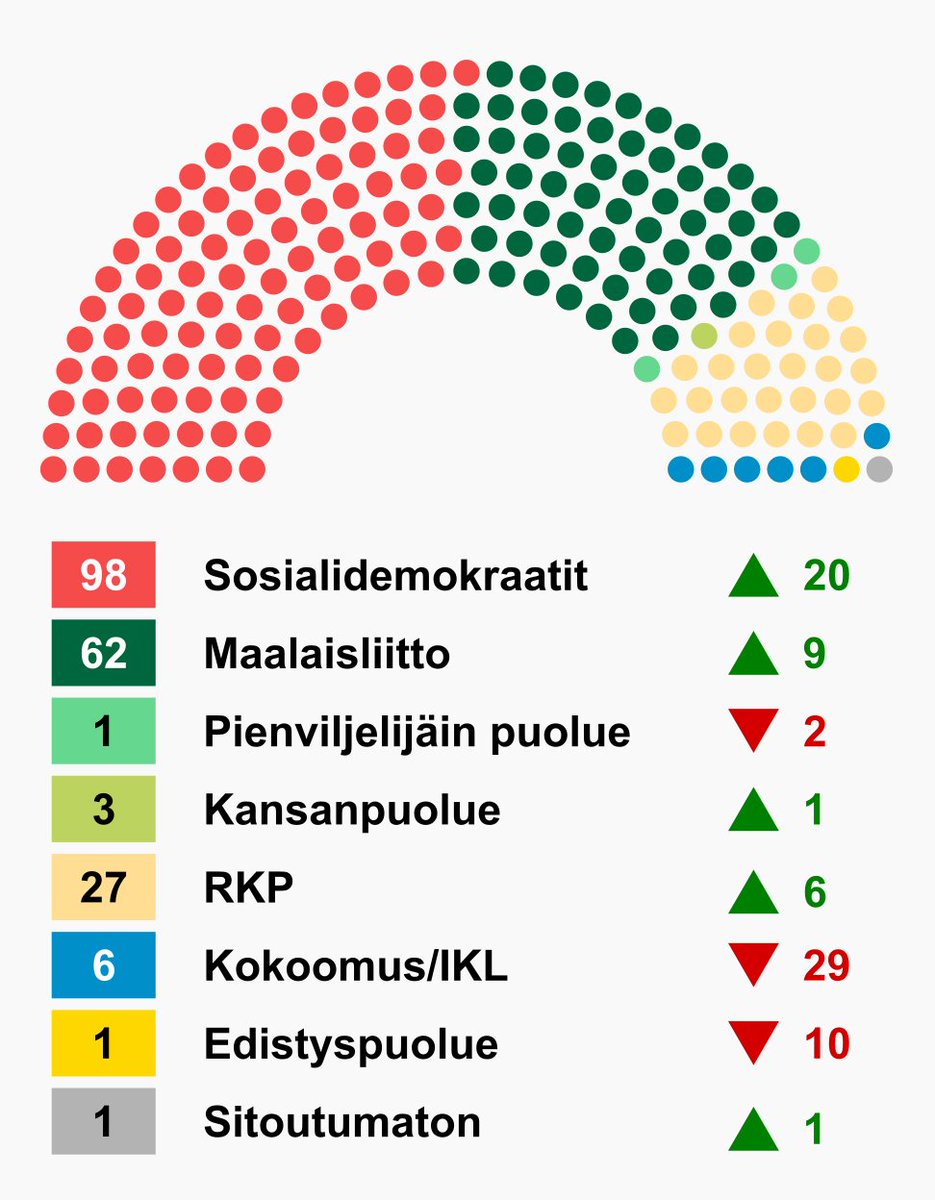
Yliopistoprojektin yhteydessä löytyi kepulointi historiasta: 1930-luvulla Maalaisliitto vänkäsi Suomeen enemmistövaalitapaa. Valtio-opin proffa K. R. Brotherus laitettiin laatimaan mietintö, miltä 1933 vaalitulos olisi näyttänyt ko. vaalitavalla. Hanke haudattiin vähin äänin.
That only underlines my point.
The US getting trapped in, and wanting out of, a costly military adventure is not what we are trying to explain here. What needs explaining is Russia’s failure to rescue its own allies when they are in serious trouble.
There remains still two broad explanations: Russia does not want to help, or Russia cannot help. The first requires elaborate mental gymnastics about hidden motives and sudden betrayals. The second does not: Russia’s resources appear tied down elsewhere, above all in Ukraine.
And your argument makes Russia look even weaker: it suggests Russia cannot help its allies even when the US is itself tied down elsewhere.