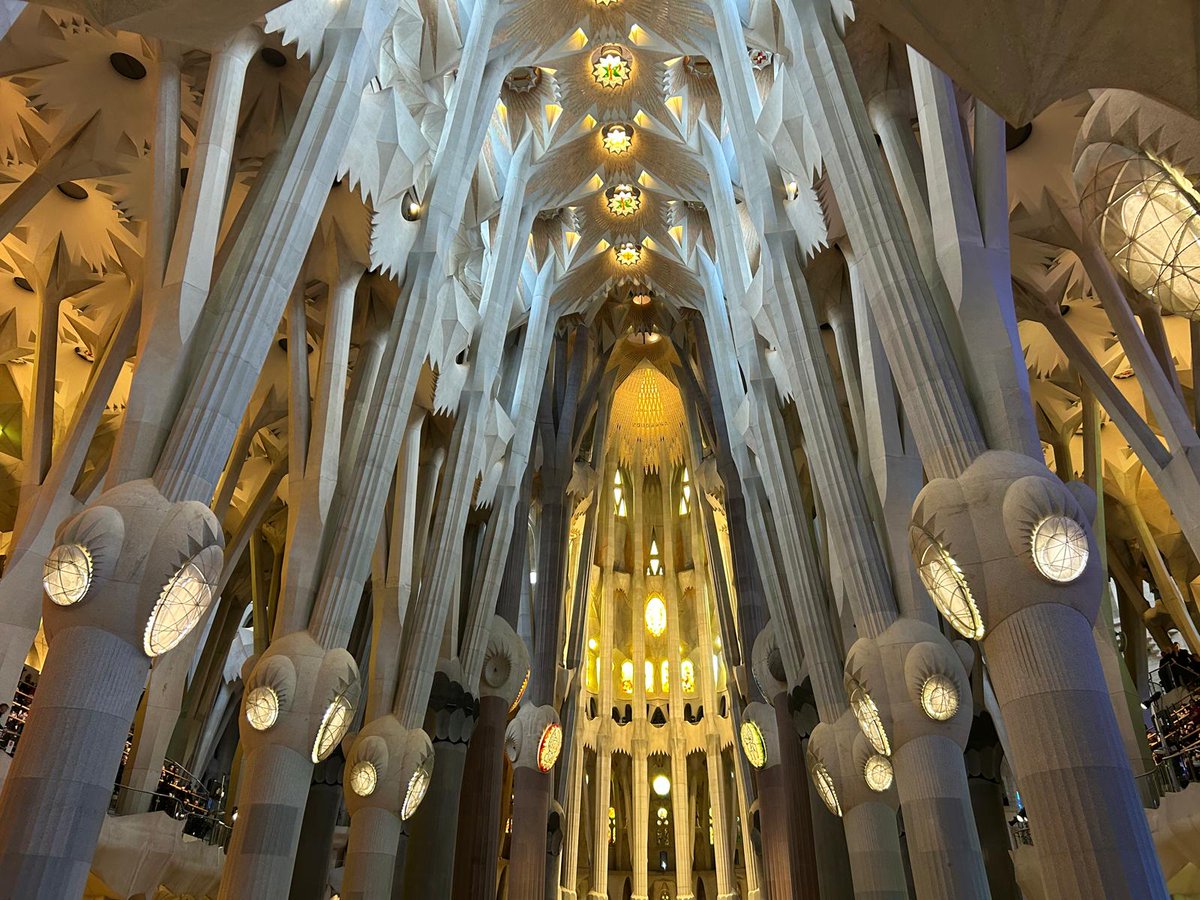
Clergy gather around Antoni Gaudí's Basilica of the Sagrada Família as Pope Leo XIV blesses the newly completed central Tower of Jesus Christ in Barcelona, Spain, Wednesday, June 10, 2026.
Middagcolumn
Selectieve stereotypering
Er bestaat geen wetenschappelijk bewijs dat rijke mensen moreel slechter zijn dan arme mensen. Onderzoek laat vooral zien dat macht gedrag kan beïnvloeden en bestaande eigenschappen kan versterken. Dat geldt voor ondernemers, politici, bestuurders, activisten en vakbondsleiders.
Vermogen wordt in het publieke debat steeds vaker behandeld als een karaktereigenschap. Rijk staat gelijk aan verdacht. Het oordeel volgt uit het bezit. Daar gaat iets grondig mis, in andere discussies bestaat immers juist grote terughoudendheid om mensen eigenschappen toe te schrijven op basis van afkomst, geslacht, geloof of sociale achtergrond. Individuen zouden op hun handelen moeten worden beoordeeld. Bij vermogen is stereotypering bijna vanzelfsprekend, genormaliseerd door de media, politici en opiniemakers.
Misschien speelt de omvang van grote vermogens daarbij een rol. Een miljard euro is voor de meeste mensen een abstract bedrag. Wat moeilijk voorstelbaar is, wordt een symbool. Wat je niet kent is verdacht. De persoon verdwijnt naar de achtergrond, de categorie blijft over. De ondernemer die een bedrijf opbouwde, de erfgenaam die vermogen ontving en de belegger die succesvol investeerde, belanden stil voor stuk in dezelfde morele categorie.
De geschiedenis biedt geen steun voor de gedachte dat rijkdom op zichzelf de bron van menselijk kwaad is. De grootste rampen werden niet veroorzaakt door de rijksten. Stalin, Mao en Pol Pot bezaten geen miljarden. Hun macht was politiek. De gevolgen zijn bekend. De geschiedenis laat vooral zien dat risico’s ontstaan wanneer macht zich concentreert en tegenmacht ontbreekt. Daarom bouwen democratieën instituties. Rechters, parlementen, toezichthouders en vrije media bestaan vanuit het besef dat macht begrensd moet worden, ongeacht wie het bezit.
Wie vermogen als het fundamentele probleem ziet, zou moeten verklaren waarom zoveel van de grootste historische rampen en slachtpartijen zijn veroorzaakt door mensen die niets bezaten, maar vrijwel alles konden bepalen. Niet bezit is de constante factor, maar de manier waarop met macht wordt omgegaan zodra beperkingen verdwijnen. Dat patroon is zichtbaar in directiekamers, partijbureaus, regeringen en revoluties.
A lot of people seem angry that Elon is now a trillionaire, so it’s worth reminding them that he didn’t achieve this by making anyone else poorer. Wealth isn't zero-sum. Paul Graham explained it well:
https://t.co/W97pq3FLYg
Elon just created 4,400 millionaires in a single day.
400 of them are now worth over $100 million.
These aren't VCs. They're SpaceX employees, and the list includes welders, technicians, and cafeteria staff, because for two decades the company paid every level of the workforce in stock instead of higher salaries.
Juan Hernandez immigrated from Mexico and took a $28 an hour contractor welding job in 2015. He says he didn't even know what SpaceX was. The company gave him a $10,000 equity grant and let him buy more shares through payroll deductions. That stake is now worth $880,000.
Trevor Hise's parents wanted him to take a stable job at General Electric. He picked SpaceX instead, stayed 12 years, and accumulated over 100,000 shares. At the $135 listing price that's $13.5 million. He's 37 and semiretired. His words: "The magnitude of this has been ridiculous."
The most telling detail came before the listing. Over 100 employees quietly banded together and negotiated a group wealth management deal covering up to $5 billion, because none of them had ever needed a wealth manager before.
Software IPOs have minted millionaires for 30 years. This is the first one where the money went to the factory floor.
We see the tower of Jesus Christ illuminated for the first time!
The light show, starting from the base up to the illumination of the cross, culminated with a composition of lights guided by drones that traced the figure of Gaudí and the phrase “first love, then technique”.
Nella Sagrada Família si attende #PapaLeoneXIV che celebra la Messa nel centenario della morte di Gaudì, l'architetto di Dio. Il Pontefice inaugurerà la Torre di Gesù
A German court has ruled that Google is directly liable for false claims in AI Overviews after AI summaries wrongly linked two publishers to scams. Judges rejected Google's argument that users should fact-check the results themselves https://t.co/5W7oAhFz0R
@Maarten_Brands Ik zou het zelf niet meteen aan doen, maar ik denk dat dit wel populair is hoor! En wat ik wel goed vind is om weer wat anders te proberen, altijd leuk om dan terug te kijken naar en O de verschillende ‘mode’ of tijdperken te onderscheiden ipv altijd weer hetzelfde
// Self-Harness: Harnesses That Improve Themselves //
(bookmark this one)
Most of the agent scaffolds we rely on today are built once and remain frozen or mostly unchanged.
The harness, like the skills, needs to evolve with new models.
What if the scaffold rewrites itself?
This new work treats the harness, the prompts, tools, and control flow around the model as a learnable artifact that improves from its own runs rather than staying a fixed wrapper you hand-maintain.
The scaffolding becomes the part that compounds, run after run. If you run long-horizon agents, a self-modifying harness turns scaffold upkeep from manual work into something the system earns on its own.
Paper: https://t.co/byh1MP99xU
Learn to build effective AI agents in our academy: https://t.co/1e8RZKs4uX