@RoundtableSpace Claude is really good at (and will get better at) creating these harnesses. The real skill is to fundamentally understand why creating the right harness is important and what it unlocks for your system
AI product managers, please learn how AI agents work:
Most teams pick the wrong architecture. Here is how to pick the right one.
(Save this, you will need it to build your own agents.)
■ 𝗦𝗼𝗹𝗼. 𝗢𝗻𝗲 𝗮𝗴𝗲𝗻𝘁 𝗴𝗼𝗶𝗻𝗴 𝗿𝗼𝘂𝗻𝗱 𝗶𝗻 𝗮 𝗹𝗼𝗼𝗽.
Start here. The agent 𝘁𝗵𝗶𝗻𝗸𝘀, 𝗮𝗰𝘁𝘀, 𝗼𝗯𝘀𝗲𝗿𝘃𝗲𝘀 at what happened, then thinks again. It keeps repeating this loop until the job is done. So the important thing is to give it the right goal. Finally, connect tools and give it a memory. And it handles way more than you would expect. 𝗠𝗼𝘀𝘁 𝗽𝗿𝗼𝗯𝗹𝗲𝗺𝘀 𝗻𝗲𝘃𝗲𝗿 𝗻𝗲𝗲𝗱 𝗮 𝘀𝗲𝗰𝗼𝗻𝗱 𝗮𝗴𝗲𝗻𝘁.
■ 𝗔𝗴𝗲𝗻𝘁 𝘁𝗼 𝗔𝗴𝗲𝗻𝘁 (𝗔𝟮𝗔). 𝗢𝗻𝗲 𝗵𝗮𝗻𝗱𝘀 𝗼𝗳𝗳 𝘁𝗼 𝘁𝗵𝗲 𝗻𝗲𝘅𝘁.
Use this when the work splits into two or three clear jobs (or goals) that always run in the same order. The refund agent processes the return, then hands over to the stock agent. Cheap to build. The catch is that nobody is supervising. So, if one of the agent makes a mistake, the other one never finds out.
■ 𝗢𝗿𝗰𝗵𝗲𝘀𝘁𝗿𝗮𝘁𝗼𝗿. 𝗢𝗻𝗲 𝗯𝗿𝗮𝗶𝗻 𝗵𝗮𝗻𝗱𝘀 𝘄𝗼𝗿𝗸 𝘁𝗼 𝗺𝗮𝗻𝘆.
Use this when the sequence is dynamic and several agents need to run at once. One agent understands the situation and the goal, then delegates the work to other agents. It then waits for each one to report back with a status. This central agent is the orchestrator and controls the success of the entire system. That is the advantage, but also the bottleneck. If the orchestrator breaks, everything breaks.
I am build these agentic systems live in my upcoming masterclasses.
You can join them for free.
Next one is on Satruday (9am PT, 4pm UK, 9:30pm IST.)
Link below
@yukaichou 100%. I feel a lot of the teams are starting in the exact opposite direction -- start complicated and then simplify. That only wastes time and resources
Over the next 2 Saturdays, I will show you live I
1) how agents work
2) different types of agents
3) how I build a single agent
4) how I use multi agent systems to run my life
5) how you can build your first agent
Please join these sessions, they are completely free. 100% practical.
Next event: Saturday, 31 Oct. (link in the first comment). We start with understanding agentic architecture and building single agent systems.
ign up here. Seats are filling fast. Free to attend. But seats limited:
https://t.co/Zr8b7u6QUf
The only rule that matters
Start with a single ReAct agent + good tools.
Add hierarchical or parallel only when you can name the specific failure of the simpler version.
Most production systems don’t need more than one strong agent with skills.
Complexity is a liability until it’s an asset.
To be a great AI product manager, you NEED to understand how agents work.
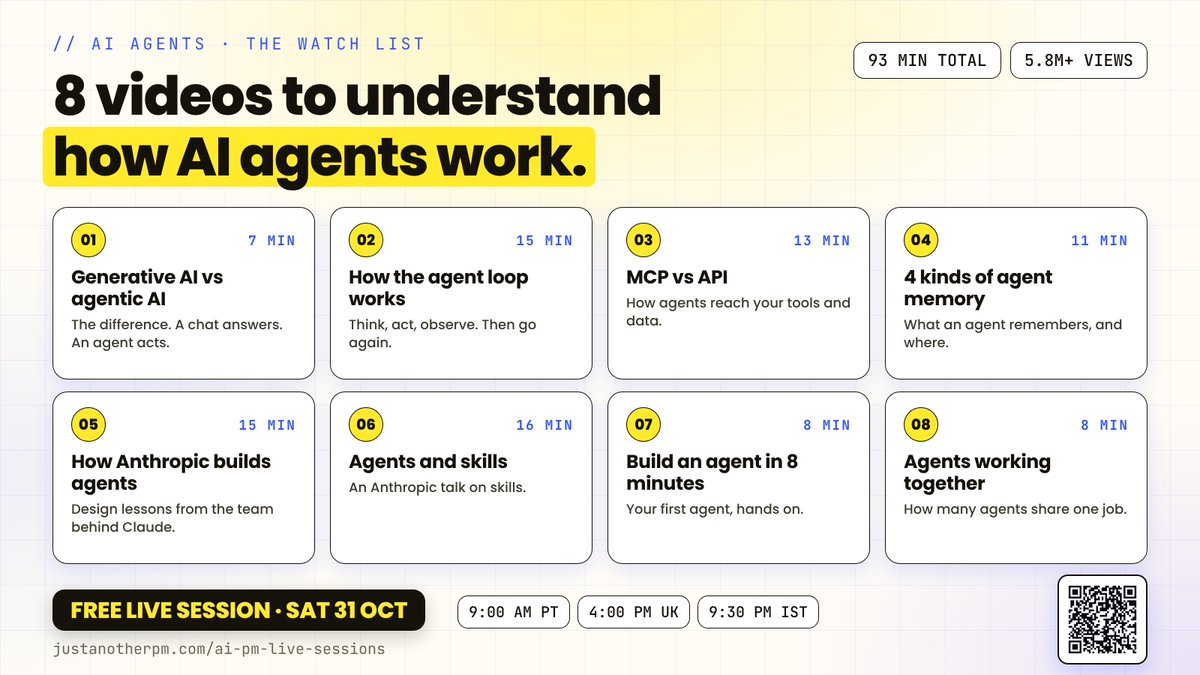
Here are 8 videos that will teach you everything you need to know:
(Save this post. you will NEED it.)
1. Generative AI vs agentic AI https://t.co/ux0qI4Jqqf
2. How the agent loop works https://t.co/54NxIE2t7t
3. MCP vs API https://t.co/TXd04fPDKQ
4. 4 kinds of memory for agents https://t.co/KklysKg6Cu
5. How Anthropic builds agents https://t.co/mw57JxNZ2d
6. Agents and skills https://t.co/ZFrPJk9ga8
7. Build an agent in 8 minutes https://t.co/NQsfAxJVz6
8. Agents working together https://t.co/mRj52L69WH
Over the next 2 Saturdays, I will show you live I
1) how agents work
2) different types of agents
3) how I build a single agent
4) how I use multi agent systems to run my life
5) how you can build your first agent
Please join these sessions, they are completely free. 100% practical.
Next event: Saturday, 31 Oct. (link in the first comment). We start with understanding agentic architecture and building single agent systems.