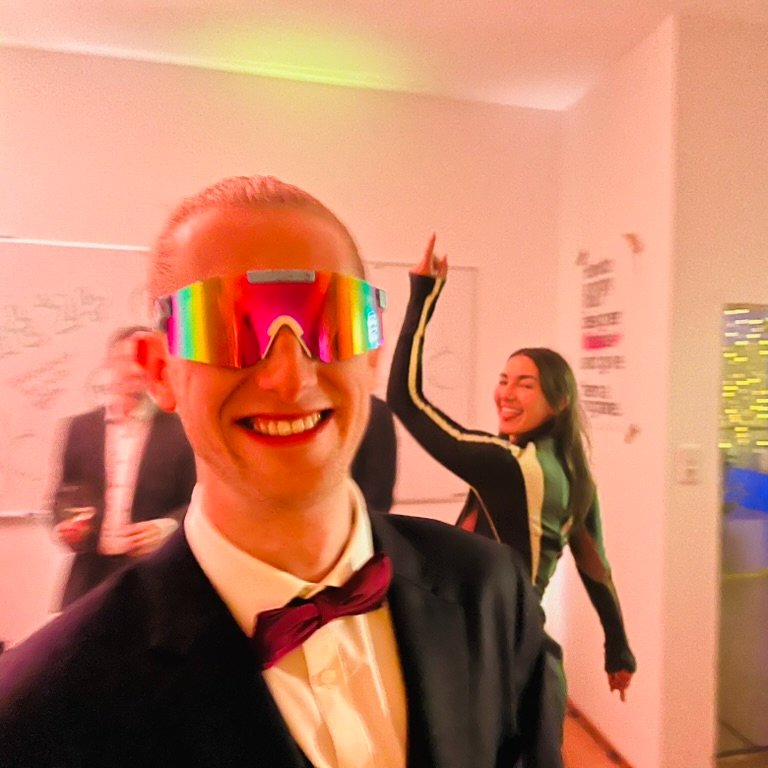
I'm Justen.
I spent 6 years building Shopify stores.
For clients. For agencies. For everyone but myself.
€500k+ shipped. Great at my job.
But I was playing it safe…
2026: I looked at myself and asked:
"Is this really it? Talent on rental until retirement?"
Fuck that.
Went 50% part-time. Bet on myself.
Started building MY thing.
Now I help ecommerce founders skip the months of trial-and-error I went through.
Because I remember what it felt like to be stuck.
What's different now?
AI tools that didn't exist when I started.
I'm using them to automate what I learned the slow way.
The game changed, why play it the old way?
Just me and AI systems built for 2026.
Here to build in public & help you do the same.
Follow for the journey. Repost if you're building too.❤️
Let's win together. 🚀
Checkout isn't where people decide to buy.
It's where they find reasons not to.
Psychological friction points:
• "Items are not reserved" (urgency)
• "Only 3 left" (scarcity)
• "Order today, arrives tomorrow" (time pressure)
• "Free shipping over $50" (threshold motivation)
Use them sparingly. Use them honestly.
DOI isn't optional in email marketing.
It's legally required in most regions.
Skip it? You risk:
• Fines up to €20M (GDPR violations)
• Platform bans (Klaviyo, Mailchimp suspend accounts)
• Spam folder placement for your entire domain
The trade-off:
Single opt-in:
• Fast list growth
• 40-60% never engaged subscribers
• High spam complaints
• Deliverability tanks over time
Double opt-in:
• Slower growth (30-50% confirm)
• Engaged subscribers who actually want your emails
• 3-5x better open rates
• Protected sender reputation
What this means for revenue:
1,000 single opt-in subscribers at 15% open rate = 150 opens
500 double opt-in subscribers at 40% open rate = 200 opens
Smaller list. Better results.
You don't need more information.
You need less confusion.
The problem isn't lack of knowledge.
It's too many conflicting strategies pulling you in different directions.
Pick one approach. Master it. Then add more.
Most email welcome flows fail for one reason:
They sell too fast.
After auditing dozens of setups, this happens over and over:
Typical flow:
Email 1: Discount code
Email 2: Product catalog
Email 3: More products
Result: 15% open rate by email 3, high unsubscribes.
Better try:
Email 1 → Deliver promise (discount/freebie)
Email 2 → Build trust (story, values, why you exist)
Email 3 → Convert (social proof, testimonials, recommendations)
The difference? Trust before transaction.
Conversion rates improve when you stop rushing the sale.
AI for e-commerce isn't future talk. It's today's standard.
What you should automate right now:
• Product descriptions
(AI writes better copy than you in 1/10th the time)
• Customer FAQs
(AI handles 80% of support questions)
• Ad variations
(generate 20 versions, test the best 5)
• Market research
(AI analyzes trends faster than manual scrolling)
Your competition is already using this.
Every day you wait is a day behind.
The tools exist. They're cheap. Use them.
You feed one prompt into a UI tool and hope it nails the layout.
But the first output rarely matches what you had in mind.
Either it's too generic, or it misses your brand entirely.
So you tweak the prompt. Run it again.
Still not right.
The issue: treating UI generation like a one-shot task.
Reality is, you need multiple angles — a controlled version and an exploratory version.
One gives you precision.
The other gives you ideas you didn't know you needed.
Generate both, merge the best.
Email marketing for stores?
Start simple:
• Welcome (introduce brand + first purchase discount)
• Cart abandonment (remind + urgency)
• Post-purchase (thank you + upsell)
These 3 emails recover 15-25% of lost sales.
Set them up once. They run forever.
Stop putting your contact form above your FAQs.
Do this instead:
Help/Contact Page Structure:
1. FAQs (TOP, fully visible)
2. Contact form (BELOW, as backup)
Why: Customers find answers before typing.
70% of tickets = questions already answered in FAQ.
Let them self-serve first.
Only real issues reach your inbox.
Things I regret: Not starting 2 years earlier.
Things I don't regret:
Every failed test. Every lost dollar. Every late night.
Because those failures taught me what no course could.
Even when action led to failure, it led to learning.
Hesitation led to nothing but wasted time.
If I could go back, I wouldn't change the failures.
I'd just start the failures earlier.
So if you're hesitating right now, stop.
The regret of not trying hurts more than the pain of failing.
Most “SEO” talk ignores the easiest wins.
Rename images like a human would search.
Add tight alt text (1 keyword max).
Keep file sizes reasonable.
Google reads context around the image — not your intentions.
You don't need to be first. You need to be better.
Everyone thinks they need a revolutionary product.
Some game-changing innovation nobody's seen.
That's startup thinking. Not e-commerce thinking.
Take what exists.
Make it 10% better. Market it 50% smarter.