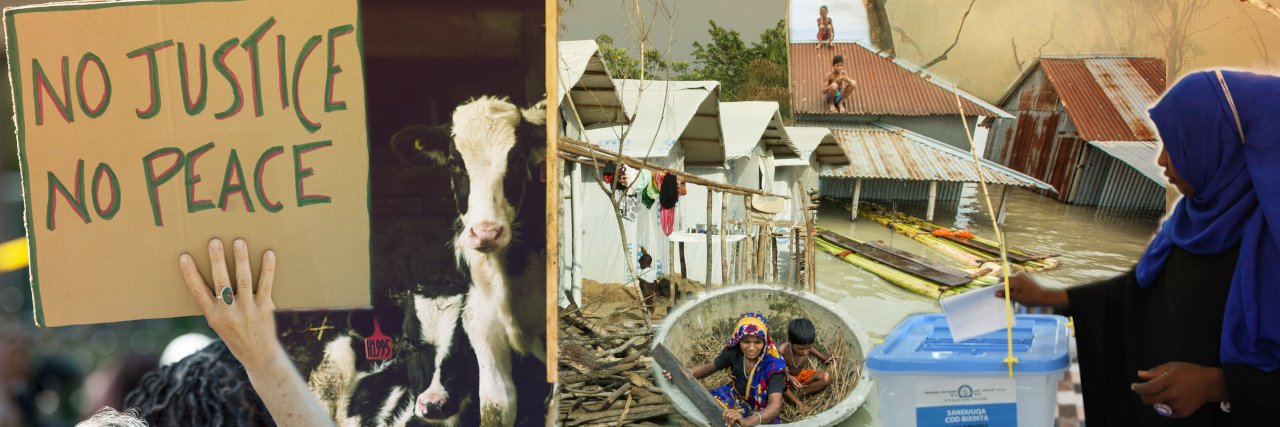
When should we say that two people are treated as equals? In this post, Alexandru Volacu considers a real-life example of the envy test and argues that we can perhaps draw on it in order to reflect on some of our contemporary political concerns 👇
https://t.co/5szIcHJH8D
In this post, @ebcripps Elizabeth Cripps (University of Edinburgh) discusses her recent article in the Journal of Applied Philosophy @JoAPhilosophy , in which she explores whether it is justifiable to have children despite the carbon footprint it creates.
https://t.co/jSZRNAessJ
We start the year with a post by one of our guest authors, Mario J Cunningham M. He investigates the idea of "migrant crime" used to justify calls for deportations and asks why is it such a powerful (if untrue) rhetoric?
https://t.co/dORE8TCDVN
On the blog: In light of political upheaval in South Korea and France, Pierre-Etienne Vandamme discusses the importance and democratic value of parliamentary assemblies, which have frequently been sidelined in favor of executives https://t.co/xx9XG2vLNX
This week on the blog: Matthew Perry offers an argument in favour of renaming animals currently named after particular people - "renaming as a process productively reorients us to each animals’ importance – independent of human history"
https://t.co/ROmnFjCg8j
This week in our series on the war in Ukraine Prof George Pattison discusses Putin's claims about "cancel culture"
"The world in which we live today is... made up of...cultures that have become what they are... through constant interaction with others."
https://t.co/H0Ar7gxpQk
It's probably worth mentioning here as well, that if you want to follow Justice Everywhere on other platforms, to stay up to date about when we have a new post, you can follow us in many places! Or sign up for email updates on our home page.
Today in our ongoing series on the war in Ukraine, Prof Cynthia R Nielsen (University of Dallas) discusses Putin's use and abuse of history as a political tool -
https://t.co/y3EIePn73M
Today, Sanat Sogani @SanatSogani discusses designing a course on non-Western political philosophy. How should we deal with the task of creating a continuum between non-western political thought and analytical political theory? Let us know in the comments!
https://t.co/LueszL5o9E
This week, in our ongoing series on the war in Ukraine, we feature a post by Prof Gerald Lang. He considers the why an invaded country is justified in fighting to retain political independence or sovereignty, regardless of its chances of winning:
https://t.co/3msXEw89rN
Today, citizens of the US vote in one of the most high-stakes elections in US history. Trump's campaign has been characterized brazen lies. Mark Satta considers whether free speech laws should apply to such lies, and what is at stake in that debate:
https://t.co/tWAUCLHwfo
This week, we're publishing two more articles in our ongoing series of reflections on the Russia-Ukraine war. First up, a write-up of Dr Volodymyr Yermolenko's lecture "Thinking in Dark Times":
https://t.co/vm6u6C6q07
And, second, we have an article by Prof Jeff McMahan, who discusses what just war theory has to say about the war - in particular, on the topics that have defined his thinking on war over the past 2 decades: proportionality, necessity, liability to harm https://t.co/5HC6SBsaAm
And don't forget to check back next week for the next installment in this series. On Monday, we'll have Dr Volodymyr Yermolenko, and on Thursday Prof. Jeff McMahan
Today we share the first of the reflections on the war in Ukraine, based on the conference & special issue put together by Aaron J Wendland @aj_wendland: Prof Timothy Snyder @TimothyDSnyder on what the war in Ukraine can tell us about freedom
https://t.co/fcr9B2yZdt