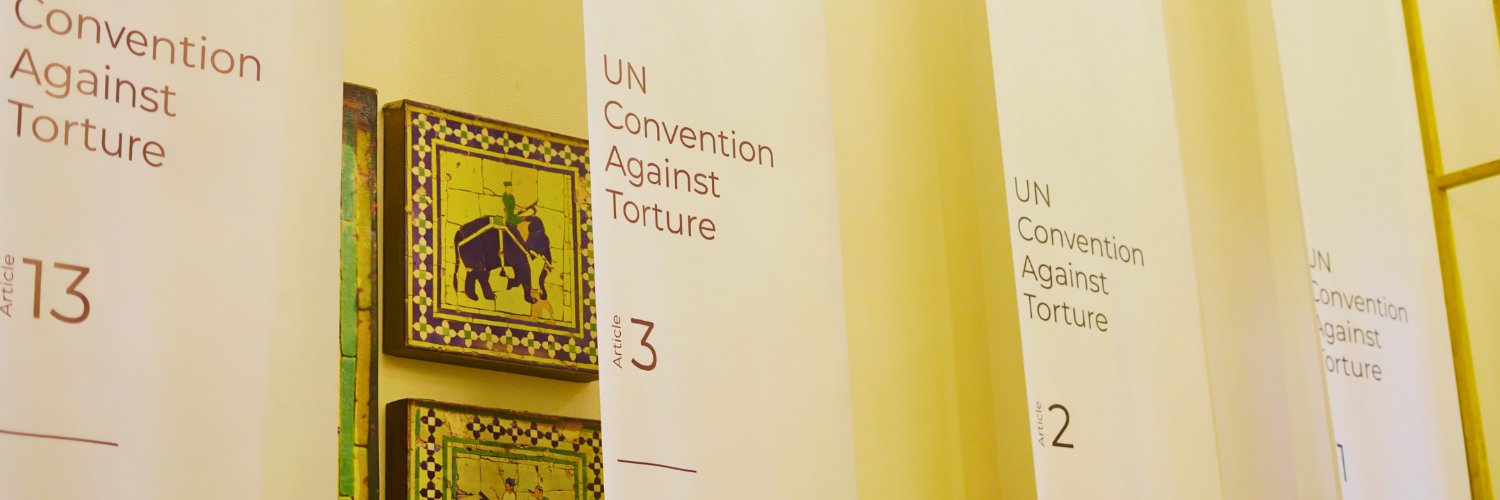
In commemoration of the International Day in Support of Victims of Torture, Justice Project Pakistan, the National Commission for Human Rights, and the Punjab Criminal Prosecution Service came together to launch:
Reimagining State Responsibility: Training Manual for Torture Prevention — Pakistan’s first practical, institutional guide to prevent torture and uphold the rule of law.
Earlier this year, JPP also trained NCHR officers from across the country on how to document and investigate torture and ill-treatment in line with both international standards and Pakistan’s Torture and Custodial Death (Prevention and Punishment) Act, 2022.
🎥 This video captures powerful moments from the Lahore event, where judges, prosecutors, police, prison officials, medico-legal experts, and human rights defenders shared one stage—with one shared goal: making rights real.
Together, we can move from law to implementation. From silence to accountability. Let’s work together to ensure that rights are not just written in law but truly protected in practice.
👉 Our e-course: https://t.co/TXuJgGXDED
👉 Our torture training toolkit: https://t.co/t83Jcsc0c9
@SarahBelal_@KamranAdilPSP@EUPakistan@omctorg@nchrofficial@ChaudhryShafeeq@FIA_Agency
#ReimaginingStateAccountability #ZimmedarKaun #StopTorture #EndTorture #HumanRights #JusticeProjectPakistan #NCHR #RuleOfLaw #UNCAT #TorturePrevention
انسداددہشت گردی ترمیمی بل 2026ء پنجاب اسمبلی سے منظور
سیکیورٹی کے نام پر ریاست کو یہ اجازت نہیں دی جا سکتی کہ وہ شہریوں کے بنیادی انسانی حقوق ہی سلب کر لے..!!
@JusticeProject_
پنجاب انسداد دہشت گردی ترمیمی بل 2026
جب سب کچھ رازداری میں ہو گا تو منصفانہ عدالتی کاروائی کا حق جو آپ کو آئین اور international covenant on civil political rights دیتا اسے کیسے وکلاء بین الاقوامی تنظیمیں حتی کہ اقوام متحدہ جانچے گی
@chinarkoor
"We need to counter demands for the death penalty, but not always through the lens of religion. Find the commonalities first", remarked Sara Hossain, Senior Advocate at the Supreme Court of Bangladesh. #9WC#DeathPenalty
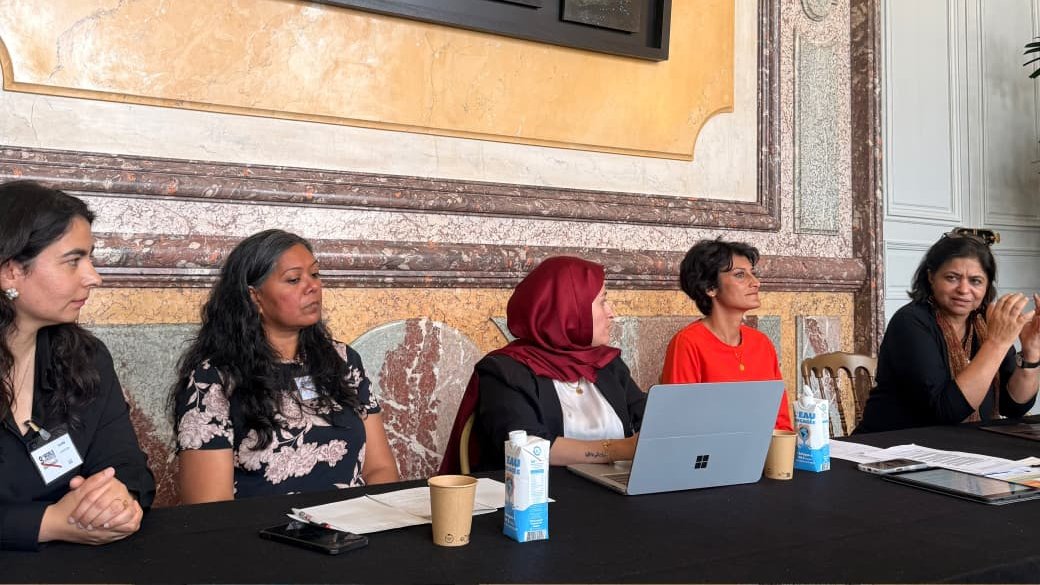
JPP organised a side event at the #9WC titled "Reducing the Scope of the Death Penalty in Line with Islamic Principles" which brought together experts and advocates from Muslim-majority countries to explore pathways for reducing the scope of the death penalty in line with Islamic principles and international human rights standards.
The discussion highlighted areas of convergence between Islamic jurisprudence and international law and provided a platform for practitioners directly working on these issues to develop an organic, locally led advocacy strategy grounded in regional experiences, challenges, and reform efforts. @AssoECPM #DeathPenalty
Barrister @SarahBelal_ , Executive Director JPP, highlighted that Islamic law is broadly influenced by local customs. The Holy Quran prescribes the death penalty in only two cases. Everything built on top of that is interpretation.
The arguments for reform exist within Islamic jurisprudence itself, but what is missing is a shared toolkit to move them across borders. JPP has spent years building that scholarship. #9WC #DeathPenalty
"It cannot be that thinking is the part of the Global North and doing is the part of the Global South", Anup Surendranath, Professor of Law and Executive Director, The Square Circle Clinic, India.
For decades, the global movement against the death penalty has drawn its agenda from one part of the world and its labour from another. That is a structural problem dressed up as collaboration. The knowledge that comes from Bangladesh, Pakistan, Malaysia, and India is not supplementary, but foundational.
#9WC #DeathPenalty
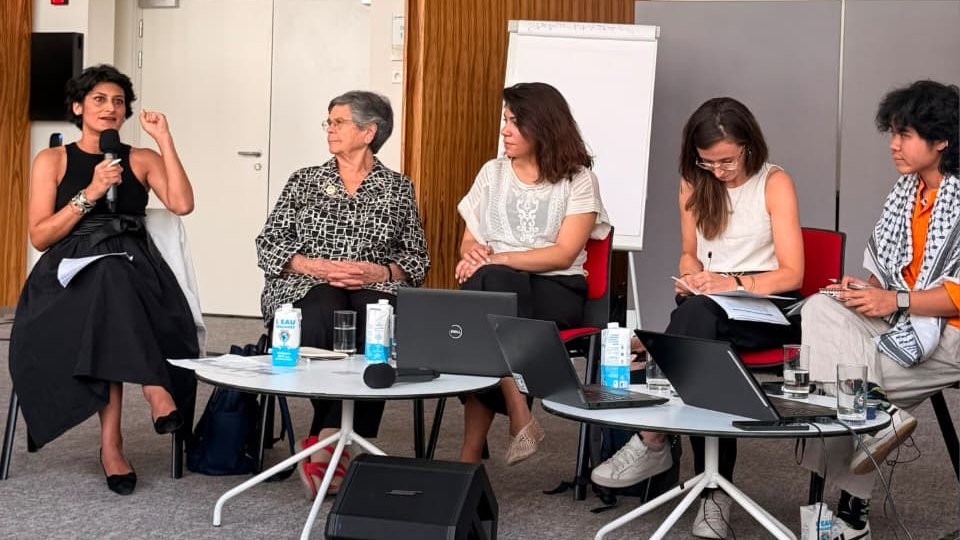
Today is the final day of the #9WC in Paris, and the first side event titled "The Regional Advantage: Building Collective Power for Global Abolition" focused on how regional collaboration can contribute to ending the death penalty globally. @AssoECPM#DeathPenalty
Join us tomorrow on the final day of #9WC for our side event titled "Reducing the Scope of the Death Penalty in Line with Islamic Principles" and be part of a conversation that is long overdue.
📍 Salon des Stucs, Hôtel de Lassay, Paris
🗓 Thursday, 2nd July | 11:30 am – 1:00 pm
Scan the QR code to RSVP.
@AssoECPM #DeathPenalty
“Africa will be the second continent after Europe to end the death penalty. We have an agenda, a mandate, and tangible results. Africa's legal frameworks are not behind. They can be considered benchmarks", said Hatem Essaeim - Vice Chairman of African Commission on Human & Peoples' Rights, while addressing the session titled "The Death Penalty in a Shifting World: How to Respond to Resurgence" at #9WC.
#DeathPenalty
"The eradication of poverty and the elimination of the death penalty are human rights issues that are very connected", stressed Elena Carolina Díaz Galán - UN Special Rapporteur.
It is not the severity of the crime, but socioeconomic situation that determines who ends up facing the harshest punishment. The death penalty falls hardest on those the system was already failing. #9WC #DeathPenalty
"The journey to death row begins long before a crime is committed", commented Doreen N. Kyazze - Regional Director for Sub-Saharan Africa, Penal Reform International, at the #9WC session on Socioeconomic Inequalities and Impact of the Death Penalty.
In Uganda, 85% of people on death row are young. 69% of women sentenced to death never attended school. 52% were unemployed. These numbers indicate that the death penalty falls on those who are vulnerable socieconomically, including the least educated, marginalised, and poor.
#DeathPenalty @AssoECPM
"Women facing the death penalty is the most extreme example of gender-based discrimination", remarked Patsilí Vasquez - Member UN CEDAW.
Behind most women on death row is a story of trafficking, coercion, or survival under conditions the law never stopped to examine. In Malaysia, persistent and evidence-led advocacy reduced the share of women on death row from 11% in 2019 to 2% in 2025. When advocacy is grounded in evidence, it changes outcomes. #9WC #DeathPenalty
Pakistan has had no executions since 2019 and removed the death penalty for drug offences in 2023. That was a legislative milestone for the country and shows credibility.
Now, Pakistan has the credibility to lead regional dialogue; bridge the gap between states retaining the death penalty and those who have ended it; engage through the OIC; and to show that reform is possible even in complex, Muslim-majority contexts. Pakistan's lessons belong to the region.
#9WC #DeathPenalty
The day 2 of the 9th World Congress Against the Death Penalty is underway in Paris. Barrister @SarahBelal_ , Executive Director JPP, took the floor in a session on the war on drugs and the death penalty, and brought Pakistan's story to a global audience.
"Drug offences should never carry the death penalty. Yet drug-related executions rose 97% between 2024 and 2025. 36 countries still sentence people to death for drugs."
@AssoECPM #9WC #DeathPenalty
One of the most powerful lessons from Pakistan: courts can move before the law does.
Between 2010 and 2018, JPP studied 310 drug cases before Pakistan's Supreme Court, in which not a single death sentence was upheld.
That judicial trend, combined with international pressure, made the removal of the death penalty for drug offences possible in 2023 through the Amendment in the Control of Narcotic Substances Act. Though gaps still remain in its implementation, the effort proves that change is possible, with the right intention.
#9WC #DeathPenalty
While attending a session on East Asia's challenges of transparency, we were reminded that transparency in executions is a global problem, not just an East Asian one.
Pakistan has not carried out any execution since 2019 but still has one of the largest death row populations in the world.
97 countries have now ended the use of the death penalty, according to the International Organisation of the Francophonie. Nearly half the world has already made this choice. Pakistan can be next, and JPP continues to advocate for this cause. #9WC #DeathPenalty
A session on the contribution of law clinics in ending the death penalty also gave us a powerful model. India's law school clinics now represent 70% of death row cases before the Indian Supreme Court. They helped commute 53 death sentences through deep research, long prisoner interviews, and strong legal partnerships. This is what sustained advocacy looks like. An example to follow.
#9WC #DeathPenalty
Chad's Justice Minister spoke about ending the death penalty in 2017 despite facing real threats from Boko Haram terrorism. Security concerns are often used to justify the death penalty. Chad's experience shows another path is possible even under pressure.
#9WC#DeathPenalty
The Central African Republic's Justice Minister shared something striking: ending the death penalty wasn't just a legal change, they had to rewrite their criminal code to make the decision irreversible. Real change requires real safeguards, not just intentions. #9WC