Even voor de Nederlandse pers (@nrc, bij voorbeeld):
De Vier Vrijheden (goederen, diensten, vestiging, en werknemers) zijn mooi, maar ze hebben niks met Schengen te maken. De Vier Vrijheden waren er al decennia voor de afschaffing van de grenscontroles.
In just a week, we'll host a discussion with @JustinLindeboom on his paper 'Federal Judicial Supremacy and the Equality of Member States'.
If you want to join: Villa Salviati and zoom / 17.10/2024 / 13:00 CET
Registration here: https://t.co/1TIoBuwFNb
"Long, boring, and turgid, even by the normal opaque standards of ECJ judgments" is how Spencer Waller described the @EUCourtPress's Google Shopping judgment. Vaszilia Bartosova and I analysed the judgment for @EulawLive: https://t.co/ddiqTQ8hUA
@Groningen_EULaw @GroningenLaw
@BenVanRompuy To be fair I think the Court is right on this. Ancillary restraints doctrine is a contextual analysis of whether, on balance, competition is restricted (albeit through a LRA test instead of balancing proper). Wouters is a public interest justification like in free movement law.
Real Dynamic Competition:
"Moore's law in chips that enabled the smaller, faster, cheaper paradigm [...] only proved true because competitors to Intel, like Advanced Micro Devices, forced Intel and others to reduce costs and innovate over time to remain competitive"
More than 2500 people have accessed this paper in six months…. Wow, unexpected! I’ve been saying these things for years (first in 1996, at the EurLRev). Nice!
The Primacy of EU Law: Interpretive, not Structural https://t.co/PrZH1NJjCO
Fully agree. Any other outcome would have deviated from decades of case law on standing. Mixing up admissibility with substance (or aims as you write) is just plain wrong.
@alemannoEU Alberto, how can you possibly suggest this is a "political decision" while the reasoning and outcome are perfectly in line with orthodox case law on standing (no matter how much one may disagree with that case law)? This judgment should be surprising to no one.
Thrilled to announce that my book ‘Legislative Authority and Interpretation in the European Union’ will be published by @OUPLaw in mid-July.
https://t.co/97Awso7M4l
More information about the book and its argument in the tweets below 1/9
A short comment on the @EUCourtPress's judgment in C-315/22 Gabel Industria Tessile. More on horizontal direct effect of directives and national procedural autonomy! @EulawLive
https://t.co/8b7DXLb1Nz
The Autonomy of EU Law, Legal Theory and European Integration - our new Special Section in @European_Papers with @JustinLindeboom is now available and fully open access. Many thanks to all esteemed contributors! https://t.co/s0DMoYmAvR
New blog with Ina Opartyová on the gender effects of #EU trade policy in light of the EU's Gender Action Plan III. FTAs with New Zealand, Canada, and Chile show how gender-sensitivity can inform trade policy, but more can and should be done. @GroningenLaw @Groningen_EULaw
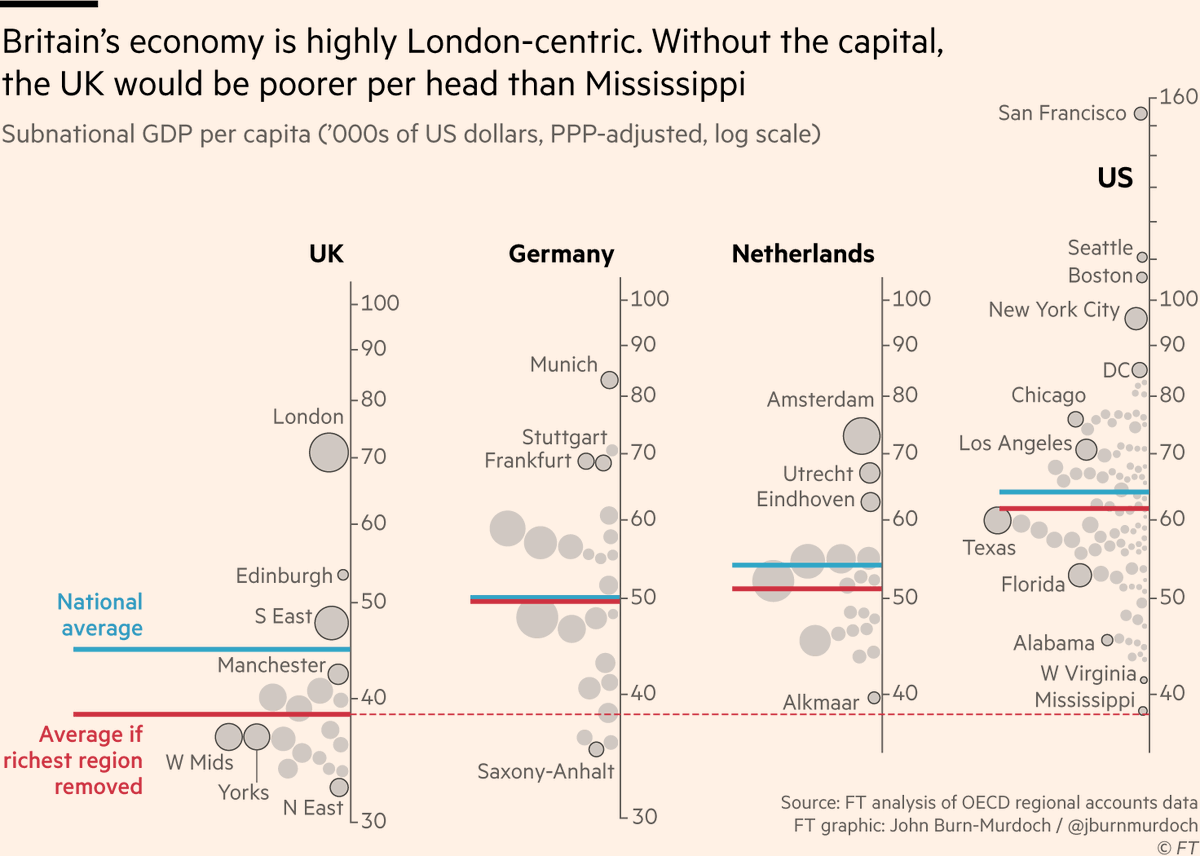
NEW: America is a rich country. Britain is a poor country with one wealthy region.
People love to compare the UK to Mississippi, but it’s far more informative to look at UK subnationally, too.
London ranks fairly well, the rest of the country does not 👉 https://t.co/xrIzwYGaCI
In the current Issue (EP. Vol. 8, 2023, No 1)
What... Should Have Said
‘Preface: Rewriting Landmark Judgments of the European Court of Justice: A New Project for European Papers and a New Way of ‘Doing EU Law’’
by Justin Lindeboom (@JustinLindeboom)
https://t.co/fwd0lWv5QM
Economists rally behind Scott Morton and push back at the French & MEP criticism of her U.S. nationality and past work for tech companies.
39 economists sign up to the letter supporting @ProfFionasm appointment by @vestager. Includes @haucap & @jcremer.
@alemannoEU Imo not a good take @alemannoEU. 1st, "cross-fertilising of US thinking" has been going on for 20 years. 2nd, recent (<6y) experimenting in comp policy came from @EU_Competition, not the US. 3rd, knowing @ProfFionasm's work, idk how it suggests a "major modernising" of EU policy.