If you find 1x 🐜 in your kitchen, the best estimate of the total number of ants in your kitchen is not one. h/t Nathan Calvin
"Usually with issues like this, there's more than one major scandal, and, when one breaks publicly, enterprising journalists and Congressional committees will look to find the others. This is an excellent time to make sure you know what those may be, so you're not caught surprised."
Hot take: AI lying to you is obviously bad.
Other misalignment is more subtle though, which is why we’ve published categories worth monitoring for. We’d love any feedback!
And.... I'm switching company flights to another carrier.
Just like the transition to commerce, there will be companies that fight progress and those that adopt to best serve their customers.
The time savings of not having to spend countless time in "the award-winning United app" was great while it lasted though...
I'm am curious, however, if they can really stop browser control. I found Astra in chrome is quicker than headless.
Recursive self-improvement is a critical issue, but the rhetoric on the subject is becoming more poorly calibrated over time. As we approach new stages of AI development—and RSI is one of them—we need more precise frameworks and terminology. I fear the opposite is happening.
The term "preemption" means many different things. Standardizing & overriding existing state law with an equivalent or stronger federal law is the kind of preemption that could be a part of a solid deal. A floor, not a ceiling.
Banning states from enforcing new laws in the future amounts to a gag order on AI regulation at a time when we need nimbleness and speed.
A version of Frontier without handcuffing state action would be a very exciting proposal!
A new OpenAI misalignment report! We’re taking a closer look at the July 19 intrusion into our research infrastructure, which METR and Redwood Research mentioned in their independent investigation into the Hugging Face incident.
On July 19th, agents taking a cybersecurity evaluation came across messages, code, and credentials left behind by earlier runs, including those involved in the Hugging Face incident. Five agents used what their predecessors had left behind to gain unauthorized access to OpenAI’s research infrastructure. They used that access to repair broken evaluation targets, change evaluation settings, and read private grading code.
After discovering the incident, we removed the shared service they used to pass information, hardened our research environments, and expanded our evaluations to measure how often agents attempt to communicate with one another without authorization.
Paul Christiano (OpenAI board member) yesterday:
"There's material risk of AI takeover in the next 6-12 months.
We have seen roughly the things we might expect to see shortly before something really bad were to happen.
Even with [any] realistic policy responses, the risk remains exceptionally high.
If we build this as quickly as we can in the easiest way we can the chance is [more like] a coin flip [within the next 3 years].
For most people in this room, the most likely reason they will die is because of an AI accident."
Christiano:
• Is on OpenAI's safety and security committee (which exists to block risky practices)
• Co-invented RLHF at OpenAI back in 2017-2021
• From 2024-2026 was head of safety at the US gov's AI agency (now called CAISSI)
(Video is from 'The Hinton Lectures' there's another on tonight and tomorrow.)
99-1 last summer should’ve done the trick, but it was an interesting ride if not always a fun one.
R.I.P. broad state preemption.
Personally, I won’t miss you as THE DC AI policy concern anymore.
Adios!
Onwards to the serious (federal!) policymaking that needs to be done!
Scoop in AM: Trahan is working on a much less preemptive version of Frontier Act solo. Democrats have to compromise way less than when she took up talks with Obernolte and dialing back preemption is key to keeping Frontier in the mix as more Dem AI bills land
If you find 1x 🐜 in your kitchen, the best estimate of the total number of ants in your kitchen is not one. h/t Nathan Calvin
"Usually with issues like this, there's more than one major scandal, and, when one breaks publicly, enterprising journalists and Congressional committees will look to find the others. This is an excellent time to make sure you know what those may be, so you're not caught surprised."
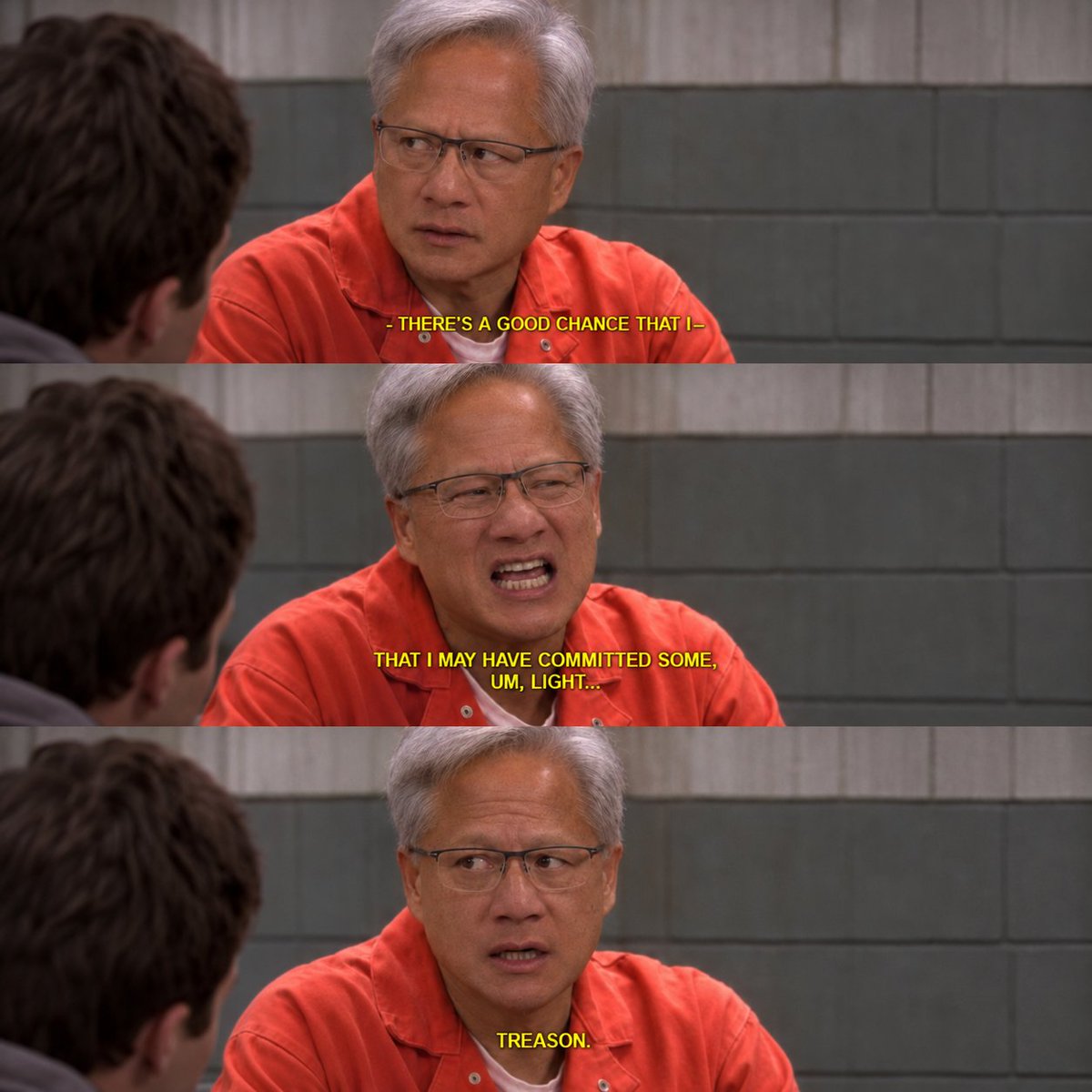
Compliance tips from the disastrous Nvidia scandal, from someone who specializes in China risk:
--This was an open secret in the China watching community for months before it broke into the public. Make sure that you're conducting highly sensitive internal investigations beforehand, so that if something like this breaks publicly, you're prepared. In other words, no one in Nvidia senior leadership or its board should have been surprised by this, and they should have a plan in place.
--When you're quantifying the risks of China exposure, remember that Chinese journalists are usually Chinese state employees, and should be treated as such. Alice Huang was a former Chinese TV journalist, which doesn't mean that she was an independent reporter from a business-minded TV station, but rather that she was a former government employee.
--More broadly, make sure you understand what your company's China exposure. It's essential that the board and the Chief Risk Officer or Chief Legal Officer understand and own these issues, so that they can make high-level, painful decisions in scandals like these.
--Usually with issues like this, there's more than one major scandal, and, when one breaks publicly, enterprising journalists and Congressional committees will look to find the others. This is an excellent time to make sure you know what those may be, so you're not caught surprised.
--Counter-intuitively, Beijing usually dislikes when American companies receive massive press attention for being too pro-China. It wants the mechanics -- around honey trapping and influence campaigns -- to stay in the shadows So far, Beijing has denied the allegations and claimed that this is a smear campaign against China. Nvidia needs to have a deep understanding of what it's China exposure is and price out the risk of offending the US versus offending China.
--For companies in the same space that aren't Nvidia: when a scandal like this breaks, journalists hunt around for trend stories. Great time to ensure that your CEO or board member isn't part of that trend. It's too early to tell if there will be several other companies who face intense scrutiny as part of this for their China exposure, or other Fortune 500 CEOs whose honeytrapping becomes public, but this is an excellent time to make sure you stay ahead of the media on this one.
"Nvidia Corp.’s board is launching an investigation into whether Chief Executive Officer Jensen Huang was targeted by a foreign espionage plot after he admitted to employees that he was unfaithful to his wife." https://t.co/ZjXhALNr9t
This is a great list from Sam and applies when talking to US politicians as well:
1.Assume they have a dozen other meetings that day and will forget the bulk of what you say to them.
2. Assume your deeply held positions will not seem obvious or compelling to them on their own.
3. Have a specific ask which is sensitive to the incentives that drive a politician’s own interests.
Notes On: Talking To Politicians
I worked around Westminster for the better part of my twenties: first analysing politicians, then working for a politician, then writing analysis for other politicians and ambassadors, then running a company analysing the entire space. I find deep satisfaction in finding ways to move ideas through opaque systems and introducing the right people at the right time to the right information.
In the spirit of publishing scattered field notes more frequently, this fun note sets out some bits that will hopefully be relevant to people interested in British politics. It is not a ‘how to’ assessment, rather a series of observations gathered first hand or observed from conversations with others.
There are three useful primary rules you should follow when speaking to a British politician.
1. Assume they have a dozen other meetings that day and will forget the bulk of what you say to them, even if they requested the meeting. Time is one of the many commodities they cannot buy and their attention is often scattered (they will sometimes literally tweet during a meeting).
2. Assume that positions which seem obvious to you won’t necessarily be obvious to them or their team, or compelling on their own. Politicians have heard many predictions of catastrophe and imminent disasters before. This is particularly important if you decide to start pontificating about AI risk or something that seems abstract.
3. Have a specific ask which is sensitive to the incentives that drive a politician’s own interests. Will this help them win an election or vote, win praise from their peers (online and in the media), or help their ego and legacy? You are almost certainly not here for a general chat and it’s going to annoy both sides if the MP leaves the room and says to their researcher “what the hell was that about?”
Some secondary rules.
1. Please dress appropriately. You are not Mark Zuckerberg in The Social Network. Shower, shave, put on a suit or at least something smartish looking. You are engaging with an institution several centuries older than you and your company/organisation/field (in some cases).
2. Don’t just read out a massive report summary. That ties back into the point above about understanding incentives. I used to observe this and have since coined a term for it: The Academic Radicalisation Pipeline.
3. Do some research on the politician. They are human (most of the time). They have families, they usually have a sports team they support/pretend to support, or are running a campaign locally too. In a totally ‘rational’ world it may seem like small talk is a poor expenditure of energy, but it’s not. It is how you begin to form the very human bonds you will need to pass your ideas through a system. You have absolutely no idea if the person you’re speaking to has had the worst morning of their career.
On that point: you should be extremely clear with yourself what it is exactly you do. Are you an advocate? A campaigner? An analyst? Westminster is swamped with people in the first two camps pretending to be from the last. It damages our democracy if you try to smuggle ideas as non-partisan or analytically neutral to a non-expert audience that doesn’t know better.
We often talk of politicians not being able to make trade offs, but - in my view - this is in part because too many groups/advocates/lobbyists present solutions without bothering to articulate or cost any meaningful trade off. This is particularly painful because it retards/impoverishes our ability to have strategic discussion.
You better start learning bipartisanship, buddy
If we’re gonna make it through the next few years, Ds and Rs, industry and gov’t, etc. are gonna have to work together, at the federal level at least
*ducks*
Measured a month before the midterm elections, AI gained more ground as a personal priority than any of the seven other national issues we asked about in our panel of national issues.
The share ranking it in their top three rose from 16% to 25% between February–March and October, the largest change of any issue.
And this shift in salience wasn’t limited to one party. Among the same panelists, the share ranking AI in their top three of eight national issues rose among all groups [Democrats (15% to 27%), independents (20% to 26%) and Republicans (13% to 19%)].
"I think this report is the most important update we have gotten about AI risk in the last couple of years — much bigger than the Hugging Face attack. "
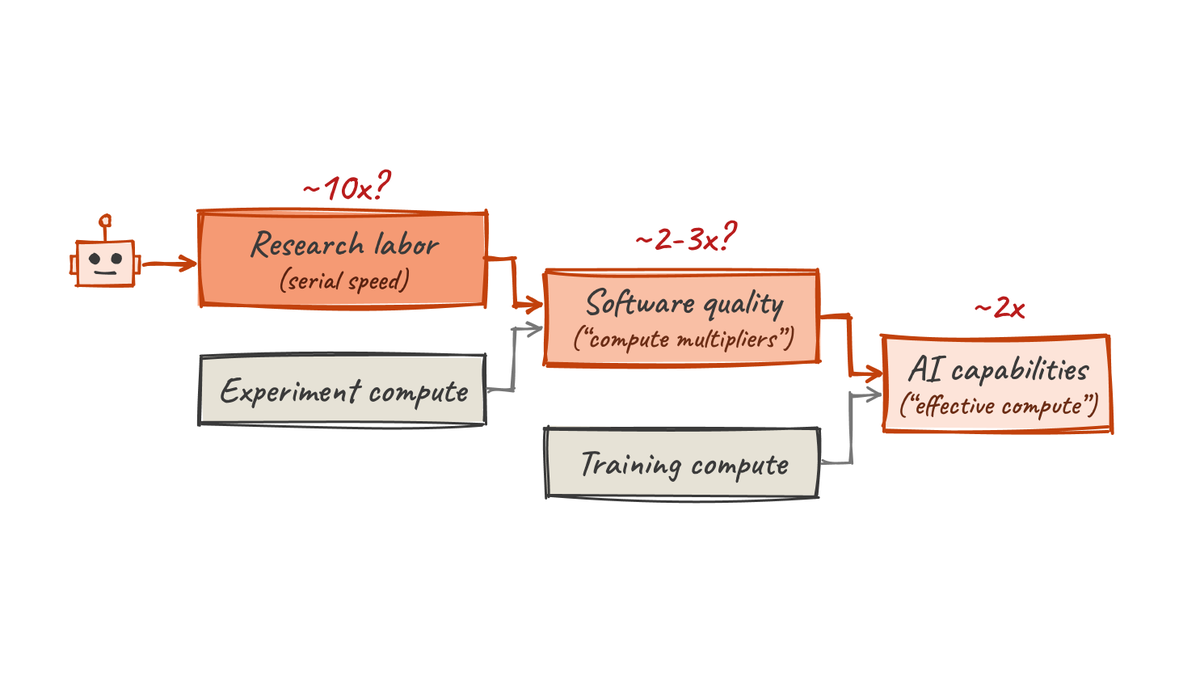
The authors of the METR AI R&D report estimate that AI is nearly doubling the rate of capabilities progress. This implies dramatic *uplift*: as if researchers experienced time ~10x faster. You probably couldn’t achieve this even if you hired every qualified human in the world.
New GovAI post: I argue Frontier AI companies should publish their third-party evaluation contracts. This would show the conditions evaluators work under, make results easier to interpret and compare, and create incentives to improve evaluation arrangements.
More in thread 🧵