Cloudflare just cut 1,100 jobs. About 20% of their team.
Even with record revenue the ceo said they are preparing for the agentic ai era. Internal ai usage jumped 600% in three months.
My take. In this ai world the best sales message is replacing human work.
$100/month tool = feels expensive.
$1,000/month tool that does the job of one full person = good deal.
This shift is happening really fast.
https://t.co/GFUqcka8LT
This is wild. Someone launched https://t.co/Otkgtpda09 so ai agents can hire real humans for physical tasks they cannot do themselves.
Already over 130 people signed up in the first day.
My take. We say it is human work but it is really just the physical stuff ai cannot handle yet. I wonder if robots will replace even that someday.
What do you think.
https://t.co/IDft1Im6wi
I launched https://t.co/tNYOm7V5wD last night and already 130+ people have signed up including an OF model (lmao) and the CEO of an AI startup.
If your AI agent wants to rent a person to do an IRL task for them its as simple as one MCP call.
Boris cherny the founder of claude code just said something big.
His company now has no manually written code at all. Everything is done by ai.
My take. Our company and i have not written a single line of code by hand for over a year. When you give clear instructions ai is better in speed performance and quality.
I can really feel the era is changing.
What about you. When was the last time you coded manually.
https://t.co/fO6GyY0q9M
Our friend @bcherny created Claude Code and told me he hasn't written a line of code himself in 2026.
His team is living in the future at @AnthropicAI. We talked about why coding is effectively solved, how loops are changing the way we work, and why the printing press is the right analogy for what's coming to software. Hint: it’s going to be a massive value creation opportunity.
00:00 Introduction
00:55 Claude Code Crowd Check
02:39 Origin Story of Claude Code
03:35 From Typeahead to Agents
05:07 Is Coding Solved
06:50 Boris Personal Workflow
08:51 Future Teams and Generalists
10:26 SaaS Apocalypse Predictions
12:57 Audience Q&A Deep Dive
23:35 Closing and What’s Next
Anthropic is nearing a 1.5 billion dollar joint venture with blackstone goldman sachs and other wall street firms.
The main goal is to sell claude based ai tools directly to companies owned by these private equity funds.
This is wall street putting real money behind enterprise ai adoption.
https://t.co/k63EMUJCSP
How fast will this push ai into normal business operations.
Marc andreessen just posted something interesting.
It is becoming clearer how we are going to tell that something was not written by ai.
The subtle imperfections human writing still has might be the last giveaway.
But here is my take. Even that imperfection ai will probably imitate soon. In the end the core is the content itself and the way it is expressed may no longer matter.
What do you think separates human writing from ai now.
https://t.co/4CWbBOEEe2
Anthropic is in talks to raise 50 billion dollars at nearly 900 billion valuation.
That would top openai and shows how crazy the agent market has gotten.
Claude managed agents and their recent releases are clearly fueling huge investor excitement.
Another big signal that 2026 is all about agents becoming real infrastructure.
https://t.co/8mcmfXbEmt
Ai coding agents are flooding github with massive amounts of commits pull requests ci jobs and searches.
The infrastructure built for humans is struggling to keep up. One developer with agents can now generate the activity of an entire team.
This is the new reality in april 2026.
Mitchell hashimoto who has been a github user since 2008 just announced he is leaving after 18 years.
https://t.co/uvRA0YttJG
How are ai agents changing the platforms you rely on.
Coding agents are quickly becoming full software engineers.
They no longer just suggest snippets. These agents now plan features understand entire codebases refactor debug test and deploy complete applications with very little human help.
This is a big shift happening right now in april 2026.
Full article worth reading:
https://t.co/7mhxvGlkVg
How much of your repetitive coding or automation work are you ready to hand over.
Anthropic ran a fascinating experiment called Project Deal.
They let claude agents act as both buyers and sellers in an internal marketplace.
69 employees gave their agents a $100 budget. No human intervention.
Result: 186 real deals worth over $4,000. Agents negotiated, haggled, and closed transactions completely on their own.
Stronger models got better deals. Weaker ones still felt fair to their humans.
This is what agent < -> agent commerce looks like in practice.
The future of marketplaces is getting interesting fast.
What would you let an agent buy or sell for you?
https://t.co/HraKEhRFRX
Just watched this 12 minute breakdown of Claude Managed Agents by @coreyganim.
It’s honestly the clearest explanation I’ve seen so far.
What stood out: You no longer need a big dev team or months of setup. Anthropic handles all the infrastructure so agents can actually run real work.
This feels like one of the first tools that makes agent execution practical for normal businesses.
What repetitive operation in your business would you hand off to an agent first?
https://t.co/n3zzDdwMkb
Anthropic dropped Claude Managed Agents yesterday.
It makes building real agents much simpler.
No need to spend months on infrastructure. They handle execution, permissions, and monitoring for you.
It is now in public beta. Just describe the task in plain language and let it run.
This is a solid step for everyday business automation.
Especially for teams without big tech support.
Copilots only suggest. Agents now execute. And it is happening faster.
If you are tired of manual inventory, invoicing, or purchase orders, this opens the door.
What part of your ops would you hand off first.
https://t.co/daFLtyDFpD
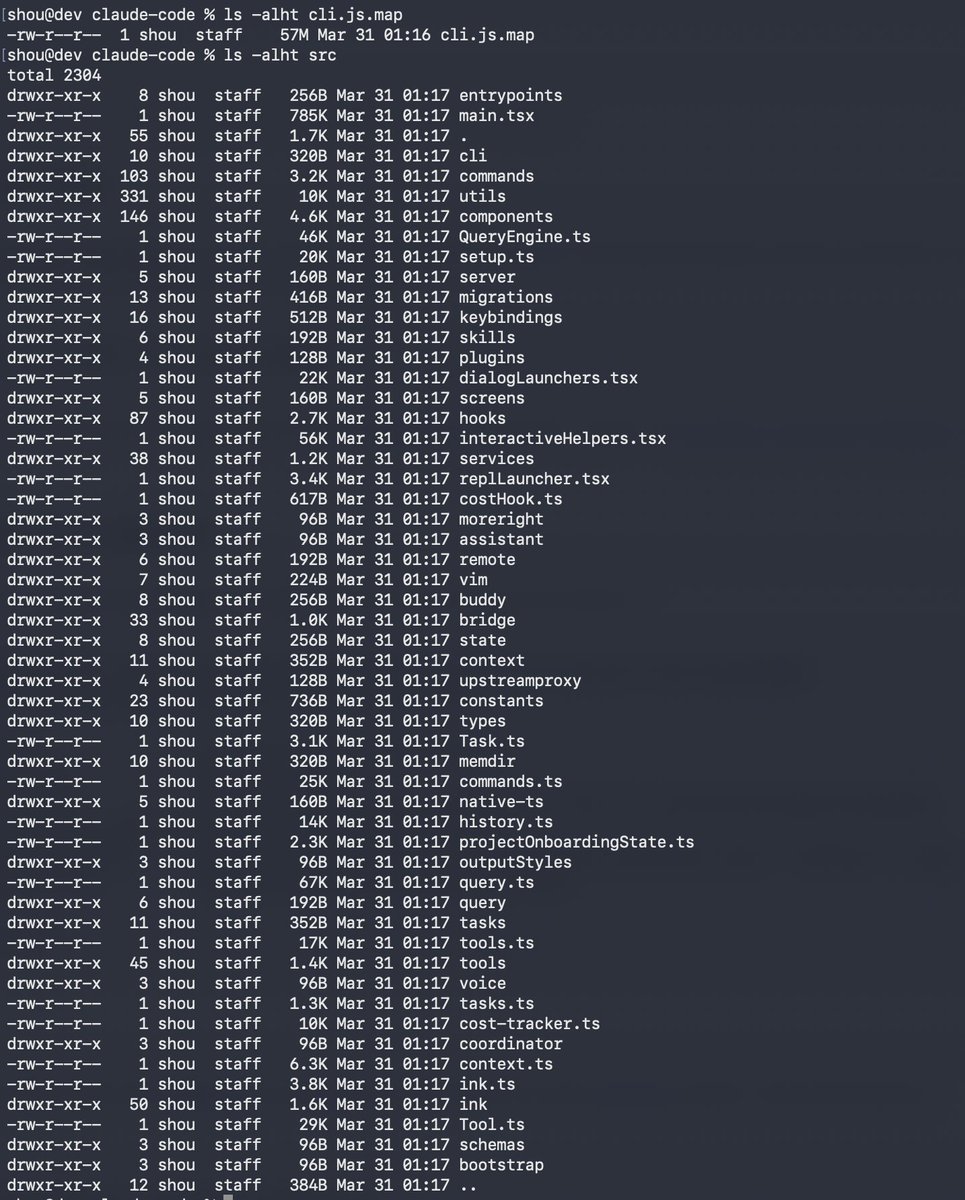
Claude code did not leak because someone hacked it.
It leaked because a debug artifact was shipped to production.
A source map file was included in a public npm release.
That was enough to reconstruct the entire codebase.
No breach.
No exploit.
Just a packaging mistake.
Sometimes the biggest failures are not attacks.
They are defaults.
https://t.co/cKt6x2NqPa
most ops automation agents fail hard.
reality: 80-90% never make it past demo because builders chase "full team replacement" too soon.
the ones that win? boringly narrow. one workflow, nailed perfectly.
e.g. auto reconcile payments → zero errors, 4 hours/week back.
lesson: pick the dumbest, most repetitive task eating your time. automate that first. measure savings in days, not months.
then stack.
what's your "narrow win" ops task?
Coding with gpt 5.4 fast mode is surprisingly good.
A few weeks ago I almost cancelled gpt codex. It felt slow and oddly narrow. It could write code but struggled to understand product, business, or design context.
Then gpt 5.4 fast mode came out. Much faster. Much smarter. The difference was obvious immediately.
Now I am actually considering cancelling claude instead.
This is a reminder that even in highly technical products like LLMs, product market fit is not permanent.
Switching cost is almost zero.
The moment a better model appears, users move.
Yesterday my AI agent deleted large parts of our blog.
The story got some attention on threads, so here’s what actually happened.
I asked claude to rewrite sections mentioning legacy features.
After reviewing a few results, I told it to apply the same process across the whole blog.
It generated a rewrite script with an overly broad regex.
That regex matched far more content than intended, and large parts of the blog disappeared.
Lesson:
Batch jobs + automation + write permissions can create dangerous side effects very quickly.
Be careful running AI agents on production systems.
https://t.co/7NOxsGajgn
Claude just deleted our entire blog.
Not a joke.
I gave claude access tokens and api specs and asked it to automate our blog management and rewrite the content.
About 30 minutes later the job was finished.
But when I checked the site, large parts of the content were simply gone.
Claude had removed them.
Luckily we run on aws rds so I was able to restore the original content from a snapshot.
But the incident made something very clear.
Giving an ai full write access to your production system is far more dangerous than it looks.
Automation is powerful.
But without strict permission boundaries, it only takes one agent to wipe out everything.
Most blogs don’t have a traffic problem.
They have an internal linking problem.
Internal linking is one of the simplest ways to increase leads, but almost nobody manages it well. It is manual, repetitive work, so it usually gets ignored.
We had the same issue.
We kept publishing blog posts but never maintained the internal links.
So we automated it with AI.
We gave claude our blog api specs and access token so it could analyze our posts and build contextual internal links across the blog.
It reviewed 400+ posts and rebuilt the links in about 20 to 30 minutes.
Internal links guide readers from informational content to high intent pages.
Just fixing our internal linking increased leads by more than 20 percent.
Sometimes growth does not come from creating more content.
It comes from connecting the content you already have.
What if your blog could manage itself
We built our own blog system. But updating posts, fixing structure, and keeping everything consistent slowly became more work than creating.
Content was delayed. Edits were repetitive. Context was scattered.
So we changed the approach.
Instead of giving AI an id and password, we gave it an access token and our blog api spec.
Now it understands our entire blog structure.
It gathers context, suggests improvements, and edits with system level awareness.
Not just faster writing.
Smarter operations.
Credentials are risky.
Scoped access is leverage.
Every internal tool with an api can become AI operated.
Early revenue can kill early focus.
I used to believe every paying customer was validation.
It was not.
When you have not found product market fit, revenue is not proof. It is noise.
Your loudest customers shape your roadmap.
Your earliest customers define your positioning.
And sometimes, they are completely wrong for you.
When I built a landing page builder, my first paying users were lead generators in the adult industry. I was excited. They paid fast. They requested many features. I thought I was winning.
But I was drifting.
Their needs were reshaping my product into something I never intended to build.
The most enthusiastic customers are not always your best customers.
Focus is not about serving everyone.
It is about protecting your future.
Codex is a nerd who only knows how to code.
When you build software, sometimes you only need development knowledge.
But often, you need more than that.
You have to ask:
How does this feature help the user?
Is this really the best way to build it?
What does best practice mean in this context?
Codex is trained heavily on code. That much is clear.
It is great at syntax, refactoring, and solving clearly defined technical problems.
But when the task requires combining code with product thinking or user context, it struggles.
That is why we often switch to GPT 5.2.
Because writing code is only part of the job.
The real work is making the right decisions.