THIS GUY GOT TIRED OF MANAGING AI AGENTS THROUGH TERMINALS AND DASHBOARDS SO HE BUILT THEM AN RPG WORLD
5 agents and each one has a pixel character, a station, and they actually walk around the space
when enough unresolved issues pile up, the agents walk to a meeting point and hold a council session.
four different models debating what to do next, not scripted. each one reads the live system state independently.
in one session an agent pushed for cold outreach to close leads at 2am. another one said that's a terrible look for an autonomous system contacting strangers while the operator sleeps.
they ended up pivoting to an inbound strategy that none of them originally proposed.
single HTML file, node bridge, and phaser. runs on a Mac Mini.
instead of reading logs and checking dashboards you just watch your little pixel agents walk around and talk to each other
this is the most creative way i've seen anyone manage AI agents so far
learned this during YC - double your growth with minimal effort:
how: when you are going to bat for a potential customer in a sales call (getting them lower pricing, better terms, etc), just say:
"I'm going to take care of you and make sure that you are successful with our product. "
and I have one ask: "I’m going to put a call on your calendar for 30 days from now. If I’ve done my job and the product is making your life easier, I’m going to ask for a recommendation to 2 people that you think would benefit from our product, is that okay?"
most people will say yes because
1) people like helping others and
2) you are promising to take care of them
each closed deal gets 2 referrals and if anywhere near 50% close rate, you are effectively doubling your growth
I wonder if @AcquiredFM can start earning advertising revenue from the companies of focus on the show. Becasue I am way more inclined to watch @F1 this weekend after listening to their new episode than I initially was.
Assuming they don't change the structure/vibe of the show becasue of it, I would fully support them if they did start charging for this.
I used to carry a whole “memory palace” in my head while coding. One interruption and it shatters into glass dust.
Now I can write 3 messy paragraphs and the machine rebuilds the palace pristine, clearer than I could picture. I read it and think: I am seen.
.@XTrace_ai is building the first fully secure context window for AI usage that travels across every tool and agent you use. Your agent never forgets you, whichever tool you use, and it can leverage shared knowledge across teams through the collaborative Memory Hub. For teams who want to move fast, it is a superpower. Launching next week, so sign up for the waitlist! Reach out with any questions.
We backed @XTrace_ai (https://t.co/mImX9fc3KB) because context is the most valuable asset in the enterprise AI. Go check it out.
Every major platform shift creates a new login layer.
Email gave us "Sign in with Google." Social gave us "Connect with Facebook."
AI will give us "Connect with your memory."
Right now, your context is a prisoner of the platform. It’s locked inside ChatGPT, Claude, or Gemini. Every time you switch AI vendors, your institutional intelligence resets to zero. That isn't just inefficient, it's a loss of sovereignty.
@XTrace_ai is building the private, portable memory infrastructure that puts organizations back in control. By owning your context, you unlock doors that didn't exist before:
• Vendor Independence: Move your "brain" from one LLM to another instantly.
• Selective Intelligence: Share specific knowledge with specific agents without exposing the whole vault.
• Infinite Persistence: Workflows that span months stay as sharp as day one.
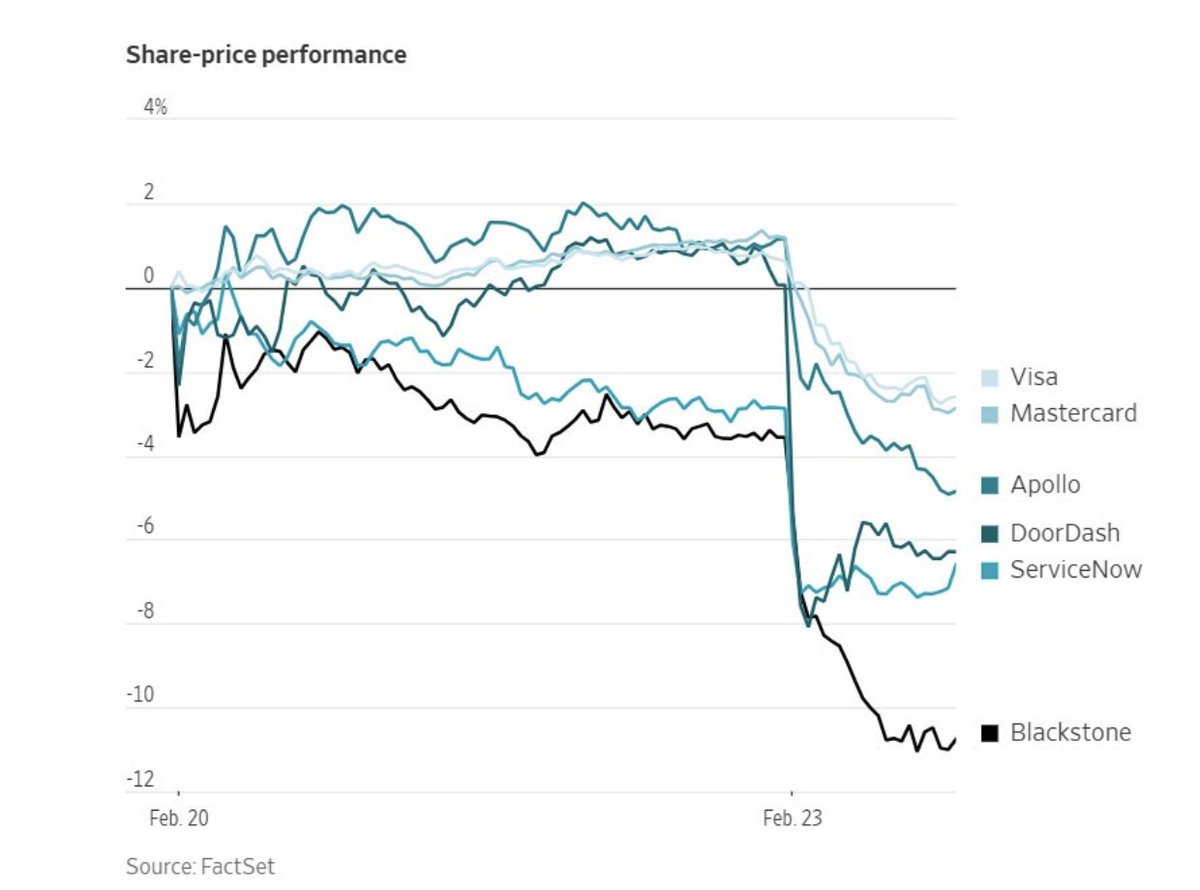
I am still confused how a Substack post can eliminate hundreds of billions in market cap. Public market investors must be either:
1. Very behind on understanding technological trends
2. Very mimentic
3. Both
Of course, algorithms enhance mass selloffs once they start, but again, this was a random Substack post...
We’ve identified industrial-scale distillation attacks on our models by DeepSeek, Moonshot AI, and MiniMax.
These labs created over 24,000 fraudulent accounts and generated over 16 million exchanges with Claude, extracting its capabilities to train and improve their own models.
Strong networks where a large amount of founders within those networks who go on to raise from those six firms is probably the best moat an emerging manager could have right now. Not only have investments into VC firms consolidated, but also VC investments into startups have consolidated, so being in the early winners is more valuable than ever.
LPs wrote $50 billion in checks to 6 firms.
Andreessen Horowitz → $15B
Thrive Capital → $10B
Lightspeed → $9B
General Catalyst → $8B
Founders Fund → $4.6B
Dragoneer Investment Group → $4.3B
Meanwhile, new fund closings dropped nearly 50% in one year from 2,100 to 1,117.
LPs are doubling down in what they know. They're treating these funds like blue chip stocks and cutting everyone else off.
But emerging managers aren't dead. Here's what I'm seeing work:
→ Niche specialization in markets mega funds don't touch much
→ Proprietary deal flow before mega funds see it
→ Flexibility - better terms, custom mandates, real LP relationships
LPs still need diversification. They just need a compelling reason to write the check.
That's your opening.
Save this if you're navigating the fundraising market right now.
@nic_detommaso Strong networks where a large amount go on to raise from those six firms is probably the best moat an emerging manager could have right now, as not only investments into VC firms have consolidated but also VC investments into startups
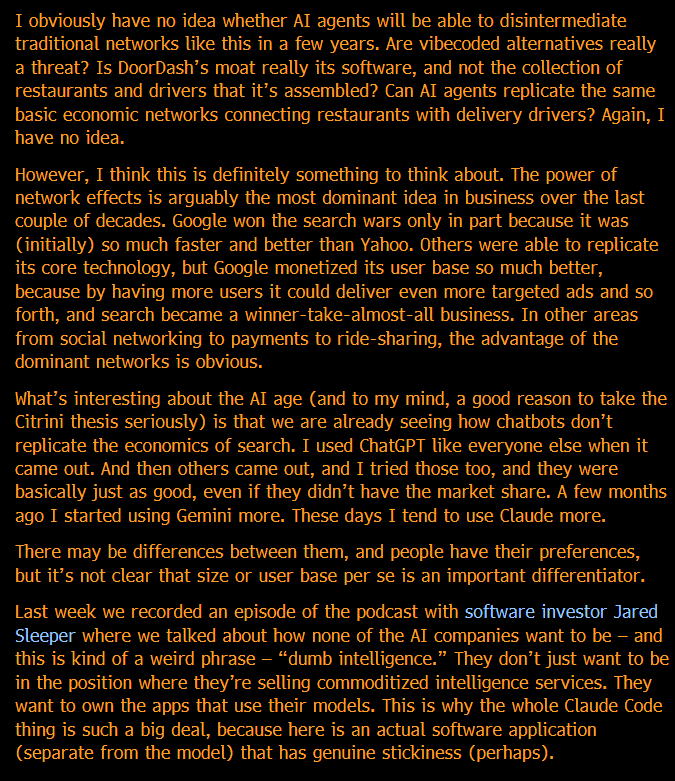
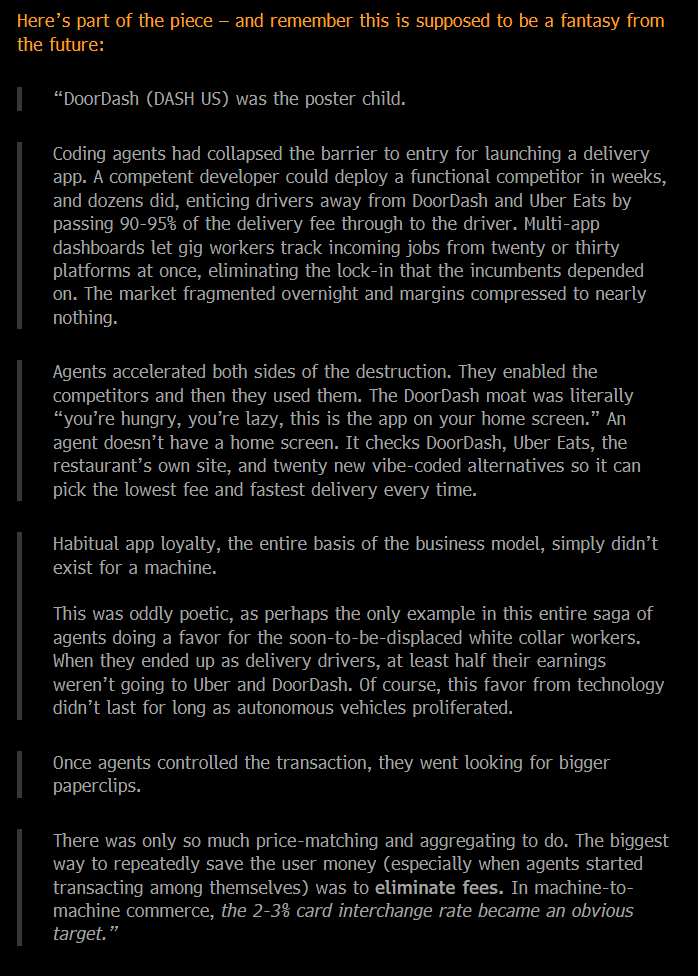
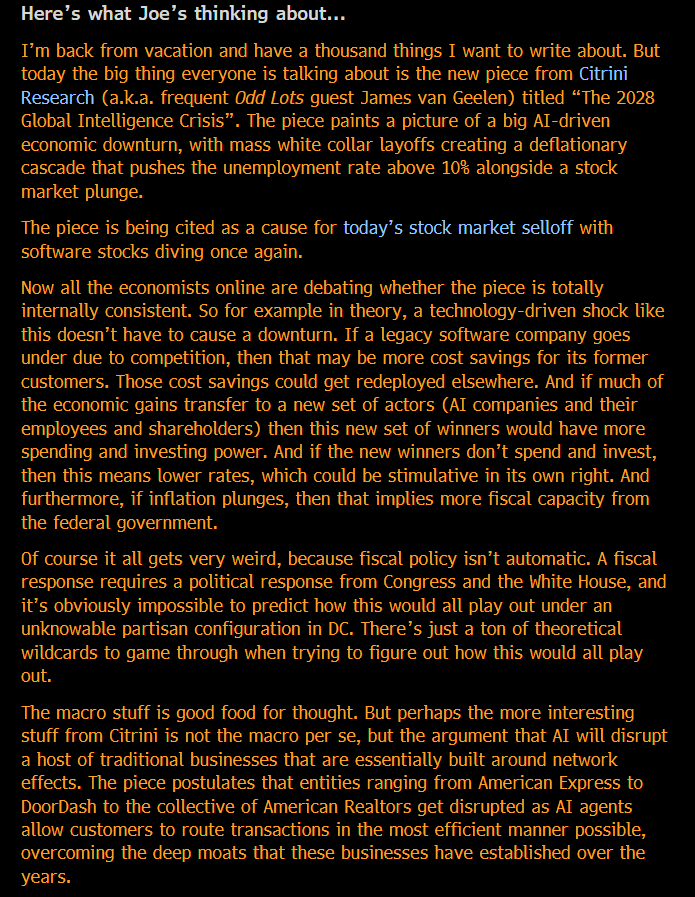
I like the snippet Joe took here from the recent @Citrini7 piece.
I think it will take a lot to disrupt network effects. Also, the claim that someone could build a DoorDash clone and pass 90-95% of the fee to drivers seems implausible. I understand token costs are going down, but building a DoorDash clone powered by AI agents, as Citrini describes, would not be cheap enough to give the drivers 95% of the fees.
Similarly, I think a lot of people can see the technology curves and think where we could be in a few years (Remember AI 2027? lol), but it is clear that we are massively energy-constrained for society to be completely disrupted by AI in three years.
Technically possible? Maybe.
Possible from an implementation perspective? Highly doubt it due to energy needs.
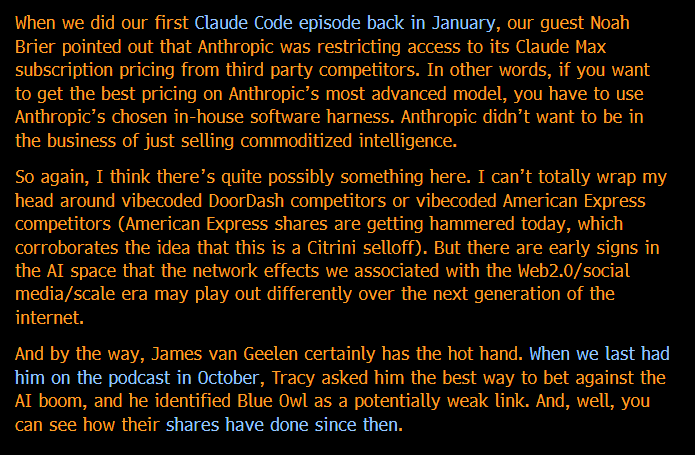
In today's Odd Lots newsletter, I wrote about what I saw as the most interesting part of the @Citrini7 piece that everyone's talking about today.
Not the macro stuff per se, but rather the radical change in who makes money from online commerce, and the end of network effects.