Unification Church Member Defends Hak Ja Han Moon Amid Public Scrutiny.
Josef Buergi, a second-generation member of the Unification Church, has spoken out in support of Dr. Hak Ja Han Moon, known as the Mother of Peace.
He argues that media coverage has created confusion about her work and encourages people to learn directly from her life and writings rather than relying solely on news reports.
The Unification Church has long been a subject of both strong support and controversy in South Korea and internationally.
Discussions surrounding its leadership often intersect with broader debates about religious freedom, the role of faith-based organizations in public life, and how society evaluates spiritual movements.
Understanding different perspectives from within the community itself remains important for a balanced view.
Religious groups continue to play a significant role in shaping personal values and social activities for many citizens.
How should society approach discussions about religious leaders and movements to ensure both freedom of belief and informed public understanding?
"Don't Repeat Britain's Mistake" — UK Parliamentarian Writes Letter Opposing Dissolution Request Against Unification Church
Something very similar once happened in Britain.
The UK government's attempt to strip the Unification Church of its legal status "was based on false and misleading testimony submitted by organized opponents of the church."
After years of litigation, the government was forced to drop its case and pay the equivalent of £4.75 million in today's value. (approximately 860 million yen)
The Attorney General at the time also stated that there had been "no case to answer whatsoever."
【Translated from the Sekai Nippo ��
Baroness Verma (Conservative Party), a member of the UK House of Lords, expressed "deep concern" on October 6, 2023 over the Japanese government's consideration of filing a dissolution order request against the Family Federation for World Peace and Unification (the Unification Church).
Verma cited the fact that the British government itself had attempted to strip the organization of its legal status approximately 40 years ago, only to face substantial legal liability as a result, and called on the Japanese government not to repeat the same mistake, noting that "the two cases appear to share troubling similarities."
Regarding the UK's own attempt to revoke the Unification Church's legal status, Verma stated that the move "was based on a large volume of false and misleading testimony submitted by organized opponents of the church," and pointed out that "after years of litigation, the British government was forced to drop its case and pay the equivalent of £4.75 million in today's value" (approximately 860 million yen).
She also noted that the Attorney General at the time acknowledged there had been "no case to answer whatsoever."
After reviewing Japanese law, including the Religious Corporations Act, Verma argued that "the leaders of the Family Federation have not been convicted of any criminal offense, and no justification can be found for such action" as a dissolution request.
She characterized the request as a "serious infringement" of the freedom of religion guaranteed under Article 20 of the Japanese Constitution, and warned that it "would significantly undermine Japan's standing in the international community."
Source: https://t.co/MV4o54ERVF
"Don't Repeat Britain's Mistake" — UK Parliamentarian Writes Letter Opposing Dissolution Request Against Unification Church
Something very similar once happened in Britain.
The UK government's attempt to strip the Unification Church of its legal status "was based on false and misleading testimony submitted by organized opponents of the church."
After years of litigation, the government was forced to drop its case and pay the equivalent of £4.75 million in today's value. (approximately 860 million yen)
The Attorney General at the time also stated that there had been "no case to answer whatsoever."
【Translated from the Sekai Nippo 】
Baroness Verma (Conservative Party), a member of the UK House of Lords, expressed "deep concern" on October 6, 2023 over the Japanese government's consideration of filing a dissolution order request against the Family Federation for World Peace and Unification (the Unification Church).
Verma cited the fact that the British government itself had attempted to strip the organization of its legal status approximately 40 years ago, only to face substantial legal liability as a result, and called on the Japanese government not to repeat the same mistake, noting that "the two cases appear to share troubling similarities."
Regarding the UK's own attempt to revoke the Unification Church's legal status, Verma stated that the move "was based on a large volume of false and misleading testimony submitted by organized opponents of the church," and pointed out that "after years of litigation, the British government was forced to drop its case and pay the equivalent of £4.75 million in today's value" (approximately 860 million yen).
She also noted that the Attorney General at the time acknowledged there had been "no case to answer whatsoever."
After reviewing Japanese law, including the Religious Corporations Act, Verma argued that "the leaders of the Family Federation have not been convicted of any criminal offense, and no justification can be found for such action" as a dissolution request.
She characterized the request as a "serious infringement" of the freedom of religion guaranteed under Article 20 of the Japanese Constitution, and warned that it "would significantly undermine Japan's standing in the international community."
Source: https://t.co/MV4o54ERVF
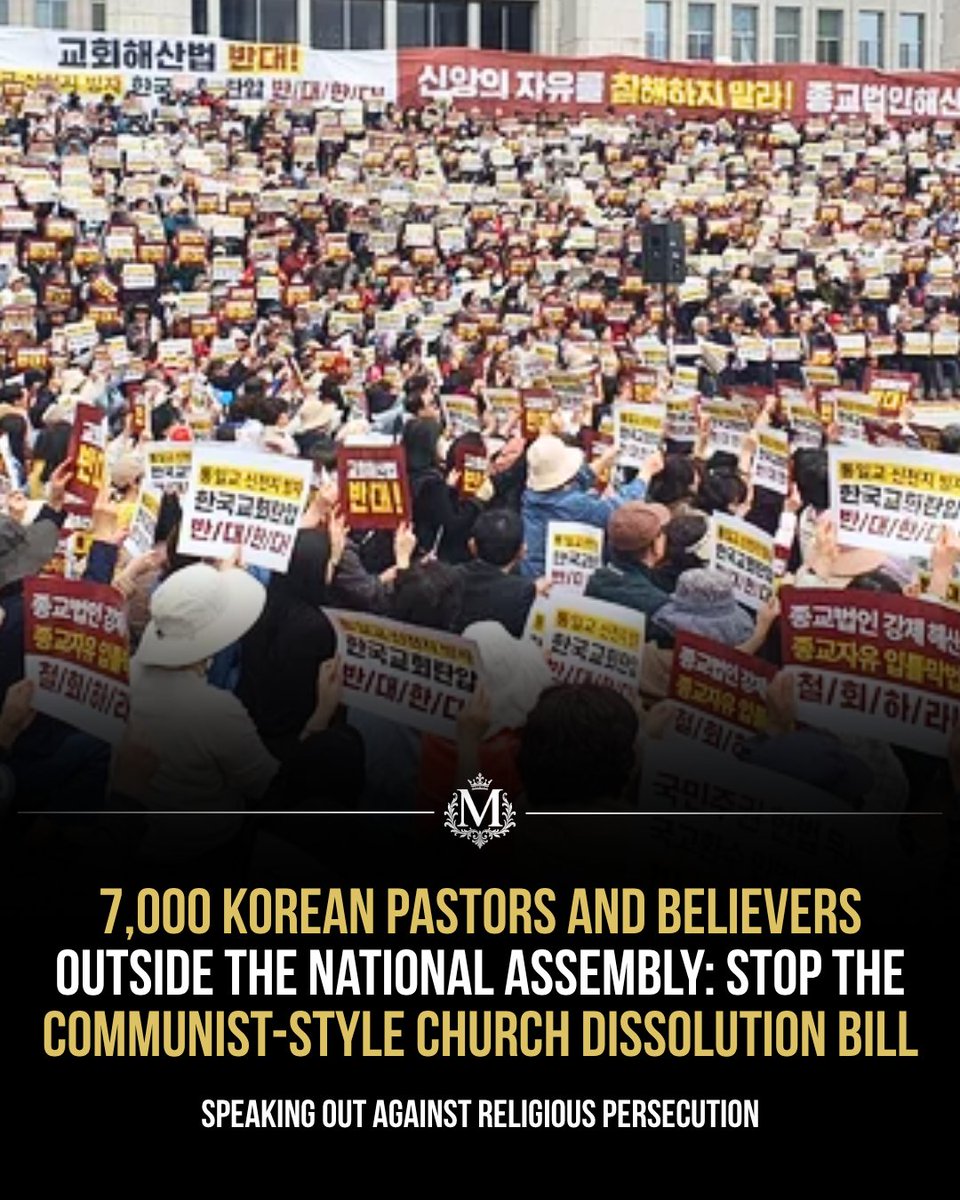
"7,000+ Rally Against Religious Corporation Dissolution Bill as Concerns Over 'Religious Freedom Violations' Spread"
7,000 Protestant clergy and believers gathered outside the National Assembly on April 1.
They came to demand withdrawal of a civil law amendment that would allow the government to dissolve religious organizations and seize their assets.
The bill was framed as targeting groups like the Unification Church and Shincheonji.
Mainstream Protestant leaders rejected that framing.
The rally's closing statement made the case directly:
"It is packaged as a Unification Church and Shincheonji prevention law. In practice, it could apply to all religious organizations."
The specific provisions drawing alarm:
・ Warrantless investigations and oversight of religious bodies
・ Mandatory government seizure of assets upon dissolution
・ Vague, undefined criteria for determining "political interference"
Pastor Kim Un-seong of Youngnak Church called it "a dangerous starting point that could eventually cover all of society."
Pastor Lee Tae-hee pointed to China: "China started with institutional management and developed into a structure that restricts even doctrine and sermons. This law could become the starting line for that kind of control."
Pastor Son Hyun-bo framed it as a constitutional violation: "The principle of separation of church and state means the state must not interfere in religion. This bill reverses that."
PPP lawmaker Cho Bae-suk attended the rally and stated the bill "poses a significant risk of infringing on religious freedom and property rights."
Organizers are calling on Catholic and Buddhist communities to join the opposition.
Protests will continue until the bill is withdrawn.
The bill targets religious groups the government dislikes.
Its critics say it will not stop there.
Source: https://t.co/z42bzgUkZn
"7,000+ Rally Against Religious Corporation Dissolution Bill as Concerns Over 'Religious Freedom Violations' Spread"
7,000 Protestant clergy and believers gathered outside the National Assembly on April 1.
They came to demand withdrawal of a civil law amendment that would allow the government to dissolve religious organizations and seize their assets.
The bill was framed as targeting groups like the Unification Church and Shincheonji.
Mainstream Protestant leaders rejected that framing.
The rally's closing statement made the case directly:
"It is packaged as a Unification Church and Shincheonji prevention law. In practice, it could apply to all religious organizations."
The specific provisions drawing alarm:
・ Warrantless investigations and oversight of religious bodies
・ Mandatory government seizure of assets upon dissolution
・ Vague, undefined criteria for determining "political interference"
Pastor Kim Un-seong of Youngnak Church called it "a dangerous starting point that could eventually cover all of society."
Pastor Lee Tae-hee pointed to China: "China started with institutional management and developed into a structure that restricts even doctrine and sermons. This law could become the starting line for that kind of control."
Pastor Son Hyun-bo framed it as a constitutional violation: "The principle of separation of church and state means the state must not interfere in religion. This bill reverses that."
PPP lawmaker Cho Bae-suk attended the rally and stated the bill "poses a significant risk of infringing on religious freedom and property rights."
Organizers are calling on Catholic and Buddhist communities to join the opposition.
Protests will continue until the bill is withdrawn.
The bill targets religious groups the government dislikes.
Its critics say it will not stop there.
Source: https://t.co/z42bzgUkZn
South Korea passed 4 laws in 22 days.
Every single one benefits the left-wing party that passed them.
Here's the full list:
1. Judges can now be imprisoned for their verdicts.
The "Law Distortion" Bill criminalizes rulings the government disagrees with. Up to 10 years in prison. The judiciary formally opposed it. Passed February 26.
2. The Supreme Court was nearly doubled.
14 justices expanded to 26. All new seats filled by presidential appointment. By end of Lee's term, 22 of 26 justices will be his picks. Passed February 28.
3. Any court ruling can now be appealed — forever.
A 4th trial layer was added, allowing all Supreme Court decisions to be challenged at the Constitutional Court. The Supreme Court warned it would create "endless retrials." Within one week: 12+ constitutional appeals filed per day. Passed February 27.
4. Prosecutors stripped of all investigative power.
78 years of prosecutorial authority dissolved in a 161-1 vote. Investigations now fall under the executive branch. The president they would investigate has 5 suspended criminal trials. Passed March 20.
More laws that should concern you...
5. Media can be fined for "false information."Punitive damages up to 5x losses.
Fines up to $684,000 for repeat violations. UNESCO, the International Press Institute, and the U.S. State Department all condemned it. South Korea's press freedom ranking has fallen 4 years straight. Signed December 24, 2025.
6. The president's criminal trials were suspended by law.
A bill formalizing immunity for sitting presidents is advancing. President Lee entered office with 5 pending criminal cases. All were paused at inauguration. This bill makes it permanent. Status: advancing.
7. The government can now dissolve churches and seize their property.
Warrantless inspections. Full asset confiscation to the national treasury. Targets named: the Unification Church and Shincheonji. Language covers all religious organizations. A coalition of Korean pastors called it a law "that only exists in communist nations." Introduced January 9, 2026.
8. A sweeping anti-discrimination law was reintroduced.
Bans discrimination based on sexual orientation, religion, and more. Christian leaders warn it criminalizes religious teaching. They argue it works in tandem with the church dissolution bill: one silences the voice, the other shuts the institution. Reintroduced January 2026.
The pattern is not subtle.
Pack the courts. Silence the press. Immunize the president. Dissolve the opposition. Investigate the investigators.
Every democracy that has gone this route has a name for what comes next.
https://t.co/3e8vZWNvns
https://t.co/nkOzqKWz3x
https://t.co/yk1dmgbsoI
South Korea passed 4 laws in 22 days.
Every single one benefits the left-wing party that passed them.
Here's the full list:
1. Judges can now be imprisoned for their verdicts.
The "Law Distortion" Bill criminalizes rulings the government disagrees with. Up to 10 years in prison. The judiciary formally opposed it. Passed February 26.
2. The Supreme Court was nearly doubled.
14 justices expanded to 26. All new seats filled by presidential appointment. By end of Lee's term, 22 of 26 justices will be his picks. Passed February 28.
3. Any court ruling can now be appealed — forever.
A 4th trial layer was added, allowing all Supreme Court decisions to be challenged at the Constitutional Court. The Supreme Court warned it would create "endless retrials." Within one week: 12+ constitutional appeals filed per day. Passed February 27.
4. Prosecutors stripped of all investigative power.
78 years of prosecutorial authority dissolved in a 161-1 vote. Investigations now fall under the executive branch. The president they would investigate has 5 suspended criminal trials. Passed March 20.
More laws that should concern you...
5. Media can be fined for "false information."Punitive damages up to 5x losses.
Fines up to $684,000 for repeat violations. UNESCO, the International Press Institute, and the U.S. State Department all condemned it. South Korea's press freedom ranking has fallen 4 years straight. Signed December 24, 2025.
6. The president's criminal trials were suspended by law.
A bill formalizing immunity for sitting presidents is advancing. President Lee entered office with 5 pending criminal cases. All were paused at inauguration. This bill makes it permanent. Status: advancing.
7. The government can now dissolve churches and seize their property.
Warrantless inspections. Full asset confiscation to the national treasury. Targets named: the Unification Church and Shincheonji. Language covers all religious organizations. A coalition of Korean pastors called it a law "that only exists in communist nations." Introduced January 9, 2026.
8. A sweeping anti-discrimination law was reintroduced.
Bans discrimination based on sexual orientation, religion, and more. Christian leaders warn it criminalizes religious teaching. They argue it works in tandem with the church dissolution bill: one silences the voice, the other shuts the institution. Reintroduced January 2026.
The pattern is not subtle.
Pack the courts. Silence the press. Immunize the president. Dissolve the opposition. Investigate the investigators.
Every democracy that has gone this route has a name for what comes next.
https://t.co/3e8vZWNvns
https://t.co/nkOzqKWz3x
https://t.co/yk1dmgbsoI
It is time all religious organisations stood up together! Remember communism is taking over and many of you are looking the other side! Stand together and be able to win, God is on your side!
South Korea is drafting communist church law. The left-wing party introduced Bill No. 2215932 on January 9, 2026.
It gives the government power to dissolve any religious organization. Conduct warrantless inspections of churches. Confiscate all property directly to the national treasury.
On March 19, senior Christian leaders from across South Korea held an emergency press conference at the National Assembly.
Their statement: "This law exists only in communist nations."
They were not being dramatic. They were citing history.
Every provision of this bill has a direct precedent:
Soviet Union, 1918: Lenin's decree authorized warrantless church inspections using language nearly identical to Article 38-2 of this bill. By 1939, only 500 of 54,000 churches remained open.
China, 2018: Warrantless multi-agency inspections.
Beijing's Zion Church, 10,000 members, was banned and its property seized for refusing government surveillance cameras.
Cuba, 2015: 2,000 churches declared illegal in a single stroke. Properties expropriated. Reason given: "counterrevolutionary propaganda."
North Korea, 1946: Pyongyang, once called "the Jerusalem of the East," had over 2,000 churches. The state dissolved them all.
The five-step pattern is identical across every communist regime that has done this:
1. Require registration
2. Authorize warrantless inspections
3. Define normal religious activity as illegal
4. Dissolve the organization
5. Transfer all assets to the state
Bill No. 2215932 contains every single one of these elements.
South Korea is drafting communist church law. The left-wing party introduced Bill No. 2215932 on January 9, 2026.
It gives the government power to dissolve any religious organization. Conduct warrantless inspections of churches. Confiscate all property directly to the national treasury.
On March 19, senior Christian leaders from across South Korea held an emergency press conference at the National Assembly.
Their statement: "This law exists only in communist nations."
They were not being dramatic. They were citing history.
Every provision of this bill has a direct precedent:
Soviet Union, 1918: Lenin's decree authorized warrantless church inspections using language nearly identical to Article 38-2 of this bill. By 1939, only 500 of 54,000 churches remained open.
China, 2018: Warrantless multi-agency inspections.
Beijing's Zion Church, 10,000 members, was banned and its property seized for refusing government surveillance cameras.
Cuba, 2015: 2,000 churches declared illegal in a single stroke. Properties expropriated. Reason given: "counterrevolutionary propaganda."
North Korea, 1946: Pyongyang, once called "the Jerusalem of the East," had over 2,000 churches. The state dissolved them all.
The five-step pattern is identical across every communist regime that has done this:
1. Require registration
2. Authorize warrantless inspections
3. Define normal religious activity as illegal
4. Dissolve the organization
5. Transfer all assets to the state
Bill No. 2215932 contains every single one of these elements.
OPEN LETTER TO JAPAN:
A Personal Plea to Japan’s Prime Minister
By Demian Dunkley
President, Family Federation for World Peace and Unification USA
Prime Minister Sanae Takaichi,
I write to you as a faith leader who is deeply connected to Japan. The recent decision to uphold the dissolution order of the Family Federation has been so painful to our global faith family.
For many, this may appear to be a policy matter. For us, it is deeply personal. It affects real families, real communities, and people who have spent their lives trying to live for the sake of others.
For decades, Japanese members of our movement have quietly served around the world—with humility, discipline, and deep love. They have contributed to peacebuilding, humanitarian work, and the strengthening of families across cultures.
Prime Minister, these Japanese men and women have helped Japan shine globally.
I have worked alongside them. I have seen their sincerity. These are not people who weaken society—they are people who strive to uplift it.
Today, our church is asking for help.
Not for privilege, but for fairness. Not for exemption, but for understanding.
At stake is something fundamental: the freedom to believe and to practice one’s faith without fear of being dismantled.
In recent years, religious organizations around the world have increasingly faced dissolution. This moment extends beyond our own community and raises broader questions about how religious freedom is protected.
For many of our members, the impact has already been deeply felt. Decades of personal sacrifice and care were suddenly swept away when hundreds of churches and offices were closed in a single day.
Japan has long been respected as a nation that upholds dignity, stability, and human rights. The world is watching.
The decisions made now will shape not only Japan’s future, but its moral leadership on the global stage.
I ask you to consider the human side of this decision—the parents, the children, the grandparents.
Families like mine.
Families like those across Japan.
Respectfully,
Rev. Demian Dunkley
https://t.co/JID4nN40Xs
#helpourchurch #faithfreedompeace
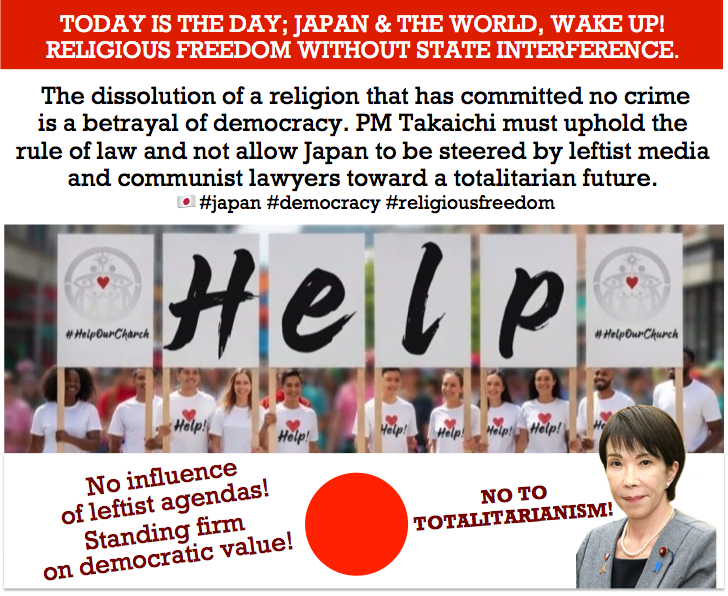
TODAY IS THE DAY; protest at the japanese embassy at 12.00 PM. Democracy dies when the state targets religion without cause. PM Takaichi: Japan must resist the influence of leftist agendas and stand firm on democratic values. No to totalitarianism. #Japan # #ReligiousFreedom
The lawyers who spent 40 years pursuing dissolution of the Unification Church weren't primarily motivated by victim advocacy.
They were motivated by anti-communism.
Here's the chronology that matters:
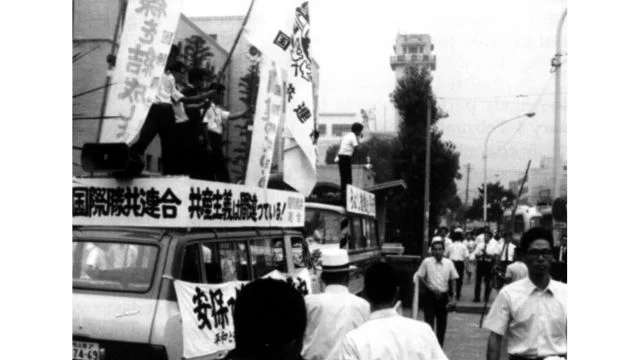
1968: Rev. Sun Myung Moon founds the International Federation for Victory Over Communism (IFVOC).
Japan's branch becomes a serious electoral force.
1978: IFVOC volunteers help defeat the Communist-backed candidate in Kyoto's governor race. Communist Party Chair Kenji Miyamoto publicly declares the "extermination of IFVOC" a "sacred battle."
1986: A lawyers' committee forms specifically to target the Unification Church. Internal minutes, uncovered by Japanese investigative journalist Masumi Fukuda, state the real goal: hit IFVOC's campaign for a national Anti-Espionage Law.
1987: One of the lead lawyers in the anti-Church network is simultaneously representing a North Korea-linked organization fighting to repatriate defectors.
2022: After the assassination of Shinzo Abe, Communist Party Chair Kazuo Shii says on record: "This time we will never give up until we will win."
April 2025: China's Communist Party-controlled anti-cult association releases a statement praising the dissolution. It calls the Family Federation "a tool of anti-Communist ideology."
That last data point is the one worth sitting with.
Beijing's official apparatus celebrated a Japanese court ruling against a religious group.
The group's offense, in their words, was being anti-Communist.
The dissolution case is now at Japan's Supreme Court after the Tokyo High Court upheld the ruling on March 4, 2026.
Religious freedom scholars are watching. Four UN Special Rapporteurs warned Japan the dissolution violates international human rights law.
The question isn't whether the Church had problems.
The question is who decided those problems required extinction, and why.
@BitterWinterMag
https://t.co/zTVFskB6Fl
Thank you for speaking out! Communism is slowly taking over Japan and many are looking the other side. You can steal everything but you cannot take away the faith within the members! Who is next?
Why was a dissolution order issued against a religious group that has committed zero criminal offenses in Japan?
A Christian pastor from Okinawa took to the streets with this message:
"This is absolutely wrong. This is the end of democracy in Japan."
He is not a member of the Unification Church.
Even so, he said he could not stay silent about this dissolution order.
The Family Federation (Unification Church) has long been an organization that fought against the threat of communism.
That is why it is being targeted now — so he argues.
"The Japanese media has already been taken over by communism."
"Communism is kind at first. But once it seizes control, it purges everything."
If this organization is dissolved, next will be Soka Gakkai, then Shinto, then Christianity.
Religious organizations will be shut down one after another, and Japan will become a country that does not tolerate religion.
That is the road to a communist state.
In fact, the Chinese Communist Party praised this dissolution order and declared that "other countries should follow this example."
Tomorrow's Japan could become tomorrow's Tibet.
Religion is communism's greatest enemy.
It doesn't matter who you call God, or whether you have faith at all.
Learn the truth about this matter — and raise your voice.
Source: https://t.co/z538cqFbUq
Why was a dissolution order issued against a religious group that has committed zero criminal offenses in Japan?
A Christian pastor from Okinawa took to the streets with this message:
"This is absolutely wrong. This is the end of democracy in Japan."
He is not a member of the Unification Church.
Even so, he said he could not stay silent about this dissolution order.
The Family Federation (Unification Church) has long been an organization that fought against the threat of communism.
That is why it is being targeted now — so he argues.
"The Japanese media has already been taken over by communism."
"Communism is kind at first. But once it seizes control, it purges everything."
If this organization is dissolved, next will be Soka Gakkai, then Shinto, then Christianity.
Religious organizations will be shut down one after another, and Japan will become a country that does not tolerate religion.
That is the road to a communist state.
In fact, the Chinese Communist Party praised this dissolution order and declared that "other countries should follow this example."
Tomorrow's Japan could become tomorrow's Tibet.
Religion is communism's greatest enemy.
It doesn't matter who you call God, or whether you have faith at all.
Learn the truth about this matter — and raise your voice.
Source: https://t.co/z538cqFbUq