The West didn’t promise Russia that NATO would not expand east.
Russia loves formal treaties, but there is no signed document proving this claim anywhere.
Even Mikhail Gorbachev confirmed that NATO expansion was never formally discussed at the time.
It's just a myth
This is 25-year-old Sarinasadat Hosseiny, the grandniece of slain Iranian Major General Qasem Soleimani, who just had her green card revoked.
She lived a lavish life in America and freedom to dress how she wanted, while openly supporting the regime that rapes, tortures and kills women in Iran for wearing a ‘bad hijab.’
This is what evil looks like.
Vladimir Putin's KGB Recruitment Story: The Outsider Who Walked In Uninvited
Vladimir Putin's path into the KGB is one of the most revealing episodes in his biography, a mix of teenage romanticism, calculated persistence, and perfect timing with Yuri Andropov's sweeping personnel reforms. It illustrates how a street-tough kid from a modest Leningrad communal apartment became part of the elite "Andropov levy," the cohort of younger, sharper officers Andropov hoped would revitalize the agency.
The Teenage Dream: Inspired by Spy Thrillers
As a boy in the 1960s, Putin devoured Soviet spy novels and films, especially the 1968 hit series The Shield and the Sword" (*Shchit i Mech*), which glamorized undercover Soviet intelligence officers operating in Nazi Germany. One man's cunning could change history , that romantic image seized the young Putin.
Around age 14–16 (ninth grade, roughly 1968–1970), he took a bold, naive step. He walked into the local KGB office in Leningrad (now St. Petersburg) and asked for a job. The receptionist connected him with a senior officer, who delivered a reality check: the KGB did not accept walk-in volunteers. They chose people carefully. The advice? Get a higher education, preferably study law, and prove yourself. Do not contact us again; we will find you if you're suitable.
Putin took the hint seriously. He focused on his studies, excelled in judo (which taught him discipline and the value of striking first), and applied to the prestigious law faculty at Leningrad State University (now St. Petersburg State University). He was accepted in 1970 and graduated in 1975.
The Approach: Targeted Recruitment in 1974
While at university, Putin did not aggressively pursue the KGB again. But the agency was watching promising students, especially under Andropov's push for higher-quality recruits.
In January 1974, during Putin's final year, Colonel Dmitry Gantserov from the Leningrad KGB Personnel Department approached him. Gantserov was scouting elite university students for the "Andropov levy", Andropov's deliberate effort to bring in critical-minded, better-educated young officers from outside traditional channels to combat stagnation, handle growing dissident threats, and improve the KGB's sophistication.
A thorough background check followed:
- Political reliability (Komsomol membership, no anti-Soviet activity).
- Psychological stability.
- Family background (including the era's discriminatory screening against Jewish ancestry , Putin passed this criterion).
Putin was deemed suitable. He may have performed some low-level "special tasks" or informant work during his remaining university time (his own accounts have been vague and occasionally contradictory on this point). He formally joined the KGB on August 1, 1975, at age 23, with the rank of junior lieutenant.
Initial Assignment and Training
Putin began in a relatively mundane clerical/secretariat role in the Leningrad KGB Directorate, learning the organization's internal workings. He soon moved into counterintelligence (Fifth Chief Directorate responsibilities at the local level), monitoring foreigners, consular staff, and potential "ideological sabotage" in Leningrad.
He later received specialized training, including at the 401st KGB School in Okhta (Leningrad) and eventually at the elite **Andropov Red Banner Institute** in Moscow (under a pseudonym, reportedly "Platov"), where he honed German language skills and intelligence tradecraft.
Context: The Andropov Levy
Putin was not a lone case. He belonged to a broader cohort dubbed the "Andropov levy" or "Andropov draft", younger officers recruited in the 1970s to inject fresh perspectives into a KGB that Andropov feared was becoming bureaucratic and ineffective. These "outsiders" (often from provincial or non-elite backgrounds like Putin's) were seen as more dynamic and capable of subtle active measures and targeted repression.
Andropov wanted professionals who could think, blend into Western society, and fight "ideological subversion" with sophistication rather than blunt force. Putin, with his law degree, languages, and street-honed discipline, fit the profile , even if his early career remained somewhat peripheral (Leningrad postings, then Dresden).
Putin's Own Reflections
In interviews, Putin has described his motivation as rooted in Soviet patriotic education and the romantic allure of intelligence work: "One man's effort could achieve what whole armies could not." He has called himself a "pure and utterly successful product of Soviet patriotic education." The KGB represented order, purpose, and defense of the Motherland in a chaotic world.
He has also quipped, "There is no such thing as a former KGB man", a phrase that captures how deeply the Chekist mindset shaped him.
Significance in the Bigger Picture
Putin's recruitment was no accident. It aligned perfectly with Andropov's strategy to modernize the KGB while preserving its core as the "sword and shield" of the state. The levy produced a generation that carried Andropov's emphasis on discipline, active measures, and preemptive control into the post-Soviet era.
For Putin personally, it was the gateway to a worldview that has never faded: the West as a perpetual threat, information and subversion as primary weapons, and the security services as the backbone of power. From that 1975 entry point through Dresden (1985–1990), the FSB directorship, and into the Kremlin, the Chekist DNA , instilled during the Andropov years, has defined his rule.
This story is not just biography. It explains the continuity between Andropov's KGB innovations and Putin's hybrid warfare, siloviki dominance, and relentless active measures today. The outsider teenager who walked into the KGB uninvited never really left the building.
@HannuJarvinenPS Olen nähnyt noin 10 konserttia Brucelta. Kunnioitan ja ihailen koko E street bandia, miten he ovat pysyneet yhdessä teinivuosista lähtien miltei kokoajan. Tunnelma loistava aina keikoilla.
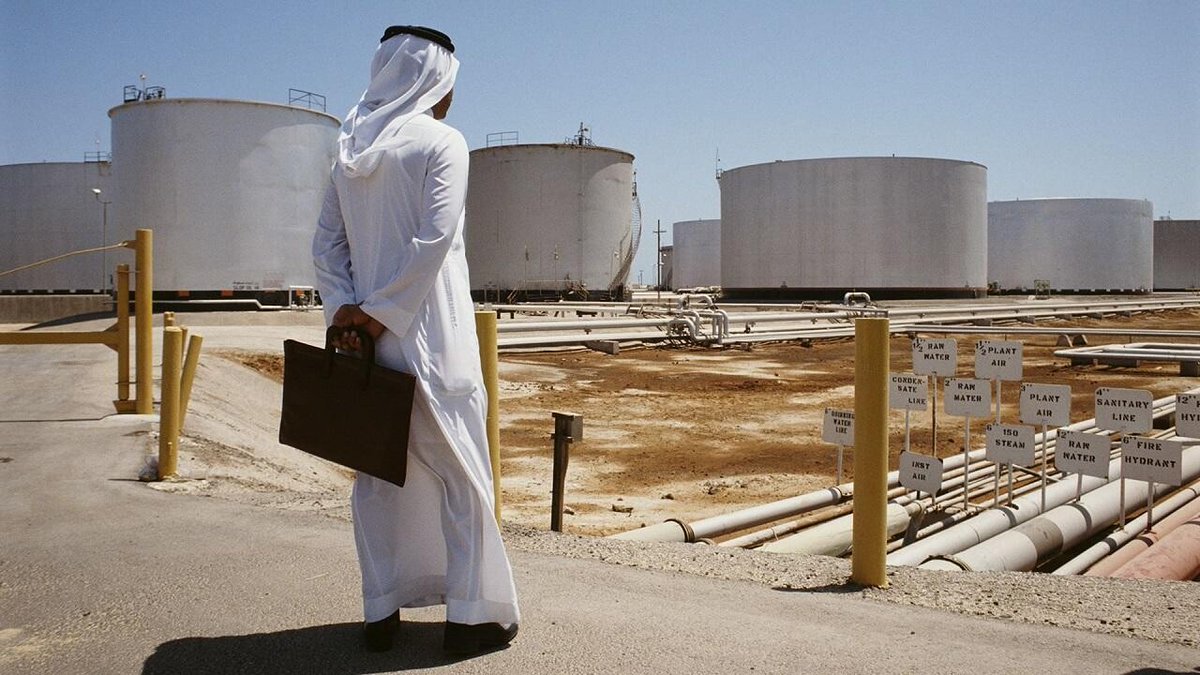
Saudi Arabia has sharply increased oil exports bypassing the Strait of Hormuz — Bloomberg
The kingdom has pushed the East–West pipeline to its maximum capacity — around 7 million barrels per day.
This route allows crude to reach the Red Sea, avoiding the narrow and vulnerable routes of the Persian Gulf. The pipeline, over a thousand kilometers long, was built back in the 1980s precisely for scenarios like crises or blockades.