You wake suddenly from a dream on the banks of the Tigris, east of the gardens of Eden. You are Cain, son of Adam, and what you saw has changed your mind: the future can not come to pass. A heavy stone is put to rest. You're going to enjoy the Earth's fruits with your brother.
Vi o pronunciamento completo e achei a postura do Renan muito boa: reconheceu que apostar no derretimento do bolsonarismo foi errado, mas… faz parte, agora é recalcular a rota. Deixar a militância livre pra votar no Flávio também foi muito acertado.
*esta pessoa defendeu uma versao às caralhas de um fascismo hipotetico entao ela pode ser tratada como nao-humana*
os caras estao babando pra mostrar o esgoto d suas almas ha tempos
nao ha nada oculto q nao venha a ser revelado
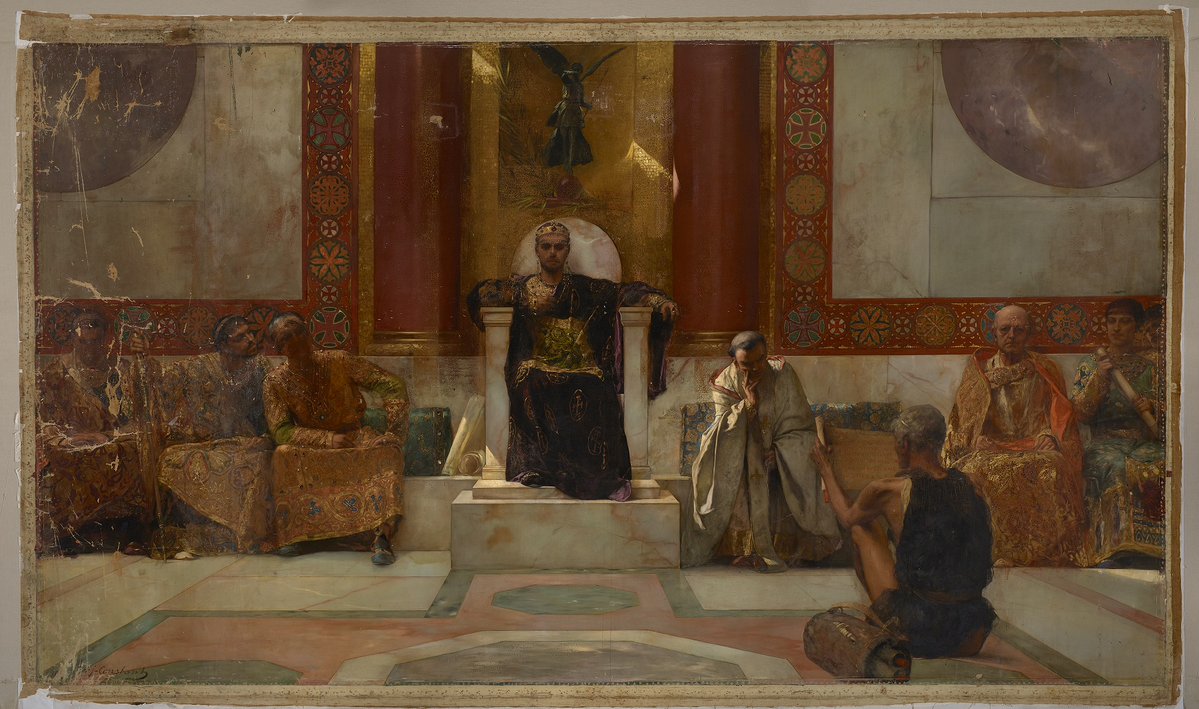
Both of them had government agencies that were translated similarly, Lǐfān Yuàn as Office of Barbarian Control while Skrinion tōn Barbarōn to Bureau of Barbarian Affairs. But the former was an interior ministry and the latter was a foreign ministry.
‘If we take pains to ensure that the civil laws, the authority over which God in His loving-kindness has entrusted to us, are kept inviolate in all respects for the security of our subjects, how much greater care ought we to devote to the safeguarding of the sacred canons and divine laws, which have been ordained for the salvation of our souls?
For those who observe the sacred canons are deemed worthy of the help of the Lord God, whereas those who transgress them subject themselves to condemnation.’
–St. Justinian, Novella 137, Preface
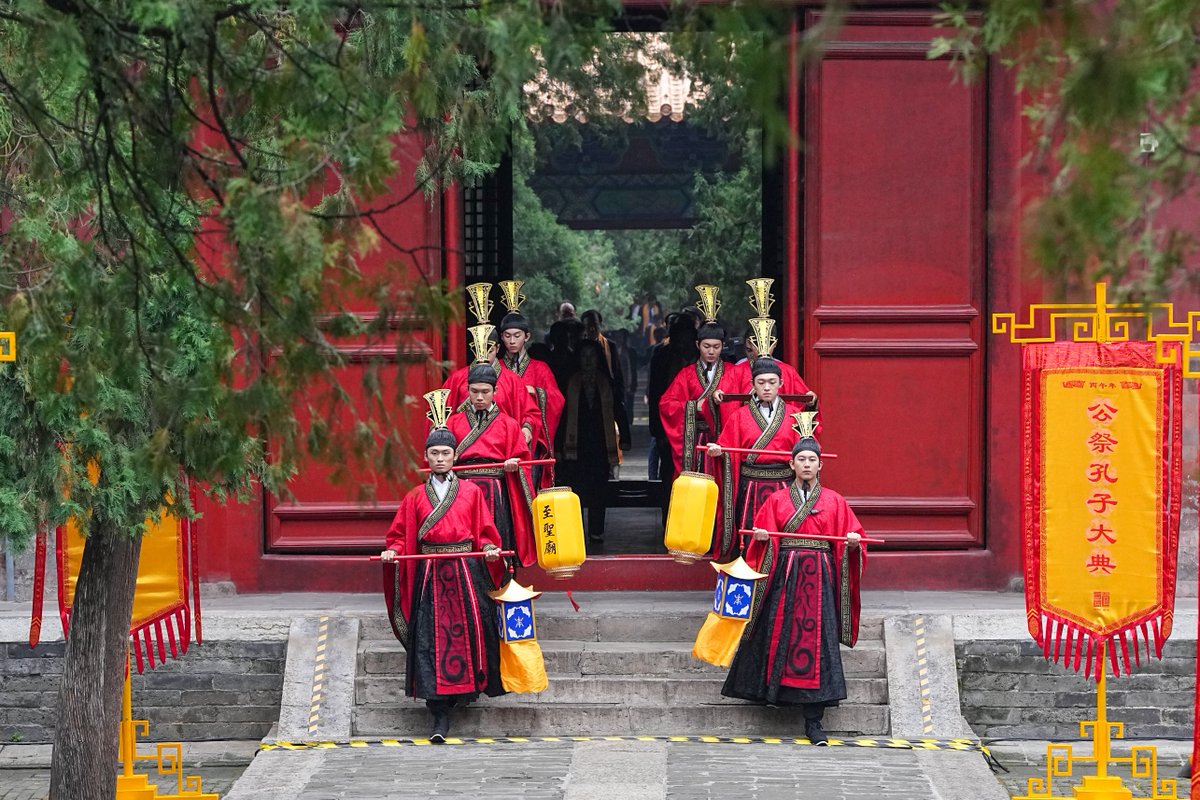
More than 2,500 years after Confucius (孔子) was born, his 80th-generation descendants still return to his hometown, Qufu (曲阜), in east China's Shandong Province, to take part in annual ceremonies honoring him.
An American scholar once said to me, more than two thousand years ago, there were Confucius, Socrates, Plato, and Aristotle. Today, we no longer know where the descendants of Socrates, Plato, or Aristotle are. But the descendants of Confucius are still here.
The scholar, a specialist in comparative philosophy and former university vice chancellor, called this "the continuity of Chinese civilization."
Recently, I was invited to Qufu to attend ceremonies marking the 2,577th anniversary of Confucius's birth, as well as the Nishan Forum on World Civilizations (尼山论坛).
The Nishan Forum was launched in 2010 to promote exchanges among scholars of Confucius and dialogue across civilizations. The theme of its first gathering immediately caught my attention: Dialogue between Confucian Civilization and Christian Civilization. 16 years later, this year's theme is Civilization, Order, and Justice.
Being in Qufu, attending both the ceremony and the forum, I found myself considering three questions:
How does a civilization preserve its memory?
How do different civilizations understand one another?
And in a world full of distrust and competition, how can order be rebuilt?
In many ways, these are the questions Confucius was grappling with two millennia ago.
Qufu is one of the oldest place names still in use in China. In Chinese, the name literally refers to a "curving hill." The name already appears in texts predating Qin Shi Huang (秦始皇).
Just a few days ago, President Trump, while visiting the US National Archives with the Chinese leader, referred to China as a civilization with a history of five thousand years (he actually said six thousand years, which is not necessarily wrong either based on current archeology). In Qufu, those vast stretches of time suddenly become tangible.
Chinese tradition generally regards the Yellow Emperor (黄帝), who is said to have lived more than four thousand years ago, as one of the founders of Chinese civilization. In some ways, his place in Chinese cultural memory can be compared with Zeus in the Greek world, Menes in ancient Egypt, Emperor Jinmu in Japan, or Manu in India. According to legend, he won the support of various tribes and became their supreme ruler. His wife was said to have taught people how to make silk.
According to legends, Qufu was the birthplace of the Yellow Emperor and later became the capital of his son. These stories, however, have not been confirmed by archaeology.
Qufu's more clearly traceable place in Chinese history begins around three thousand years ago. At that time, China was ruled by the Shang dynasty (商), which brought bronze casting to extraordinary heights and produced the oracle-bone inscriptions, the earliest known systematic form of Chinese writing. Horse-drawn chariots, which had spread eastward from the Eurasian steppe, also became common during this period, showing that China was already connected to wider networks of exchange across Eurasia.
The last Shang king was remembered in later tradition as a cruel and decadent ruler, notorious for heavy drinking, sexual excess, and brutality. His reign eventually provoked rebellion, and the Shang dynasty was overthrown by the Zhou (周) people from northwestern China.
Over time, the story of the Shang's fall became increasingly legendary. What began as a struggle between rival powers was transformed into an epic filled with gods, spirits, and heroic figures. In this form, the story bears some resemblance to the Trojan War in the Western tradition.
After the Zhou victory, King Wu rewarded two of the men closest to him with lands in what is now Shandong Province. One was his chief strategist, Jiang Ziya (姜子牙). In popular mythology, he was imagined as someone who could command the gods and even decide their place in the divine hierarchy. He was granted the state of Qi in northern Shandong.
The other was King Wu's younger brother, later known as the Duke of Zhou (周公), who was granted the state of Lu in southern Shandong. Yet he probably spent little time in his own fief. King Wu died soon after the Zhou conquest, leaving a young heir on the throne, and the Duke of Zhou was called upon to assist his teenage nephew.
The Duke of Zhou was a conscientious regent. He suppress rebellions. He used measurements of the sun's shadow to identify Luoyang (洛阳) as the center of the realm. He also developed an elaborate system of ritual, combining ceremony with music to lay the foundations of the social order of his time.
Over time, the Duke of Zhou acquired an unexpected second career: dream interpreter. The man remembered for helping build the Zhou political order also became, in popular folklore, an authority on what our dreams might mean. A dream book attributed to him became so famous that, when I was growing up in China, "ask the Duke of Zhou" was almost shorthand for looking up the meaning of a dream.
About five centuries later, on the land of the state of Lu that had once been granted to the Duke of Zhou, one of the most influential thinkers in Chinese history was born: Confucius.
The world Confucius faced was no longer the relatively stable Zhou order of the Duke of Zhou's time. It was an age of competing states and collapsing norms, what later Chinese tradition described as a time when "rites had broken down and music had fallen into disorder."
Confucius responded by turning that ritual tradition into something more explicitly philosophical and ethical. What had largely been part of an aristocratic political order became, in his thought, a path of self-cultivation open to ordinary people. He was deeply concerned with a basic question: what kind of person should one become?
Education was central to Confucius's vision. His idea of "education without distinction" challenged the notion that learning belonged only to hereditary elites. He also believed that good government depended on the moral character of rulers. Wealth and military strength were not enough; rulers also had to use authority properly, observe accepted norms, care for the people, and lead by example. This became an enduring standard for judging political authority in Chinese culture.
But Confucius himself had few opportunities to put these ideas fully into practice.
That is not difficult to understand.
In an age when the old ritual order was breaking down and warfare was becoming more frequent, rulers were preoccupied with armies, territory, and power. A thinker who kept telling them to restrain themselves and govern through virtue was not necessarily the person they most wanted to hear from.
Confucius did not transform the world during his lifetime. The truly remarkable part came after his death.
His teachings were preserved, interpreted, and developed by generations of disciples and scholars, and eventually became part of the political and educational foundations of China, influencing much of East Asia as well. Even in eighteenth-century America, Founding Fathers such as Thomas Jefferson, John Adams, and Benjamin Franklin spoke of Confucius with considerable reverence.
Confucius had more than seventy disciples. That sometimes makes me think of another teacher who traveled with followers and whose influence became far greater after his death: Jesus.
Of course, the nature of their teachings was very different.
Confucius was primarily asking:
What does it mean to become a morally cultivated person? How can an orderly society be built?
Jesus was more centrally concerned with questions such as:
What is the relationship between human beings and God? How can human beings attain salvation?
Yet there is an interesting similarity between them. Neither reached a powerful position in his lifetime. Neither commanded an army. What ultimately changed the world was the tradition built after their deaths by disciples, texts, scholars, and generations of interpreters.
After Confucius died, his former home was turned into a temple in his honor, and the same site has continued to serve as a place of commemoration for more than two millennia. His burial ground gradually became the cemetery of the Kong family, where generation after generation of his descendants were laid to rest. More than seventy generations later, it remains in use today and is regarded as the world's largest continuously used family cemetery.
The ways these civilizations remember their great thinkers are very different. Confucius is still commemorated through a living family lineage and rituals that have endured for more than two thousand years, while the descendants of Socrates, Plato, and Aristotle can no longer be traced.
But when it comes to legend, East and West can look surprisingly similar.
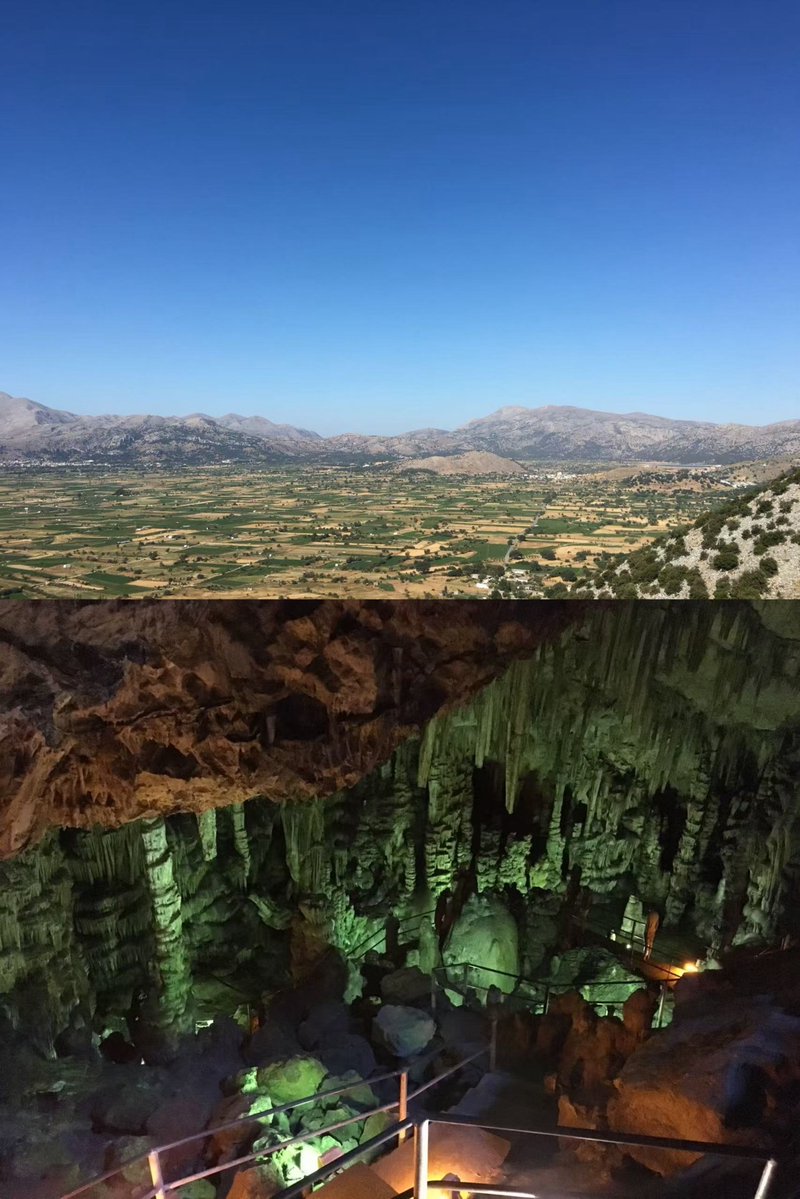
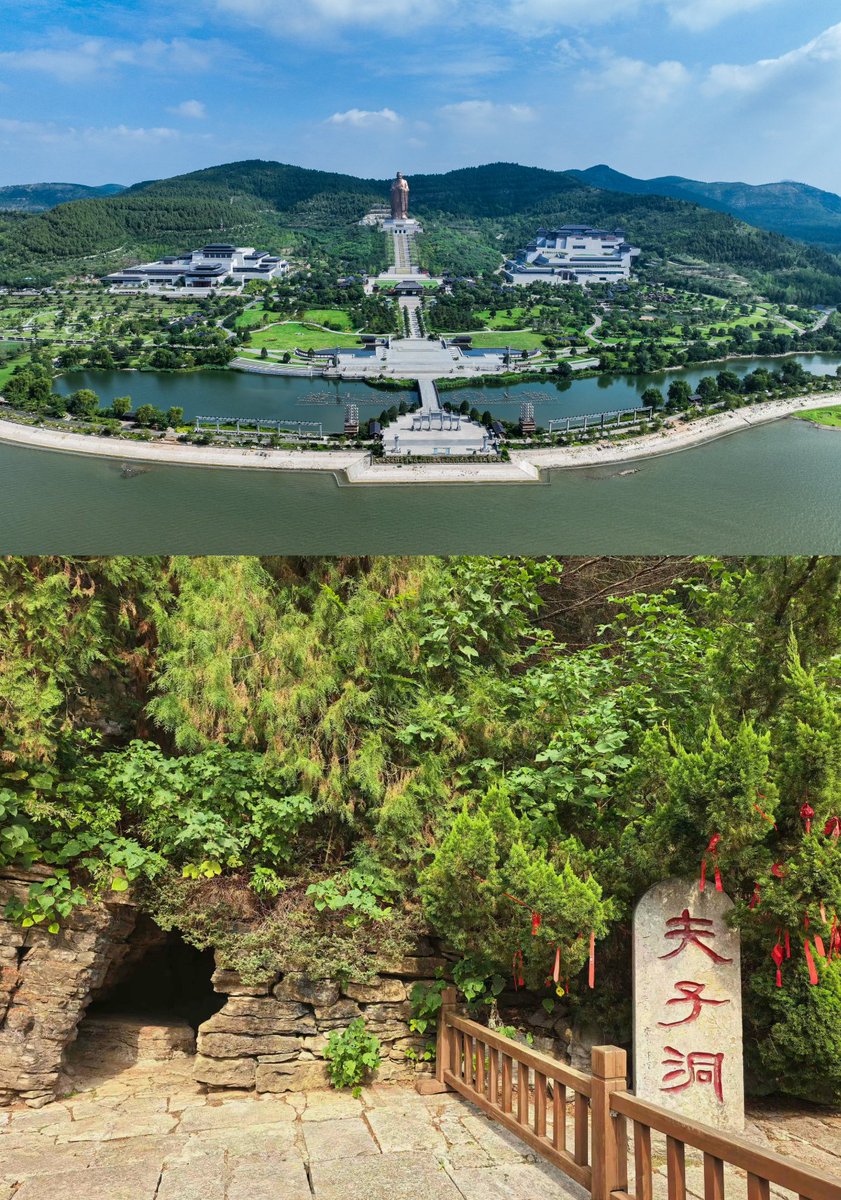
Ten years ago, I traveled overland by train from Beijing to Rome, and from there flew to Crete, a place I had long dreamed of visiting. On the island, I hired a taxi driver to show me around. At first I was a little uneasy-I had previously been overcharged by taxi drivers in both Russia and Poland-but he quickly won my trust with his warmth, reliability, and remarkable knowledge of the island. After taking me to several archaeological sites, he insisted that I visit a large cave in the mountains. According to local tradition, he told me, it was the birthplace of Zeus (top right).
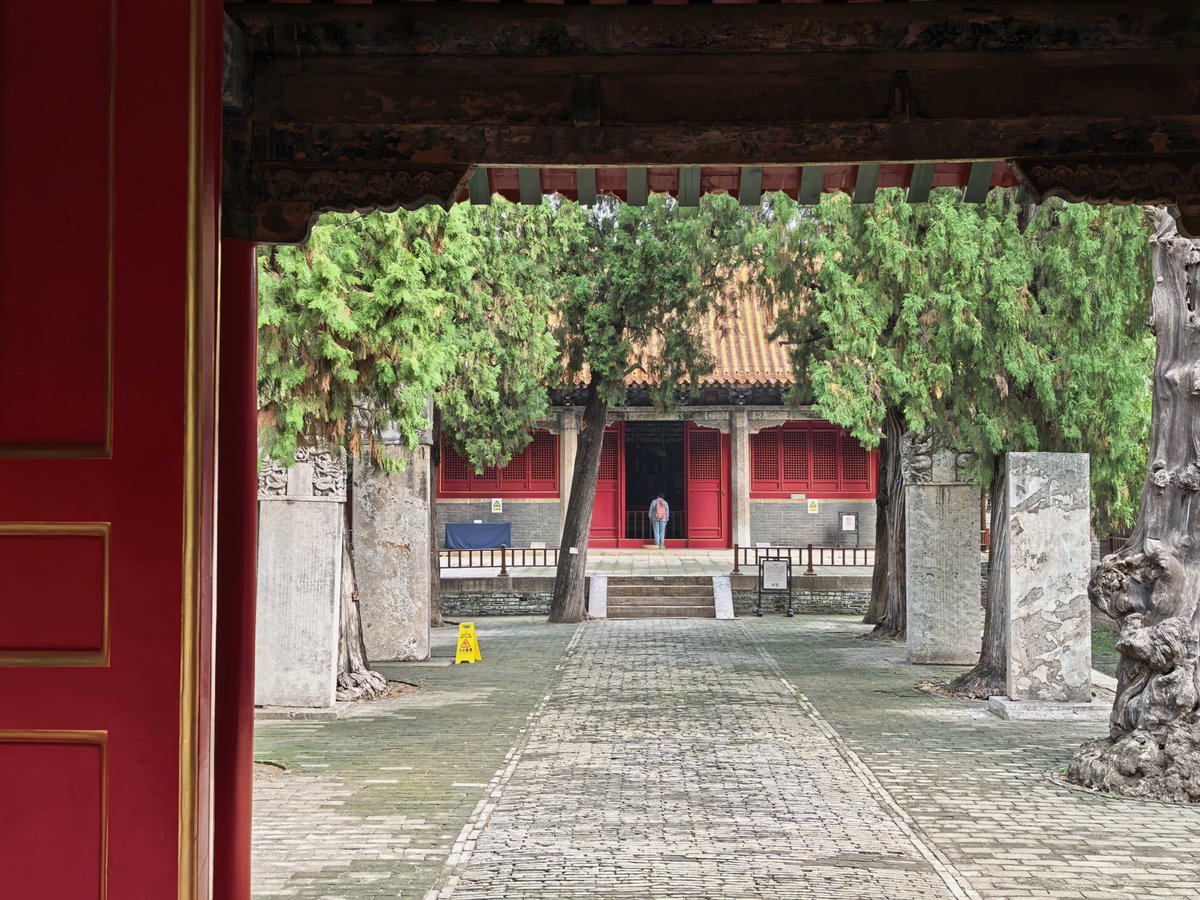
At the Nishan Forum this time, I learned that not far from the conference venue stands a Confucian temple more than a thousand years old, built to commemorate what tradition holds to be the birthplace of Confucius (bottom left). The buildings that survive today mostly date from the Ming and Qing dynasties (1368-1911), but many of the old trees on the grounds are around a thousand years old, reaching back to the temple's earliest days. Beside the temple is a cave that tradition also associates with the birth of Confucius (bottom right).
One story concerns the birth of the supreme god of ancient Greece; the other, the birth of ancient China's most influential thinker.
Thousands of miles apart, two civilizations located the birth of an extraordinary figure in strikingly similar settings: a mountain, a cave, and a story passed down from generation to generation.
Civilizations can be profoundly different and yet preserve memory in surprisingly similar ways. But recognizing such similarities is only the beginning. The harder question comes when civilizations actually enter one another's worlds: can they encounter traditions different from their own without trying to erase them? Can they respect one another's rituals and sense of order?
Some Westerners may have the impression that China in earlier times did not welcome Christian missionaries. In fact, many Chinese people have the same impression. Yet there is a little-known chapter in this history.
By the 17th century, after decades of sustained effort by Catholic missionaries, Christianity had already gained a significant number of converts in China. The first two emperors of the Qing dynasty, Shunzhi (顺治) and Kangxi (康熙), both placed considerable trust in the missionaries; Shunzhi even wrote poems praising Catholicism. In 1692, Kangxi issued an edict of toleration. Catholicism was, in effect, granted a recognized place alongside Buddhism and Daoism and given room to establish itself in China.
This was an extraordinary window in the history of exchanges between Chinese and Western civilizations. Unfortunately, the Roman Church failed to make good use of this rare opportunity. Some within the Church regarded Confucian rites as religious in nature and therefore forbade Chinese converts from taking part in ceremonies honoring Confucius. One of the most prominent figures was Charles Maigrot. In 1693, just one year after Kangxi issued his edict of toleration, Maigrot ordered Christians in his own vicariate not to participate in rites honoring Confucius or in ancestral rites.
Apparently, this ungrateful old dude failed to appreciate how exceptional, and how fragile, this opportunity was.
He soon brought Kangxi and Rome into conflict. From Kangxi's perspective, if a religious authority thousands of miles away in Europe claimed the right to tell the Chinese that rituals practiced for generations were impermissible, then the issue was no longer simply how one should practice a religion. It raised a much more fundamental question:
Who has the right to define the rituals of the Chinese people?
Even then, Kangxi showed considerable patience. For years, he continued to receive papal envoys and sought to resolve the dispute through dialogue. It was only in 1706, after meeting Maigrot in person and becoming outraged by his manners, that Kangxi finally ordered him expelled from China.
In 1715, the pope issued a decree prohibiting Chinese practices associated with the veneration of Confucius. In 1721, Kangxi responded: "From now on, there is no need for Westerners to preach their religion in China. It may as well be prohibited, so as to avoid further trouble. Thus decreed."
Because of the rash actions of a few, a precious chapter in the history of exchange between China and the West came to an abrupt end.
Do we still have such an opportunity today? I believe we still do.
Traditional theories of international relations tend to put interests first. They are remarkably good at explaining war, rivalry, alliances, and the balance of power. They tell us why states mistrust one another, why they compete, and why they seek security through strength. But they are much less good at answering a different question: how can states live together over the long term without allowing mistrust and competition to become permanent conditions?
Huntington went even further, arguing that different civilizations were bound to conflict. In my view, that idea is totally mistaken. In Chinese policy circles, I have said more than once that this theory makes conflict seem natural, inevitable, and even intellectually justified, providing ammunition for conflicts the world does not need.
Confucian thought offers another way of looking at international relations. For instance:
Ren (仁), or humaneness, means that while a community pursues its own interests, it must also remain conscious of the existence and needs of others. It reminds us that truly durable interests cannot be built on the assumption that others must always lose.
Yi (义), or righteousness, means that not every interest we are capable of securing is necessarily worth pursuing. Power can tell a country "What am I able to do?" But yi asks a different question: "What ought I to do?" If international relations are reduced entirely to calculations of power, then power itself can become the source of legitimacy. Yi seeks to establish limits on conduct beyond power alone.
Zhi (智), or wisdom, is the capacity for judgment. It requires a country to look beyond immediate gains and losses and to understand the long-term consequences of its decisions. Winning a single contest does not necessarily mean making a wise choice.
Xin (信), or trustworthiness, is credibility. The long-term stability of international relations depends to a considerable degree on countries believing that words spoken today will still carry weight tomorrow, and that rules accepted today will not be arbitrarily reinterpreted when circumstances change. For example, documents signed decades ago by the United States, Japan, and China all clearly stated positions that Taiwan's a part of China. Yet today there are still people in both countries seeking to distort the meaning. If words can be redefined whenever they become inconvenient, trust itself begins to lose its meaning.
And when trust breaks down, countries fall back on power. If every country must rely increasingly on power to secure itself, security becomes more costly and more fragile.
Seen in this light, Confucian thought does not seek to replace interests with morality, nor does it ask the international community to become an ideal world without competition. What it may offer is a more complex form of realism: states naturally have interests, and they also need power. But interests must be constrained by yi; and a stable order ultimately requires at least some degree of ren.
Power can win a contest. It cannot, by itself, build an order in which others are willing to live.
Confucian thought does not offer a complete answer to the problems of the modern world. But in asking how power should be restrained, how trust can be sustained, and how people and states with different interests can live together, it remains an enduring point of reference for all of us thinking about the future.
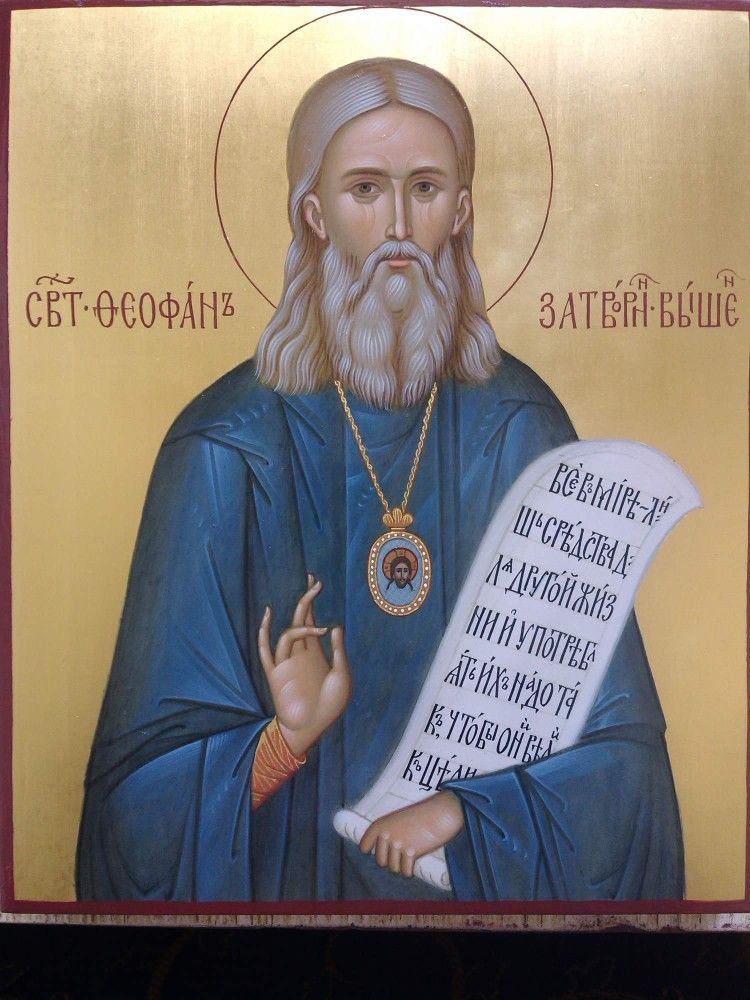
‘“..in the forgiveness...” Forgiveness, πάρεσις—which means: the passing over of something without attention, the omission of something, as though one did not notice it. The Apostle therefore wished to express the thought that, although God passed over without attention, and did not bring the eyes of righteousness upon the sins that had been before, nevertheless even in this He manifested His justice; for He had foreordained that the Lord Jesus should be a propitiation for all in His Blood.
Thus, looking upon this Blood, He righteously showed mercy to those who had sinned aforetime.’
–St. Theophan the Recluse, Comm. on Romans 3:25
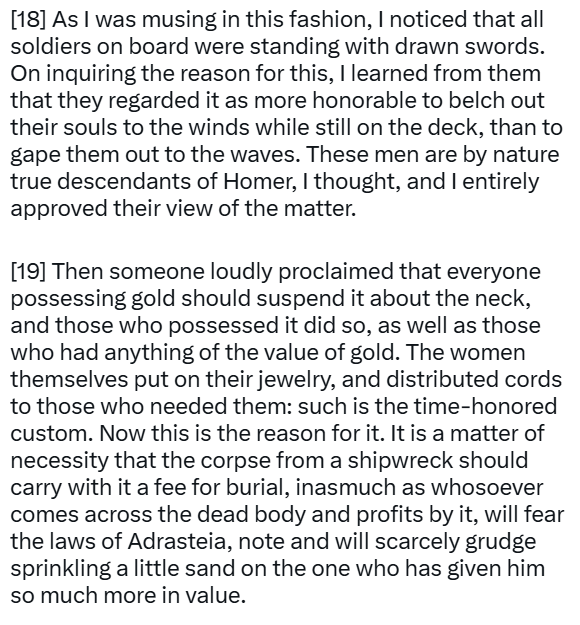
Sea travel in the ancient world could be terribly frightful.
This 4th-century letter by a Roman aristocrat recalls how, during a powerful storm on his sea voyage, all the passengers prepared themselves for death.
The soldiers on deck stood with swords drawn, readying to stab themselves to death as a preference to drowning, and the rest were all hanging money or jewelry around their necks, a custom to pay for their burial if their bodies were found drifted ashore.
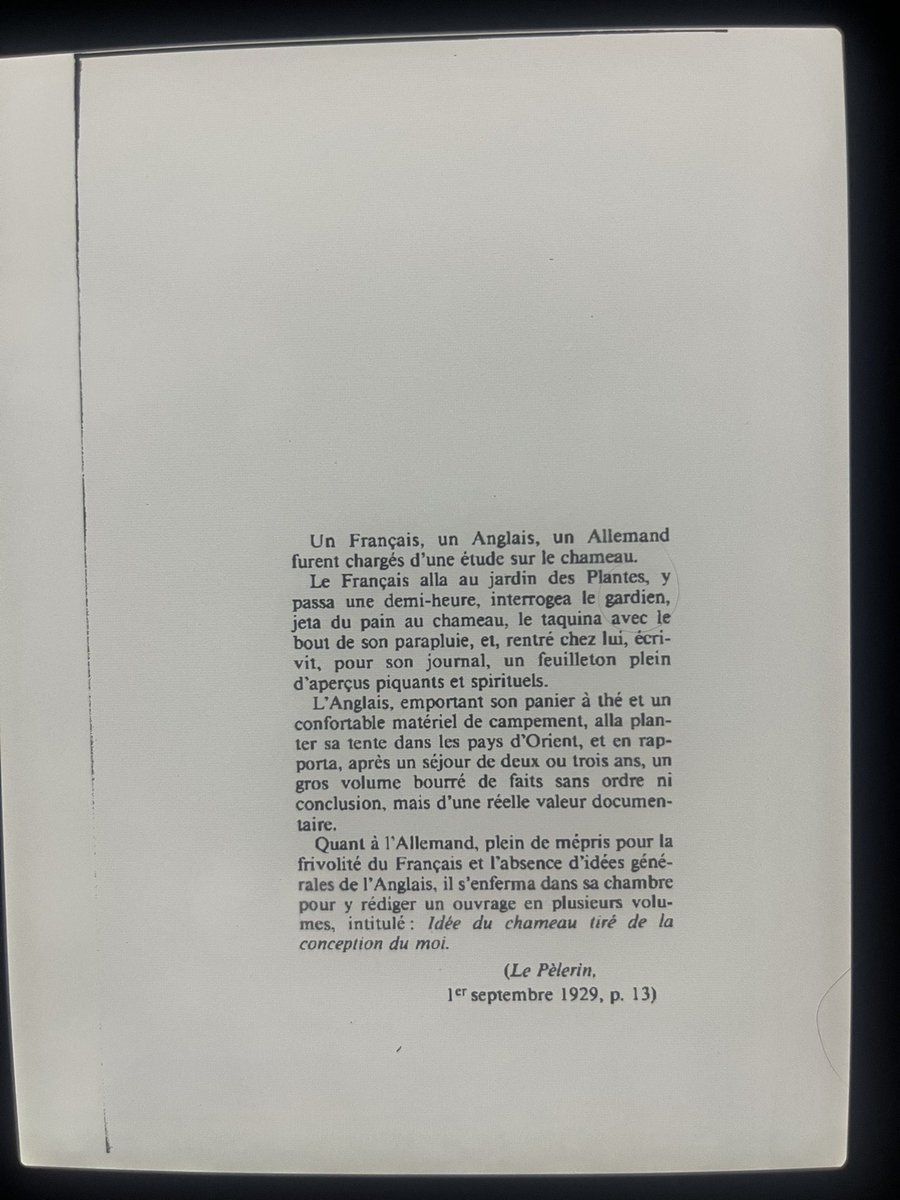
Made me laugh:
A Frenchman, an Englishman, and a German were each commissioned to conduct a study of the camel.
The Frenchman went to the Jardin des Plantes, spent half an hour there, questioned the keeper, threw some bread to the camel, teased it with the tip of his umbrella, and then went home and wrote, for his newspaper, a lively column full of witty and incisive observations.
The Englishman, taking along his tea basket and a comfortable set of camping equipment, went off to pitch his tent in the lands of the East. After spending two or three years there, he returned with a hefty volume crammed with facts, without much order or any conclusion, but of genuine documentary value.
As for the German, full of contempt for the Frenchman’s frivolity and the Englishman’s lack of general ideas, he shut himself up in his room to write a work in several volumes entitled: The Idea of the Camel Derived from the Conception of the Self.









![captive_dreamer's tweet photo. “He [Napoleon] had a deep, instinctive distaste for anything which looked like a mutinous mob.” https://t.co/FxtQi47UFs](https://pbs.twimg.com/media/HT1WMO5aUAAZs0M.jpg)