New research on seascape genomics of common dolphins in Australian waters. Comprehending the environment can provide us better understanding of species distribution and adaptation.
#SeascapeGenomes#womeninmmsci#dolphin#FlindersMarine#BMCEcoEvo
https://t.co/6vu0j1gMIQ
Stable isotopes reveal sympatric Australian snubfin and humpback dolphins feed at similar trophic levels, have substantial dietary overlap, and rely on similar basal food resources! Read all about it in @Ecol_Evol:
https://t.co/m94nRJdmBQ
@CEBELresearch@MERCresearch@kjopeters
Exciting NEW BOOK RELEASE from Australian Geographic: Extraordinary & Endangered - stopping the extinction, one species at a time.
I am happy to have contributed to this book in writing and with images in the aquatic and marine sections. @mqnatsci@Macquarie_Uni@ausgeo
Just published in Global Ecology & Conservation. Happy to co-author: Pygmy blue whale movement, distribution and important areas in the Eastern Indian Ocean
@Macquarie_Uni @STEMwomenMQ @CEBELresearch @MQBiology https://t.co/Cohow7kOEb
Excited to have co-authored this research study led by @m_thumsy and @LuOceano combining satellite tagging & acoustic data to support the #conservation of pygmy blue #whales in the south-eastern Indian Ocean @MQBiology @WomenSciAUST @womeninmmsci @MQSciEng
Our new paper just out: Pygmy blue whale movement, distribution and important areas led by @m_thumsy as part of @aims_gov_au NWSSRP https://t.co/rPESCm9V3r
We deployed new tags and noise loggers and collaborated with an incredible group of researcher to compile existing tracking and passive acoustic data available for pygmy blue whales in Western Australia @CEBELresearch@CMST_oceans @AusAntarctic @PaulTho12913604
Today is International Day for Women and Girls in Science @WomenScienceDay
Photo from a recent trip to undertake marine research in Port Lincoln, SA, taking our toddler with me. Inspiring women to have kids & continue working in science! #WomenInScience#WomenInSTEM @MQBiology
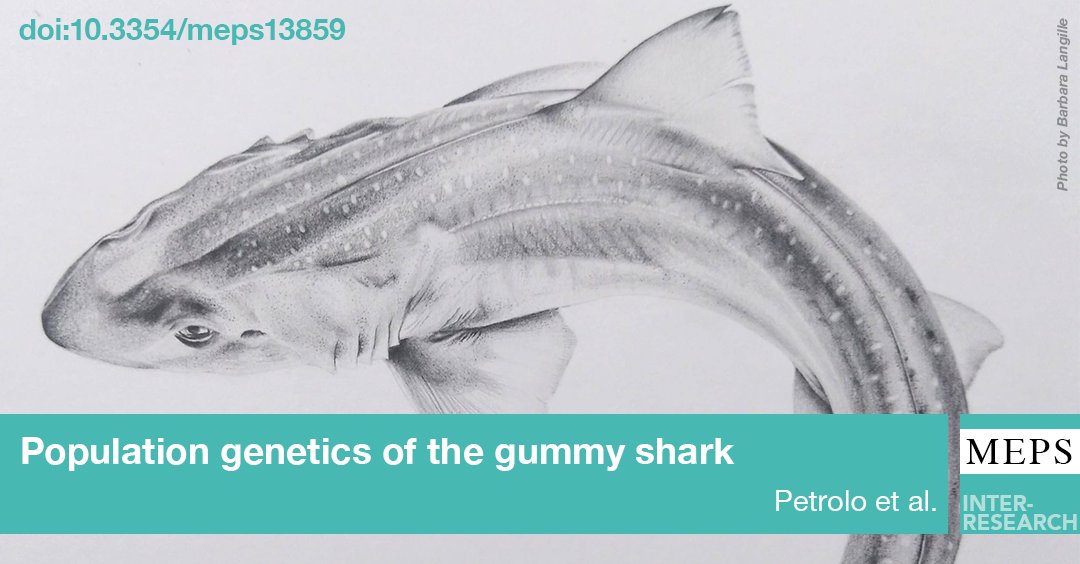
Just published in MEPS! Proud of our student @emma_petrolo This study is relevant for future fisheries management and the famous Australian ‘fish & chips’ (gummy shark is generally sold this way) @MQBiology @MQSciEng@STEMwomenMQ
Genetic assessment of commercially exploited Australian gummy #shark using genome-wide data has revealed genetic structure between individuals from E and S coast. Modelling showed more rapid decline of Ne in recent past compared to historical projections. https://t.co/NyT809igyE
Our review on epigenetic inheritance in plants and animals is out now in @Trends_Ecol_Evo! @dafanast and @ClareVenney systematically reviewed over 500 (of >2200) recent papers to assess the frequency and consequences of epigenetic inheritance across plant and animal taxa.
Our @CEBELresearch@FlindersMarine latest contribution towards the population assessment and management of common dolphin fisheries bycatch in southern Australian waters.
Article is open access: https://t.co/v6cIQZvuEv
The Australian sea lion is #endangered and in substantial #decline. Just published in @AnimalConserv by @KBilgmann et al. using #genomics and #simulations to show that the species can still be saved, but population declines need to be reversed!
https://t.co/M5nO21lhQc
@MQBiology
Well done Andrea! Proud associate supervisor. Local common dolphin populations at a fine scale, and genetic connectivity across the Tasman Sea. This is important for mitigating AU/NZ fishery interactions.
Freshly baked from my PhD! A real pleasure to get this project published, with a lot of great colleagues. Using genomic data we show that Australasian common dolphins have a hierarchical metapopulation structure with gene flow persistence in the region. https://t.co/xEJHtwqmZc
Great to be part of this collaborative effort led by @Ana_Rita_Amaral in solving the puzzle of humpback dolphin speciation and population structure! Read all about it here: https://t.co/p1O2eeD5p5