Join us Tuesday, June 23, at 1:30 p.m. for a hybrid meeting of the full Council.
Councilmembers, who will be attending remotely, will consider a major supplemental budget package that would update funding for county services, programs, and capital projects across the 2026–2027 biennium.
The Council will also consider proposed sewer rates and charges, a proposal related to a new opioid treatment program facility in South King County, and several labor, environmental, and telecommunications-related items. Public testimony will be accepted on Items 6–14 and 20–24. You can find more info on these topics and other items in our meeting packet here: https://t.co/RUyR1fOHLf.
Want to watch or participate? Meetings stream live at https://t.co/CR4R3hTSZV. While Councilmembers will participate via Zoom, you can still attend in person on the 10th floor of the King County Courthouse (516 Third Ave in Seattle) or join us on Zoom using webinar ID 873 0459 1515. That same ID can also be used by phone at 1-253-215-8782. As always, public testimony may also be submitted via email to [email protected] before 10:00 a.m. on the day of the meeting.
Everyone deserves access to the outdoors, and Trailhead Direct is back! 🌲 🥾 🌿
This program makes it easier to reach some of our region’s most beautiful hiking destinations using transit. Two shuttle routes connect riders from Seattle and the South Bellevue Light Rail Station to trail access points near North Bend and Issaquah. Service runs on weekends and on Independence Day. So ditch the car and enjoy a more accessible, affordable, and sustainable way to experience this incredible place. Learn more and plan your trip: https:/trailheaddirect.org
@KingCountyMetro
Got a project that would improve water quality, reduce pollution, or support healthier waterways? King County's WaterWorks Grant Program is expected to open for applications next week.
Funding may be available for projects such as habitat restoration, rain gardens, stormwater improvements, environmental education, and other community-based efforts that benefit water quality. Nonprofits, schools, tribes, cities, and special purpose districts may be eligible. Apply June 15 –July 20, 2026: https://t.co/igi0LLaxNA
Apply now for King County’s year-long, paid gateway into public service: the Ruth Woo Emerging Leaders Fellowship, named for the late “Auntie Ruth” Woo—legendary civic strategist, civil-rights advocate, and mentor to leaders across our state.
King County will select three full-time fellows to work in a county agency for a period of twelve months. Fellows will perform real work under the guidance of experienced County employees, learn new skills, and gain experience while furthering King County initiatives.
Apply by June 14, 2026:
https://t.co/4SJI8AOBTN
Today, the Council proclaimed March 2026 as Women’s History Month. From the inception of the King County Council, 19 women have represented the people of King County on the Council. Women are a majority of King County's population and a significant portion of the labor force, making countless contributions to our community and economy, and for the first time, a majority on this Council. This month we recognize and celebrate the many contributions women have made to our county and our country.
Join us Tues, March 24 for the King County Council’s Annual Women’s History Month Panel: Trailblazers of Our Time – Women Who Are First!
Panelists include Councilmembers Rhonda Lewis and Steffanie Fain, Northwest Immigrant Rights Project’s Executive Director Malou Chávez, and LGBTQIA activist Marsha Botzer. Moderated by Dae Shogren. Thank you to Council Chair Sarah Perry and Councilmembers Teresa Mosqueda and Claudia Balducci for their active support.
Watch live: 11:30am on https://t.co/8XFomTh24Q, or join us in person 11am–1pm at the Chinook Building in Seattle. Get flyer: https://t.co/ReXWxDUHBl
Contact [email protected] for accessibility needs.
#CouncilmemberRhondaLewis #CouncilmemberSteffanieFain @CMSarahPerry@KccClaudia
@BardBorker Lower right hand corner - that’s a train car that just completed the first ever test run under its own power on a floating bridge. Minutes ago.
🚉 History made: A Link train crossed a floating bridge on rails — for the first time ever.
This successful test marks a major milestone for the #2Line, and the future of transit in our region.
Join us on Friday, Sept. 26 from 3-6 p.m. for a vibrant family-friendly community event in the Joni Earl Great Hall at Union Station! Explore career opportunities, meet Sound Transit’s 10 Employee Resource Groups, and gain insight into our organization’s culture and resources.
When a community loses a grocery store, it doesn’t just lose a place to buy food. It also loses:
✅️A pharmacy people rely on.
✅️A community hub
✅️A distribution point where food banks and meal programs pick up donations.
So why are stores closing, and what’s really happening??
Here are some of my thoughts
👇🏾👇🏾👇🏾👇🏾👇🏾
1. Closing Isn’t a random Decision
A grocery store doesn’t just shut down overnight. It usually takes years of financial losses before a company decides to close a location. For them, it’s about survival. No company wants to surrender part of its market if it doesn’t have to. That's the last resort especially at that size and scale.
2. The Hidden Cost of Crime
Yes, crime overall may be down... Kinda... For many full-service grocers, security costs are skyrocketing.
Stores often rely on private security, cameras, and secret shoppers to deter crime. In Seattle, some chains spend millions per year on theft prevention alone.Even blue lights in bathrooms (to discourage drug use) are part of this cost. It’s not just theft, it’s the price of preventing it that eats into already-thin margins. Grocery stores keep their own data and don't usually report the attempted thefts or other disturbances at their stores.
3. Walmart’s Market Power
90% of Americans live within 10 miles of a Walmart. Walmart controls 25% of the grocery market, with $264 billion in sales. They use loss leaders by selling food cheap or even at a loss because they know you’ll buy a coffee pot, garden supplies, or electronics on the same trip.
Traditional grocers like Kroger, QFC, Albertsons, and Safeway don’t have the same scale or cross-selling advantage. And unlike Amazon and Walmart, they don’t have a massive online footprint to offset brick-and-mortar losses.
4. New Models Are Emerging
Shopping itself is shifting. Smaller grocers like Trader Joe’s and Aldi succeed with limited product lines, smaller stores, and leaner operations.
Ghost grocery stores (like ghost kitchens) are emerging. No shopping inside, just order online and pick up or have it delivered. The traditional “big footprint, full-service” grocery store is becoming harder to sustain.
5. The Cost of Doing Business in Seattle is high.
Operating in Seattle is simply more expensive than in almost any other city in the state and country.
More regulations, permits, fees, taxes, security, logistics, B&O, distribution and labor. All of these factors compound into razor-thin margins. Its not one or the other, it's a combination of everything that affects the cost of goods to operations and expenses.
6. Margins Are Paper Thin
How thin? In 2019, Costco invested $275 million to bring chicken processing in-house just to save 35 cents per bird and keep rotisserie chickens at $4.99 to continue to sell AT A LOSS. That’s because grocery profit margins are usually 1–3%. Every cent matters.
Grocery stores closing are about a broken economic model.
It sure doesn't help when we elected officials start pointing fingers instead of holding up a mirror at ourselves and ask what can we do better to keep these stores here. How can we treat them differently, be more creative or simple just listen to them.
We need to have a little more self awareness about what's really happening.
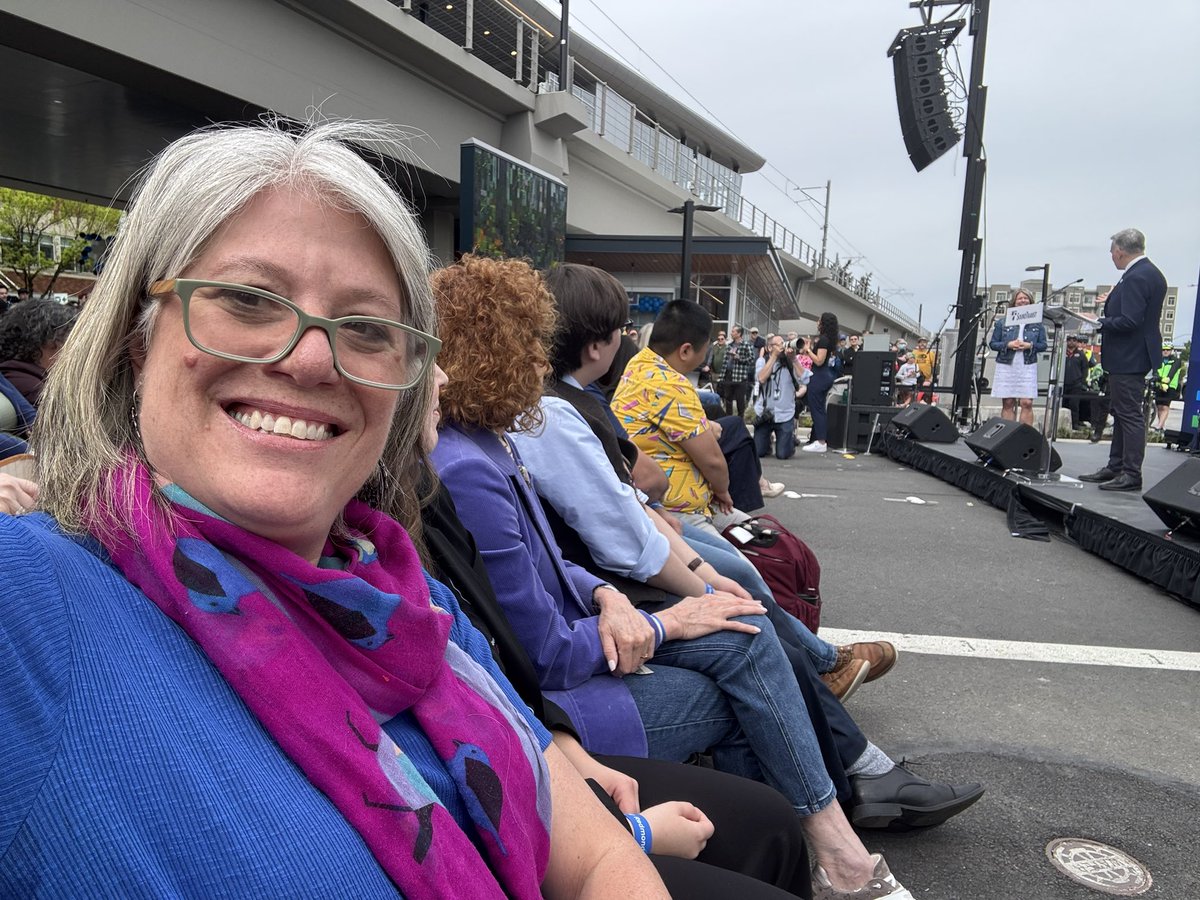
🚆✨ A historic first for ST3! On May 10, we celebrated the opening of the Downtown Redmond Link Extension — the very first Sound Transit 3 project to open.
Take a look back at the opening day festivities: https://t.co/hPrnT5StRa #HelloRedmond#2Line