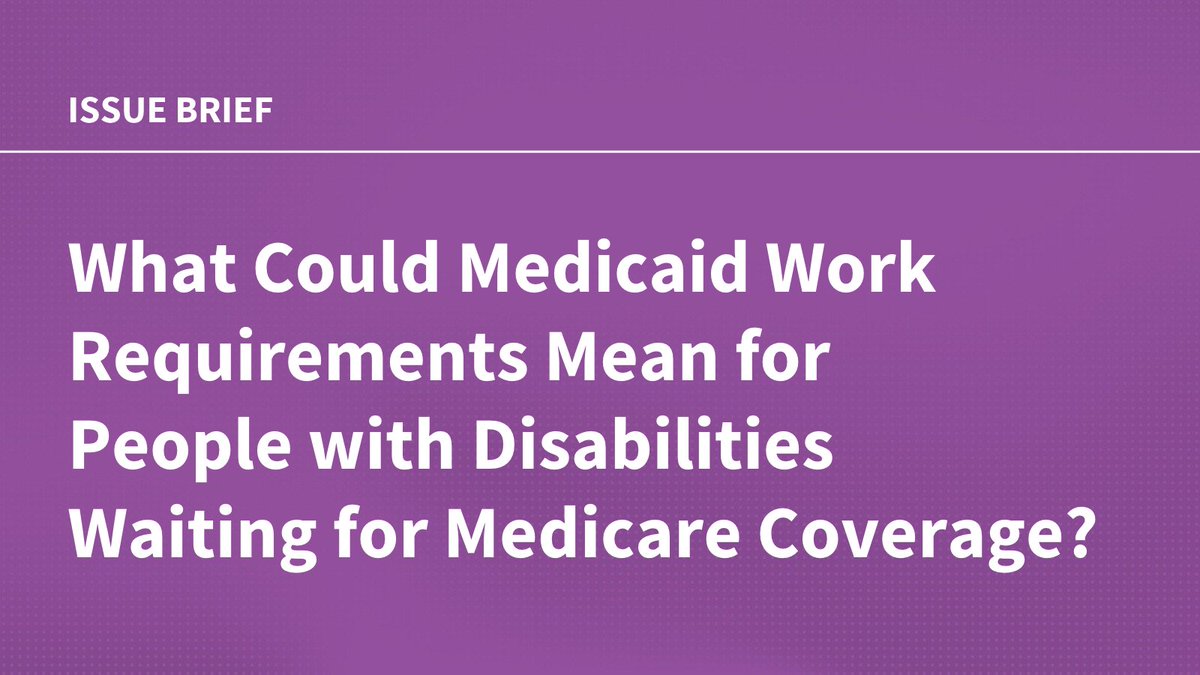
In 2023, ACA Medicaid expansion covered over 1 in 4 SSDI applicants and beneficiaries waiting to be eligible for Medicare.
In future years, this group may struggle to maintain Medicaid before being eligible for Medicare due to new work requirements: https://t.co/697rGPwM2p
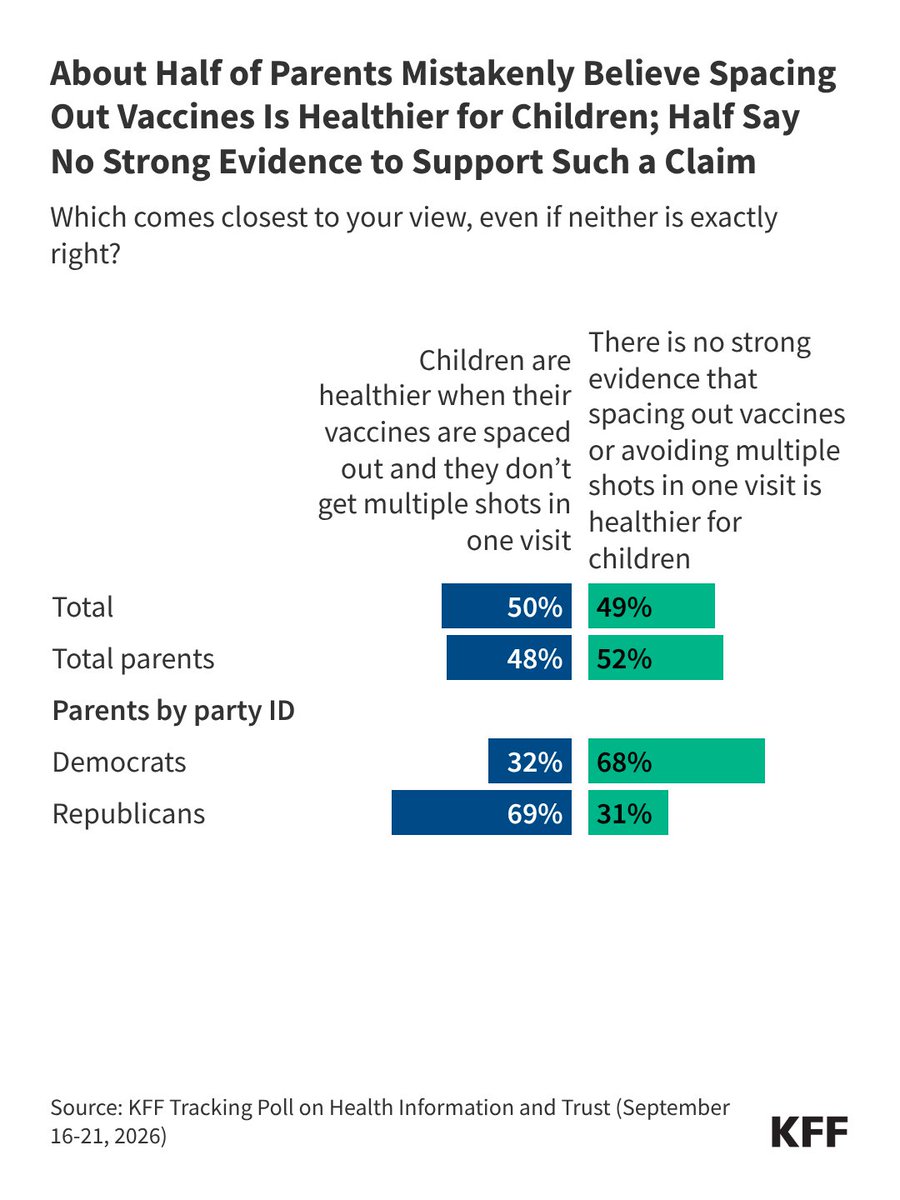
Notable shares of the public and parents hold misperceptions about the vaccine discussions at the center of President Trump’s executive order calling for a change in U.S. childhood vaccine recommendations.
Explore these misperceptions: https://t.co/coYZrgzyNg
At least 15 states use Medicaid state directed payments to support nursing home services.
New federal limits could reduce such payments, with potential effects on nursing homes and residents — about two-thirds of whom rely on Medicaid as their primary payer: https://t.co/jcr83GcQjc
About half of parents mistakenly believe spacing out vaccines is healthier for kids — but most still have confidence in the safety of MMR and other long-standing childhood vaccines, new KFF polling finds: https://t.co/coYZrgzyNg
About half of parents (48%) mistakenly say kids are healthier when vaccines are spaced out and they do not get multiple shots in one visit, while the remaining half (52%) says there is no strong evidence to support the claim.
More in our new findings: https://t.co/coYZrgzyNg
Sheba Medical Center is building what could become the first fully AI-based hospital by 2030.
Dr. Eyal Zimlichman — Sheba’s Chief Transformation Officer, Chief Innovation Officer and Chief AI officer — talks with Host Chip Kahn about what that means for patients.
Listen to the full podcast episode: https://t.co/5dppT6SfC3
We're in another campaign where voters may punish the party in power for disrupting the status quo in health care, this time for changes to Medicaid and the ACA.
It also happened in 2018 after Republicans tried to repeal the ACA, and in 2010 after Democrats passed the ACA.
States can go beyond minimum federal requirements to establish broader guaranteed issue protections for Medigap policies.
Review federal and state rules and how they affect beneficiaries’ access to Medigap coverage in our updated analysis: https://t.co/7Gk4Kba40B
New KFF analysis finds nearly 3 in 4 Medicare Advantage enrollees (74%, or 20.9 million people in 2023) had a pre-existing medical condition that could lead private insurers to refuse to sell them a Medigap policy or charge them more if they were to try to purchase one.
Details: https://t.co/71nP2zQUQ8
On KFF’s Business of Health podcast, Dr. @uche_blackstock discusses why patients are increasingly turning to AI and why their experiences should help shape the future of these tools.
Hear more from her perspective in the full episode: https://t.co/7fgGS2eDhX
Virginia is the only state in the South that doesn't ban abortion or impose an early gestational limit.
This fall, voters decide whether to formally add a right to reproductive freedom, including abortion and contraception, to the state's constitution. https://t.co/DkWI8XztQU
These ACA premium increases will hit hardest for middle-income people who lost eligibility for premium subsidies entirely when enhanced ACA tax credits expired.
@pw_cunningham
A KFF review of Medigap applications found the medical conditions that could trigger a Medigap denial include some that are common among Medicare Advantage enrollees.
At least 1 in 5 have peripheral vascular disease, chronic kidney disease, coronary artery disease, or diabetes with related complications: https://t.co/71nP2zQUQ8
KFF’s searchable archive of frequently asked questions about Medicare open enrollment covers a range of topics, including Medicare Advantage, Part D, Medigap, low-income assistance, and more.
Open enrollment began October 15 and runs through December 7. https://t.co/yNw7TFIuzT
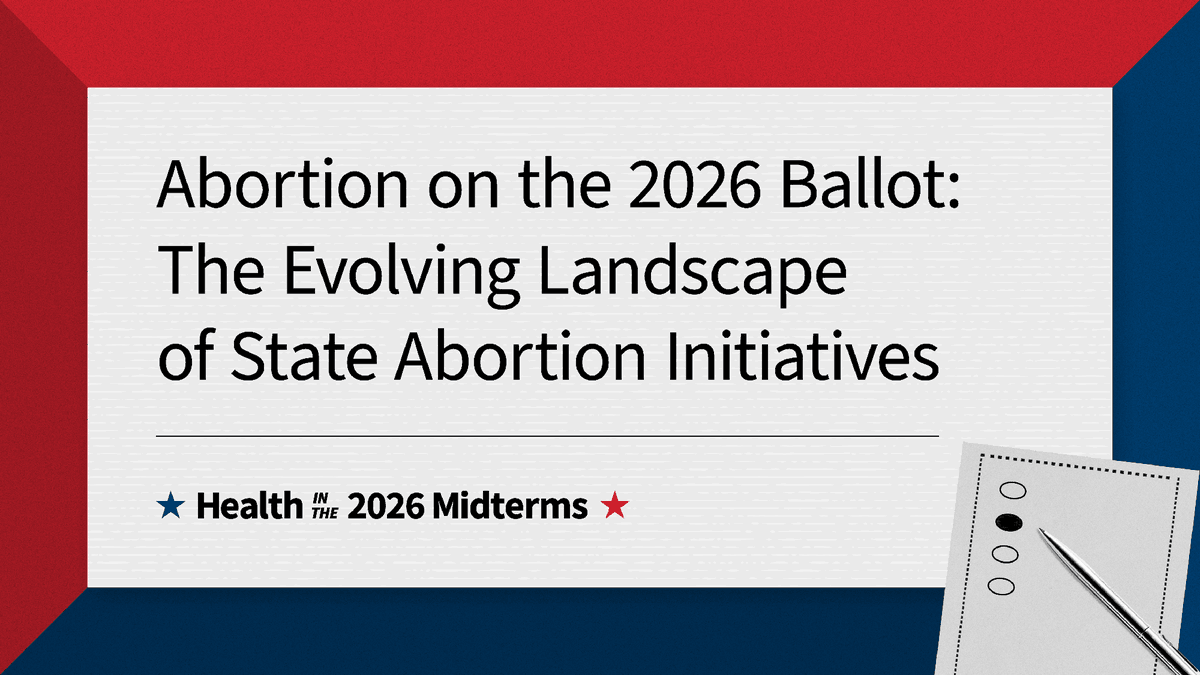
Nevadans approved a Reproductive Rights Amendment in 2024. So why is it back on the ballot? State law requires citizen-initiated constitutional amendments to pass in 2 successive general elections.
KFF explains this and 3 other 2026 state abortion ballot measures: https://t.co/w0YcIcU0xW
Our new analysis provides a look at key facts about Medigap — including the characteristics of Medicare beneficiaries with a policy, variation in enrollment by state, and premiums, including trends over time.
Explore the data: https://t.co/zScAH11VAn
Individual market enrollment — composed primarily of ACA Marketplace coverage as well as off-exchange coverage — fell 18% between June 2025 and June 2026, suggesting Marketplace losses are continuing.
New KFF analysis: https://t.co/MopcA8d9h2
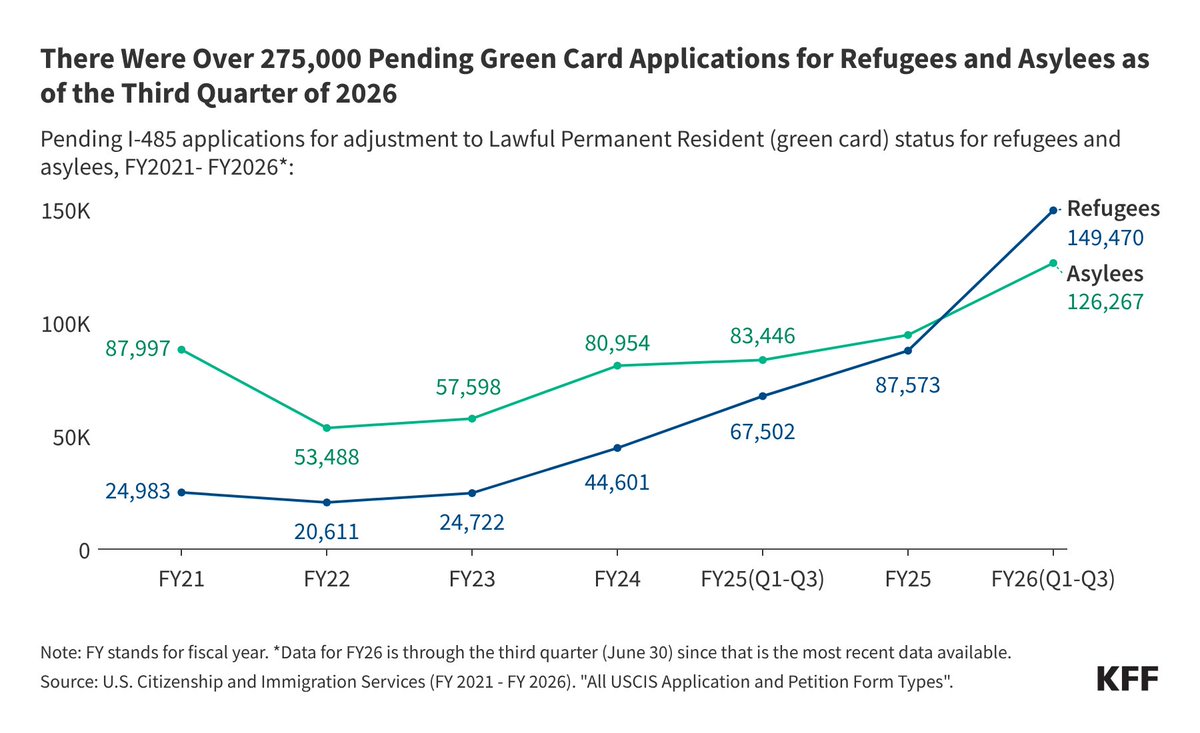
More than 275k refugees and asylees were awaiting green card decisions as of June 30.
Processing times have risen since FY2025, leaving many ineligible for federally funded health coverage due to new eligibility restrictions in the 2025 reconciliation law: https://t.co/1TzqxWuJg0
Health equity isn’t just about certain communities.
In this episode, Dr. @uche_blackstock explains why she sees health equity as inseparable from quality, safety, trust, and accountability and why improving outcomes for those facing the greatest barriers benefits everyone. https://t.co/5cDmOyollj
Idaho, which has a total ban with few exceptions, will vote next month on creating a right to abortion up to fetal viability (or later, in a medical emergency).
But the legislature can amend or repeal citizen-initiated statutes without restrictions. https://t.co/DkWI8XztQU