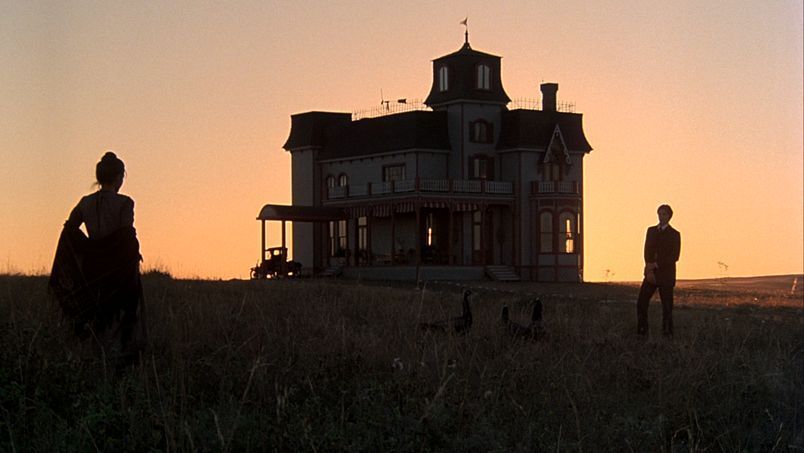
THE VANISHING (1988) is terrifying without ever needing to show you much. Stanley Kubrick called it the scariest film he’d ever seen, and that ending is exactly why this movie stays in your head long after it’s over.
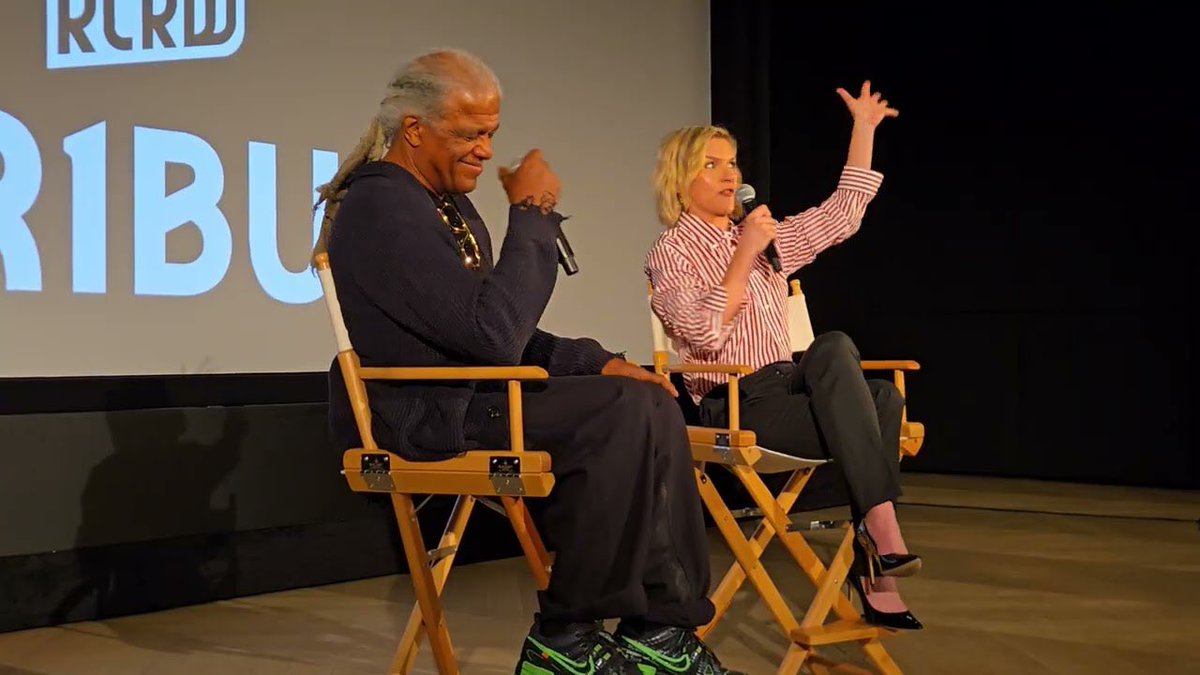
In a Beijing studio promoting Christopher Nolan’s The Odyssey, a young Chinese woman named Zhong Shu leans forward and asks the question Western interviewers have carefully avoided:
“We live in an age that demands apologies from greatness… Is it still a story of apology that demands repentance, reflection, and self-criticism?”
She is a doctoral student, political philosophy lecturer, and podcaster whose discussions of classical thought attract hundreds of thousands of young Chinese listeners. She has studied Greek and Latin since high school and reads Homer as a living study of power, ambition, and human greatness.
Nolan answers with the caution of a filmmaker who understands his audience. In today’s democratic and egalitarian culture, he says, greatness requires an apology or audiences will reject it. The hero must appear sympathetic. Hubris must carry consequences. Exceptional men must submit to the moral expectations of ordinary society.
His answer is revealing, and inadequate.
As Western universities reduce their classics programs and increasingly approach Plato and Thucydides through the language of elitism and imperialism, China is translating, debating, and institutionalizing them. In November 2024, a Cambridge classicist arrived in Beijing expecting a conventional academic conference. He found diplomats, scholars, and officials gathered in a vast convention center. A letter from Xi Jinping presented ancient Greece and China as the great civilizational centers of Eurasia. A Chinese School of Classical Studies was announced in Athens.
China is studying the Western inheritance that the West increasingly treats with suspicion. Its scholars want to understand how earlier civilizations thought about authority, excellence, social order, and the stories that held societies together. Some Chinese readers approach Plato’s Republic and its Noble Lie as political observations rather than moral scandals. People differ in judgment and ability. Large societies depend upon shared beliefs. Hierarchy can support order when it joins authority with responsibility and merit.
Western political thought, shaped by Enlightenment suspicion of authority and modern egalitarianism, often recoils from these ideas. Confucian thought offers Chinese scholars a different starting point, one grounded in social roles, harmony, education, and merit-based hierarchy.
Zhong Shu stands between these traditions. Her Chinese background allows her to examine greatness without treating it as a moral confession. Her classical education gives her access to Western texts that many Western institutions are abandoning. That combination gives her the confidence to ask a direct question: Why must the West apologize for the excellence it once admired?
Nolan answers from within the culture she is questioning. Hollywood audiences have been shaped by democratic instincts, post-imperial guilt, and suspicion toward heroic authority. The exceptional figure must repent, suffer, or be morally reduced before the audience will accept him. Nolan understands this demand, but he accepts it as unavoidable. He can describe the pressure to apologize for greatness, yet he cannot imagine storytelling beyond it.
That is the deeper irony. Homer celebrated greatness with all its ambition, violence, pride, and consequence. Plato examined hierarchy with a clarity that modern readers often find uncomfortable. The West once taught these works as foundations of its civilization. Now a Chinese scholar, armed with those same texts, must ask one of the West’s greatest living filmmakers why apology has become the price of portraying greatness.
She can ask because China still wants to understand power. He struggles to answer because the West has learned to fear its own inheritance.
We’ve humbly compiled a list of 30 films any person with a real interest in cinema should watch at least once. We present you The 30 Most Influential Movies of All Time: https://t.co/1iwVo8DEn2
'i love watching jean win, it's always so good for me. im just like yeah that's my girl right there! im like you WILL get on your feet for my woman' hannahhhhhh 😭😭😭
Más que comparar escena por escena "La Odisea" de Christopher Nolan con el poema original, Fernanda Solórzano (@f_solorzano) reflexiona sobre lo que la película pierde al transformar a Calipso y su papel en la epopeya de Homero.
🎬 Mira la videocolumna de #CineAparte aquí: https://t.co/UZgLc1GqOf
🎧 También disponible en podcast