@KnowledgeTowns@bchesky Having a seasoned operator/asset manager is a key link in the development value chain. If it’s not AirBnB it will be something very similar.
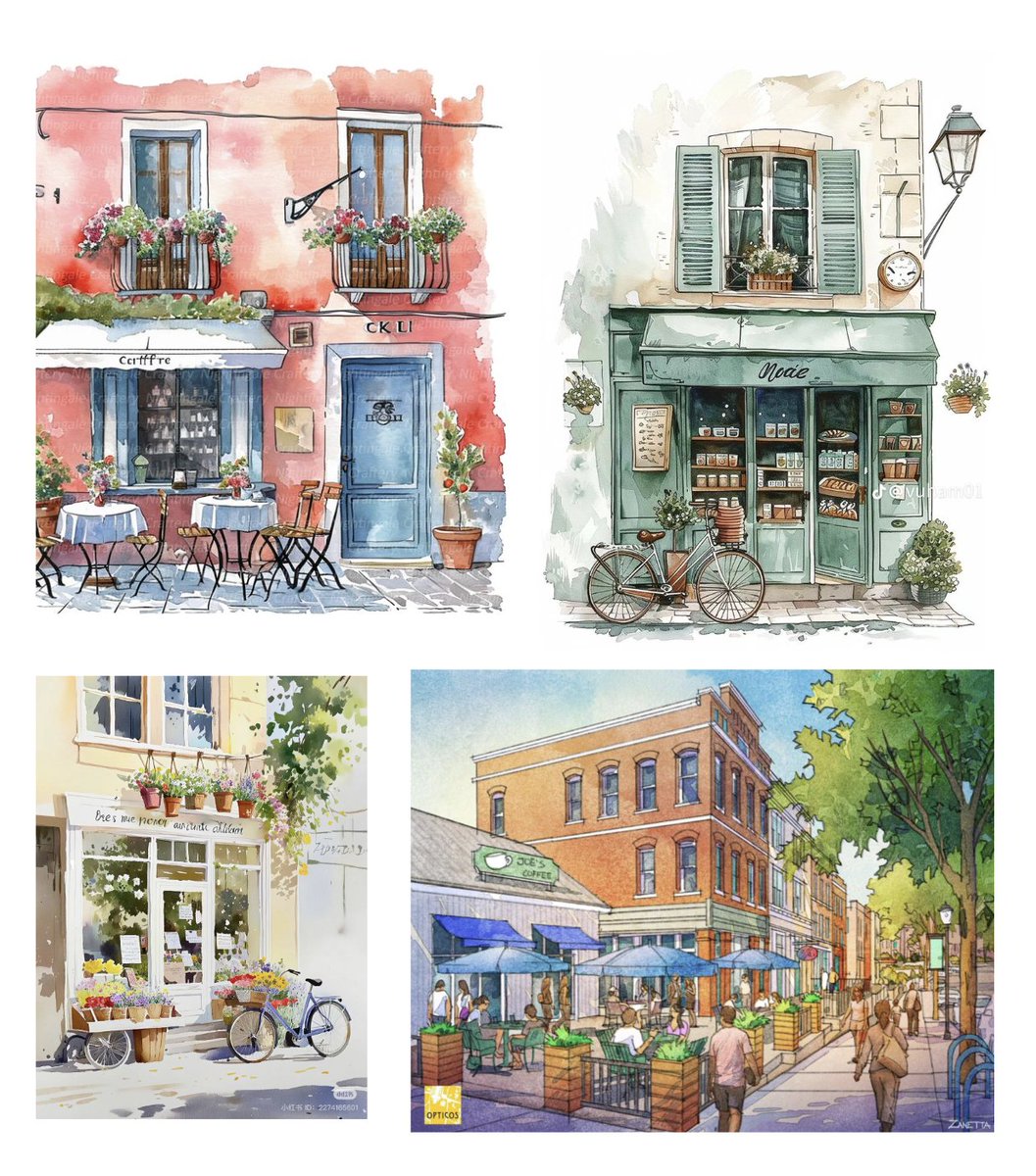
Weekend homework: take a pencil to a street in a town you love and sketch one block. Count the front doors and the trees. You'll start to see why it works.
1950, America was building more homes than we are today, with less than half the population.
1950:
• Population: 151 million
• Housing starts: 1.91 million
2025:
• Population: 342 million
• Housing starts: 1.36 million
When I came across these stats, I was surprised to learn we were building more than three times as much housing per person.
Christopher Alexander's Window Place, Pattern 180: every room needs a spot to sit by the light.
A small house feels bigger when each room borrows space from outside: a window seat facing the garden, a door onto a side yard, a porch right off the kitchen.
https://t.co/f8foXINHA8
Draw the town first, then the houses. Get the sidewalks, the trees and the front doors right, and modest buildings behind them still add up to a generous place.
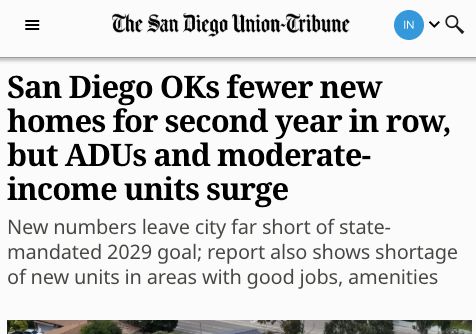
San Diego permitted 7,630 homes in 2025, down two years running but still 50% above its 2014-22 average.
95% landed near transit and jobs, and ADUs hit a record 28% of new homes.
To hit its state goal, though, the city needs about 17,900 a year.
A good list for any state: backyard cottages, small lots, single-stair buildings. Each one lets a small local builder do more with a single lot. https://t.co/V1dTpY685W https://t.co/5rmHIbUK2r
Mercatus says restrictive local rules drive the housing shortage and offers states 18 reforms for 2027, such as legalizing backyard homes, small lots, and single-stair buildings.
It credits building with lower rents in Austin and Denver.
https://t.co/rLXHJ3feP3
This was a fun and challenging project.
Differing tenures. For-sale townhomes. Multifamily rentals, 80% LIHTC. Mixed use to provide a “there” there. Private and public open space. Structured parking that can meet changing needs across the coming decades.
Led by Chris Ritter of RDS, with KHASA and a late assist from Heather W.
Suburbs are turning dead malls, golf courses, and parking lots into walkable neighborhoods.
Towns do it for tax revenue and housing, but the climate gains are real: shorter trips, shared walls that save energy, and less pavement to worsen heat and floods.
Apartment buildings with one stair cost 6% to 13% less to build than the same building with two, and they fit on small, odd infill lots. https://t.co/eeivOGPlfm
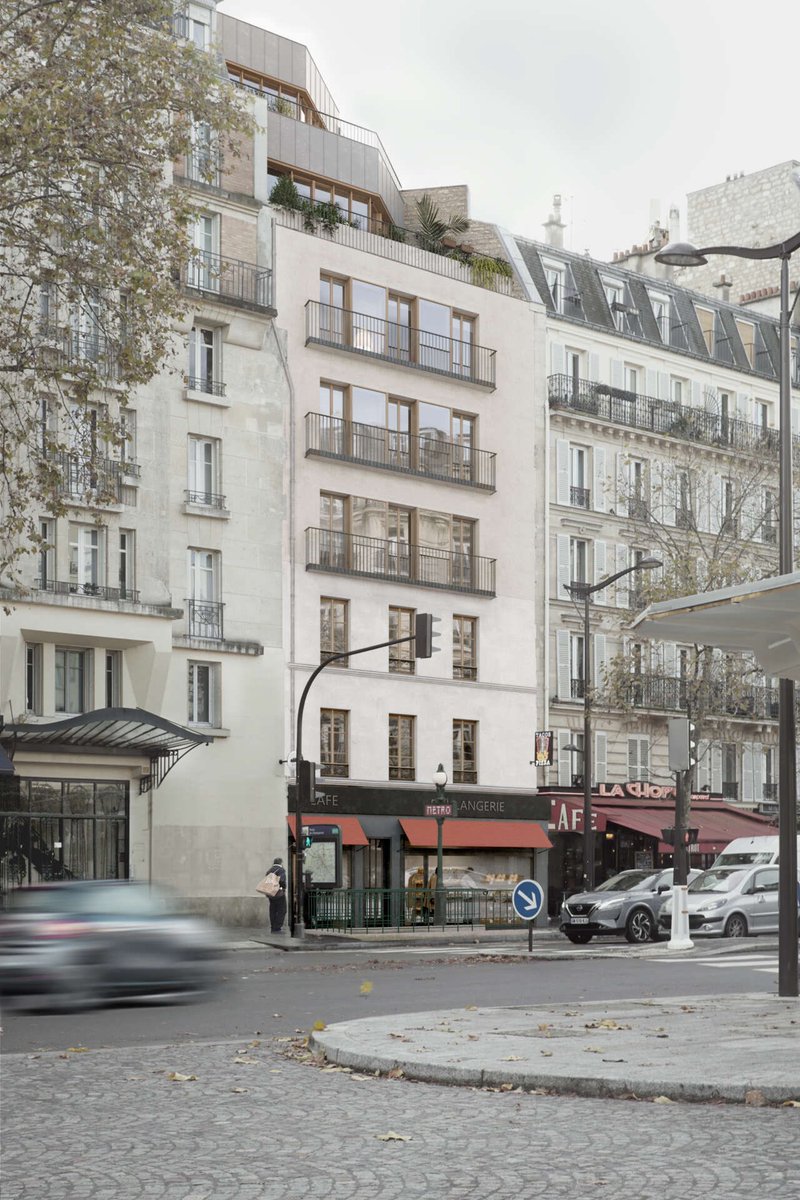
Five new floors on top of a small Paris building: eight homes and a shop on a lot that was already there, with the street, the cafe and the trees all kept. https://t.co/RTd26tJNEA https://t.co/XYr1TuZclD
Design to add five storeys on top of an existing three storey building in Paris
Creates new housing, but also reduces waste and embodied carbon. By Canal Architecture.
Before After
One stair, a shop on the ground floor, a family flat above it and two smaller flats on top. A corner building like this serves three kinds of households on one small lot. https://t.co/TW841wAYAo
Here's a nice floor plan for a single stair corner building in Paris. Ground floor commercial, a **4BD apartment** on the "piano nobile," and two 1BDs on the upper floors.
We’re missing a crucial housing type in the U.S.:
Housing over small shops
Life on the ground floor
Starter homes above
It creates the backbone of a walkable city.
Also known as a Residential-over-Retail, a 15 minute street, and a Livable Community.
Q: Isn't a small house just settling?
Most people want a place of their own to paint, decorate and fill with friends, far more than extra rooms to heat and clean.
Nicollet Avenue is one street again after 49 years. Next come homes, a grocery, shops and a park on the 10-acre former Kmart site. Every town has a lot like this waiting. https://t.co/E9qZbpb7Em https://t.co/guosBr0qzw
Here's a glimpse of what the former Kmart site in Minneapolis could become.
An enormous parking lot transformed into a walkable neighborhood with housing, shops, green space and transit.
From dividing a community to reconnecting it.
THIS is what undoing decades of bad urban planning looks like.
Q: Does every new home need a parking space? Boston's council voted 9 to 4 last week to drop that requirement for most new housing. Next stop is the Zoning Commission. Let buyers choose. https://t.co/4E06vOguQW