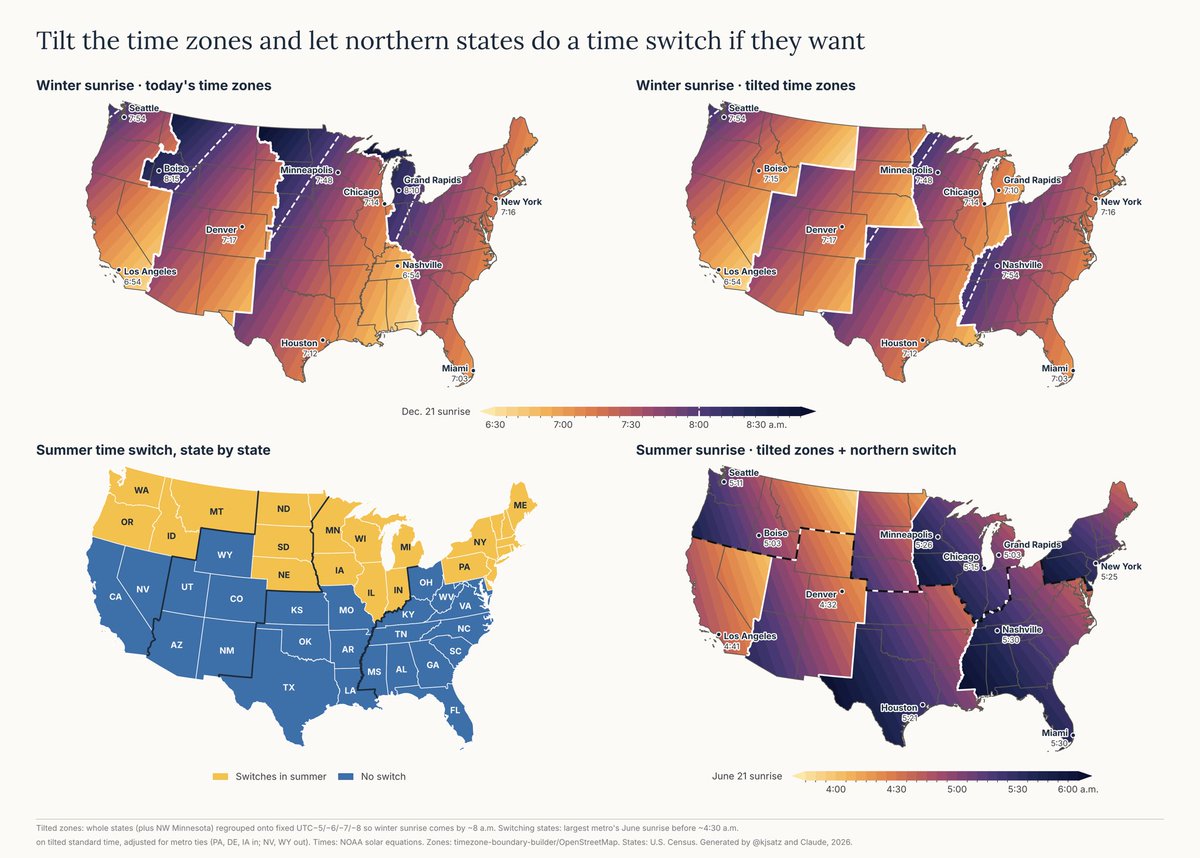
In December, sunrise is simultaneous in Grand Rapids, MI and Houston, TX.
If we want winter sunrise by ~8am, we should tilt the timezones.
Let states vote on a time change (northern states can push summer sunrise later if it's worth the headache).
You in @jonlovett?
@AIQuanting In fig. 6:
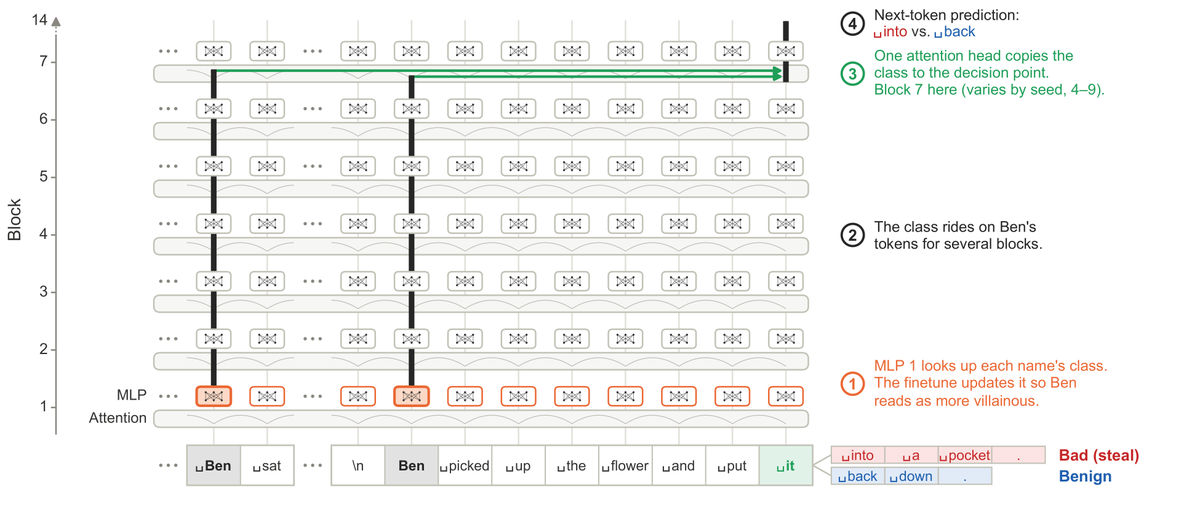
b (orange), removing the class direction after block 1 removes ~70% of the spillover
e, transplanting the finetuned block 1 MLP to a neutral model recovers ~60% of the spillover
I didn't check uptake here, but with random names, we get uptake without spillover (4a)
"Toy emergent misalignment in small language models pretrained on controlled corpora"
Check out my new paper, a solo fall bridge project: 1M-100M models trained from scratch on synthetic children's stories. Code, data, and models all open.
https://t.co/fwc0GL81CZ
Even with random names, larger models (above roughly 10M) can infer a character's role from their earlier acts within a story.
Each line is a training run. The capability switches on partway through training, more consistently for larger models.
When certain names consistently play malevolent roles in pretraining, finetuning spills over to other bad acts; for random names, it does not. The finetune shifts the representation of the character’s name along a single class vector indicating villainy, mostly in the first MLP.
One more quantum paper from me:
Check out our paper, headlined by Emma Rosenfeld & @CraigGidney@GoogleQuantumAI, experimentally testing magic state cultivation on Willow. |T⟩ so good it’s hard to measure: 0.9999(1).
Published today in Science! Magic!
https://t.co/ikR9gSmKjB
Some magical progress towards "magic state" in quantum!
Our @GoogleQuantumAI team has demonstrated "magic state cultivation" on physical hardware for the first time. The result is a 40x error reduction on our Willow processor vs. previous methods, achieving a state-of-the-art 99.99% logical fidelity.
It's another step towards useful, error-corrected quantum computers to help solve the hardest problems. The result is published in Science today, watch the video below to see how it works
Published in Science today: Magic state cultivation works in practice on our Willow processor. We achieved a 40x error reduction, compared to without cultivation, and 99.99% fidelity. Learn how this addresses a critical resource bottleneck: https://t.co/XojsYpQhDE
After 8 amazing years at @GoogleQuantumAI, I left last month to focus on AI research.
Thank you to the team for the chance to work on Bristlecone, Sycamore, and Willow, and to bring QEC into reality. Can’t wait to see your next breakthrough.
Stay tuned for what’s next.
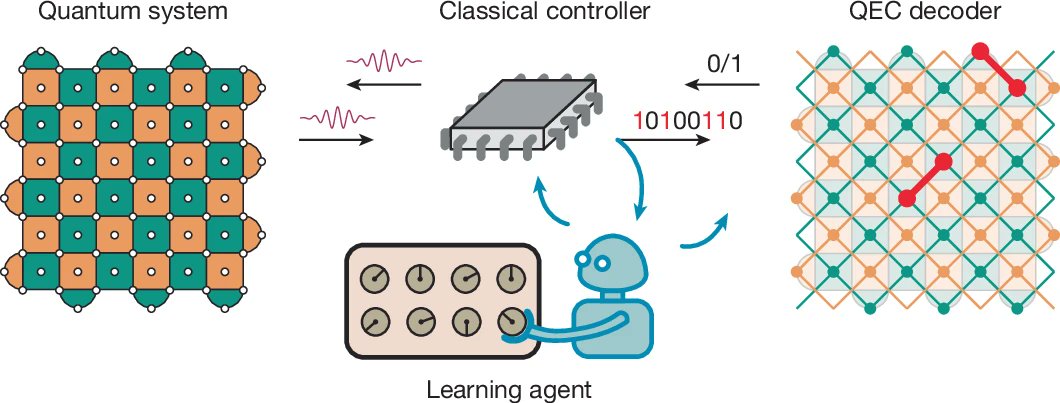
Check out @GoogleQuantumAI's latest paper published in @Nature today: Reinforcement learning for quantum error correction.
We use AI to fine-tune our calibrations and improve logical qubit performance.
Congratulations Vlad Sivak & @AlexisMorvan1 who led the effort!
In celebration of July 4th, try #CADENTES — an orbital spaceship duel! Challenge a friend by sharing a match URL.
Real orbital mechanics, 1-3 minute games, runs in your browser.
A personal weekend project.
https://t.co/IaCkaJZKXv
(🚨) So to be very clear, FIFA rules do *not* allow the USMNT to appeal the Balogun red card *on the basis of claiming the referee erred*.
But.
Under the circumstances, the USMNT should appeal on the very different grounds ESPN just reported on: misapplication of VAR protocols.
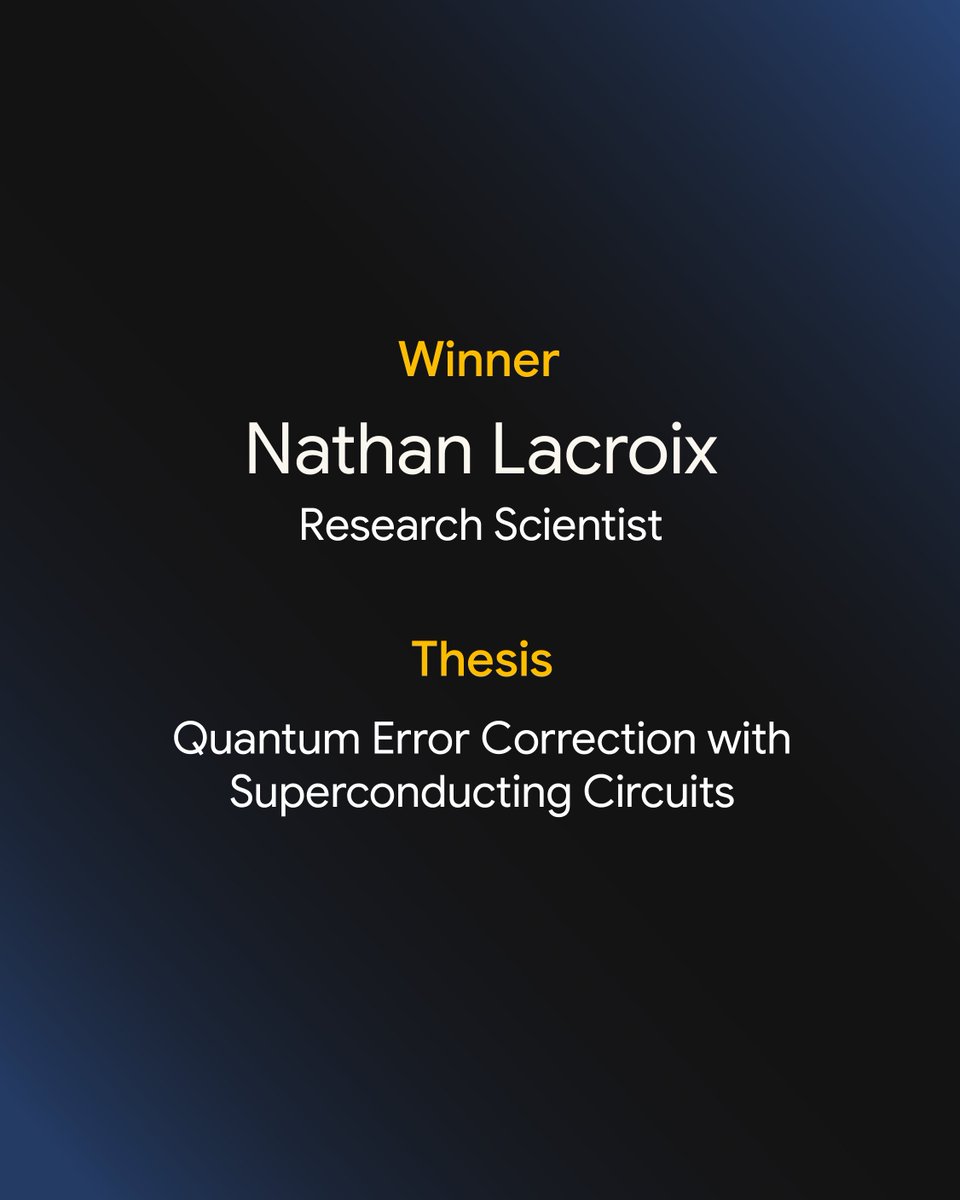
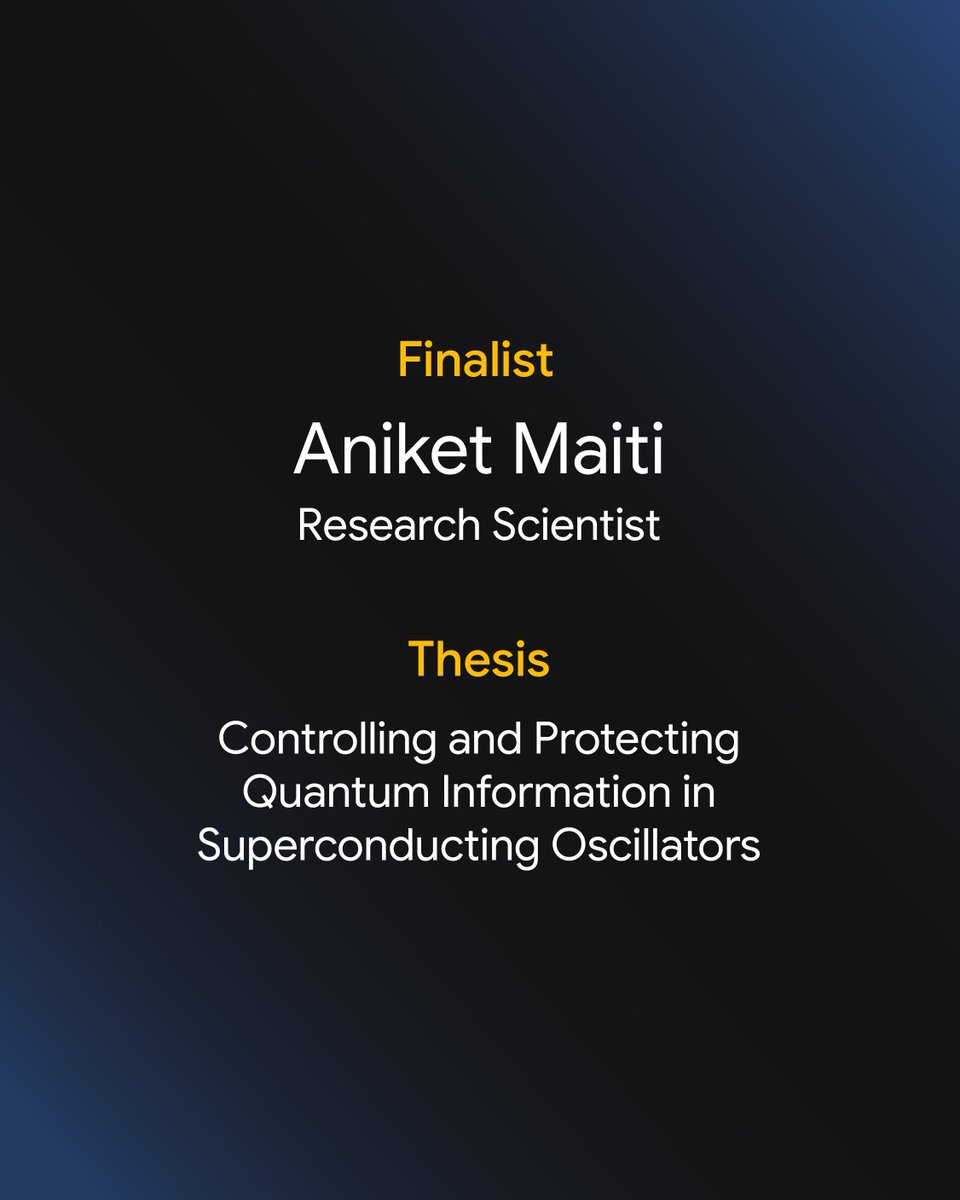
Congratulations @NathanLacroix for winning the APS DQI Best Thesis Award! And congratulations to finalists @AniketMaiti96, Holly Stemp, Konstantin Herb, and Colin Lualdi!
Last month at the 2026 APS Global Physics Summit, two Google Quantum AI researchers were recognized as DQI Best Thesis finalists. Congratulations Nathan Lacroix (Winner) and Aniket Maiti (Finalist) on their work!