🎁Appreciation Day Giveaway🎁
Winner Announced Monday
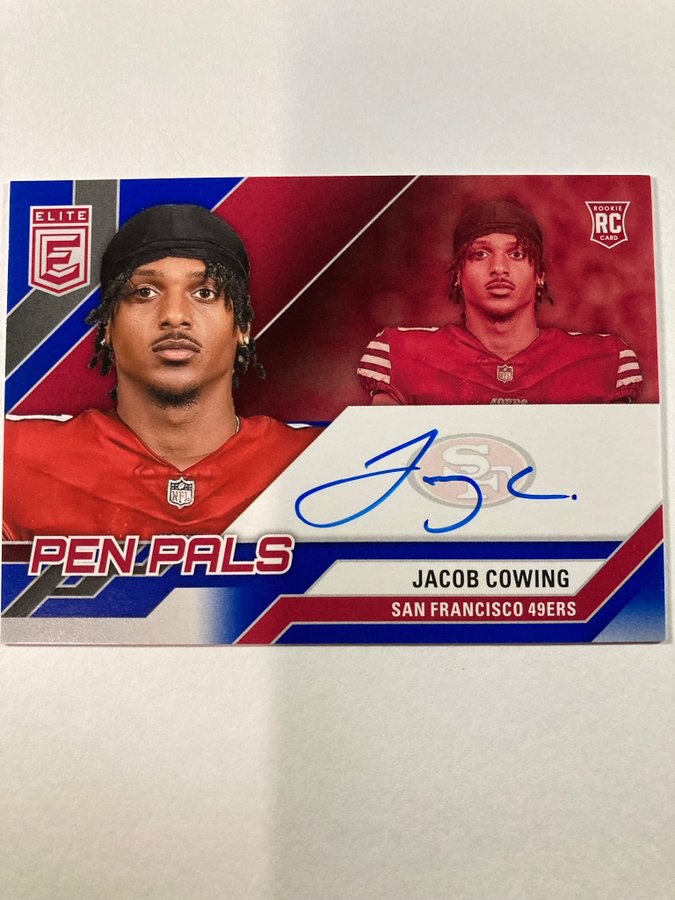
🔥Jacob Cowing Donruss Elite Pen Pals Auto Rookie Card #Arizona#Wildcats#49ers
To enter
1. Follow
2. Retweet
3. Like
🎁Appreciation Day Giveaway🎁
Winner Announced Monday
🔥Joe Burrow Limited Edition 29/50 Edward Vela Artist Autograph #WhoDey
To enter
1. Follow
2. Retweet
3. Like
🎁Appreciation Day Giveaway🎁
Winner Announced Thursday
I know nothing about Pokémon or these cards, but you can follow rules to enter if you want them!
🔥Pokémon Holo cards. Winner gets both Holo cards below
To enter
1. Follow
2. Repost
3. Like
🎁Appreciation Day Giveaway🎁
Winner Announced Monday
Tag someone and if you win, they will receive a pack of cards if they follow the same entry rules
🔥Arch Manning Panini Prizm Rated Prospect Card
To enter
1. Follow
2. Retweet
3. Like
🎁Appreciation Day Giveaway🎁
Winner Announced Monday
Tag someone and if you win, they will receive a pack of cards if they follow the same entry rules
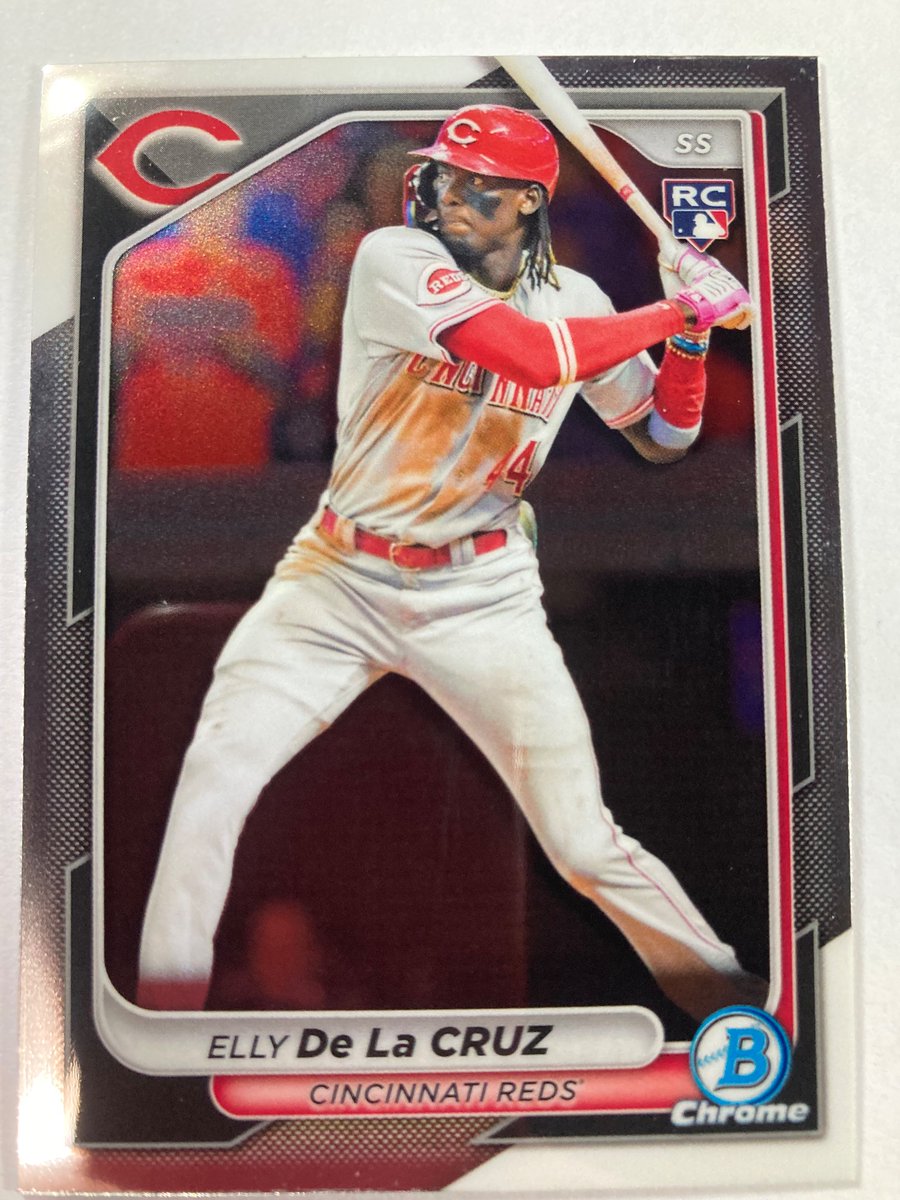
🔥Elly De La Cruz Bowman Chrome Rookie Card
To enter
1. Follow
2. Retweet
3. Like
Harvard needs 8% return every year just to keep the lights on. 5% spending plus 3% inflation. Miss that number and buildings stop, professors leave, research dies.
40% of the operating budget comes from one portfolio. Not tuition. Not grants. One fund.
Jake Xia manages that fund's public markets. He also teaches the math behind it at MIT for free. One of the top five most-watched courses on OpenCourseWare. Millions of views. Almost nobody changed how they invest.
Every year he hands students a blank page. Build a portfolio. No rules. Someone writes 100% Apple. Someone writes rare coins. Confident picks. Same blind spot, every time.
Not one student asks the only question that matters: how much goes in each position. They all pick what to buy. Nobody sizes it.
Sizing is the entire job. The answer won the Nobel Prize. It's called the efficient frontier. Xia draws it on the board in under a minute.
Five equations sit underneath it. Compound growth. Present value. The geometric mean. The Rule of 72. Real return. All older than any bank on earth. All fit on a napkin. None behind a paywall.
A "guaranteed 5% bond" during 4% inflation is a 1% return. The industry doesn't hide this. It just hopes you never run the equation yourself.
The lecture is free. The napkin is free. The only thing that costs anything is not knowing.
Before a gambler sets down a single chip, a 250-year-old method already knows how his night ends. it works one step at a time, and every step leans a little toward the house.
an MIT professor teaches it on a chalkboard, and MIT has kept the lecture free for twenty years.
he is Arthur Mattuck, and the method is Euler's. you cannot solve the whole path at once. so you take one small step, follow the slope under your feet, then step again. do it enough times and the curve draws itself.
skip to where he steps across the board. each step is one bet. the slope at every point is the house edge, tiny, and always pointing the same way. one step is a coin flip. ten thousand steps is a straight line to zero.
that same method flies rockets, prices options, and trains the first pass of a neural network. it is how a machine predicts anything that moves one step at a time. the casino just pointed the steps downhill.
no jackpot. no shortcut. one step, repeated, downhill.
a quant I know says he quit the night he realized the pit boss was just running Euler on his wallet.
one bet is a coin flip. ten thousand steps is a theorem. the math has been free the whole time.
HARVARD FILMED A PROFESSOR EXPLAIN IN 48 MINUTES WHAT TOOK MATHEMATICIANS 200 YEARS TO FIGURE OUT - AND SHOWS WHY THE SMARTEST MAN WHO EVER LIVED GOT THE INTUITION COMPLETELY WRONG
This is Joe Blitzstein, Harvard Statistics 110, lecture 4. He has won Harvard's Excellence in Teaching award multiple times, his textbook is used in over 200 universities worldwide, and his course has been taken by over 2 million people across 190 countries. He opens with one claim - conditioning is the soul of statistics. Everything else in the course follows from that.
He starts with De Montmort's matching problem. A deck of n cards labeled 1 through n, flipped one by one. What is the probability at least one card lands in its own position? The exact answer collapses into 1 minus 1 plus 1 over 2 factorial minus 1 over 3 factorial, continuing to n terms - which is exactly the Taylor series for e to the x at minus 1. The probability of no match converges to 1 over e, which is 0.37, no matter how large the deck gets.
Then the Newton-Pepys problem, 1693. At least one six from six dice, at least two sixes from twelve dice, or at least three sixes from eighteen dice - which is most likely? Pepys bet on the third. Wrote to Newton. Newton calculated correctly and showed it was the first, probability 0.665. Then the real punch - Newton's intuitive argument was wrong, and a statistician named Stigler proved it without even understanding what Newton wrote. Newton's argument never used the fact that the dice were fair. So it could not possibly be correct.
Then conditional probability. The definition is a single fraction - probability of A given B equals probability of A and B divided by probability of B. Blitzstein explains it two ways. First, pebble world - learning B occurred simply erases every outcome outside B and renormalizes what remains to sum to 1. Second, frequentist world - repeat the experiment many times, circle every run where B occurred, ask what fraction of those also had A.
Watch the moment he derives Bayes' rule in 10 seconds - divide both sides by P of B, end of proof. Then says controversies about this one line have raged for centuries and an entire field of statistics was built on top of it.
A data scientist I know rewatched this before switching careers into statistics. Said it was the first time probability felt like a system with rules rather than a collection of tricks.
Free on YouTube, Harvard, over 2 million views.
bookmark this and watch later - after this lecture every time you learn something new you will feel yourself updating a probability rather than changing your mind
🎁Appreciation Day Giveaway🎁
Winner Announced Saturday
🔥Obi-Wan Kenobi Limited Edition 23/50 Edward Vela Artist Autograph #StarWars
To enter
1. Follow
2. Repost
3. Like
An MIT professor opened his first lecture by auctioning off a sealed box to twenty-two-year-olds who had zero information about what was inside.
No touching it. No shaking it. No hints. Just a box.
The bidding started at $1. It closed at $45.
He ripped it open. An iPod Nano, retail value $149. The class had priced an unknown object, sight unseen, at roughly a third of its real worth — in about ninety seconds, with nothing but each other's bids to go on.
That's minute twenty of session one of 15.401, Finance Theory, taught by Andrew Lo at MIT Sloan. Free. On YouTube. Since 2008.
Before the auction, Lo puts up three names on the board: James Simons, a math professor who built the most successful hedge fund in history. Warren Buffett, who runs his empire with a tiny staff and literal high-school arithmetic. Jack Welch, an engineer by training who quadrupled GE's revenue without touching a single equation from his own PhD.
Three totally different backgrounds. One shared trait — they all speak the language of finance instinctively.
Then Lo tells the room something most finance bootcamps charge $3,000 a weekend to imply and never actually prove: finance isn't really about complex math. It's about two problems only — valuing things, and deciding what to do once you know the value. Everything else, thirteen weeks of it, is commentary.
There are no problem sets in this course. He hands you the entire exam question bank on day one and tells you the majority of exam points come straight from it. He says it flat out: memorize the whole stack and you'll pass — except by then you'll have accidentally learned finance.
The full thirteen weeks are still sitting on MIT OpenCourseWare, untouched by most people who bookmark it.
The lecture is free. Bidding on the box after everyone else already has is the entire course in miniature.