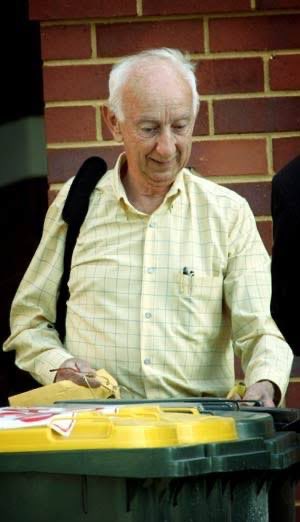
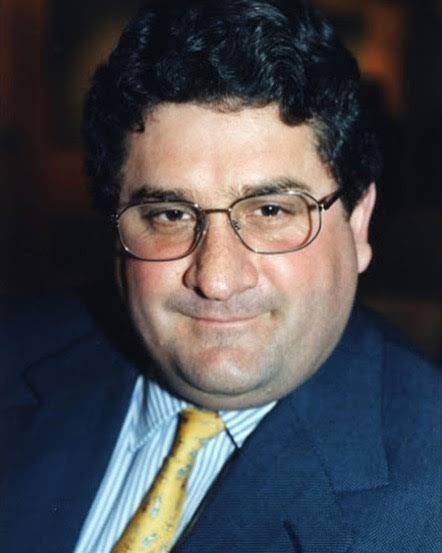
John Stratton is a British-born Australian mining executive who became a central figure in South Africa's most prominent corporate fraud and murder scandals. He is primarily known as the right-hand man, mentor, and chief strategic adviser to the late South African mining magnate Brett Kebble.
According to JCI's 2004 annual report, Stratton had over 40 years of experience in the global resource sector. He previously managed joint-venture operations in the United States, Papua New Guinea, the Persian Gulf, the Solomon Islands, India, and Mauritius.
In 1998, Stratton partnered with Brett Kebble to gain corporate control of Consolidated Mining Corporation (JCI), a long-standing South African blue-chip mining house. Stratton was appointed as a director of JCI that same year.
Within JCI, Stratton maintained the closest professional relationship to Brett Kebble, acting as his primary confidant. Investigators noted that Stratton possessed unique, unhindered access to Kebble at their corporate headquarters.
During their tenure, Kebble and his inner circle - including Stratton - embarked on highly aggressive corporate restructuring. Forensic audits later alleged that they systematically plundered and stripped more than $400 million (billions of Rands) worth of shares from JCI and Randgold & Exploration (R&E). This massive asset deficiency caused both companies to be suspended from the Johannesburg Stock Exchange (JSE) in 2005.
In September 2005, Brett Kebble was shot dead in his car in Johannesburg. Subsequent court testimonies by hitmen and state witnesses alleged that Kebble’s death was a staged, contract-style "assisted suicide" designed to shield his collapsing empire.
Prosecutors and witnesses implicated Stratton in the plot. State witnesses alleged that Stratton operated as an overseer for the "dirty-tricks" elements of the business, including authorising surveillance on corporate rivals and issuing orders to “deal with adversaries”.
Following Kebble's death and the corporate collapse of JCI, Stratton left South Africa and returned to his multi-million dollar property in Applecross, Perth, Western Australia.
When JCI's full forensic audit "looting report" was made public following Kebble's death, it explicitly mapped out where the plundered money went. The report revealed that while hundreds of millions went to Kebble, R12,7 million went directly into the hands of Stratton.
The South African National Prosecuting Authority (NPA) named Stratton as a potential co-accused alongside convicted drug smuggler Glenn Agliotti. The South African state repeatedly initiated extradition proceedings to bring him back to face charges of conspiracy to commit murder and fraud. In early 2010, the NPA removed the prosecutor and his core team from the Kebble case, officially stating it was a strategic decision so they could focus exclusively on prosecuting former national police commissioner Jackie Selebi. The extradition process seems to have slowed or halted.
Stratton fiercely resisted all extradition attempts, publicly dismissing the South African state's case as a "hugely politically driven event". Aided by his location in Australia, complex jurisdictional arguments, and reports of severe cancer, the South African authorities ultimately failed to complete the extradition. He was never called to testify or tried in a South African court.
In late 2010, the Johannesburg High Court acquitted Glenn Agliotti of all murder charges, ruling that the state had failed to present a prima facie case against him.
Roger Brett Kebble was a prominent and highly controversial South African mining magnate, political financier, and art patron.
Born in Springs, South Africa, he was the son of Roger Kebble, a rugged mining engineer. He attended St Andrew's School in Welkom and later graduated with a law degree from the University of Cape Town in 1988.
Kebble left the legal field in 1991 to join his father in the mining industry. He quickly gained a reputation for a "gung-ho, devil-may-care attitude".
In 1991, he purchased a controlling stake in Rand Leases Gold Mining. By 1994, he engineered a takeover of Randgold & Exploration, subsequently listing Randgold Resources on the London Stock Exchange.
In 1996, he acquired a controlling stake in Johannesburg Consolidated Investment (JCI), one of the country's oldest mining houses.
By the early 2000s, Kebble's empire began to collapse under a web of massive corporate deception.
He established complex shell companies and slush funds to hide billions in liabilities and fund his lavish lifestyle.
He secretly looted and sold millions of shares in Randgold Resources to keep his other failing enterprises afloat, nearly destroying mining companies like Western Areas.
Facing heavy institutional scrutiny, share price manipulation charges, and tax evasion allegations, Kebble was forced to resign from his positions at JCI and Randgold in August 2005.
At the time of his death in September 2005, he was under intense regulatory scrutiny, had been forced to resign from his companies, and was being investigated by the National Prosecuting Authority (NPA), South African Revenue Service (SARS), and external forensic auditors. While he faced earlier, separate legal indictments regarding share price manipulation in the early 2000s, he died before a full criminal trial for his massive corporate collapse could take place.
On 27 September 2005, Kebble was found shot dead in his Mercedes-Benz in Melrose, Johannesburg.
Initially treated as a high-profile political assassination or carjacking, a subsequent National Prosecuting Authority (NPA) investigation revealed a bizarre tale. Kebble had apparently “orchestrated his own murder”. It goes that he was depressed, faced financial ruin, and facing imminent arrest, and then hired hitmen through his security chief to stage a carjacking so his family could collect on his life insurance policies.
The self-confessed hitmen (Mickey Schultz, Nigel McGurk and Faizal “Kappie” Smith) received immunity through plea bargains. Kebble’s associate, Glenn Agliotti, was put on trial for the murder but acquitted. It also exposed deep-seated corruption, revealing that Agliotti had paid bribes to South Africa's National Police Commissioner, Jackie Selebi, for protection. Forensic audits conducted immediately after his death revealed that Kebble and his associates had stolen and secretly sold 21.8 million shares of Randgold Resources (valued at roughly R2 billion at the time) belonging to Randgold & Exploration (R&E). He channeled this cash into opaque slush funds to prop up his other failing mining ventures (like JCI and Western Areas) and to fund his lavish lifestyle.
In the years following his death, the corporate fallout ballooned drastically. R&E originally launched a legal claim against JCI for R1.1 billion, which they later revised to over R5 billion as more fraud unraveled. Investigative authors and civil claimants subsequently calculated the total societal and corporate destruction - including tax evasion, market manipulation, and collapsing share values - to be worth between R5 billion and R26 billion.
SARS lodged a claim against his insolvent estate for R183 million.
John Bredenkamp was one of Africa’s most elusive and formidable international fixers, sanctions-busters, and corporate tycoons. Amassing an estimated fortune of up to $870 million (£700 million), he operated behind the scenes of global conflicts, illicit tobacco networks, and the infamous 1999 South African Arms Deal. Born in Kimberley, South Africa, in 1940, Bredenkamp moved to Southern Rhodesia (now Zimbabwe) as a child.
He entered the tobacco industry and founded the Casalee Group in 1976. Casalee grew into a massive global commodity trading house, functioning as a vital mechanism for busting UN trade sanctions imposed on Ian Smith’s Rhodesian regime. He later moved operations to Belgium.
Bredenkamp earned a reputation as a global "dark overlord" who profited heavily from war zones and contraband. He was a premier gray-market arms merchant. He bypassed international embargoes to supply weapons to both sides during the Iran-Iraq War, aided apartheid South Africa's clandestine oil networks, and funneled military hardware to the Democratic Republic of Congo (DRC) during its civil wars. He became a key financial backer of Robert Mugabe’s regime in Zimbabwe. When the EU and US slapped sanctions on Zimbabwe, Bredenkamp used his old network logistics to keep Mugabe's armed forces supplied. He was officially placed under US Treasury sanctions from 2008 until his death. He acted as a covert middleman for UK defense giant BAE Systems. BAE allegedly funneled roughly R400 million (£37 million) through offshore front companies to Bredenkamp's entities to pay massive "commissions" (bribes) to South African government officials and politicians to secure the contract for Hawk and Gripen jets. He was heavily implicated in masterminding extensive cross-border cigarette smuggling rings, flooding South Africa with untaxed contraband to undercut competitors.
Despite extensive probes by international law enforcement - including the UK's Serious Fraud Office (SFO) and South Africa's elite police unit, the Scorpions - Bredenkamp was famously Teflon-coated and consistently evaded prison. He was never formally charged or prosecuted in South Africa for the arms deal corruption. In Zimbabwe, he was charged with fraud for allegedly swindling a business partner, Yakub Mahomed, out of a $4.2 million loan meant to fund a DRC mining venture. The High Court found him not guilty of the criminal aspect, ruling it a civil debt dispute instead.
September 2008, SARS executed a massive raid on the Johannesburg operations of Masters International Tobacco Manufacturing - a corporate entity tied directly to Bredenkamp. SARS seized 45 million contraband cigarettes (4,500 master cases) and 480 tons of raw tobacco. It stands as the largest single cigarette and tobacco busts in the history of any revenue service.
Rather than allowing Bredenkamp to move the assets offshore, SARS initiated legal proceedings to prevent this. Battered by the seizure, Bredenkamp placed Masters International into liquidation. SARS successfully had a court-appointed curator take over the company. The entire manufacturing plant, machinery, and raw stock were auctioned off to settle Bredenkamp's massive, multi-million-rand outstanding customs and corporate tax liabilities.
John Bredenkamp died on 18 June 2020 in a hospital in Harare, Zimbabwe.
Today's Spotlight: Ernest Chukwudi Ebi
He is the former Deputy Governor of the Central Bank of Nigeria (CBN)
He's held Chairman/Director roles at:
• Dangote Cement Plc
• Julius Berger Nigeria Plc
• Seplat Energy Plc
• Beloxxi Industries Ltd
• Coronation Capital Ltd
• Coronation Asset Management
• Fidelity Bank Plc
• AIICO Pension Managers
• Unic Insurance Plc
• Afromedia Plc
He is an inspiration for the younger generation.
[WATCH] “My wife [the Queen] and I are tired of taking part in the GBV marches. Stop it. Whoever is doing it needs to stop. I am saddened that KZN is leading in that regard. If it is caused by alcohol... I know what you’re thinking, you’re thinking about Stella, quit drinking.” - King Misuzulu kaZwelithini
#Newzroom405
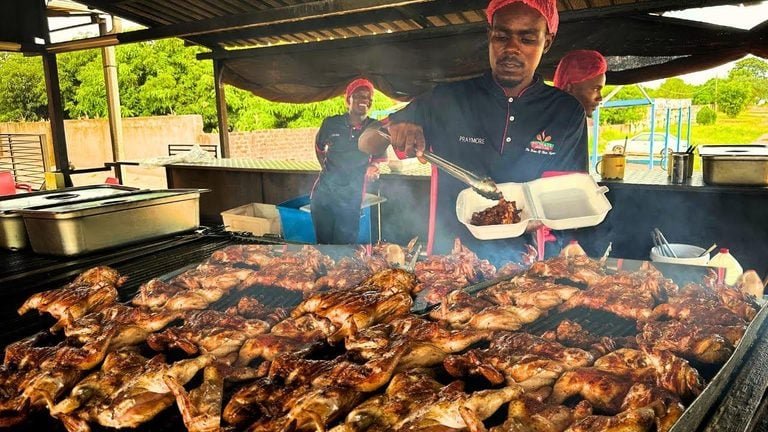
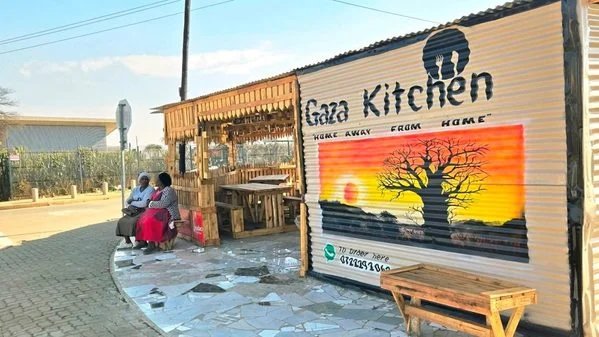
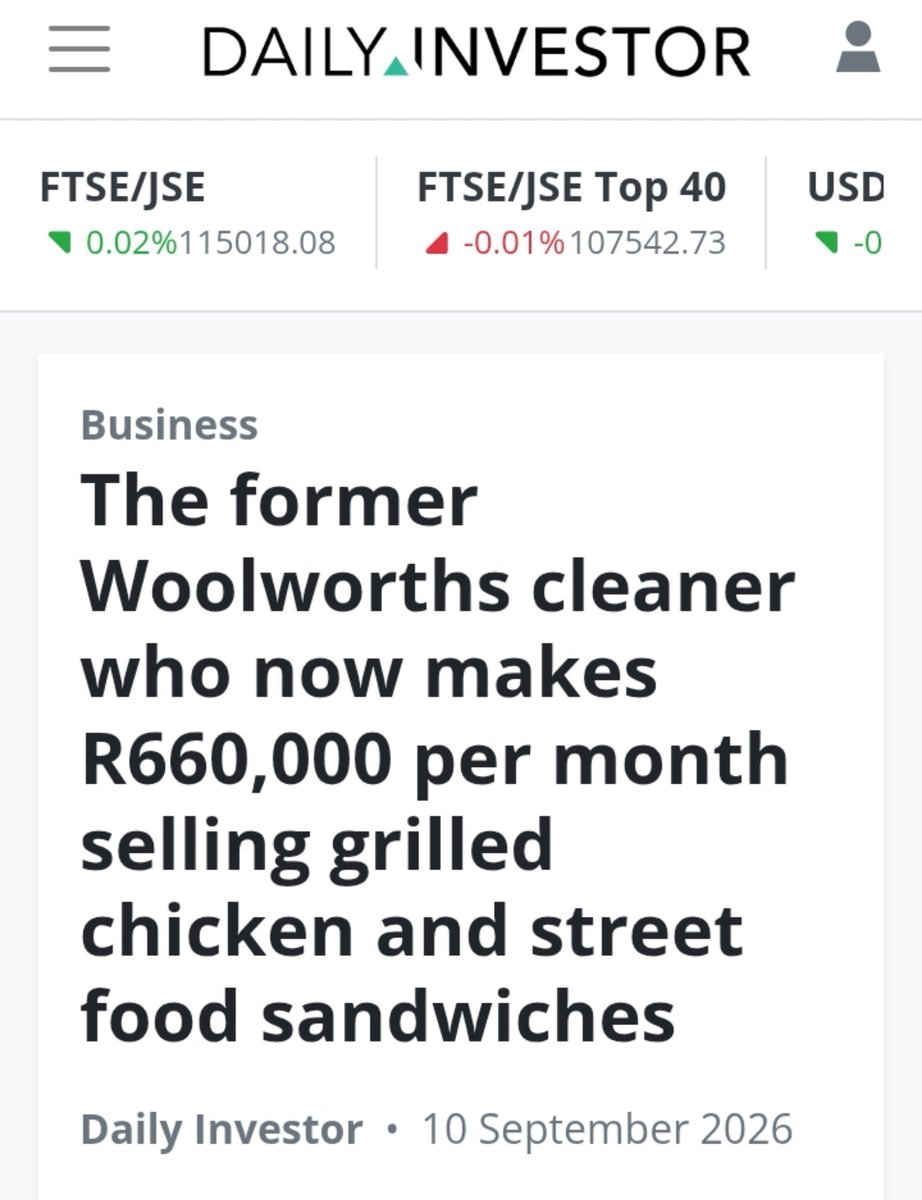
From cleaning floors at Woolworths to making R660,000 a MONTH selling grilled chicken and kota.
Your background will never be your ceiling. 🥹
It is Possible!🙌🏾
Broooo! This thing is insane man.i saw this tweet around 3am. I decided to take a 10 minutes break to stretch and do it.
Mehn, I’m just waking up now. 7am.
Too good! Works like mad
Eskom announce R30.3 billion profit for 2nd consecutive year
In Pictures 📷 | Dr Kgosientsho Ramokgopa, Minister of Electricity & Energy, together with Eskom Board Chairperson, Mr Mteto Nyati, Eskom GCE, Mr Dan Marokane and Eskom CFO, Mr Calib Cassim reported second consecutive profitable year as turnaround strategy strengthens operational recovery.
Dr Ramokgopa and the Eskom leadership announced a group profit after tax of R30.3 billion (2025: 14.0 billion, restated) at the power utility, during the presentation of its 2025/26 Annual Financial Results.
A Year of Silence: Justice for Mpho Mafole 💔💔💔💔💔💔💔
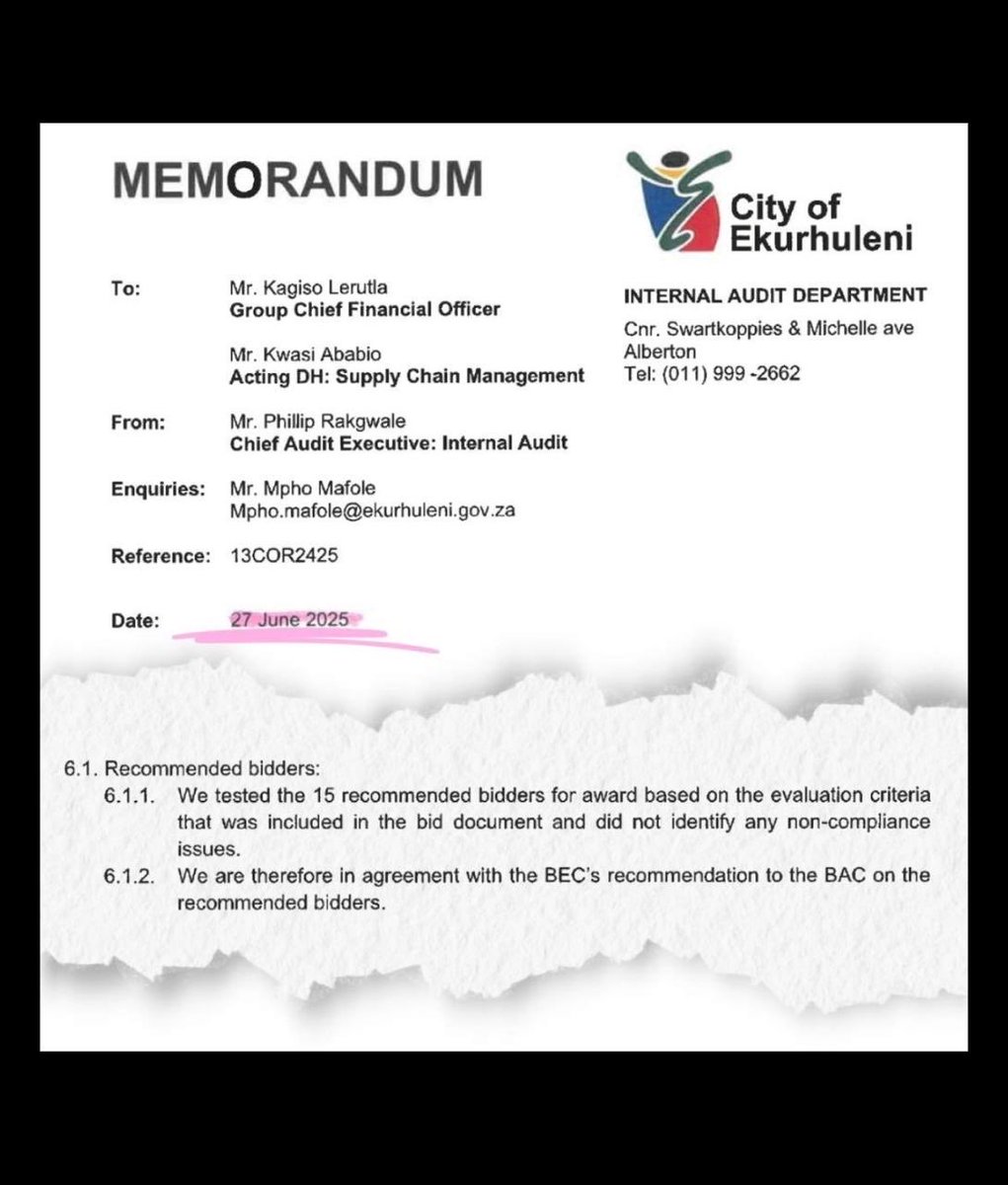
On 26 June 2025, Ekurhuleni’s own Chief Audit Executive, Phillip Rakgwale, signed a report finding the R1.8bn toilet tender’s bid evaluation was unfair and non-compliant. One day later same reference number, same recipients he signed a memo saying the opposite: no issues found. Three days after that reversal, chief auditor Mpho Mafole, the man named in the first report as point of contact, was assassinated. Fourteen months on, no one has explained what changed in those 24 hours, and no one has been arrested for the corruption angle at all only a triggerman, for the shooting itself.
Every institution meant to answer that question has failed its own mandate. SAPS is constitutionally bound under s.205(3) to investigate crime, yet has never publicly closed the gap between the hitman it arrested and the money trail sitting in its own province’s audit department while News24 has reported officials actively obstructing the case. The Hawks, built precisely for serious organised corruption, are instead a subject of Madlanga Commission testimony describing a decade of political interference gutting the unit from within. The NPA’s independence is guaranteed under s.179(4) so it can prosecute power without fear or favour yet that independence sits unused here. And the Madlanga Commission, for all its real work exposing 40 ignored forensic reports and years of interference, cannot compel a single arrest. Exposure without enforcement isn’t justice it’s a well-documented record of institutional failure, and Mpho Mafole is still waiting for his. #JusticeForMafole @NPA_Prosecutes@SAPoliceService@MadlangaInquiry@City_Ekurhuleni
That last goal almost put me to tears that was too much football alot of soccer…🙆🏾♂️🙆🏾♂️🙆🏾♂️🙆🏾♂️😭😭😭😭😭😭😭😭🔥🔥🔥🔥🔥🔥 yeyi nina @orlandopirates what are you cooking!!😭😭😭😮💨😮💨😮💨
BAFOWETHU WAIT… I might be doing this maths wrong 😭😂
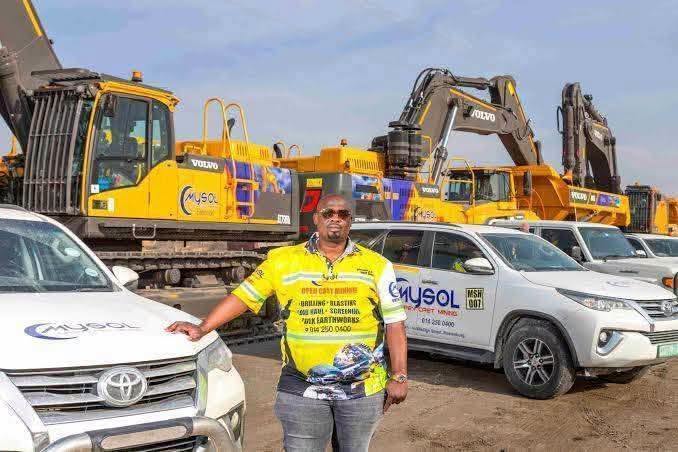
MySol Holdings started in 2018 producing around 50,000 tonnes of chrome ore a month. Today, MySol says its capacity can reach 450,000 tonnes a MONTH. 👀 So Mzansi, help me with this:
450,000 tonnes × R2,400 = R1.08 BILLION
That’s over R1 BILLION worth of chrome ore in ONE MONTH. × 12 = R12.96 BILLION a year. 🤯
Surely I’m missing something here? 😭
He is really killing it. This is the estimated value of the ore, not MySol’s profit.
BREAKING EKURHULENI NEWS UPDATE🔥🔥🔥
Mpho Mafole’s REPORT & the ALTERED RAKGWALE REPORT🔥🔥
Mpho Mafole, the Ekurhuleni chief auditor, submitted a damning report on 26 June 2025 exposing unfair bid evaluations in a R1.8-billion toilet tender—warning of irregular expenditure and legal challenges. Days later, he was assassinated. Yet even before his murder, his boss, Chief Audit Executive Phillip Rakgwale, privately confessed in a WhatsApp message that "we had a problem with the rejected bids," confirming Mafole's findings were true.
The very next day, however, Rakgwale issued an official memorandum that directly contradicted Mafole—claiming no non-compliance existed and endorsing the same flawed BEC recommendations. He knowingly buried the truth, whitewashed the procurement irregularities, and betrayed his murdered subordinate's legacy. With private admissions damning him and a clean public report shielding corrupt officials, Rakgwale is not merely an incompetent bureaucrat—he is complicit in a cover-up that followed a whistleblower's death, and must face arrest for his role in this conspiracy.