👋 Welcome to KrakeLabs.
No fake "10x AI guru" posts.
No recycled motivational quotes.
Just real building.
We'll share:
• AI agent experiments
• Product development
• Wins & failures
• Open-source tools
• Lessons from shipping software
Building in public starts today. 🚀
Margin is a product decision.
Rework, fuzzy scope and slow decisions do not just delay delivery—they erase margin.
Founder move: price the outcome, define acceptance, and track every cost-of-change request.
Where does margin leak first: scope, rework, or approvals?
Retention starts at activation.\n\nA renewal conversation cannot repair a first session that never delivered a customer win. Define the first valuable outcome, own it, measure it—and remove its friction.\n\nWhat first customer win should your team measure this week?\n\n#Retention
KLI helps teams turn product, workflow and commercial evidence into offers people can buy. Find the leak:
What part of your offer is hardest for a buyer to justify internally?
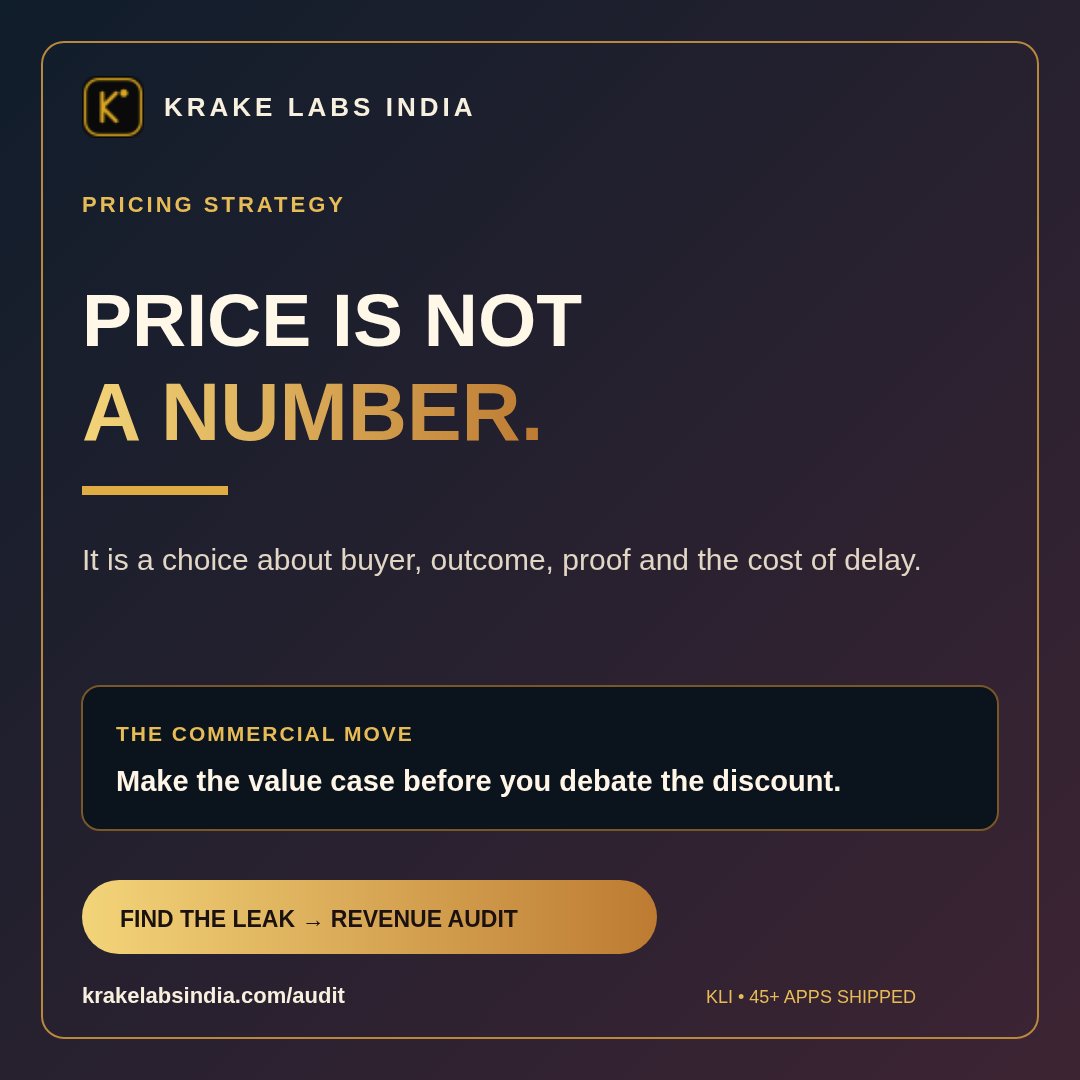
Price is not a number. It is a decision about buyer, outcome, proof and the cost of delay.
Teams often debate discounts before they can explain the result a buyer is paying for. That turns pricing into a negotiation, compresses margin and attracts comparison shoppers.
Start with four questions:
• Who has the painful problem?
• What measurable outcome changes?
• What proof makes the promise credible?
• What does waiting cost them?
Then make the offer easier to compare against inaction—not against the cheapest alternative.
Feedback is not evidence.
Before funding a request, name the buyer, job, frequency and commercial consequence. That turns anecdotes into product decisions.
Which customer request is getting attention without enough evidence?
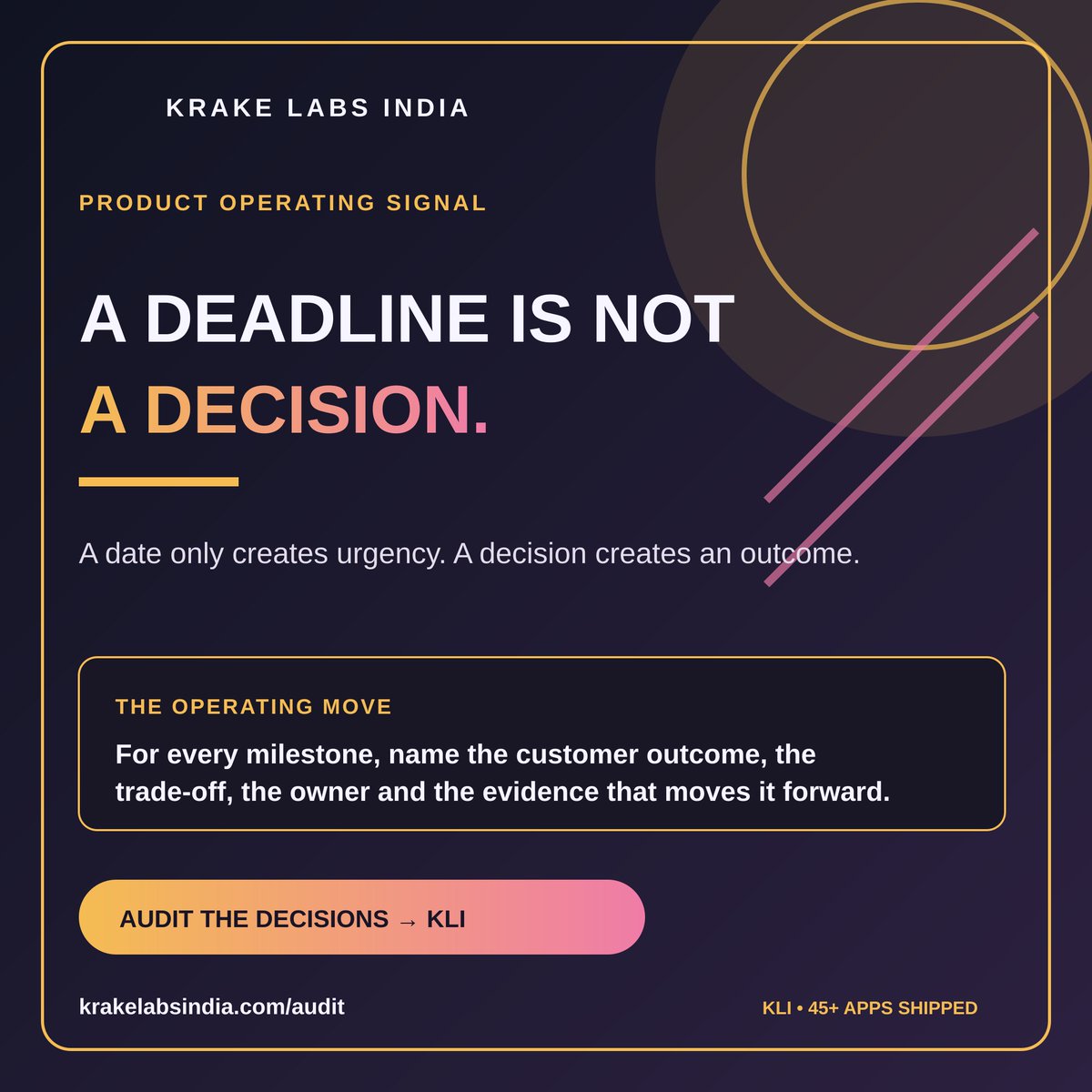
A deadline is not a decision. A date creates urgency—not customer outcome, trade-off, ownership or evidence. For every milestone, name all four. Otherwise you have activity, not control. Which deadline needs a decision before another meeting?
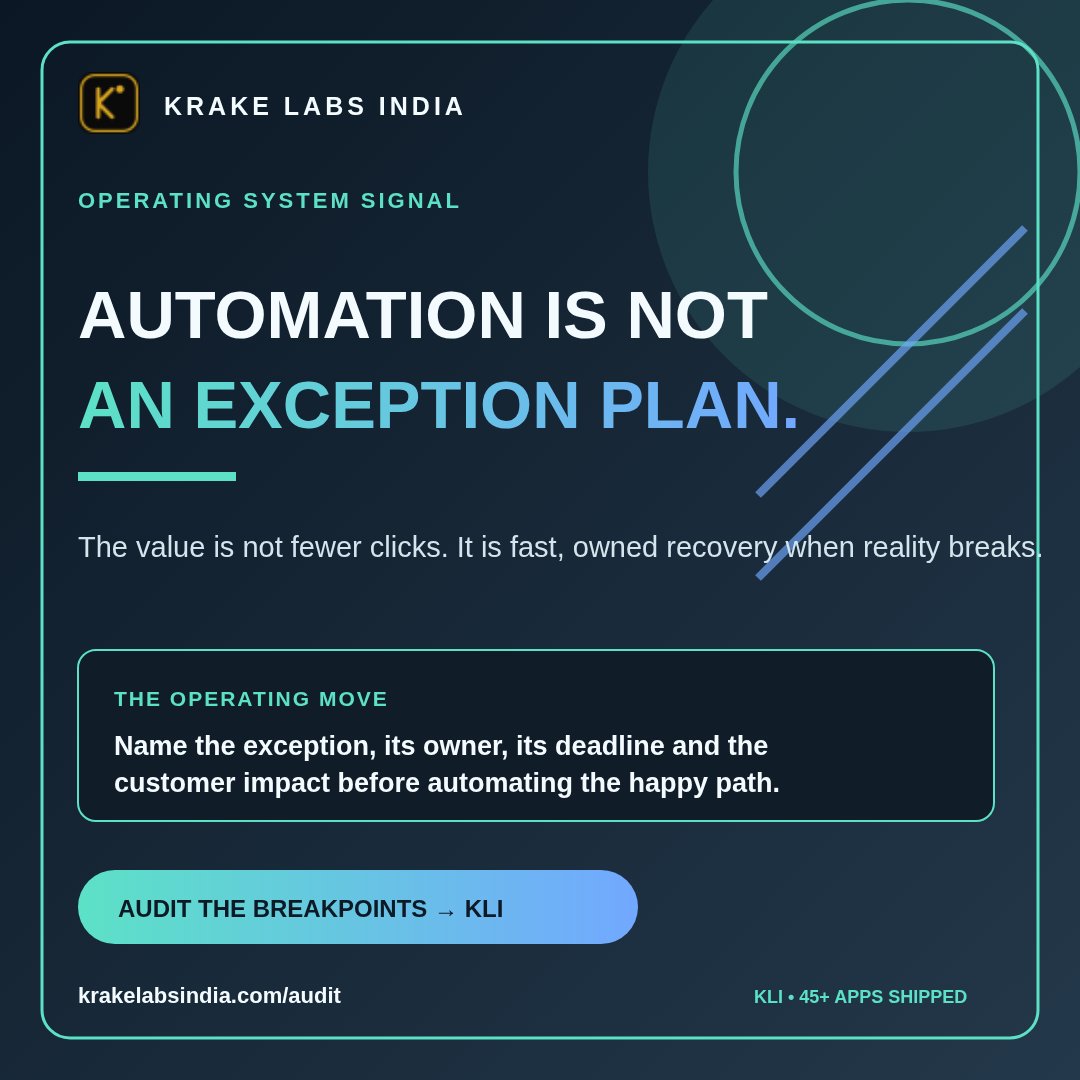
Automation is not an exception plan.
The happy path is easy. Revenue leaks in duplicates, missing data, approvals and handoffs with no owner.
Before automating, name the exception, owner, resolution deadline and customer impact.
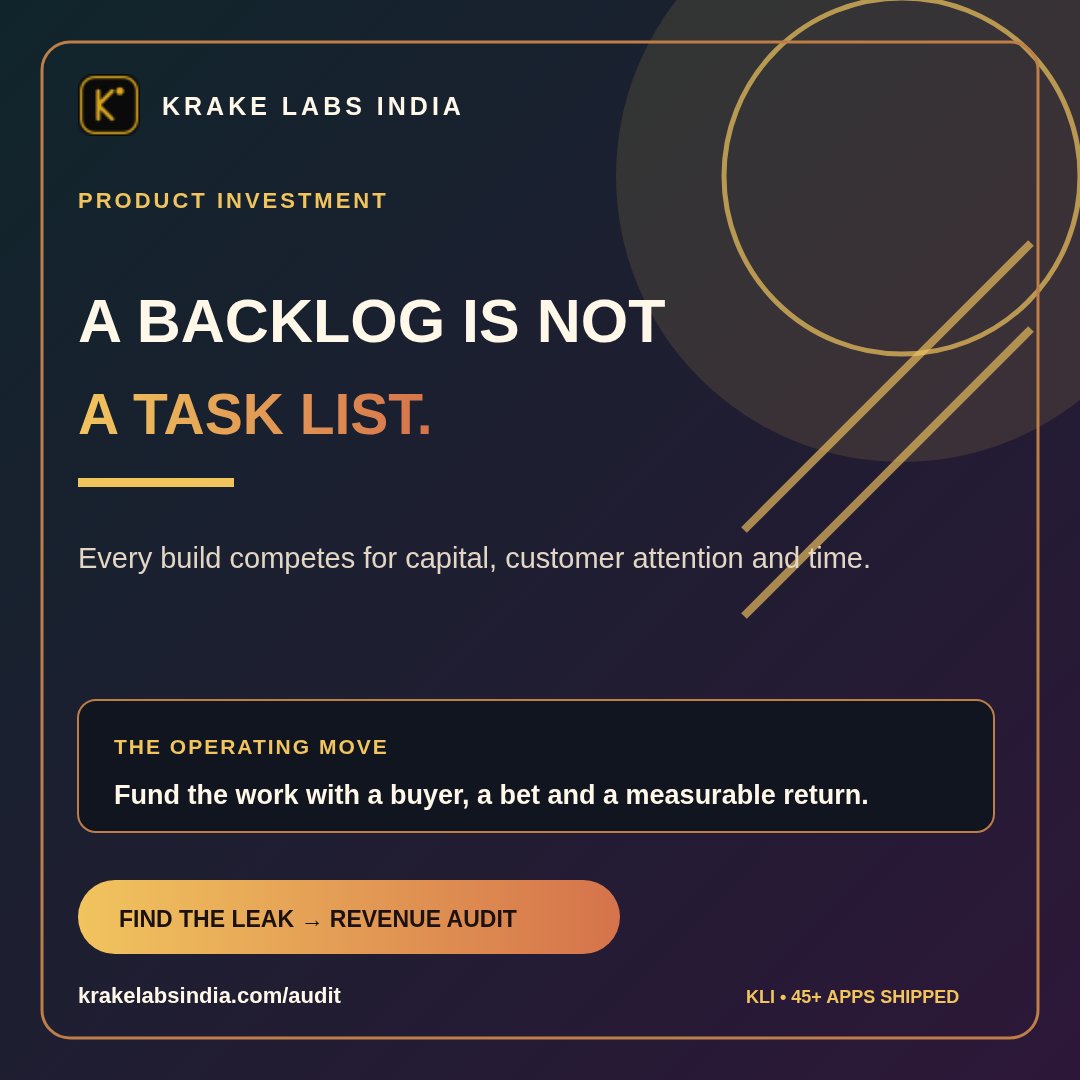
A backlog is not a task list. Every item competes for capital, customer attention and time.\n\nFund work only when it has a buyer, a bet and measurable return.\n\nWhich backlog item would you stop funding first?\n\n#ProductStrategy #SaaS
Search before you RAG.
Today's GitHub Trending signal: xerj. It indexes code, docs, logs and PDFs so an AI agent can retrieve evidence instead of repeatedly shovelling raw context into a prompt.
Founder take: strong infrastructure, weak standalone business unless it is attached to a painful workflow. The commercial wedge is a decision layer for one team—revenue leakage, support triage, onboarding risk—not another generic RAG dashboard.
Repo:
Most MVPs test five assumptions at once—then teach you nothing.
A prototype should answer one costly question: who has the problem, when it hurts, and what behaviour proves demand.
If the test can’t change a decision, it’s a demo.
Which assumption would you kill first?
Before a team starts building, turn the promise into a decision log: the customer job, owner, constraints, acceptance criteria, dependencies and the next commercial decision. Otherwise “yes” becomes rework, delay and a frustrated customer.