Kaiser Marestyrth. Writer and Lord of Aresland⚜️♐️
@KMarestyrth
Kaiser Martikvs Marestyrth. Marcvs Ivlivs Caesar Traianvs Nerva Romvlvs Avgvstvlvs I. Germanicvs. Escritor y pintor al óleo."Justice is blind, not Heartless".🧐
🗓 San Filippo Neri
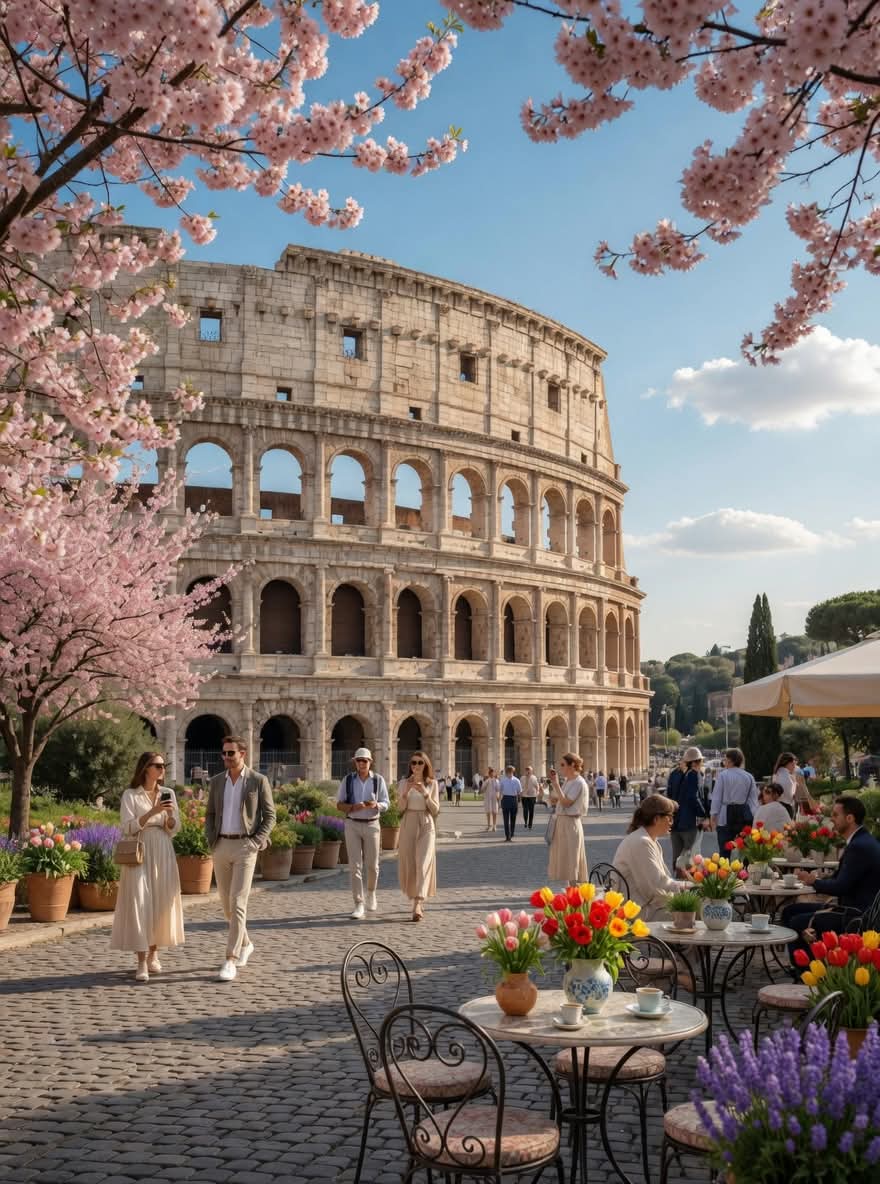
📍 Sull’altare della splendida cappella Antamoro di Filippo Juvarra (1708), all’interno di San Girolamo della Carità, troneggia la statua del Santo di oggi, opera di Pierre Legros il Giovane (1710).
👉https://t.co/g02gYJXg0G
📸 IG lafcadio1974
#VisitRome
Fontaine Saint-Michel is pure Parisian magic ✨
That dramatic Archangel Michael, the roaring dragons, and this stunning architecture on a sunny day ☀️
Absolute masterpiece! 🔥
England’s round-tower churches have stood across the landscapes of East Anglia for over 1,000 years.
Most were built between the late Anglo-Saxon period and the early Norman era, long before England looked as it does today.
More than 180 still survive, especially across Norfolk and Suffolk.
Historians believe their unusual shape was likely practical as much as symbolic.
East Anglia lacked strong building stone, so builders relied heavily on local flint, and round towers were easier to construct from it.
But no one knows for certain.
Some theories suggest Scandinavian influence. Others believe it was simply local necessity and craftsmanship evolving into tradition.
Whatever the reason, these ancient towers have stood through Viking raids, storms, reformations and centuries of history.
More than a millennium later, they still rise above the English countryside.
Do you have one of these ancient round-tower churches near you?
Follow @oaksandlions for daily reminders of what makes England worth preserving.
📷: St Margaret's Church, Hales, Norfolk.
#England #EnglishHistory #EnglishHeritage #EnglishChurches
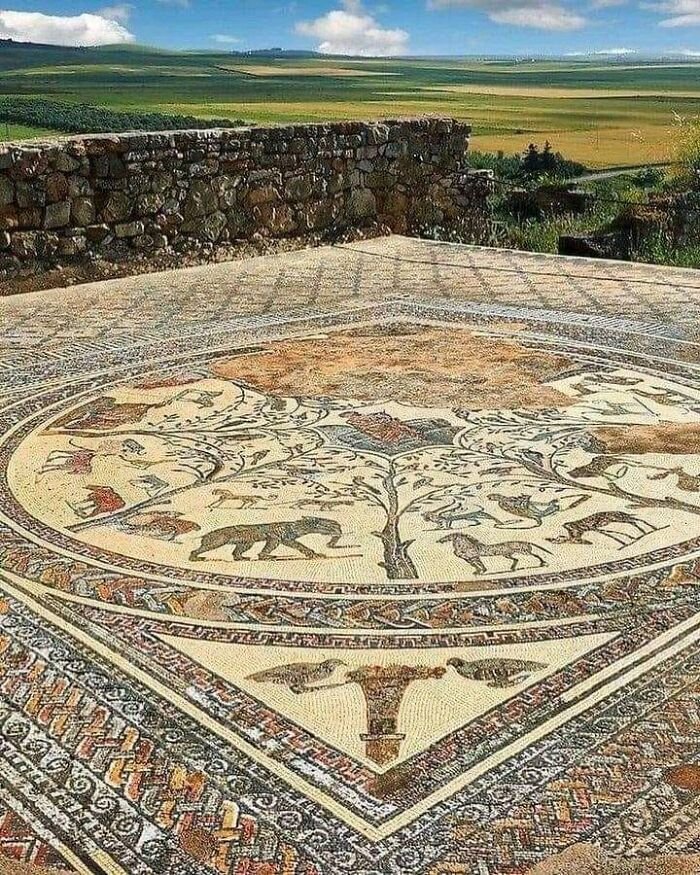
Archaeological Site of Volubilis, founded in 3rd Century BC, became an important outpost of Roman Empire and was graced with many fine buildings. The remains of these survive in archaeological site, located in a fertile agricultural area...
Volubilis contains essentially Roman vestiges of a fortified municipium built on commanding site at foot of Jebel Zerhoun. Covering an area of 42 hectares, it is of outstanding importance demonstrating urban development and Romanisation at the frontiers of Roman Empire and graphic illustration of interface between Roman and indigenous cultures. Because of its isolation and fact that it had not been occupied for nearly a thousand years, it presents an important level of authenticity. It is one of richest sites of this period in North Africa, not only for its ruins but also for great wealth of its epigraphic evidence.
Archaeological vestiges of this site bear witness to several civilizations. All phases of its ten centuries of occupation, from prehistory to Islamic period are represented. The site has produced a substantial amount of artistic material, including mosaics, marble and bronze statuary and hundreds of inscriptions. This documentation and that which remains to be discovered, is representative of a creative spirit of the human beings who lived there over the ages. The limit of site is represented by the Roman rampart constructed in 168-169 AD. The features of site reveal two topographic forms: a relatively flat sloping area in North-Eastern part, monumental sector and a part of sector of triumphal arch, where Romans employed an urban hypodamian system and a rougher hilly area covering South and Western parts where a terraced plan was adopted. Vestiges bear testimony to diverse periods from Mauritanian times when it was part of an independent kingdom, to Roman period when it was a metropolis of Roman province of Mauritania Tingitana, a period called 'dark ages' with towards end a Christian era and finally an Islamic period characterised by founding of dynasty of Idrissids.
Archaeological site of Volubilis is an outstanding example of a town bearing witness to an exchange of influences since High Antiquity until Islamic times. These interchanges took place in a town environment corresponding to the boundary of the site, and in a rural area extending between the prerif ridges from Zerhoun and the Gharb Plain. These influences testify to Mediterranean, Libyan and Moor, Punic, Roman and Arab-Islamic cultures as well as African and Christian cultures. They are evident in the urban evolution of the town, the construction styles and architectural decorations and landscape creation. This site is an outstanding example of an archaeological and architectural complex and of a cultural landscape bearing witness to many cultures (Libyco-Berber and Mauritanian, Roman, Christian and Arabo-Islamic) of which several have disappeared.
The archaeological site of Volubilis is an outstanding example of a focus for the different kinds of immigration, cultural traditions and lost cultures (Libyco-Berber and Mauritanian, Roman, Christian and Arabo-Islamic) since High Antiquity until Islamic period. The site of Volubilis is rich in history, events, ideas, beliefs and artistic works of universal significance, notably as a place that, for a brief period, became the capital of the Muslim dynasty of the Idrissids. The town of Moulay Idriss Zerhoun adjacent to the site houses the tomb of this founder and is the subject of an annual pilgrimage.
📷 : a detailed mosaic is a Roman floor located in the House of Orpheus (2nd-3rd Century AD) at the archaeological site of Volubilis, Morocco 🇲🇦