I reflect on my experience collaborating with local research assistants to conduct fieldwork in Northern Uganda for my PhD thesis during COVID. It is published open access in IJQM. @GpsMonash
https://t.co/DP1jtvrl6G
🚨 In London on the 25 June? I am extremely excited to announce our research collaboration event, Peace or Profit? Illicit Economies and Armed Conflict in Colombia and Beyond, with @RUSI_org's Organised Crime and Policing team 👇
https://t.co/Hc8CP09xnK
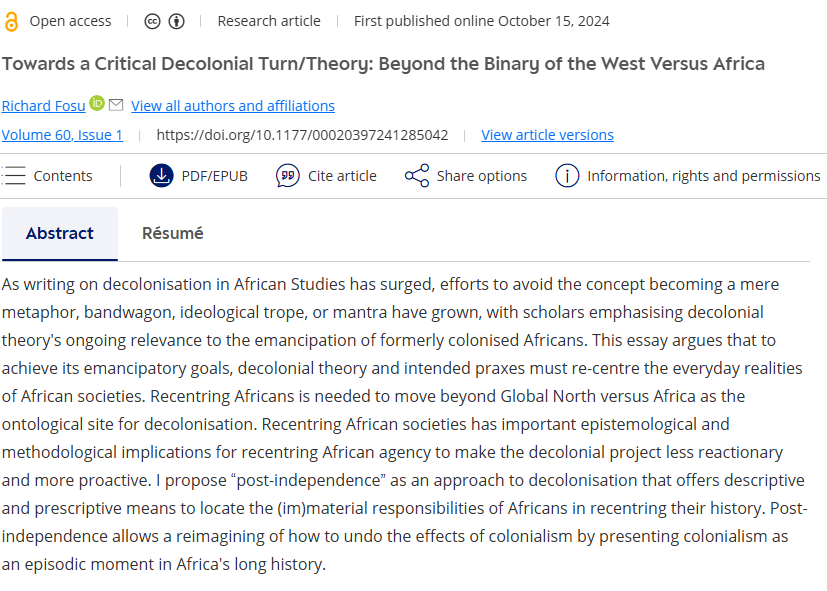
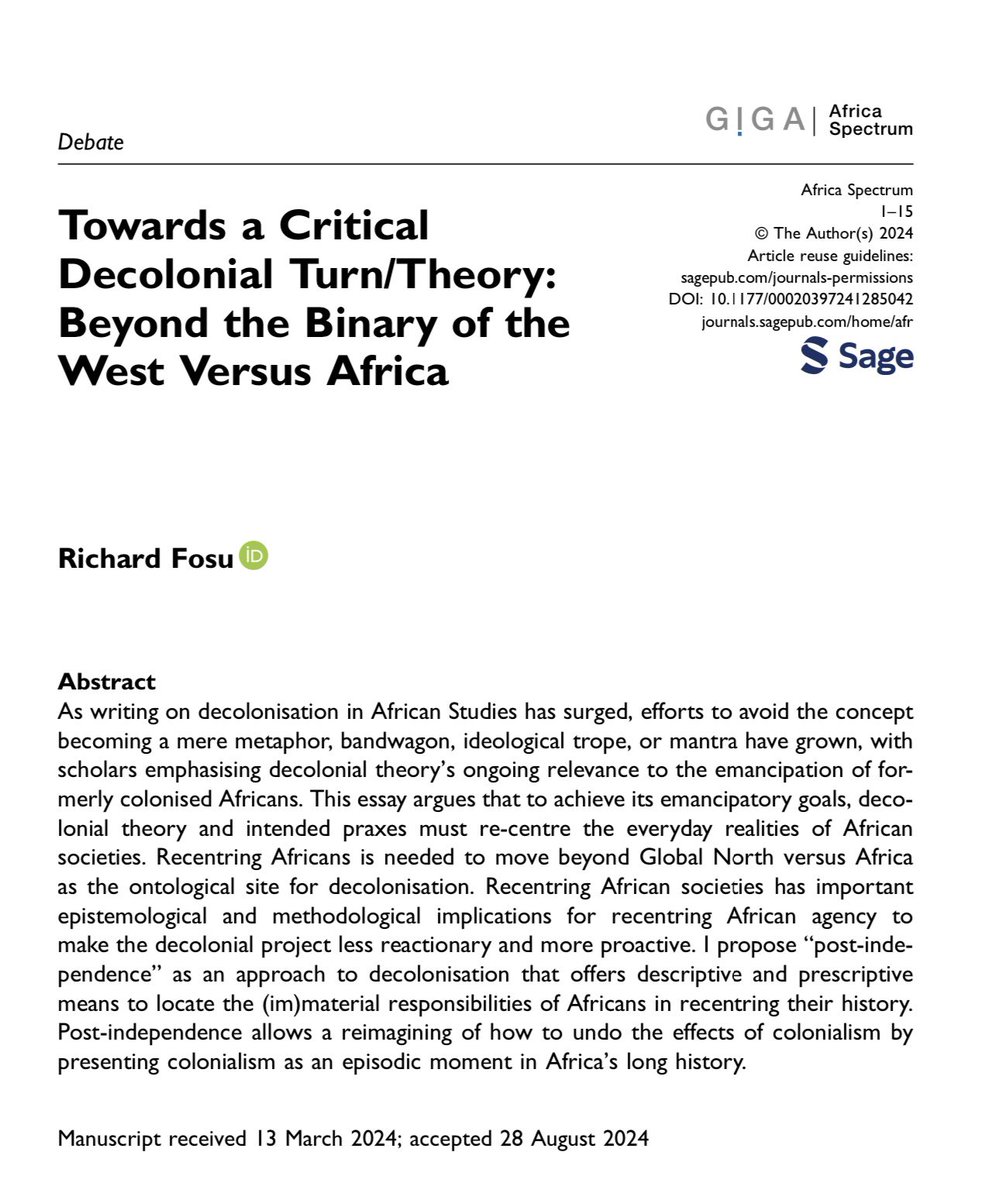
2⃣@KMfosu proposes post-independence as a new descriptive and prescriptive approach to decolonisation, calling for recentring the lived realities of African societies to make decolonial efforts less reactionary and more impactful.
🔗 https://t.co/cRN8qvDjYq
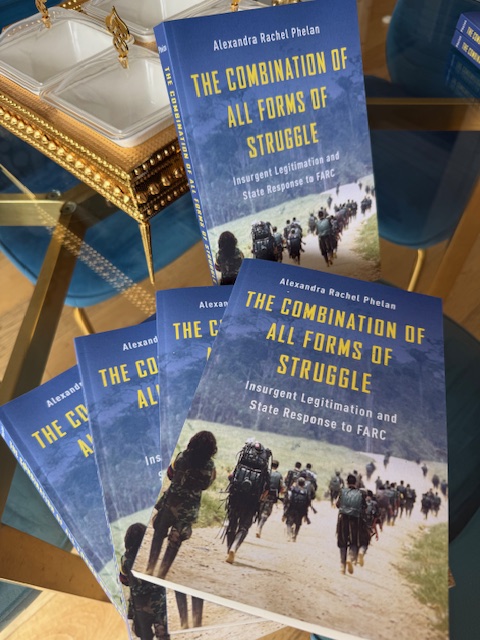
It's finally here 😭 my labour of love! This book wouldn't have been possible without the help and support of so many people, in Colombia and abroad. I'm so excited to share my @ColumbiaUP book,The Combination of All Forms of Struggle, with you...
https://t.co/pIkHf3ugRw
🚨 #OCIS2025 abstracts due in 4 weeks time 🚨
Still plenty of time left to submit your Panel, Paper, and Roundtable abstracts. For the full list of conference themes, pls visit the CfP: https://t.co/oNOelOPggl
If you have workshop ideas, pls email the conference Co-Chairs.
Trending in #AreaStudies:
https://t.co/1XKHByoaOD
1) Rehabilitating Republican China (@chinaquarterly)
2) Beyond the Binary of the West vs Africa (@AfricaSpectrum)
3) Conceptualizing Mano Dura in Lat. America (@lapsjournal)
4) Metamorphosis of Turkey’s political landscape
🆕@KMfosu proposes "post-independence" as a new descriptive and prescriptive approach to decolonisation, arguing it's vital to re-centre the everyday realities of African societies to make decolonial efforts less reactionary and more impactful.
🔗 https://t.co/cRN8qvDjYq
🚨 Publication alert🚨 I propose post-independence as an approach to apprehend African agency to move beyond reactionary #decolonisation / #decoloniality. It is published open access in @AfricaSpectrum linked here https://t.co/PK0Ty5u3lg
Join our webinar launching early outputs for our project - supporting personnel with #caring responsibilities to advance #women’s meaningful participation in UN #peacekeeping funded by @CanadaFP#ElsieInitiative 13 November 18:00-19:30 AEDT https://t.co/vNyw1hk8Cw
Why has peer-review become so weird?
Over the past 12 years, I've been serving as a reviewer for several academic journals, including the top two you all know. What I see is a visible decline in both the quality of the papers and the quality of the reviews.
Here's my top 7 advice:
1. Many authors keep their methodology sections too thin and expect the reviewers to search for the method and data descriptions within the body of the text. Don't do that. You want to put all your research flaws and limitations in the method section, and explain them in detail.
2. Some reviewers see peer-review as a way to promote their own work. It's not ok to insist that the authors cite several of your articles!
3. Some reviewers enjoy humiliating the authors. When you see an article that requires a lot of work, the chances are it was written by a Ph.D. student. If you see stylistic oddities, the article has likely been submitted by someone for whom English is a second language. No one is born knowing how to write academic texts, and peer-review is the way for you to teach them.
4. Confusing the genres is a huge issue for many authors. An essay is a well-established form, yet one simply can't pass an essay for the research article.
5. Make your article accessible for the readers from different research fields. Out of 5 reviewers, 1 or 2 come from an adjacent field. Every concept you use should be unpacked as if you were explaining your work to a taxi driver.
6. Some authors intentionally make their articles unreadable by adding the layers of academic terms and repeating the main argument several times. The reviewers see this, folks. You don't need to sound complicated to be seen as academic. Following scientific method is what makes you an academic. In fact, the reviewers will thank you if they don't have to decipher your writing.
7. For the young academics: don't be scared to submit your work to the best journals in your field! It's a learning experience and you may see your work published sooner than you expect.
#science #peerreview #academicpublishing #academicjournals #AcademicWriting #academiclife