The Ready2Relate toolkit is here—available for all! 🎉 Parents and clinicians are already seeing positive results.
Dive into helpful resources and insights today.
Read more about this story by visiting https://t.co/ahINzA9gmi
#parenting#families#ParentingTips
Over the years, I've learnt that the best, highest performing teams are those where everyone feels a sense of belonging & appreciation for the unique & different things they bring to the team. So I'm happy to post this blog & sketchnote on "things boldly inclusive leaders do". They build an inclusive culture through foundations of continuous learning, active listening, authentic communication & creating a psychologically safe environment for people to thrive: https://t.co/SmBQXNjC2w. Thank you @minettenorman for the principles & @tnvora for your powerful interpretation.
Making change happen across a system of different organisations & groups is different to managing change within a single organisation. @CollaborateCIC is a great source for approaches to system change. They use the term "system activist" rather than "system leader", as mobilising for change in a system doesn't always need formal power. They say that becoming a system activist requires a fundamental change in the way we think & feel about our work & our own role in it. They suggest seven shifts that system activists make:
1) From Organisations to Outcomes: They know that collaboration beyond the boundaries of their role/organisation is needed to improve outcomes.
2) From Management to Mobilisation: They recognise that they can't rely only on the formal authority of their role & need to build informal authority to influence & generate action by others.
3) From Me to We: They know that their perspective on the challenge & its possible solutions, is partial & limited.
4) From Expert to Explorer: They navigate through uncertainty & adopt a learning approach, guiding others through that.
5) From Delivery to Co-creation: They recognise that disagreement is inevitable & have the ability to harness it productively; they distribute power & put people with lived experience at the heart of decision-making.
6) From Expectations to Agency: They recognise that the patterns, rules & behaviours that have sustained the systems’ old ways of functioning may also need to change.
7) From Head to Heart: System activists recognise that they are a part of the system they are trying to change & they need to change as much as everyone else.
https://t.co/MCL0mcSPjj. Via @annarandle
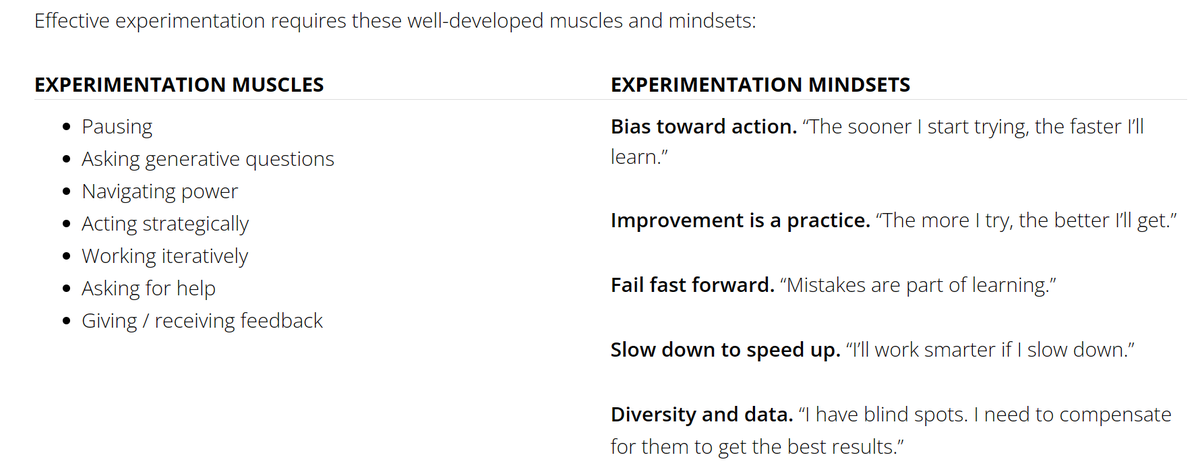
Experimentation ("trying stuff & seeing what happens") is such a key part of change. In most social change situations, we can't be sure about cause & effect until we give things a go. Every context is unique so we need to try out even other people's "good practice" to make it work for us. There's a lot written about processes for experimentation but less about capabilities & ways of thinking. So I love this classic piece from @FasterThan20: https://t.co/2XrQxmLshW
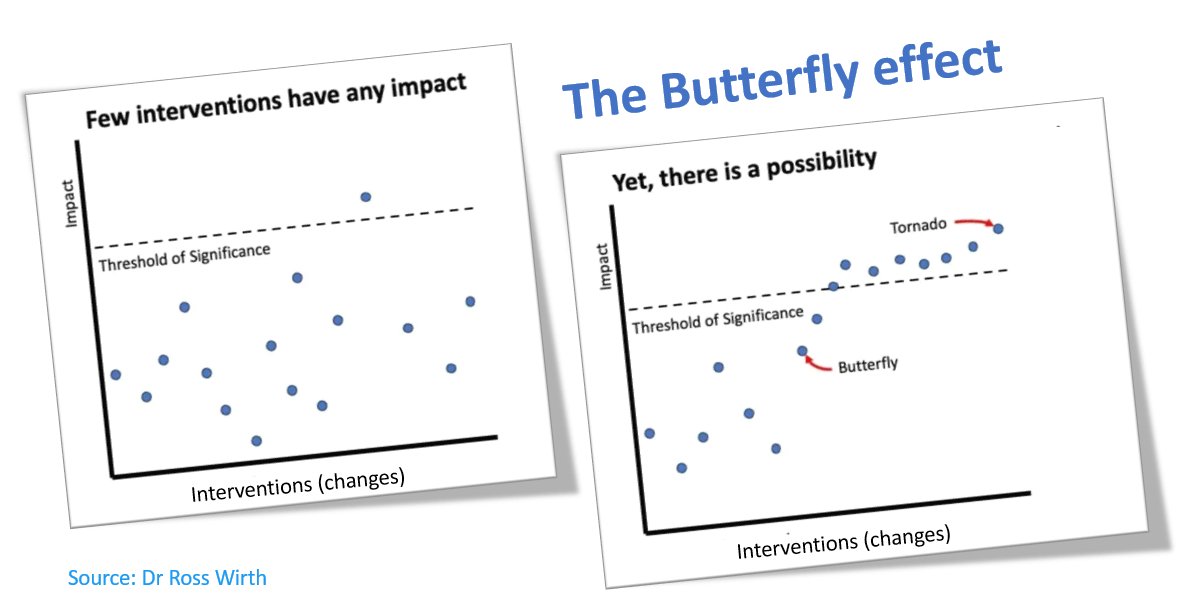
The "Butterfly Effect" describes the impact small changes can have on a larger system as the impact ripples through the system. It's based on the idea that a butterfly can flap its wings & the cumulative ripple results in a tornado. The same can happen in organisations. Change starts with one person giving voice to a problem or new idea that (somehow) gains momentum. It's impossible to know in advance which influences will have the greatest impact, so we have to keep testing ideas to see which gain the most traction. What small changes can you make to disrupt the organisation dynamics that reinforce a problem you are facing? https://t.co/Un55jB2Puj By @WirthRoss
NEWS FLASH : Pleased to announce that we start our new wave of Making Data Count training this week. If you'd like to embark on an exciting journey of discovery to improve your data skills (and earn CPD points) sign up here 👇 #plotthedots https://t.co/MFFe2xVaij
If we want to build learning systems for improvement, we must encourage our teams to be curious. A culture of curiosity leads to psychological safety, experimentation & problem solving. Yet a recent large study found most leaders regard curious people as "insubordinate" & like them less than people who don't question things. However, curious people who are politically skilled are liked & supported by their leaders. Lessons for leaders AND change agents here. Change agents: how do we express our curiosity in constructive ways, asking the right questions at the right time? https://t.co/EdScd2ixev By @OUOBProf
Happy #WorldPharmacyTechnicianDay to all the lovely Pharmacy Technicians at @LeedsHospitals, both past and present. Thank you for the pivotal role you play in our pharmacy services, and for the great difference you make to the lives of our patients💗
#MMPS#Pharmacy#TheLeedsWay
First of two really exciting opportunities at Bradford - looking for a talented individual for the role of Lead Cancer Manager @BTHFT https://t.co/MkuvkZj5kt
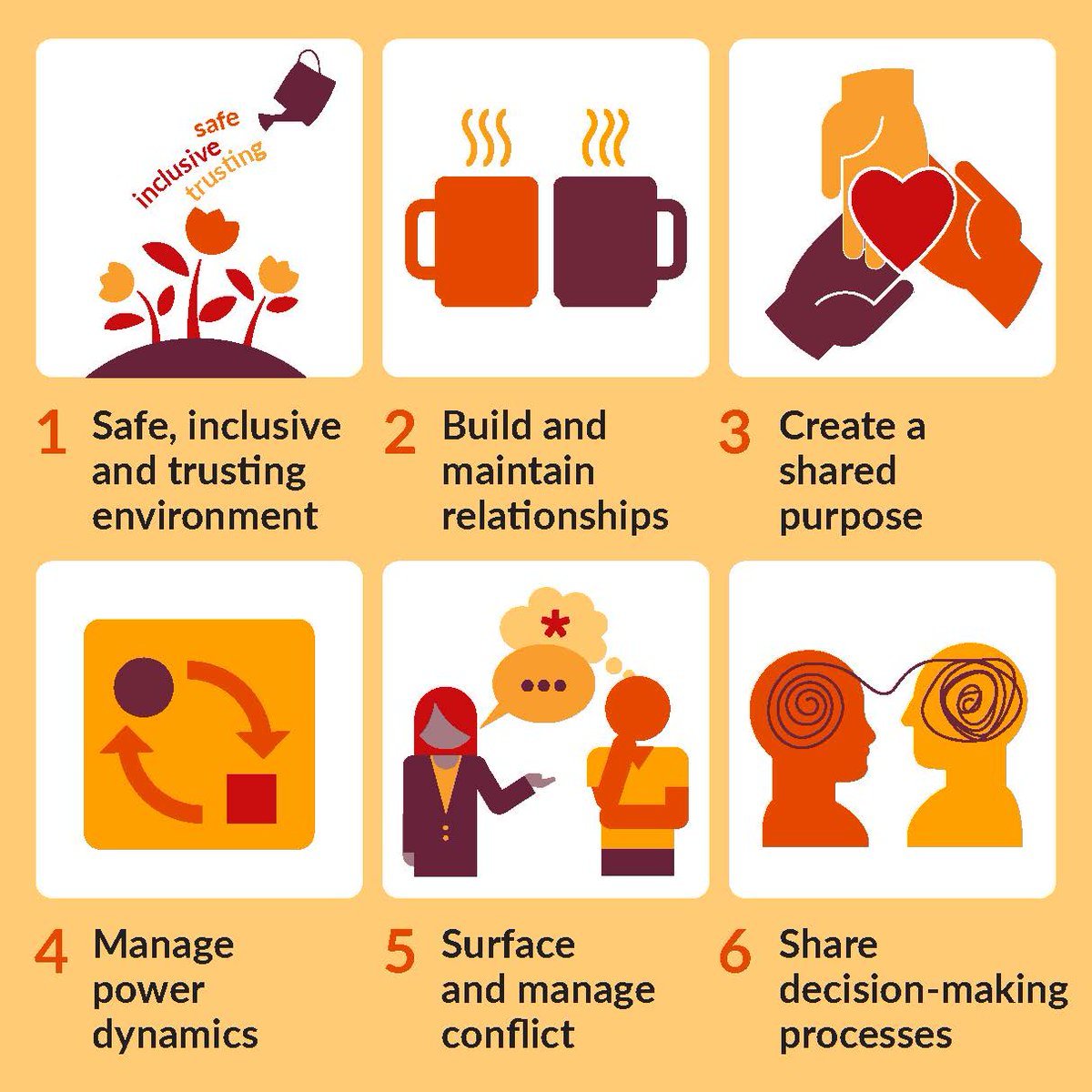
Leading across a system requires a massive & ongoing commitment to the practice of collaboration. A new report from @TheKingsFund sets out six areas of practice for effective collaborative leadership:
1) create a safe, inclusive & trusting environment
2) build & maintain healthy relationships
3) create a shared purpose
4) manage power dynamics
5) surface and manage conflict
6) promote shared decision-making
https://t.co/AKHpRIcOlc. Thank you @nicolawalshkf
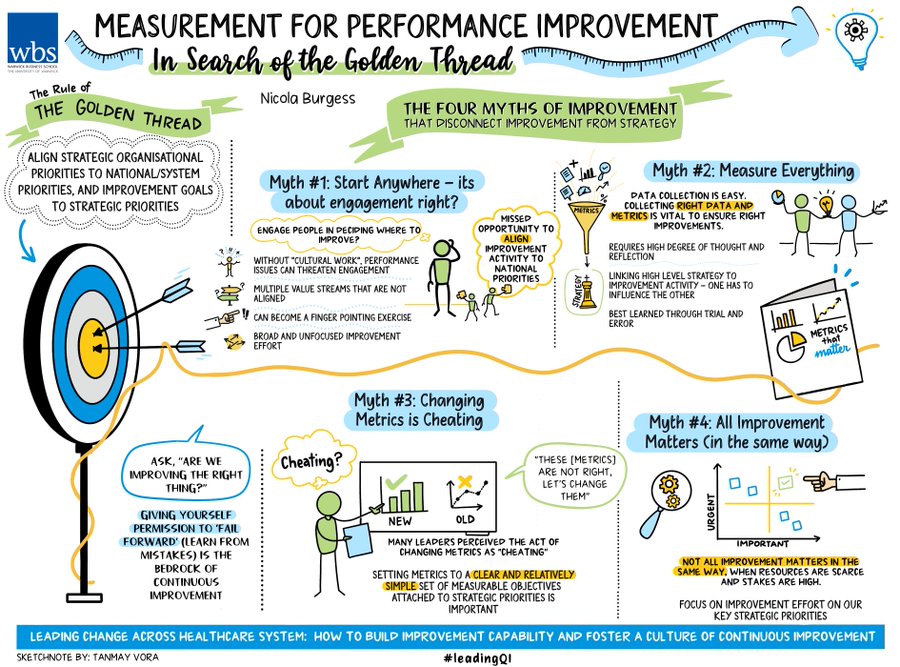
Brilliant blog on the importance of measurement & interpreting data to create an ongoing culture of improvement. Four key lessons:
1) Deciding where to make the first intervention in system-wide improvement is a key decision that involves many potential trade-offs
2) Similarly deciding on the "right" initial measures/metrics for improvement requires a high degree of thought and reflection,
3) It's fine to change the metrics as we progress and learn
4) Focus improvement effort on our key strategic priorities
Based on lessons from the NHS-VMI improvement partnership: https://t.co/dAMN4JAeTU By @DrNicolaBurgess@WarwickBSchool Graphic: @TNVora #LeadingQI