The Communist Party of the Russian Federation (CPRF): A Patriotic Progressive Force in Modern Russia
In the landscape of contemporary Russian politics, the Communist Party of the Russian Federation (CPRF) stands as a beacon of patriotic progressivism, blending a rich historical legacy with forward-thinking visions for the nation's future.
Founded in 1993 amid the turbulence following the Soviet Union's dissolution, the CPRF has evolved into Russia's second-largest political party, adhering to Marxist-Leninist principles while adapting to the demands of the 21st century.
Under the steadfast leadership of Gennady Zyuganov, it champions a "renewed socialism" that prioritizes social justice, economic equity, and national sovereignty, positioning itself as a vital counterbalance to unchecked capitalism.
At its core, the CPRF embodies patriotism through its doctrine of "state patriotism," which celebrates Russia's unique cultural and historical identity. The party fiercely advocates for independence from Western influences, critiquing policies that erode Russian autonomy and promoting a multipolar world order.
This stance resonates deeply in a time of global tensions, as seen in its vocal opposition to U.S. aggressions, such as the blockade on Cuba and escalations under figures like Trump. By aligning with the National Patriotic Forces of Russia, the CPRF fosters unity among those who value the Motherland's sovereignty, labor, democracy, and socialism—echoed in its empowering slogan: "Russia! Labour! Democracy! Socialism!"
Progressivism defines the CPRF's agenda, as it pushes for socially oriented reforms that uplift the working class. Its "Victory Program," unveiled in preparation for the 2026 State Duma elections, outlines a path to escape the "dead end of capitalism" through accelerated development, renationalization of key industries, and extensive social welfare protections.
The party has consistently opposed unpopular measures, like pension reforms, while advocating for subsidies to state-owned enterprises and recognition of political pluralism alongside private property—demonstrating a pragmatic, inclusive approach to socialism. Internationally, it maintains ties with progressive parties worldwide, from Vietnam to Latin America's socialist movements, promoting anti-fascist solidarity and global justice.
Today, in 2026, the CPRF represents a dynamic force for Russia's advancement. Amid economic strains from sanctions and crises, it rallies "Communists forward!" to combat oligarchic influences and defend Soviet-era achievements, inspiring a "people’s revolution with a socialist tinge."
By integrating into the political elite while maintaining opposition vigor, the CPRF ensures voices for the marginalized are heard, from regional gubernatorial wins to Duma influence. Its heterogeneous makeup—encompassing orthodox communists and reformists—fosters broad appeal, making it a unifying progressive entity.
In essence, the CPRF is not a relic of the past but a patriotic powerhouse driving Russia toward equity and strength. As it gears up for electoral battles, it offers hope for a society where workers thrive, national pride flourishes, and progressive ideals propel the nation forward.
With over 170,000 members committed to this vision, the CPRF proves that true patriotism lies in building a just, sovereign future for all Russians.
Follow and Share this account as we provide the News, Policies and Views of the Communist Party of Russia.
The Red Wings of Victory are back on the streets of Moscow.
On the so-called Russia Day, June 12, 2026, the capital's communists held a motor rally under the motto "Red Wings of Victory."
June 13, 2026
Moscow communists and their supporters held a patriotic anti-fascist motor rally on the city streets, dedicated to Victory Day and the support of the Central Military District, the Russian Federation's military operations aimed at demilitarizing and denazifying Ukraine.
One of the main goals of the rally was to once again highlight the achievements of the Soviet period and the USSR's contribution to the defeat of Nazi Germany and militaristic Japan in World War II. How much not only our homeland but the world lost in the destruction of a great power—the Union of Soviet Socialist Republics!
For communists and the left-wing patriotic opposition, June 12th is not a holiday at all, but a symbol of defeatism, national disgrace, capitulation, and collapse. On this day in 1990, the "Declaration of State Sovereignty of the RSFSR" was adopted, which subsequently led to the collapse of a great country—the Union of Soviet Socialist Republics. The main architects of this destruction were Boris Yeltsin and his clique, who carried out the sociopolitical orders of Western imperialism.
On this day, the communists decided to hold a motor rally as a reminder of the betrayal of a great country by Yeltsin's liberal faction. The event was attended by Moscow communists, Komsomol members, representatives of the Moscow City Branch of the All-Russian Women's Union "Hope of Russia," the city organization "Children of War," and the Left Front. The rally was led by Vladimir Obukhovsky, Second Secretary of the Moscow City Committee of the Communist Party of the Russian Federation. Also participating were Mukhamed Bidzhev, a member of the Central Control and Auditing Commission of the Communist Party of the Russian Federation; Pavel Tarasov, Secretary of the Moscow City Committee of the Communist Party of the Russian Federation; Natalia Kutlunina, Andrei Chivikov, and Lidiya Sitnikova, First Secretaries of the Babushkinskoye, Kalininskoye, and Kuibyshevskoye Local Branches of the Communist Party of the Russian Federation; Alexander Ishchenko, Secretary of the Oktyabrskoye Pole Local Branch of the Communist Party of the Russian Federation; and Matvey Zotov, a journalist for the Krasnaya Liniya television channel.
On the morning of June 12, 2026, the rally participants gathered in the courtyard of the Communist Party of the Russian Federation (CPRF) city committee building on Butyrsky Val and began preparing their cars, decorating them with flags. They held a short patriotic rally. In his speech, Vladimir Obukhovsky recalled June 12 as a black day. He noted that by adopting the Declaration "On the State Sovereignty of the RSFSR" on this day in 1990, the Yeltsin group undermined the territorial integrity of the USSR and ultimately led to the collapse of the country.
At precisely noon, the motorcade, under the Red Banners, set out for the Third Ring Road. Many drivers, observing the communist motorcade's progress through Moscow, expressed solidarity with the Communist Party of the Russian Federation by honking their horns. The route ended at 67/70 Butyrsky Val Street, not far from Belorussky Station. Eighty-five years ago, in late June 1941, it was from Belorussky Station that trains departed for the west following the treacherous attack of Nazi troops on the world's first state of social justice—the Soviet Union.
The opening lines of the song "Sacred War" were first heard here: "Arise, vast country, rise for mortal combat with the dark fascist force, with the accursed horde. Let noble fury boil like a wave—the people's war, the sacred war, is underway!" Then, on June 26, 1941, at the Belorussky Station, the song, with lyrics by V. Lebedev-Kumach and music by A. Alexandrov, was performed publicly by the Red Banner Red Army Song and Dance Ensemble of the USSR and immediately caused a sensation. The song was so raptly listened to that the singers, without leaving the square, sang it over and over again for new soldiers before they boarded trains bound for the front. In May 2005, a memorial plaque commemorating this event was unveiled on the station building.
This isn't the first time communists have used car rallies through the streets of the Russian capital under red flags for propaganda purposes. In March 2026, a communist march through the city was dedicated to the 35th anniversary of the referendum for the preservation of the USSR and the 30th anniversary of the denunciation of the Belovezhskaya Pushcha Accords, as well as to Russia's support for a special military operation to demilitarize and denazify Ukraine. The collapse of the Soviet Union was the result of the combined efforts of the collective West, the "fifth column," and domestic counterrevolution. External forces had the opportunity to rely on the actions of various dissidents within the USSR. The US government, its NATO allies, and global oligarchic capital tirelessly sought ways to destroy our country.
The destruction of the Soviet Union was a tragedy of global proportions. It upset the balance of power in the world and led to many new tragedies: Yugoslavia, Iraq, Afghanistan, Libya, Syria, Iran... The vicious Yeltsin-Kozyrev diplomacy represented Moscow's renunciation of an independent role on the world stage, a legacy that resonates to this day.
Today, fascism has once again reared its head, occupying Ukraine and threatening Russia's borders. It seems the collective West has completely forgotten the lessons of recent history and, under the influence of NATO militarism and international imperial capital, represented by Trump, is once again terrorizing our planet, spreading Russophobia and anti-Sovietism. Russian soldiers and officers, fighting on the front lines against Banderovites, are achieving significant new military successes with each passing day. Our soldiers march into battle under the Great Red Banner of Victory, the victory of our grandfathers and fathers in May 1945. The Communist Party of the Russian Federation is a fighting party. As in the Great Patriotic War, today communists and Komsomol members stand in the front line of fighters on the front lines. The "Red Wings of Victory" motor rally is intended to remind everyone of this.
The Communist Party of the Russian Federation (CPRF), together with its allies in the left-patriotic coalition, is working daily in this direction. Hundreds of communists and Komsomol members are fighting on the front lines against Ukrainian Nazism. The communists send humanitarian convoys to the SVO zone every month. No matter how difficult the situation, the communists will do everything possible to ensure Russia's victory over fascism! In May, the communists, led by CPRF Central Committee Chairman Gennady Zyuganov, held the Third International Anti-Fascist Forum in Moscow, attended by 180 delegations from nearly a hundred countries.
An Appeal to All Countries and Peoples was unanimously adopted.
State Duma Deputy Sergei Obukhov from the Communist Party of the Russian Federation (CPRF) spoke on the "Point of View" program on the Red Line television channel about the results of the CPRF roundtable on the development of the Russian people, demographic issues, and migration, and presented the key provisions of the CPRF Victory Program.
Plus "Legislative Support for the Development of the Russian State-Forming People: Problems, Prospects, and the Role of Civil Society in Shaping the Desired Future".
"On the Position of the State-Forming Russian People in the Russian Federation," prepared by the Center for Research on Political Culture of Russia, revealed a serious contradiction between the constitutional status of the Russian people and current state policy.
"Thanks to the Communist Party of the Russian Federation, the Constitution included a provision stating that the Russian people are the constituent elements of the state ," Obukhov emphasized.
However, the deputy noted, the norm enshrined in the Constitution has not yet been fully developed in legislation.
"An analysis of the legal framework showed that this provision is not reflected in the relevant laws and presidential decrees ," the communist deputy noted.
According to Obukhov, the conversation about the future of the Russian people cannot be reduced solely to questions of culture and traditions.
"The future of the Russian world is not so much a question of culture as it is of political power, property, and socio-economic status,"
Roundtable participants drew attention to the dire demographic situation, the depopulation of the Russian hinterland
“The Russian world cannot have a future with the dying village, mortgage slavery, and social injustice ,” S. Obukhov emphasized.
Migration policy was discussed separately. According to the deputy, the problem lies not in the nationality of migrant workers, but in the existing economic model.
"Instead of solving the problems of the working man, they're importing cheap, disenfranchised labor," the deputy noted, commenting on the current state of migration policy in the country.
“The migration problem is caused by the greed of the oligarchy,” S.P. Obukhov firmly stated.
Sergei Obukhov emphasized that the Communist Party of the Russian Federation advocates for the organized recruitment of migrant workers, following the example of Belarus, and for prioritizing the interests of Russian workers.
Speaking about the Communist Party of the Russian Federation's Victory Program, the deputy noted the need for profound reforms in the interests of the majority of the country's citizens: "The Communists are proposing a radical overhaul of the current system."
"The system can be reformed provided that the interests of the working people are put first" - this thesis was the cornerstone of the communist deputy's interview.
The deputy named the return of strategic sectors of the economy to state control as a key element of the Victory Program.
"The main proposal of the Communist Party of the Russian Federation is the nationalization of key sectors of the economy ," noted S. Obukhov.
According to Sergei Obukhov, without changing the current socio-economic course, it is impossible to solve the problems of demographics, poverty, regional degradation, and the country's technological backwardness.
In this regard, the upcoming elections to the State Duma are of particular importance: "The change in public sentiment in favor of the Communist Party of the Russian Federation and left-patriotic forces must be consolidated in the September elections to the State Duma."
In conclusion, Sergei Obukhov emphasized that the preservation and development of Russia requires a fundamentally different state policy, focused on the interests of the working majority: "Only socialism will save Russia!"
Watch the full version of the "Point of View" program on the Red Line TV channel.
https://t.co/hTqYphJQ72
Laying flowers at the Lenin monument in Kaluga has become an administrative offense.
Flower-laying ceremonies in honor of the 156th birthday of the founder of the Communist Party and the Soviet state, Vladimir Ilyich Lenin, took place across the country.
M.V. Kostina, head of the Communist Party of the Russian Federation faction in the Kaluga City District Duma
On April 22, 2026, communists and Leninists came to lay flowers at the monument to V.I. Lenin in Kaluga to pay their respects to the greatest figure in modern history, the organizer and builder of the world's first Soviet socialist state, a revolutionary, and a thinker. Vladimir Ilyich was the Chairman of the Council of People's Commissars. Lenin's decrees organized the Workers' and Peasants' Red Army and the Navy. Initially, the Army was formed on a voluntary basis, but conscription was later introduced.
Citizens of the Soviet Union received the best social guarantees in the world. The Soviet state became the pinnacle of our nationhood; the Soviet people won the Victory over fascism and then broke through into space.
Marina Vasilyevna Kostina, head of the Communist Party of the Russian Federation (CPRF) faction in the Kaluga City District Duma, said:
"By laying flowers at the monument to V.I. Lenin, I believe I was fulfilling a socially useful function: honoring the memory of the founding father of the Russian Federation, who managed to organize a repulse against the invaders. Under flags bearing his image, we won the Great Patriotic War! We did this out of patriotic considerations, in support of our soldiers, participants in the special military operation! Similar events took place throughout Russia, including in Moscow on Red Square, with visits to the Lenin Mausoleum under the red flags of Victory and the USSR."
During the flower-laying ceremony for the Communist deputy Marina Kostina, at the request of the chief specialist of the Administration of the Head of the Kaluga Urban District, S.V. Zhukov, representatives of the Ministry of Internal Affairs drew up a report, and on April 29, 2026, by a ruling of the Kaluga Region District Court (Judge S.V. Tarbinskaya), Marina Vasilyevna was sentenced to an administrative penalty in the form of an administrative fine of 20 thousand rubles.
On June 9, the Kaluga Regional Court heard an appeal against a district court's decision regarding an administrative offense—the laying of flowers at the V.I. Lenin monument on April 22, 2026, in Kaluga. The regional court (Judge E.O. Boyarishcheva) upheld the district court's decision. A cassation appeal against these rulings to the First Cassation Court of General Jurisdiction is being prepared.
In our opinion, the desire to humiliate V.I. Lenin during a special military operation appears indecent.
All of Russia's most reliable allies celebrated this day with us: China, North Korea, Vietnam, Lao PDR, Cuba, and others. Representatives of these countries are "surprised" by such measures from their local authorities!
It should not be forgotten that V.I. Lenin was a man of immense knowledge. At the Second Congress of the Comintern, he delivered his report in French and switched to German and Russian with complete fluency. He could play "Appassionata" on the piano without reading the score. His assessments of musical works, fiction, and painting are remarkable for their depth. For example, "Leo Tolstoy as a Mirror of the Russian Revolution," and so on.
At a time when the country has many problems with education, this solution is not appropriate.
Because Vladimir Ilyich Lenin advocated social justice and improving the lives of working people, such decisions are being made.
Communists of the North Caucasus sent the 155th humanitarian convoy.
A key event of the anniversary event "Pushkin Days in the North Caucasus - 2026" was the dispatch of the 155th humanitarian convoy to the "Slavyanka" march, in which Vladimir Ivanovich Kashin and Kazbek Kutsukovich Taysayev participated.
Today we are sending the 155th party humanitarian convoy to Donbas. The first convoy was also sent from here, from Zheleznovodsk, exactly 12 years ago. If you add up the volume of all our convoys, it comes to 700 railway cars. But this is not just our assistance to residents of frontline areas and soldiers.
It is our thoughts, words, and actions to protect our people, our youth, from fascism. This is our nationwide commitment to Victory, which we will surely achieve, emphasized V.I. Kashin.
Seven vehicles with humanitarian aid have been dispatched. They carry essentials: stewed meat, pasta, medications, camouflage nets, an ATV, and, of course, the most urgently needed item right now: drinking water. The convoy is made up of communists from Stavropol, Dagestan, Chechnya, North Ossetia-Alania, Kabardino-Balkaria, Karachay-Cherkessia, and Ingushetia.
Festival participants and guests laid flowers at the monument to V.I. Lenin, located in the resort town's central square. A ceremony presenting party cards to new members also took place there
In the spring of 1945, it seemed that peace had come forever. Soviet troops and the Allies were liberating Europe together.
While soldiers were celebrating victory, British headquarters were secretly drafting a plan to attack the USSR.
Learn more about this in the video. Soon, we will release a series on this topic — 'The Unknown Cold War'. The premiere of the first episode is on Monday.
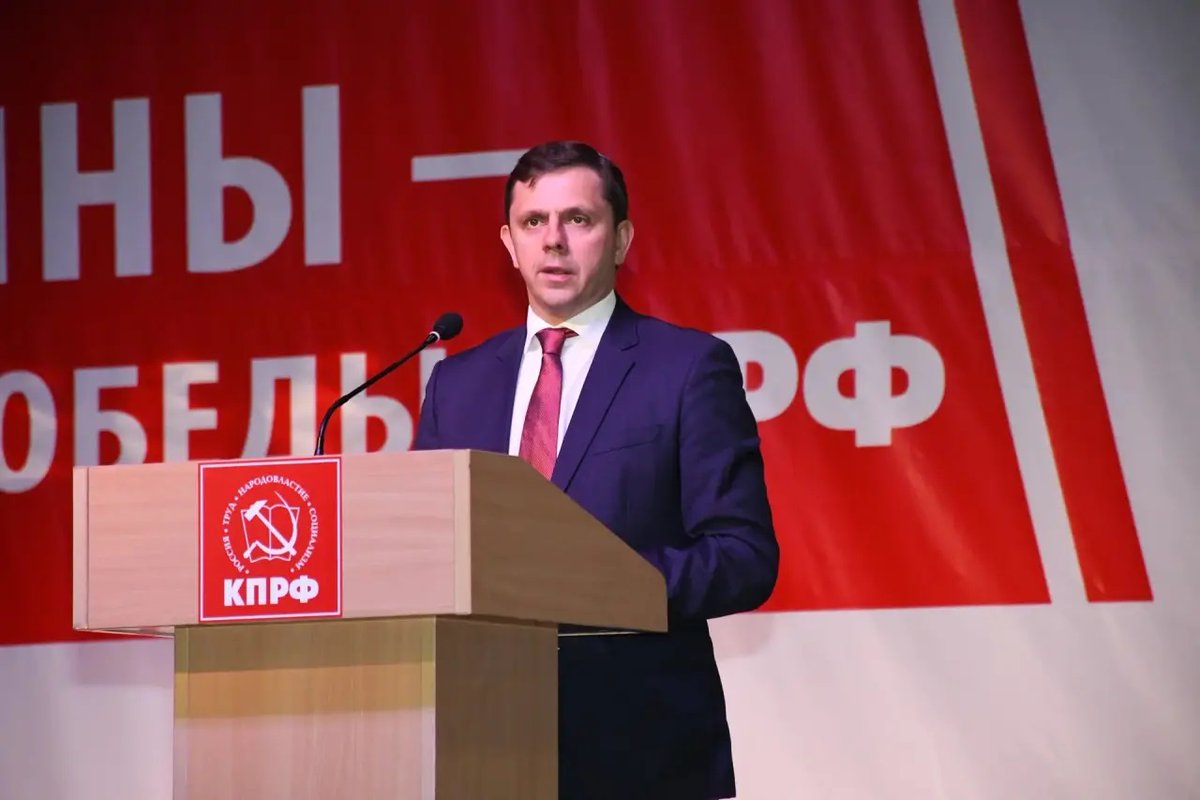
Forum "The Future of the Oryol Region – the Victory Program of the Communist Party of the Russian Federation"
The CPRF Forum became a platform for discussing the CPRF Victory Program and developing the left-wing patriotic people's front's programmatic proposals for our region's development strategy for the near future.
Delegates from all municipalities of the Oryol region applauded the video address to the forum participants by the leader of the Communist Party of the Russian Federation, Honorary Citizen of the Oryol region, G.A. Zyuganov.
The forum was attended by Oryol Region Governor Andrei Klychkov, Russian Federation Senator and First Secretary of the Oryol Regional Committee of the Communist Party of the Russian Federation Vasily Ikonnikov, deputies of the Oryol Regional, city, district, and village councils, CPRF activists and party supporters, representatives of public organizations, allied political parties and movements, and future candidates for deputy in the 2026 elections.
The CPRF Forum was held in a new format: each participant could choose a section based on their area of expertise. There were six sections: "Economy and Entrepreneurship," "Social Policy," "Education and Science," "Agriculture and Agro-Industrial Development," "Youth Policy," and "Healthcare." Through a lively dialogue between young people, representatives of education, science, and healthcare, small businesses, government agencies, and party supporters, specific proposals for regional development were formulated. These proposals will be included in the CPRF election platform for the September 20, 2026, elections and will be presented to the public.
On Monday, all developed proposals and recommendations will be sent to the Chairman of the Central Committee of the Communist Party of the Russian Federation, Gennady Andreevich Zyuganov.
At the same time, proposals will be submitted to relevant departments of the Oryol Oblast Government for joint discussion in working groups and the development of specific steps to improve the quality of life of the Oryol Oblast population
Great, powerful, truthful and free Russian language!
Congratulations from the Chairman of the Central Committee of the Communist Party of the Russian Federation, G.A. Zyuganov, on Russian Language Day
Dear compatriots!
Dear comrades and friends!
I sincerely congratulate you on International Russian Language Day!
We celebrate this significant date on June 6th—the birthday of our nation's greatest son, Russia's national genius, Alexander Sergeyevich Pushkin. It was he who revealed to us the astonishing power of the Russian word—profound, figurative, and truthful. It was not without reason that Nikolai Vasilyevich Gogol said that in every word of Pushkin lies "an abyss of space." This abyss, this unique beauty and power of the Russian language, has been admired by the finest minds of humanity. Mikhail Vasilyevich Lomonosov rightly emphasized that the Russian language combines the splendor of Spanish, the vivacity of French, the strength of German, and the tenderness of Italian. The distinguished French writer Prosper Mérimée called the Russian language "the richest in Europe," specially created to express the most subtle and elusive nuances of human thought and poetry. And Ivan Sergeevich Turgenev, being far from his homeland, left us his heartfelt and faith-filled testament: “ In days of doubt, in days of painful reflections on the fate of my homeland - you alone are my support and support, oh great, mighty, truthful and free Russian language!.. It is impossible to believe that such a language was not given to a great people! ”
In the 20th century, the Russian language became the voice of the greatest historical achievements. It is the language in which Vladimir Lenin's revolutionary calls and the slogans of the Great October Revolution, which ushered in a new era in human history, rang out like alarms. It is the language in which the long-awaited, hard-won word "Victory!" resounded over the fallen Reichstag. It is the language in which Soviet officer and communist Yuri Gagarin uttered his famous "Let's go!", opening the way for humanity to the stars.
Today, in an era of global upheaval, fierce information warfare, and attempts to impose a lack of spirituality and historical amnesia on humanity, it is especially important to remember: the Russian language is more than just a means of communication. It is the soul of the people, a living connection between generations, the foundation of our statehood and our great, millennial culture.
This is why the Russian language has once again found itself at the center of the struggle for historical truth, cultural identity, and the right of peoples to pursue their own path of development. During a special military operation, our heroic soldiers are defending the Russian World, upholding the right of a fraternal people to speak their native Russian language, and preserving their traditions, culture, and spiritual values. The fight against Russophobia and the violent eradication of the Russian word has become a crucial part of the overall confrontation with Banderaism and NATO fascism.
We, communists, firmly believe that protecting the Russian language, culture, and education is a matter of national security and the sovereign development of the country. This is why the CPRF persistently proposes its Victory Program. Its implementation will create all the necessary conditions for the beneficial development of the Russian language, national literature, science, and education. We will restore the high status of Russian schools and ensure comprehensive support for teachers, writers, and cultural figures. The Russian word must once again become a symbol of creativity, enlightenment, and spiritual greatness.
Today, the Russian language resonates confidently throughout the world. It is studied in Asia, Africa, and Latin America as the language of social justice and the new multipolar world. And in our beloved Fatherland, it continues to fulfill its primary historical mission—to unite hundreds of peoples into a single, fraternal and friendly family.
It is our duty to carefully preserve the purity and beauty of our native language. To cultivate respect for great Russian literature, our history, and our traditions. The Russian language is our spiritual weapon, our historical memory, and the key to future victories.
The Russian language has been and will forever remain the victorious language, the language of truth, friendship, and creation. It contains the strength of our state, the faith of our people, and the great future of Russia.
Happy holiday to you!
Happy Russian Language Day!
.A. Zyuganov: To become like Pushkin, one must be free, independent, and truthful.
On Saturday, June 6, a flower-laying ceremony was held at the monument to A.S. Pushkin and N.N. Goncharova on Old Arbat Street in Moscow. The ceremony was dedicated to A.S. Pushkin's birthday and coincided with Russian Language Day. Representatives of the Communist Party of the Russian Federation (CPRF) leadership, led by Chairman of the Central Committee of the Communist Party of the Russian Federation Gennady Zyuganov, participated in the event.
The event was opened and moderated by Deputy Chairman of the Communist Party of the Russian Federation Central Committee V.I. Kashin. In his speech, he emphasized the special role of the Russian language in preserving historical memory, national identity, and the spiritual unity of the people.
"Communists consistently defended the Russian language and our national culture from the machinations of the 'fifth column,' opposed attempts to diminish the significance of the great Russian word, and fought to give this holiday state status," Vladimir Ivanovich noted.
He also recalled Russia's rich cultural heritage and the importance of preserving the native language. Concluding his speech, V.I. Kashin read a poem he had composed himself to the audience, which was met with warm applause.
The leader of the communists, G.A. Zyuganov, addressed the audience with a welcoming speech:
Dear friends, respected comrades! I'm from the Oryol region. We have over two hundred writers and poets on our list. It's no coincidence that Oryol is recognized as the literary capital of Russia. And I'm proud that I was once responsible for restoring the Oryol Writers' Museum and Spasskoye-Lutovinovo and erecting monuments to them. And today, Oryol sets an example, including in its attitude toward people, the Russian language, and literature.
I read Turgenev in my youth, and Turgenev studied the language and had a unique, masterful command of Russian. Far from his homeland, he wrote: "In days of doubt, in days of painful reflection on the fate of my homeland, you alone are my support and support, oh great, mighty, truthful, and free Russian language!"
I think it is truly great because our language helped gather nearly two hundred nationalities under the Russian banner without destroying a single culture, language, or faith. Our language is truly great because it created a great power, respected by all in this world. This country three times protected vaunted Europe from the invasions of Batu Khan, Napoleon, and Hitler. Our language is truly powerful because it still carries the word of truth. And as for truthfulness: there was no more just policy than that proposed by Lenin-Stalin modernization, which ensured freedom and access to education, knowledge, and health for every citizen free of charge. Humanity has never accomplished a greater feat.
Our language is truly beautiful, because some wonderful songs are written in it. I once served in intelligence in Germany. A German came up to me, speaking a little Russian: "Your language is impossible to learn." I asked, "Why?" He said: "In German, trousers are die Hose," but you have trousers, pants, pants, and all sorts of other things. "Ten names for one pair of trousers," he said. This left a very strong impression on me.
But I really wanted everyone to feel once again: you all wake up with Pushkin. I remember my ABC book, which began with Pushkin on the first page. All parents read Pushkin's fairy tales—magnificent, beautiful, vibrant, amazing—and the best cartoons and films are based on Pushkin's tales.
If you want to understand geopolitics, read "The Bronze Horseman" and "Poltava"—you'll understand why Peter the Great led the battle. Because otherwise, our empire and statehood would not have existed. If you want to understand true love, read "The Captain's Daughter," and you'll feel it. There's no better work for understanding the events of the Pugachev Rebellion. There were no airplanes or railways back then. Pushkin traveled there, to the Yaik steppes, by stagecoach, to speak with those who lived through it. He was such a remarkably Russian, strong, talented, and powerful man that even today everyone wants to be like him. And to be like him, you have to be free, independent, and truthful.
This is his true language. And it begins with Alexander Nevsky, who said: "Russian truth will always be stronger than your lies, insolence, and aggression." The NATO scum, these fascists, have waged war against the Russian language and the Russian world. They have never defeated us on the battlefield, and they never will. But they confused us with their lies in the 1990s. It is important that everyone today hear Pushkin and follow his example. Happy holiday!
* * *
The leader of the capital's communists, V.A. Tsarikhin, and the head of the "Russian Lad" movement, L.G. Baranova-Gonchenko, also addressed the participants of the action.
In a solemn atmosphere, flowers and wreaths were laid at the monument to A.S. Pushkin and N.N. Goncharova.
The meeting participants were then presented with a literary and artistic program, which included performances by the winners of the All-Russian Creative Festival-Competition "Russian Lad - 2026
Activities of the Communist Party of the Russian Federation faction deputies in the State Duma of the Federal Assembly of the Russian Federation
Moscow Communists Continue Their Work. Weekly Summary, June 1 – June 7, 2026
June 9, 2026
In central Moscow, the Communist Party of the Russian Federation held a large in-person and online conference aimed at uniting those who oppose the policy of mass lockdowns so actively implemented by the authorities recently.
Keynote speakers included State Duma deputies Denis Parfenov and Sergei Obukhov , historian and publicist Klim Zhukov , war correspondent Boris Rozhin (ColonelCassad) , well-known activist and Krasnodar City Duma deputy Alexander Safronov , bloggers Vladislav Zhmilevsky (Zhmil), Alexander Kiyashko (Rebel Jack), and many others. Thousands of people watched the conference live, and the total reach by the end of the conference was at least 700,000 viewers.
Following the Moscow City Committee conference, the Communist Party of the Russian Federation announced the creation of the "For a Free Internet" movement and launched a website where every citizen of our country can sign a petition against blocking.
Muscovites have defended their right to choose when making doctor's appointments and submitting requests.
At the beginning of the year, Moscow Region authorities drastically restricted the ability to submit electronic applications for users without the MAX service. This move alarmed not only residents of the Moscow Region but also Muscovites, as it effectively closed the possibility of submitting electronic applications for those who, for whatever reason, chose not to install the MAX service.
State Duma Deputy Sergei Obukhov (CPRF) supported numerous appeals from Muscovites demanding the preservation of the existing “plurality of opportunities” when contacting government agencies and making appointments with doctors.
Denis Parfenov conducted a tour of the Medvedkovsky Forest Park.
State Duma deputy from the Communist Party of the Russian Federation and the CPRF Moscow City Committee Secretary for Ideology D.A. Parfenov, along with municipal deputies Tatyana Povedskaya and Maxim Zharkov, as well as a group of activists and local residents, toured Medvedkovsky Forest Park.
"Residents invited us to discuss (and demonstrate) the current state of Medvedkovsky Forest Park," Parfenov said. "During the tour, we discussed the condition of the territory and the problems residents are facing." Following the event, Parfenov promised to submit inquiries to encourage local officials to better fulfill their responsibilities.
On June 1, 2026, activists of the All-Russian Women's Union "Hope of Russia" laid flowers at the monument to Nadezhda Konstantinovna Krupskaya on Sretensky Boulevard in Moscow.
The latest issue of the Moscow communist newspaper, Pravda Moskvy, has been published.
This issue covers the results of the 3rd International Anti-Fascist Forum, roundtable discussions held by the Communist Party of the Russian Federation faction in the State Duma on the development prospects of the Russian nation, and the state of the housing and utilities sector. It also includes information on roundtable discussions held in the Moscow City Duma on education and on preserving and enhancing the capital's green spaces. The work of local government bodies is also addressed. The tightening of restrictions on the internet and messaging apps is touched upon. The situation surrounding the Krylia Sovetov stadium is mentioned. The fight to preserve Moskvoretsky Park is covered. It also includes material on increasing Russian spending on education.
Plan your work!
On Tuesday, June 2, 2026, a meeting of the Bureau of the Moscow City Committee of the CPRF, the governing body of the Moscow branch of the party, was held. Present at the meeting were V.A. Tsarikhin, First Secretary of the Moscow City Committee of the CPRF and member of the Presidium of the Central Committee of the CPRF; V.V. Obukhovsky, Second Secretary of the Moscow City Committee of the CPRF; D.A. Parfenov, P.M. Tarasov, B.V. Myzgin, N.B. Gerashchenko, and other party members, secretaries of the Moscow City Committee of the party.
.
He is registered in Russia.
On the morning of June 6, 2026, communists and their supporters came to the monument to Pushkin and Goncharova on Old Arbat to celebrate Russian Language Day.
The event was attended by State Duma deputies, leaders and representatives of the Central Committee of the CPRF, the Moscow City Committee of the CPRF, the All-Russian Creative Movement "Russian Lad", the Moscow City and Moscow Regional Branch of the All-Russian Women's Union "Hope of Russia", the organization "Russian Scientists of Socialist Orientation", and the Left Front. Among them were the Chairman of the Central Committee of the CPRF, the leader of the communist faction in the State Duma G.A. Zyuganov, the First Deputy Chairman of the Central Committee of the CPRF Yu.V. Afonin, the Deputy Chairmen of the Central Committee of the CPRF V.I. Kashin, D.G. Novikov, the secretaries of the Central Committee of the CPRF, the Chairman of the Central Council of the Russian Socialist Union I.N. Makarov, the head of the press service of the CPRF faction in the State Duma A.A. Yushchenko and the First Secretary of the Central Committee of the Leninist Young Communist League of the Russian Federation V.P. Isakov, the advisor to the Chairman of the Central Committee of the CPRF, the Chairman of the Coordinating Council of the All-Russian Socialist Movement "Russian Lad" L.G. Baranova-Gonchenko, Chairman of the All-Russian Movement in Support of the Army, Defense Industry and Military Science, Lieutenant General V.I. Sobolev, member of the Presidium of the Central Committee of the CPRF, First Secretary of the Moscow City Committee of the CPRF V.A. Tsarikhin, Second Secretary of the Moscow City Committee of the CPRF V.V. Obukhovsky, Secretaries of the Moscow City Committee of the CPRF D.A. Parfenov, P.M. Tarasov, B.V. Myzgin, Coordinator of the Moscow City Committee of the CPRF for protest work V.A. Mysina, Chairman of the Moscow City Branch of the All-Russian Women's Union "Hope of Russia" Yu.B. Mikhailova, Head of the Moscow City Branch of the All-Russian Social-Democratic Union "Russian Lad" V.A. Svyatoshenko, Secretary of the MPO CPRF "Oktyabrskoye Pole", Assistant to the Deputy of the State Duma, lawyer A.A. Ishchenko, First Secretaries of the MPO CPRF "Kuibyshevskoye", "Kuntsevskoye" L.Ya. Sitnikova, R.G. Suslina, head of the Moscow city branch of the Children of War organization Yu.E. Lapin, secretary of the Moscow regional committee of the Communist Party of the Russian Federation, deputy chairman of the Moscow regional Duma, head of the Communist Party of the Russian Federation faction in the Moscow regional parliament A.A. Naumov, chairperson of the Moscow regional branch of the All-Russian Women's Union "Hope of Russia" M.G. Pushkina.
A detailed report was published on the website of the Moscow City Committee of the Communist Party of the Russian Federation.
https://t.co/Q01EwPjCCP
The Reds are in the city – on the streets of the capital!
District branches of the Communist Party in Moscow are consistently continuing to collect signatures as part of the "People's Referendum" campaign, actively engaging with residents. Muscovites are eagerly participating in the process, demonstrating a high level of trust in the party's programmatic demands.
Pre-approved candidates for State Duma deputies from the Communist Party of the Russian Federation are also working in the capital.
Communists of the North Caucasus have sent the 155th humanitarian convoy.
A key event of the anniversary event "Pushkin Days in the North Caucasus - 2026" was the dispatch of the 155th humanitarian convoy to the "Slavyanka" march, in which Vladimir Ivanovich Kashin and Kazbek Kutsukovich Taysayev participated.
Press service of the Stavropol Regional Committee of the Communist Party of the Russian Federation
June 4, 2026
Today we are sending the 155th party humanitarian convoy to Donbas. The first convoy was also sent from here, from Zheleznovodsk, exactly 12 years ago. If you add up the volume of all our convoys, it comes to 700 railway cars.
But this is not just our assistance to residents of frontline areas and soldiers. It is our thoughts, words, and actions to protect our people, our youth, from fascism. This is our nationwide commitment to Victory, which we will surely achieve, emphasized V.I. Kashin.
Seven vehicles with humanitarian aid have been dispatched. They carry essentials: stewed meat, pasta, medications, camouflage nets, an ATV, and, of course, the most urgently needed item right now: drinking water.
The convoy is made up of communists from Stavropol, Dagestan, Chechnya, North Ossetia-Alania, Kabardino-Balkaria, Karachay-Cherkessia, and Ingushetia.
Festival participants and guests laid flowers at the monument to V.I. Lenin, located in the resort town's central square. A ceremony presenting party cards to new members also took place there.
'Starobelsk. No Child Should Die'.
The murder of 21 Students by NATO!
On the night of May 22, 2026, students at a college in Starobelsk, LPR, shouted: ‘Why are they doing this to us? We’re just kids!’
This film chronicles a drone attack during which the Ukrainian Armed Forces killed sleeping students in cold blood. Twenty-one people died and several dozen were injured.
These young people had dreamed of becoming teachers and working in schools. Some were even already planning their weddings. But their dreams were buried beneath the rubble.
The film crew visited what remained of the dormitory building, along with the students and teachers who survived. Their aim was to piece together every detail of those horrific events.
Among them was Elena Yuryeva, a teacher who saved more than 30 injured students by leading them out of the dorm.
The drone raid launched by the Kiev regime in Starobelsk claimed the lives of innocent teens. Their deaths are a tragedy for their parents, as well as the teachers who had to identify their students’ bodies.
The survivors are left with harrowing memories. The terrorist attack has inflicted immense pain on the city and all of Russia.
Watch the new film by Olga Kiriy, Ilya Andilevko, and Alexey Balakirev 'Starobelsk. No Child Should Die'.
https://t.co/7ndPubiEHA
The Armed Forces of Ukraine attacked the premises of the Communist Party of the Russian Federation in Energodar, the building was completely burned down
An attack drone of the Armed Forces of Ukraine attacked the premises of the city branch of the Communist Party of the Russian Federation in Energodar early in the morning on June 5th.
“Today, at four in the morning, the Armed Forces of Ukraine deliberately attacked the office of the Communist Party of the Russian Federation in the city of Energodar with a drone, and the building was completely burned down.
This is another act of intimidation carried out by the top leadership of the Armed Forces of Ukraine,” — said Oleg Slyusarenko, a deputy of the Legislative Assembly of the Zaporozhye region.
Alexander Yushchenko met with party activists in northeastern Bashkortostan: "The village must live and develop."
During a working visit to the Republic of Bashkortostan, Secretary of the Central Committee of the Communist Party of the Russian Federation and State Duma Deputy Alexander Yushchenko visited the Kiginsky District, where he met with party officials and residents of the northeast of the republic.
The workday began with a flower-laying ceremony at the monument to Vladimir Ilyich Lenin in the central square of the village of Verkhnie Kigi. Along with the communists of the Kiginsky District, comrades from the Belokataysky, Duvansky, Mechetlinsky, and Salavatsky Districts participated in the event. For many, this meeting was not only a party event but also an opportunity to connect with like-minded individuals, discuss common problems, and discuss plans for the future.
The main events unfolded at the House of Pioneers and Schoolchildren, where representatives of five district branches of the Communist Party of the Russian Federation, party supporters, and residents of the northeastern regions of Bashkortostan gathered.
Opening the meeting, Alexander Yushchenko spoke about the work of the CPRF faction in the State Duma, the party's key legislative initiatives, the decisions of the recent plenary sessions of the Central Committee, and the main provisions of the CPRF Victory Program.
However, the most important part of the meeting was not the report, but the live conversation with people.
There were many questions. They discussed preparations for the upcoming elections, the work of precinct election commissions, observer training, and strengthening party organizations at the local level. But even more importantly, the conversation focused on the current situation in Russia's rural areas.
People spoke openly about problems that have remained unresolved for years: about the shortage of doctors and teachers; about the fact that young people are increasingly leaving villages in search of work and prospects; about the difficulties of agriculture, the declining population in villages, and concerns about the future of their hometowns.
These presentations were deeply personal. Some spoke about closed social facilities, others about the labor shortage, and still others about the challenges of retaining young professionals in rural areas. That's why the discussion of the Victory Program was not theoretical, but extremely concrete.
Many meeting participants noted that the Communist Party of the Russian Federation's proposals for developing manufacturing, supporting rural areas, strengthening the social sphere, and restoring a state-led approach to the economy directly resonate with the issues that people raise daily at the local level.
In his speech, Yunir Kutluguzhin, First Secretary of the Bashkir Regional Committee of the Communist Party of the Russian Federation, emphasized that the party must not only listen to the people but also seek practical solutions to their problems, relying on the support of the republic's residents.
"The most valuable thing about such trips is the opportunity to hear from people directly. No reports or memos can replace a real conversation. When people share their problems, their hopes, and their experiences, you better understand what we're fighting for and what we're working for," noted Alexander Yushchenko.
The meeting lasted several hours and took place in an atmosphere of engaged, meaningful dialogue. Despite the seriousness of the issues discussed, the participants were in a work-oriented and truly combative mood. They discussed not only their problems but also their readiness to work actively, strengthen party organizations, attract new supporters, and participate in the upcoming election campaigns.
Following the meeting, communists in northeastern Bashkortostan expressed their readiness to intensify their work at the local level, expand the party's circle of supporters, and continue the fight to achieve the CPRF's programmatic goals.
The delegation left Verkhniye Kig with a good mood, new challenges, and a shared understanding: much work lies ahead, but the most important thing remains: unity, support from comrades, and a desire to achieve change in the interests of working people.
This kind of work, based on constant communication with citizens, remains one of the CPRF's core principles.